Jan 152015
 

twitterSo I’ve finally created a Twitter account – @EneaszWrites. Don’t worry though, I have no plans to engage the wider twitosphere. This is purely a tool for those who want to follow my writings without having to check this lame blog all the time. Whenever something of mine is published, I will tweet the news there. Based on my current track record, this means one tweet every 34 years. :) Hopefully I’ll be able to improve on that with time.

Jan 132015
 

When I first wrote Red Legacy it was a villain origin story. An origin story cuz I felt like writing an origin story, and that of a villain rather than a hero because hero origin stories are played to death and boring, and villains are awesome and interesting. Back then it was called “Red Menace: Origins.” Marya’s super-villain name was going to be “Red Menace” (cuz she’s Russian. Comic books were always subtle like that :) ), and she was going to glow red (that subtlety thing again). That’s actually the primary reason that the radiophage is bioluminecent and glows red – it’s the thing that was going to give her her super-powers and her red glow.

Warning: the rest of the post contains MAJOR SPOILERS for the story! Turn back now if you plan to read it later and dislike spoilers!

Like, seriously major spoilers.

OK.

When Sheila Williams wrote me about the story she said (strongly paraphrased) “I like the story, but the ending is no good. How’s about Marya dies instead?” I was reluctant. I enjoyed the whole pulpy comic-book feel of the story. But it was an origin story for it’s own sake, I was not planning to ever write in this universe again, so I decided to go along with it. Plus – it’s mother-fucking Asimov’s, I’m not going to blow my chance to be published there!

And I discovered something crazy – the ending I had written was complete crap. It added absolutely nothing to the story, and it inserted a HUGE distance between the climax and the denouement. I had gotten married to my premise of an origin story and it had led me into ruin. I hacked it out with abandon. I cut 1000 words and replaced them with a single paragraph. And the story was SO MUCH BETTER I can’t even describe it.

That is what a good editor can do. She sees this big ugly mess, spots this tweak that can fix it, and suddenly – bam! With a simple change that no one had been able to see before it’s transformed into something… well, decent, at least! I am immensely grateful for her help. I couldn’t put a price tag on that sort of thing if I tried. So many thanks to Ms Williams, and to all the amazing editors out there.

Jan 122015
 

Testing_bulletproof_vest_1923Things I Learned While Writing – Red Legacy edition.

These are things I didn’t know before, and found out while fact-checking for Red Legacy.

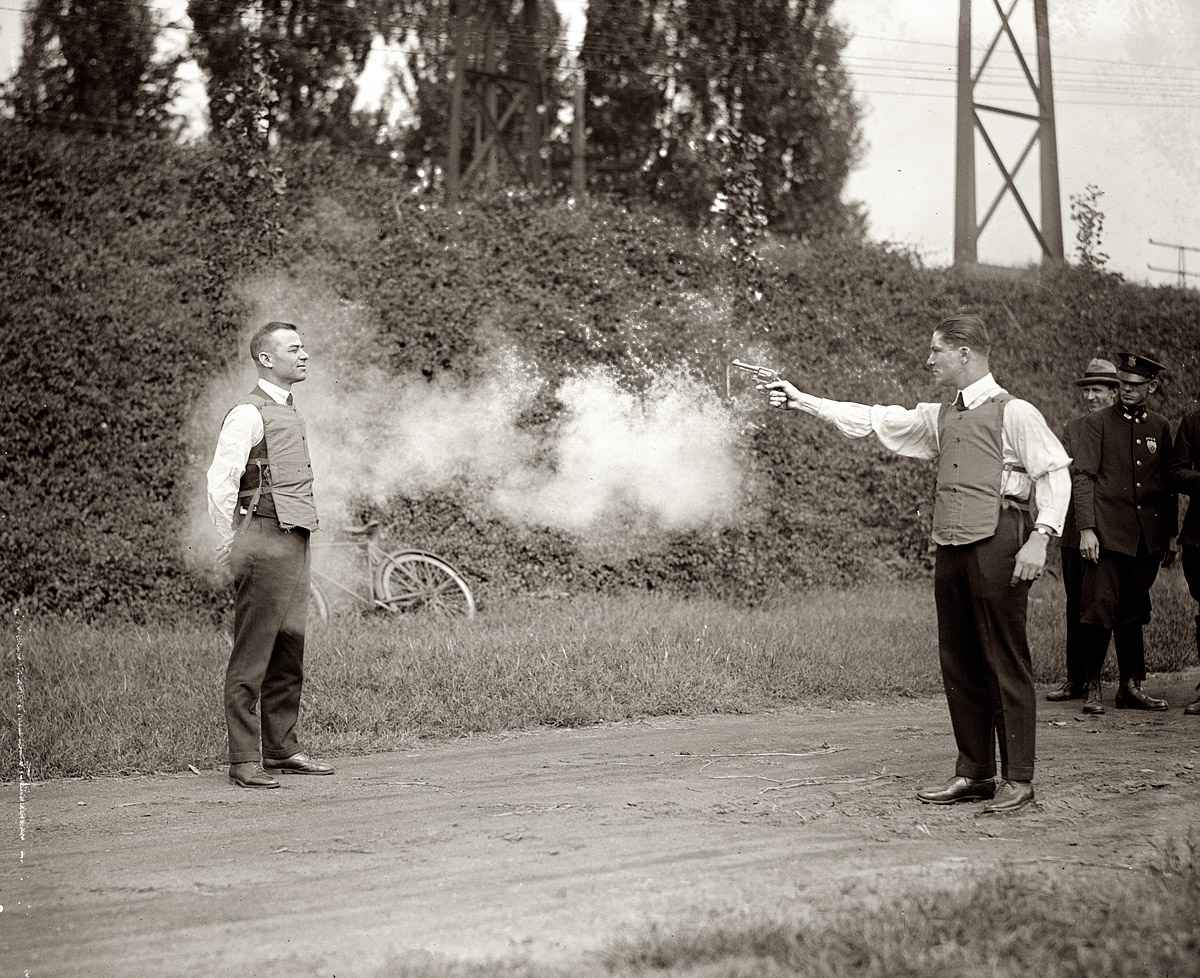
People have been trying to stop bullets for as long as there’ve been bullets. Early black-powder guns were relatively weak, and the lead balls could sometimes be stopped by a good silk shirt. In the 20s gangsters made vests out of multiple layers of very thick cotton, which were effective enough against pistols that the FBI (and presumably rival gangsters) switched to more powerful guns. Flak jackets from WWII were decent at stopping relatively-slow-speed flying shrapnel, but not much use against rifle rounds. After WWII the height of bullet-stopping tech was nylon webbing that held plates of steel or aluminum or ceramic (thus Marya’s upgraded lab coat). Kevlar wasn’t invented and made into armor until the mid-70s.

Every female name in the Russian language ends with the letter “A”. Or at least the ones that don’t are so rare that searching the standard “Russian Names” lists doesn’t produce any.

Chernobyl wasn’t actually a nuclear explosion. I know that this is probably common knowledge to most people, but all I’d really known about it before was that it was a nuclear reactor and a huge tragedy and there was an explosion and the area is still glowing (note: it’s not actually glowing), so of course I assumed it was a nuclear explosion. In fact, the explosion that tore the facility apart was an enormous steam explosion, and the nuclear disaster was when the fuel rods ignited and sent highly radioactive material pluming into the atmosphere for hours. The deaths via radiation sickness of those in the facility directly exposed were gruesome, but there weren’t many of them. The biggest effect was the large area of the nearby country that had to be abandoned for decades, and the still-high prevalence of cancer and genetic disorders among those who were the surrounding populace.

Chernobyl was also a complete cluster-fuck. It was due to a bungled test of a safety feature which didn’t have enough approval, was delayed to a shift that wasn’t prepared for it and then switched to third shift of workers mid-test, and had several mistakes and equipment failures exasperate it. Quite a few things had to all go wrong at once for this to happen, enough so that if it was in a fictional account the readers would groan and say “Are you kidding me? There’s no way that level of incompetence and misfortune would coincide in real life! It would make more sense as the result of enemy action or internal sabotage.” (note that I only very loosely based the Arkhipov incident on Chernobyl. I did the reading more to make sure that what I wrote wasn’t completely preposterous.)

100,000 volts is indeed enough to jump a 1-inch thick rubber sole.

Jan 092015
 

Lucille_clerc_jesuischarlie_tribute_instagramI received some disagreement with my previous post. Sorry I didn’t reply sooner, I’m busy all the time nowadays. One commenter posted:

> I recall agreeing with most of this article by Scott … You shouldn’t draw pictures of Muhammad just to anger Muslims … I think if you have some reason a picture would help, it’s probably OK to draw such a picture (standard disclaimers apply), but not just for the sake of angering people.

(Note that it’s a great post, and I also basically agree with it. It’s hard to disagree with Scott on things)

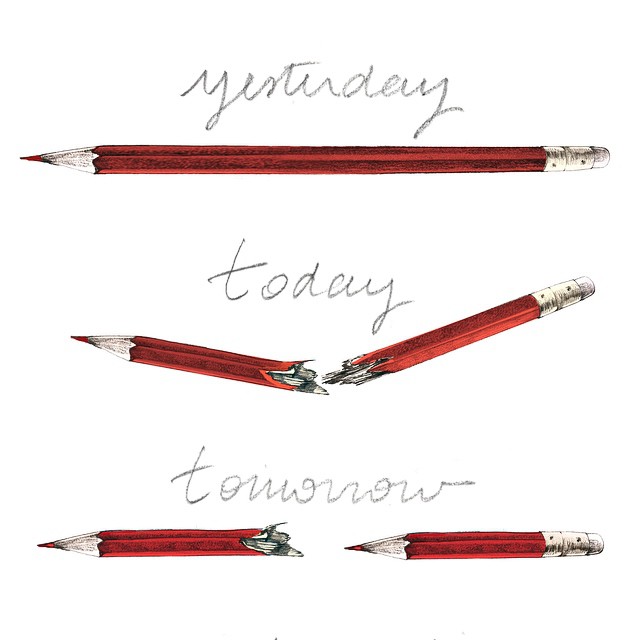
I think when satirists are killed for drawing cartoons, that’s a good enough reason to post such pictures.

I don’t normally draw or post pics of Muhammad. I don’t have any reason to, and I prefer not to offend people. OTOH, when a bunch of people are slaughtered for what the society I live in has deemed a protected right, in order to undermine that right, I get grumpy. There isn’t much I can do about something like that. But if the perpetrators of that attack had as their goal the ceasing of pictures of Muhammad being posted, I want do something to make sure that goal is thwarted. To demonstrate that killing of satirists will NOT ever result in less Muhammad cartoons, and may in fact result in more Muhammad cartoons.

I am sorry that innocent Muslims are hurt. It isn’t my wish to cause them discomfort or anxiety. But I don’t know if there’s a way to thwart the attacker’s goals without posting the Muhammad pictures. So I do it, because it is more important to me to thwart those goals than to not cause that collateral harm.

A different commenter said:

> The response to “we need to ban Nazis from exercising their free speech” is not to start spewing antisemetism in support of them.

I would consider the harm inherent in the message. If the message itself was denigrating a group of people, calling for their destruction or exile, or in some way terrorizing or hurting people, I would very strongly consider not repeating the message. In such a case I would restrict my reaction to the standard “very strong condemnation” + saying even distasteful speech should be protected + capturing the attackers and bringing them to justice.

If, instead, the message was mocking a person or thing that is held in high esteem, I would probably spread it. I don’t care if it was 12 neonazis that were killed for publishing an inflammatory picture of some famous rabbi – I’d post a picture of that rabbi as well. If the harm of the original message was no more than standard bad-joke offensiveness, that makes the benefit of spreading it to thwart the terrorist’s goals outweigh the hurt that it brings. It is the terrorists’ actions that swung that trade-off into the “spread this” zone.

Jan 072015
 

Satrical Magazine Charlie Hebdo has been hit in a terrorist attack, 12 people dead.

These are the names of the dead that have been released so far  (9:30 Mountain Time, 1/7/15).

Stéphane Charbonnier, known as Charb, the magazine’s editor and cartoonist
Bernard Maris, an economist and writer and the magazine’s deputy editor
Jean Cabu, cartoonist
Georges Wolinski, cartoonist
Bernard Verlhac, known as Tignous, cartoonist

Let us never forget them.

My readership is miniscule. Almost no one will see this post. Of the people who do, I expect none of them will be religious fanatics. Even if someone with violent intentions did stumble across this – I’m nobody. There’s no notoriety in killing me. There’s no fame or praise in it. No one would get the admiration of their peers.

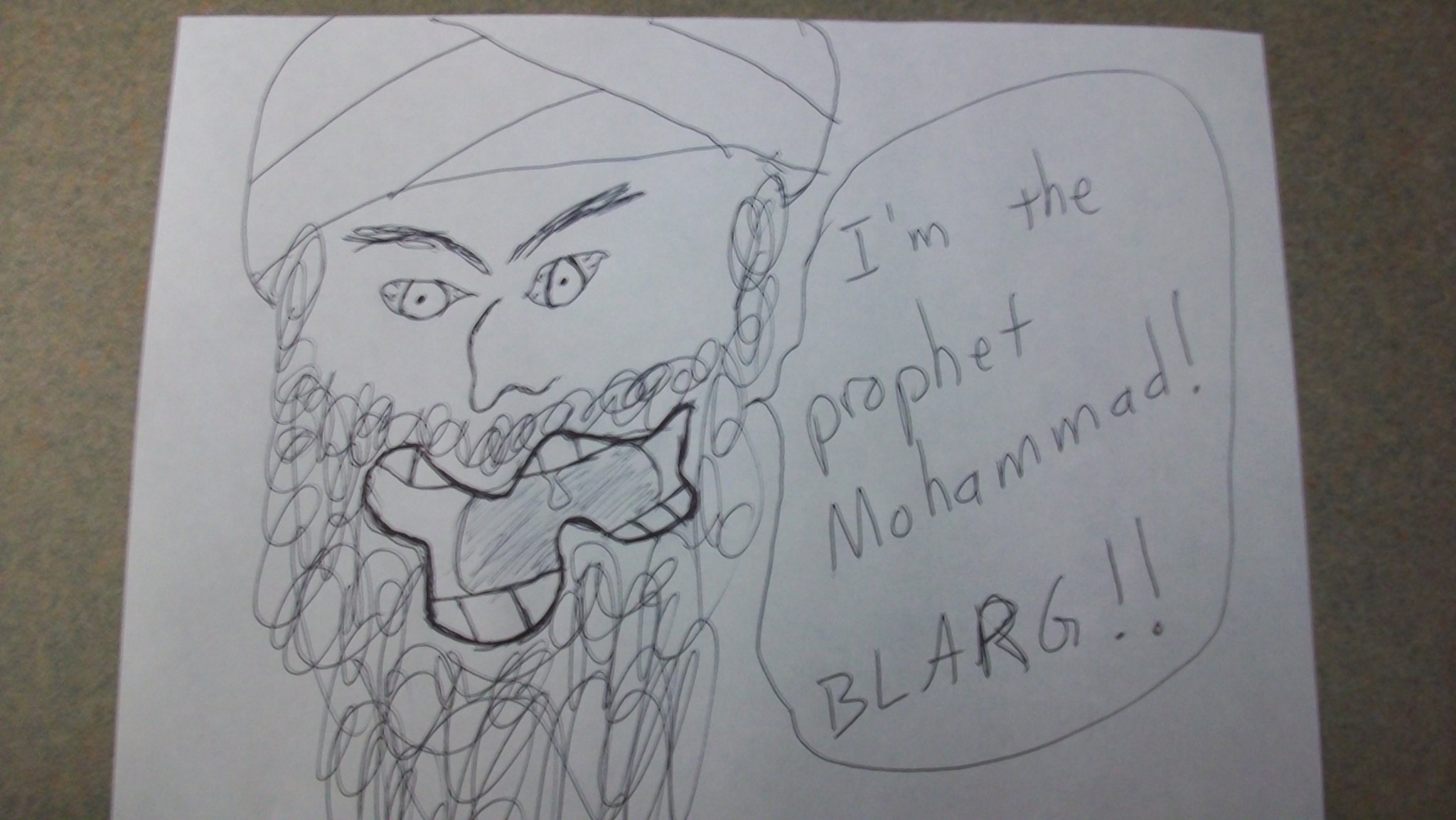
So this is not brave in any way. What the cartoonists and satirists in France did – that is brave. But in solidarity, here is the drawing I did of Muhammad for the 2011 “Everyone Draw Muhammad” day.

Muhammad

Jan 072015
 

Asimovs Feb 2015Asimov’s Science Fiction has purchased one of my stories!!! This is the first thing I’ve written to be published. I’m very proud. :)

Edit: So excited I forgot to say: It is “Red Legacy”, on page 48.

I’m not sure one can call it Rationalist Fiction, but it is at least rational. It follows a Soviet mad scientist during the Cold War era.

It appears in the February 2015 issue of Asimov’swhich is actually out right now. It is pictured in this post. You can find it in any fine bookstore. [edit 08/04/15: you can now read it online free, at my Fiction page. Or buy it almost anywhere that eBooks are sold.]

Since writers are an egotistical bunch and love talking about their work like parents love talking about their kids, I’ll be posting a few more times over the next week about writing this piece. Sorry about that, but at least I’m warning you in advance. :)

Jan 062015
 

This is a radical condensation of Scott Alexander’s “Untitled” post. My immediately-preceding post explains why I’ve done this. I quote the summary at the bottom of that post:

Scott has a lot of amazing things to say, which need to be heard by people other than just those who already agree with him. But I fear that the original article is too long for most people to read, and too triggering of those who are expecting attacks from asshole MRA-types. So I’m going to try my best to just cut to the most core parts of the post. This will flense away much of the emotion that makes it impactful, and many of the links to studies and surveys that make it insightful. All that will be left is a skeleton that cannot even approximate the heart of the original article. But hopefully, by just laying down the basic starting proposition that those who are wary of the message can read without distraction, maybe we can get a few people to read them. And consider them. And maybe, in time, discuss them.

In addition to tons of cuts, I’ve heavily modified the original article in various ways:

* simply cutting huge portions of it without ceremony
* taking lots of things out of context
* reordering lots of parts to match up with the four driving points I took away from it
* dropping lots of words in the middle of sentences, or sentences between paragraphs, to short them
* altering or adding some minor words to make the chopped-up sentences flow better
* doing BOTH of the previous two things in order to remove passion and make the post more neutral-sounding for the intended audience
* Adding two bits that are entirely my own (in blue) and shouldn’t even be there, but I put them in anyway

I have mutilated the original work in an effort to have it considered in a more neutral light by those who I most want to communicate this stuff to. But I can think of no better way of saying the things below than the way they were said. I am a both a plagiarist and a corruptor, any fault with what you read below rests on my shoulders. Scott, please forgive me.

Again, to be be perfectly clear – I am conveying my opinions by remixing an existing piece; the result should not be taken to represent the views of Scott.


  1. If Scott Aaronson counts, then how are you defining “Entitled”?

Scott Aaronson’s entire problem was that he was so unwilling to hurt women even unintentionally, and so unclear about what the rules were for hurting women, that he erred on the side of super-ultra-caution and tried to force himself never to have any sexual interest in women at all even to the point of trying to get himself castrated. If entitlement means “I don’t care about women’s feelings, I just care about my own need for sex”, Aaronson is the perfect one hundred eighty degree opposite of entitlement. He is just about the most unentitled (untitled?) person imaginable.

Yet Aaronson is the example upon which these columnists have decided their case for “nerd entitlement” must rise and fall.

A better word for this untitlement is, perhaps, scrupulosity, where you believe you are uniquely terrible and deserve nothing. Scrupulosity is often linked to obsessive compulsive disorder, which the recent survey suggests nerds have at higher rates than the general population and which is known to be more common in high-IQ people. Example: people who say “I have money and people starving in Africa don’t have money, therefore I am morally obligated to give half of my money to people starving in Africa or else their starvation is my fault” and then actually go and do that then as often as not it’s scrupulosity at work.

When you tell a highly-untitled, high-scrupulosity person that they are entitled, it goes about as well as telling an anorexic person that they are fat.

Sure, some nerds really are entitled, just like some people in every group are entitled. How come it’s 2015 and we still can’t agree that it’s not okay to take a group who’s already being bullied and harassed, stereotype it based on the characteristics of its worst members, and then write sweeping articles declaring that the entire group is like that?


  1. Shaming Tactics

Nerds have been told throughout life that they are “fat”, “gross”, “losers”, “creeps”, etc.

(Feminist men have a deep fear of being creeps. We do not want to make women’s lives worse! We’re doing what we can to make them better.)

There is a growing trend in Internet feminism that works exactly by conflating the ideas of nerd, misogynist, virgin, person who disagrees with feminist tactics or politics, and unlovable freak. Ideal feminism doesn’t do that. Ideals are always pretty awesome. Nerds deserve the right to complain when actual feminists are focused way more on nerd-baiting than actual feminism.

(Slut-shaming is an attempt to police women’s sexuality. Terms like “slut”, “whore”, “skank”, etc are used to destroy women and make them feel dirty and worthless unless they conform to what men want. Slut-shaming is awful.) We do not tolerate slut-shaming, nor do we tolerate those who do. But the male version of the problem is nerd-shaming, and I don’t feel like most women take it nearly as seriously as I try to take their problems. If anything, many actively make it worse. See previous paragraph.

Self-loathing is easy to inculcate and encourage

When someone tells you that something you are doing is making their life miserable, you don’t lecture them about how your life is worse, even if it’s true. You STOP DOING IT.

When I complained that I felt miserable and alone, it was like throwing blood in the water. When feminists write about this issue, they nearly always assume that the men involved are bitter about all the women who won’t sleep with them. In my experience and the experience of everyone I’ve ever talked to, we’re bitter about all the women who told us we were disgusting rapists when we opened up about our near-suicidal depression. I bottled my feelings inside and never let them out and spent years feeling like I was a monster for even having them.

A giant cry has arisen from shy awkward men, lesbians, bisexuals, whatever of the world is saying “NO, SERIOUSLY, FEMINIST SHAMING TACTICS ARE MAKING THIS WORSE”

Even among those who admit that nerdy men, lesbians, bisexuals, etc may be in pain, they deny categorically any possible role of feminist shaming culture in causing that pain and want to take any self-reflection on their part off of the table of potential compromise.


  1. Structural Oppression

“Privilege” is “some people have built-in advantages over other people, and it might be hard for them to realize these advantages even exist”. Under this definition, it’s easy to agree that, let’s say, Aaronson has the privilege of not having to deal with slut-shaming, and Penny has the privilege of not having to deal with nerd-shaming.

It would be perfectly reasonable to say something like “You feel pain? I have felt pain before too. I’m sorry about your pain. It would be incredibly crass to try to quantify exactly how your pain compares to my pain and lord it over you if mine was worse. Instead I will try to help you with your pain, just as I hope that you will help me with mine.”

Aaronson is admitting about a hundred times that he recognizes the importance of the ways women are oppressed. He’s not saying his suffering is worse than women’s in every way, just that it’s really bad and maybe this is not the place where “male privilege” should be invoked.

Thus the reply: “Yes, your pain technically exists, but it’s not structural oppression

I know there are a couple different definitions of what exactly structural oppression is, but however you define it, I feel like people who are at much higher risk of being bullied throughout school, are portrayed by the media as disgusting and ridiculous, have a much higher risk of mental disorders, and are constantly told by mainstream society that they’re ugly and defective kind of counts.

They’re this weird separate group with their own culture who don’t join in the reindeer games of normal society. They dress weird and talk weird. They’re conventionally unattractive and have too much facial hair.

Whatever structural oppression means, it should be about structure. And the structure society uses to marginalize and belittle nerds is very similar to a multi-purpose structure society has used to belittle weird groups in the past.

There is a well-known, dangerous form of oppression that works just fine when the group involved have the same skin color as the rest of society, the same sex as the rest of society, and in many cases are totally indistinguishable from the rest of society except to themselves. It works by taking a group of unattractive, socially excluded people, mocking them, accusing them of being out to violate women, then denying that there could possibly be any problem with these attacks because they include rich people who dominate a specific industry.

Even among those who admit that our pain technically exists, they are unable to acknowledge it without adding “…but by the way, your pain can’t possibly ever be as bad as our pain” or “your pain doesn’t qualify for this ontologically distinct category of pain which is much more important.”

  1. Nerds and Feminists shouldn’t be fighting each other.

Nerds usually have poor social skills, people who are pretty sure they are supposed to do something but have no idea what. Err to one side and you get the overly-chivalrous people saying m’lady because it pattern-matches to the most courtly and least sexual way of presenting themselves they can think of. Err to the other, and you get people hollowly imitating the behavior they see in famous seducers and playboys, which is pretty much just “being extremely creepy”.

It starts to look like feminists and I are trying to solve the same problem.

The problem is that nerds are scared and confused and feel lonely and have no idea how to approach women.

But Aaronson’s solution to the problem is to talk about it. And (some) feminism’s solution to the problem is to swarm anyone who talks about it, beat them into submission, and tell them, in the words of Marcotte, that they are “yalping entitlement combined with an aggressive unwillingness to accept that women are human beings just like men”

Denying the problem and yelling at nerds who talk about it doesn’t help either group.

What I most wanted to say, to all the messed-up teenagers and angry adults out there, is that the fight for your survival is political. The fight to own your emotions, your rage and pain and lust and fear, all those unspeakable secrets that we do not share because we worry that we will be hurt or shunned, is deeply political.” – Laurie Penny

This entire discussion is about the (some) feminists who continue to perpetuate the stereotypes that hurt us then, continue to attack us now whenever we talk about the experience or ask them to stop, and continue to come up with rationalizations for why they don’t have to stop.

Men are not even allowed to ask the people hurting them to stop – then you’re super entitled.

@#!$ that. Dehumanizing and perpetrating stereotypes about a whole group of people who already have it pretty bad is not okay.

Jan 062015
 

So just yesterday I was reading Scott Alexander’s reply/rebuttal to the NewStatesman “On Nerd Entitlement” and thinking to myself “Gosh, I am really glad that I have such a nice in-group bubble that this never even came up and I don’t have to deal with it.” And then wouldn’t ya know it, someone linked the NewStatesman article.

To be perfectly honest, I was actually feeling kinda left out. Like “Aw, everyone else is having this conversation around me, but it doesn’t affect my life at all, so I don’t really have anything to say.” Not that I wasn’t a nerd growing up, cuz I was/am, but I was shielded from the worst of this by a religion that made dating a non-issue anyway. I commented on the NewStatesman link by posting a link to Scott’s article, along with the summary “Nerds as a demographic are on average extremely feminist (more so than non-geek women are), but nerd-shaming is often done by the same groups who so vociferously oppose slut-shaming, and “When you tell a highly-untitled, high-scrupulosity person that they are entitled, it goes about as well as telling an anorexic person that they are fat.” ”

This didn’t actually go very well. The fact that Scott was even arguing that nerds might not be entitled was automatically one strike against him, and things just went downhill from there. The friend was put off by the humor I enjoyed, and the friend is still allergic to Godwin‘ing, which I guess probably says more about my being a cynical old man now than anything else. Also several concepts used are familiar to those who read rationalist blogs, but were quite a few inferential steps away from those who don’t, and therefore much of the actual argument was lost. And on top of that, it’s over 8000 words. In the end there was all-caps incredulity, phrases like “women are murdered for turning men down”, and the conversation had to be shut down with extreme prejudice to keep everyone OK with everyone else.

I can’t say anything for the emotional state of the other party, aside from “It seemed like they were upset.” I, for one, was trembling and very worried that maybe I’d lost a friend, and scared shitless that somehow the internet police were going to show up and strip me of my feminist card. I KNOW IT’S A STUPID FEAR. It’s still there.

Scott Alexander is one of the nicest and most respectful people I can think of. I’ve said this before, but the fact that we (by “we” I mean “feminism in general”) have lost him is a damn tragedy, and an alarm call that maybe some of our tactics need to be reevaluated or redirected. Yes, there’s sexism in nerd culture. Anyone who’s read a few comic books or played a few video games can tell you that.  But there are those people out there – jocks and neaderthals, my tribe would call them – who relish this, and will never change. The best we can do is get them to keep their idiocy out of the public doman, much like your racist uncle who knows well enough to act normal in public and only occasionally lets slip how much the blacks ruin everything behind closed doors at family reunions. And there are those people who respect women as equal humans and actually do a lot of work to make work/play/comic books/etc less sexist in the ways they can. A great deal of them are (or at least were) the super-scrupulous nerdy types. We have a visceral understanding of what it feels like to be on receiving end of abuse from those at the top of the social ladder, and strongly empathize. Most of us anyway.

So when the feminist movement drives away those very people, we are hurting ourselves. These are the allies we want!

Scott has a lot of amazing things to say, which need to be heard by people other than just those who already agree with him. But I fear that the original article is too long for most people to read, and too triggering of those who are expecting attacks from asshole MRA-types. So I’m going to try my best to just cut to the most core parts of the post. This will flense away much of the emotion that makes it impactful, and many of the links to studies and surveys that make it insightful. All that will be left is a skeleton that cannot even approximate the heart of the original article. But hopefully, by just laying down the basic starting proposition that those who are wary of the message can read without distraction, maybe we can get a few people to read them. And consider them. And maybe, in time, discuss them.

Jan 042015
 

matrix-morpheus-interrogation-1There’s an old saying – Don’t take life too seriously, no one’s getting out alive anyway.

While on vacation I was introduced to a fun little game called Forbidden Island. It’s basically a faster, simplified version of Pandemic (made by the same guy!). It is a cooperative “players vs the board” game, and the gameplay is as follows:

You are on an island that is sinking under the sea. You can shore up parts of it for a while, but it’s sinking faster than you can save it. You have to keep the resource-rich areas in play just long enough for the players to extract all the resources they need to fulfill one of the win conditions. Then everyone abandons it. That area goes crashing down and is swallowed beneath the waves. Those with the ability to extract resources then move to the next resource-rich area, which has been valiantly held together by other players in a holding action, draw out the resource, and again everyone abandons it to the elements. Repeat until the island has been stripped of everything of value, then flee as a group and leave the whole damned place to its doom.

(You lose if you fail to coordinate or take too long, and the important areas sink before you can get the valuable resources from them)

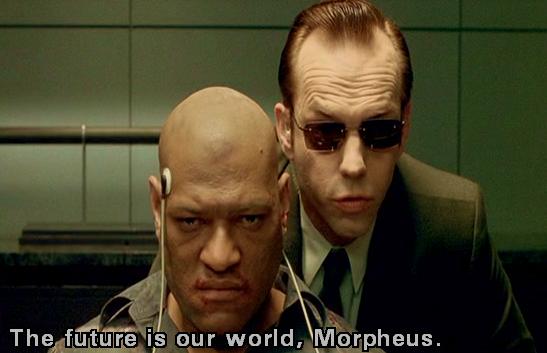
It struck me as a perfect allegory for the reigning model of corporate capitalism. Corporations do not share human values. They have a single goal that means life to them, and death if it isn’t met often – the next quarter’s profits. Every single action must advance that goal in some way. Actions that don’t do that aren’t just value-neutral, they are actually value-negative since they drain resources. This results in the sort of scorched-earth tactics that corporations are famous for, from climate-denial to child labor. It turns into a game of drawing all the value you can from a system that’s collapsing around you before abandoning it and fleeing to the next area of opportunity.

It’s an exciting game! Forbidden Island is a lot of fun. It’s also the engine behind most action novels/movies – how far can the hero push themselves in pursuit of the important goal? How much can they sacrifice? In the end he should just barely win, limping out of the wreckage with every resource exhausted. Altered Carbon, one of my favorite novels, takes this a step further – bodies can be replaced, so the hero literally burns through his life, because as long as he can make it to a place where his cortical stack will be recovered it doesn’t matter if his body is completely destroyed in the process. It makes for a fucking AWESOME action book. Seth Dickinson takes a different tack in many of his short stories, asking how much of what a hero values s/he will sacrifice in order to do The Important Thing. (spoiler: the answer is always ALL OF IT. In the most brutal way possible. OMG so good!!)

But as exciting as it is, it’s not a great way to run the world you’re living in. Eventually you’re on an island that’s crumbling into the ocean and you have nowhere left to run and oh god what do I do now? This is one of the things that makes End Times Theology so attractive – you don’t have to worry about that since God’s going to destroy the whole thing and start over anyway. And it’s the impetus for sayings like the one quoted at the top. You’re gonna die anyway, live it up while you can. This has, for a long time, been a catch-phrase of the villains. Good people care about others, they give a damn about the next generation. Interesting that we’ve created a system which spawns powerful entities like corporations which cannot act in non-villainous ways if they want to continue existing.

Dec 182014
 

getting-published-introduction (1)When I was a kid, SteamPunk basically didn’t exist. The Difference Engine had come out, sure, but there wasn’t a recognized genre. Nowadays even people who aren’t big into SF/F know what SteamPunk is.

We like Rationalist fiction. I would like for it to be a genre, so I could go and pick up a novel marketed as “Rationalist,” rather than having to hope someone stumbles across one and shares with the rest of us. We’ve adopted several books/author’s as Rationalist (Watt’s “Blindsight”, much of Greg Egan, most of Ted Chaing), but it’s not a recognized genre in the wider culture, and none of them self-identify as Rationalist writers. There are those who could accuse “You’re just appropriating especially well-written SF and trying to use it to make your genre look good!” We currently only have one really exquisite and shining example of self-identified Rationalist fiction, and it can’t be published via traditional means for legal reasons.

So what can we do to promote rationalist fiction? I think the most important step is to continue what we’re already doing – promoting HPMoR via word-of-mouth. It is/will be to Rationalist fiction what Perdido Street Station was for New Weird – the amazing ground-breaking work that gets a core base excited and wanting more. But this alone isn’t enough. Right now, only rationalists read Rationalist fiction. OTOH, a fair number of people regularly read SteamPunk and New Weird, even if they aren’t hardcare fans of the genres, because the genres exist and are accepted in the SF spectrum. They are genres that writers write in. They are genres that publishers publish. And both of these things are true because people are willing to pay money to read those genres.

To expand from a niche internet interest to a full genre there must be money in the game. There are people whose job it is to find stories that they think readers will be willing to pay money to read, and buy those stories from authors. If they are right, and the works are popular, and readers start asking for similar stories, those editors will start to pay attention to the label being used to describe that type of story. “The last rationalist story was well-received. I should try getting another one of those.” And as other authors are exposed to the same works, and find them intriguing, they’ll want to write stories in that style as well. Most SteamPunk writers didn’t create the idea Ex Nihlo, they discovered it via reading and decided “This is really cool, I want to do something like this too!” And when this happens enough times, a genre comes into being.

Right now a lot of us are cutting our teeth, figuring out how to write a thing. But eventually we need to up our game. Maybe you don’t much care if it becomes a recognized genre, you prefer the close-knit community of internet publishing. If you’re like me though, and you want this to bloom, take that next step – try to get published in a recognized market, while publicly identifying your work as “rationalist fiction.” Ideally in a pro-paying market, which SFWA guidelines say is $0.06 per word or more. Failing that, semi-pro is a good close-second.

Yes, it’s hard. It’s painful to be rejected over and over again, often after months of waiting. But it makes you better. It makes the writing better. And it will help the genre to become established. We can’t all be Eliezer (some people would claim only one of us can be!), but we can help expand the genre in other ways.