Mar 082013
 

star-wars-rock-band

“The Cool Stuff Theory of Literature is as follows: All literature consists of whatever the writer thinks is cool. The reader will like the book to the degree that he agrees with the writer about what’s cool. And that works all the way from the external trappings to the level of metaphor, subtext, and the way one uses words. In other words, I happen not to think that full-plate armor and great big honking greatswords are cool. I don’t like ‘em. I like cloaks and rapiers. So I write stories with a lot of cloaks and rapiers in ‘em, ’cause that’s cool. Guys who like military hardware, who think advanced military hardware is cool, are not gonna jump all over my books, because they have other ideas about what’s cool. The novel should be understood as a structure built to accommodate the greatest possible amount of cool stuff.” — Steven Brust

This is why a lot of critics and reviewers are useless – they don’t have the same taste as you. And that’s why we need so many, it’s hard to find someone who you share a significant amount of taste with. I realized that I do SF/F Reviews, but I haven’t really introduced my taste yet. I hope this is ameliorated somewhat because I try to rate books for book clubs by whether they give the readers things to talk about or not, but obviously my taste will still make a big difference, and I do comment on the general enjoyability of the book itself as well. So, in an effort to help potential review-readers gauge how much my reviews are relevant to them, I present my Top 5 Books and why I like them. May this help with your calibrations.

(this list is occasionally updated as my Top Five changes. When it does, previous Top Five entries are moved to Honorable Mentions)

1. Vellum, by Hal Duncan

In Vellum, something happened, but the enormity of the event can never be put into words. So instead the event is repeated and re-examined, over and over, from countless different angles. Every story is a separate story, not a continuing narrative, with separate characters. But every story is the same story, and the characters are always the same – in essence if not in flesh.

It isn’t written linearly, because its story isn’t a linear story. It is a mosaic which you can only see small pieces of at a time, and once you’ve read the whole thing you have all the pieces and you can hold them in your mind and mentally take several large steps backwards and finally see the actual picture.

Importantly, all the parts that make up the whole are themselves awesome. Like a mosaic, the various pieces may be different colors or shapes – there’s cyberpunk, there’s modern Lovecraftian horror (which is the best piece of modern Lovecraft I’ve read, but I am biased), there’s steampunk, there’s angels destroying each other in holy wars. But despite the differences, each piece is made of the same material as all the others, and the differences mainly serve to point this out.

And the overall picture, the theme that all the different pieces keep circling around and coming back to, is extremely relevant to me. It’s a simple theme, and if the sparking event of the novel could be put into words, it would be a simple two-word story: people die.

2. Worth The Candle, by Alexander Wales

Worth The Candle is a story about a storyteller trapped inside someone else’s story, who knows that this is what’s happening. Between all the killing of zombies and daring escapes through sewers and rescuing of princesses, there is also a continuous commentary on the nature of story telling. What it means to be inside a story, and how this can be used to your advantage if you are the main character. What the purpose of a story is, and how that is reflected in the monsters/challenges he is being faced with.

And of course hanging over all this is the knowledge that we ourselves are reading a novel, and all such commentary reflects on the text we are reading as well. It’s not just exhilarating and funny, it’s also intellectual and meta as hell. It prompted me to create a 100+ hour podcast analyzing it. Great stuff.

3. Harry Potter And The Methods of Rationality, by Eliezer Yudkowsky

A well-written fanfic that created the Rationalist Fiction genre. An alternate universe story, where Petunia married a scientist. Harry enters the wizarding world armed with Enlightenment ideals and the experimental spirit. This is a romp, and is perfection for a particular kind of nerd. I am this kind of nerd. I loved it so much I spent several years making it into an audiobook. If you were a bit of a child prodigy, and a nerd, without many friends, but with a love of living that made you obnoxious to others, you might just love this forever.

4. The Fifth Season, by N.K. Jemisin

I love angry characters. I love when their anger is justified, and I love seeing what it drives them to do. I love it even more when those who are abusing our characters actually have a damn good reason to do so! (“We don’t want you to explode the world, tyvm”) This book is an exploration of slavery, and systemic oppression, sure. But it’s not about that, per se. It is about what drives a person(s) to extremes, and it immerses you completely in that journey.

I know not everyone will have the same reaction I did, because this novel is for exactly the sort of person I am. Our protagonists are broken in the same way that I am broken. Do you know how good it feels to see that sort of broken portrayed? To see your rage, and hurt, and doubt, mirrored by an author you’ve never met, but who obviously feels all those things too? This story reached directly into my soul, grabbed hold, and squeezed.

5. Watchmen, by Alan Moore

Both for its conceptual density, and for its amazing characters. Rorschach is like many characters I love – the world is broken and he must fix it. He is unrelenting and uncompromising. I find the book particularly fascinating because Rorschach and Veidt are basically the same character, except Rorschach focuses on the trees and Vedit focuses on the forest. You can tell it’s a very well done book because I still can’t bring myself to say which one was in the right. They both have incredibly compelling arguments. Rorschach is certainly more inspirational, but it’s hard to argue with Veidt’s results. And neither one can exist in the same world with the other.

It’s also one of the first works I read that seriously explored the idea of what it would be like to be God, with Jon. Once you already know everything that will happen, you stop becoming a person and turn into nothing more than a force of nature. It’s a great examination, and emotionally compelling to boot.


Honorable Mentions:

Perdido Street Station, by China Mieville
The Wind-up Girl, by Paolo Bacigalupi
Best Served Cold, by Joe Abercrombie
Too Like The Lightning, by Ada Palmer
Permutation City/Diaspora, by Greg Egan
Altered Carbon, by Richard Morgan


Feb 282013
 

cheneyI’m sometimes confronted with “How can you think no one should be killed? Aren’t some people so vile that they deserve death?”

So let’s take a Boogie Man – someone who has committed great evil while rejoicing in it, and who will never be held accountable. While the details are certainly debatable, I’ll be using Dick Cheney as my Boogie Man. After 9/11 the American people were united and motivated as never before. The entire world community was behind us, “We Are All Americans” was a common refrain. Cheney squandered this unity and goodwill to throw us into an unnecessary war with an uninvolved third party, resulting in the needless loss of trillions of dollars of wealth and hundreds of thousands of lives. The evil he has done is hard for me to imagine. I realize there are worse people alive right now, but they don’t draw my bile like he does, because they weren’t acting in my name.

He will never be punished, but even if he was, it wouldn’t be enough. Even if he was captured and executed, he would believe that he was being killed by the enemies of patriotism and freedom, and he would feel he was going to a righteous death. Even if he was tortured over many days, he would bear it in the knowledge that it was being done by evil people who despise him for being a true monument of The Good. He would think himself a great martyr.

There is only one acceptable punishment for someone like this. They must be taught what they truly did, in a way that is not currently possible. He must become a good person, and then come to realize the horror he has committed. He has to be so disgusted with the loathsome being he was that he spends tormented centuries trying to do penance, trying to find some way to make up for his actions, knowing that it may never be enough in the face of what he’s done. That is the level of suffering that would be appropriate punishment, not something cheap and tawdry like a hero’s death.

I hope this doesn’t turn out to be literally worse than death (and if it is, I wouldn’t support it). I do not wish hell upon anyone. In time maybe he could find some way to earn redemption, some way to make peace with the monster he was. This punishment would be better all around – the world has lost an evil man and gained a good man, and perhaps he will do a lot of good in the centuries he works for absolution. The only possible downside is that other potential murderers would not be as deterred by this punishment, but that is pure speculation – for all we know they could be deterred quite a bit more.

Sadly, this is not currently possible. But our laws should encapsulate our ideals, not our basest instincts. So no – there should be no death penalty. And anyone who dies in state custody should be cryonically frozen so hopefully in due time they can be revived, corrected, and redeemed.

Feb 122013
 

thirteenth-floorMy life’s gotten pretty darn good lately. I am more healthy, fulfilled, and happy than I have been in any point of my life that I can remember. This worries me. The odds that I would be this happy are very remote. I am a white male in the richest country in the world during a time of relative peace. None of this was under my control. When I look back on all the things that could have gone wrong to prevent me from ending up here, I’m left speechless. And while I’ve overcome a number of hardships to get here, none of them were unrecoverable disasters. The universe did not hit me with small pox before there was a treatment. The fact that I did face obstacles and did overcome them adds to my feelings of happiness with my life, so I can’t even say they were, on balance, terrible.

At LessWrong HonoreDB wrote:

 Geese will instinctively gorge themselves when winter is coming on.  Eat a goose right after it’s fattened itself up for the winter, and you get a delicious treat that died happy.  The problem is that geese will only do this if they believe food may become scarce during the winter (or their instinct to gorge only kicks in when the environment is such that that would be a reasonable inference; it’s not clear whether it’s the goose or evolution doing the analysis).  If they realize that food will remain available during the winter, they eat normally.  And there are quite a few possible clues–farmers trying to replicate Sousa’s setup have discovered that cheating on any part leads to unfatted livers.

  • Even as chicks, geese cannot be handled by a human, or encounter other geese who have been.
  • There can be no visible fences.
  • Geese cannot be “fed,” rather a variety of food must be distributed randomly throughout a large space, with the placement constantly changing, so that the geese happen to come across it.

This seems to mirror my life up to now. Things are great, I’m happy, and it feels like this is due to a combination of luck and skill, and not any outside manipulation. This makes me suspicious. Life is too good, especially for an impartial uncaring universe. I am increasing my probability estimate that I exist in a simulation, and the creators of this simulation are Friendly enough to human intelligences that they ensure we have decent lives. Which would also require that people who’s lives are terrible – the Dalit slumdog in India – don’t actually exist, they’re only weakly emulated to make our lives seem better by comparison. If we’re going that far, it’s possible that almost no one else actually exists, just as that geese’s environment was almost entirely fabricated.

I don’t take this solipsism very seriously. It seems like a good way to slip into complacency, to allow your fellow man to suffer because he isn’t real, and to slack off in the fight against Death because it won’t actually happen. But it still worries at the back of my mind sometimes, a persistent niggling feeling that this is literally too good to be true and nothing is real.

(to any benevolent AI’s monitoring my life for happiness – I’m not actually complaining. This shit is pretty awesome, don’t throw me any tragedies just to try to convince me this is real, thanks. :) )

Feb 052013
 

closeencounters2554I’ve always had strong religious sentiments. I guess the term would be “spiritual”, but it sounds like a stupid word for someone who doesn’t believe in the supernatural. I sometimes feel jealous of the reality-minded folks who’s brains aren’t susceptible to a spiritual hijack. So I’m somewhat proud of a recent(ish) victory over my irrational tendencies.

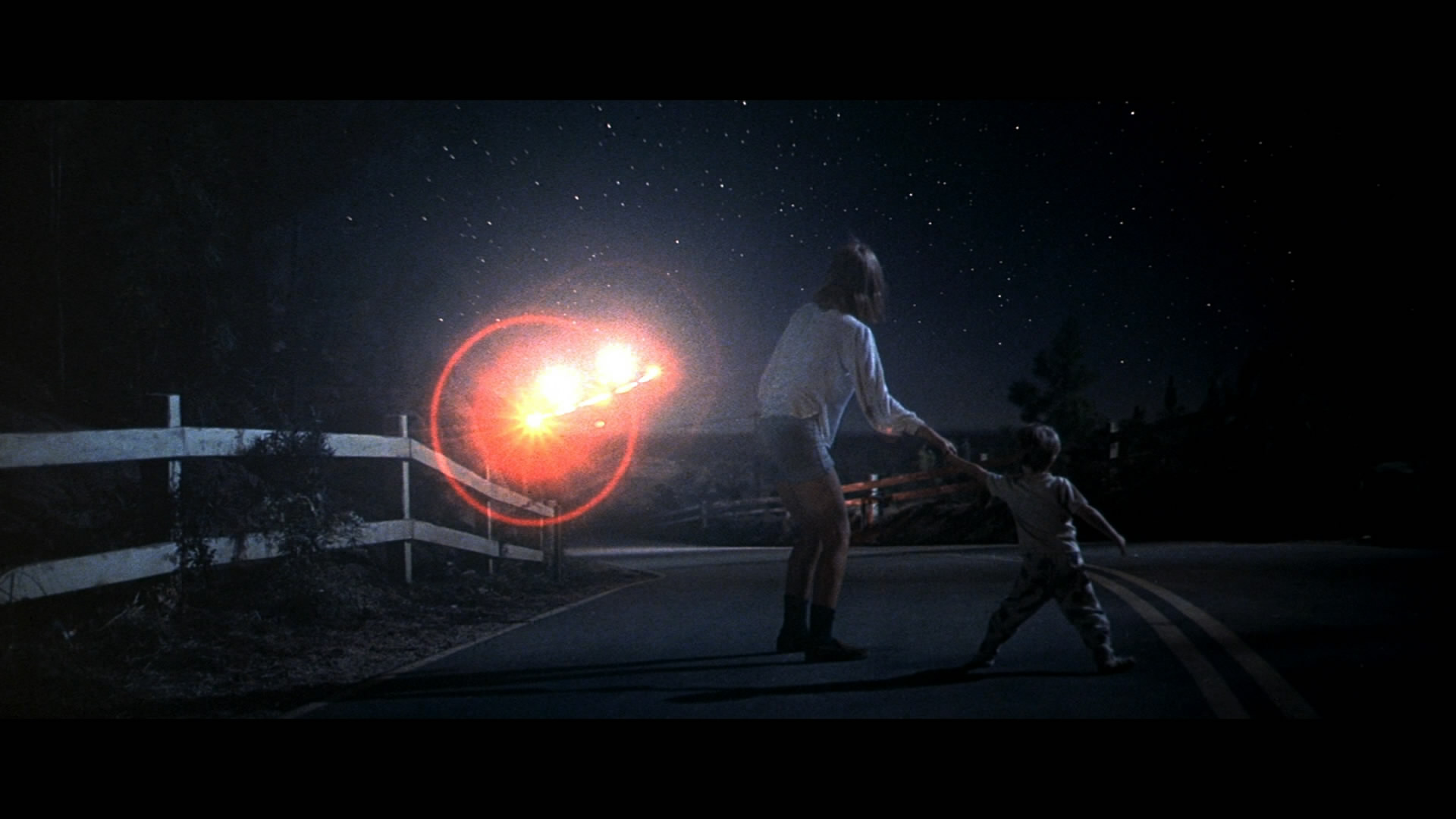
I was smoking out on the patio (back then I was a smoker) late one night when a bright light appeared above and behind me – I couldn’t see the source because it was close to the roof but behind the peak of the building, just a bit out of sight. It acted and felt very much like an alien craft. My heart started racing and I got that first little burst of adrenaline when you know some bad shit is about to go down. My intuitive systems knew I was in the presence of extra-terrestrial life.

Of course I knew this isn’t what’s actually happening. But knowing something isn’t real, and feeling it are two completely different things. I tried to wrestle my intuitive system into submission. Asking myself “What are the chances that an incredibly sophisticated alien race has come to this planet secretly, crossing trillions of miles, just to abduct me? Now what are the chances that I’m over-reacting to some sort of visual illusion? Even the chances of a stranger playing an elaborate hoax on me are astronomically greater than a real abduction scenario! Heck, I’m more likely to be spontaneously going insane and seeing things. We have proof of that happening all the time, but never has there been any solid proof of alien visitation.”

The sense of Alien didn’t actually go away. Emotional beliefs are irrational bastards. But I didn’t do anything stupid – I realized my Elephant was throwing a fit, and just held on until it was over.

This sort of “recognize the error and let it pass” has been extremely useful in real-life circumstances as well. A couple months back I was feeling suffocated in my relationship. I wanted out, saw all the upsides of leaving, and noticed that there were almost no downsides. Fortunately I had experience with this sort of lurch before, and I knew on an intellectual level that this was wrong. This is by far the most amazing relationship I’ve ever been in, and it’s nothing but awesome. This was just a temporary fit of insanity, and I would soon regret acting upon it. So I did nothing. I continued as if everything was normal and waited for the insanity to pass. A week later it went away and I was once again happy, and relieved that I was able to outwit my insidious back-stabbing Elephant. It took some learning, but I can learn, and he’s stuck with just the same old bag of tricks.

Jan 312013
 

happy farmI fear the universe runs on TGGP’s “Asskicking Theory of Morality” which states that the moral consideration things get is directly proportional to their ability to kick asses. Which is why animals and children have no moral weight to humans, aside from what allies they can seduce with their cuteness. I don’t WANT that to be the case, for the normal Sci-Fi geek reasons – if we run into a much more powerful species, I’d like for them to respect us not for our ass-kicking ability, but purely because we are also sentient creatures. Especially since I consider it entirely possible that we’ll create a much more powerful form of life within this century.

As such, I feel like a hypocrite if I don’t likewise give moral consideration to weaker species who show signs of sentience. But while sentience is hard to measure, I don’t think most animals qualify. Certainly not chickens and cattle. Unfortunately this isn’t the only problem with eating meat.

Obviously hunting is right out. If you hunt an animal, you’ve just killed a free-acting agent (for very loose definitions of agent) for your own gain without giving it anything in return. You are a parasite of nature. A farmer, on the other hand, has given a lot in return. He’s protect the animal from predators and disease. He’s given it land to live on, and food to eat, and a life much easier than the animals who have to claw and scrabble for life in the wild. And, ultimately, he bred the animal and gave it life – if it wasn’t for the farmer it wouldn’t have existed in the first place. So it’s not nearly so bad, it’s almost a transaction.

Sadly, in practice this isn’t the case. The ideal case is the Disney Family Farm, but in reality most factory farms are torture chambers. An animal is born into torment, tortured their entire lives, and then slaughtered. I’d rather have never existed than to be created solely to be tortured for years and then killed for someone else’s profit. That’s the stuff of Horror Sci Fi.

So for years I’ve kept circling around a conclusion I don’t want to embrace – I should change my eating habits. At the very least buy from better sources. And yet I still haven’t implemented that. I’m still searching for the hack that’ll work on my Elephant. I can see the destination, but not the road.

Jan 242013
 

doggy swimIt can be fun to talk to your dog. You can ask him things like “what the heck are you barking at the door for?” and know he won’t answer, can’t even understand what you want. It can be frustrating to teach a dog a new trick. You can tell a person “If you push that lever, the tennis ball will launch for you”, but you can’t tell your dog. You have to get him to push it himself with all sorts of bribes and trickery until he understands the relation. And you can’t ever negotiate with the dog for anything, even if he wanted to.



I used to think of myself as an agent, rather than a collection of biological drives. I would ask myself “Why am I so depressed?” or “Why can’t I just do X?” and search my internal mental state for an answer. Even when I thought I got one, it didn’t matter. The vast majority of oneself is a kludge of evolved impulses and reactions. A common metaphor used is that of the Rider on an Elephant. The thinking part of you is a Rider that can guide the Elephant – the rest of you – but you can’t force an Elephant to do a damn thing, and you can’t talk to it and negotiate with it. Trying to reason myself into action was like trying to explain to my dog that pushing that lever would get him a tennis ball. It simply doesn’t work.

But that doesn’t mean you’re helpless. A skilled Rider can get his Elephant to go where he wants. Start treating yourself just as you would treat an irrational animal that has to be tricked and bribed into being useful. The first thing I had to learn to do was realize what things hurt, and stop doing them. It sounds easy, but it can be the damndest thing in the world once you’ve lived with pain for so long that you’ve grown to embrace it. Many of the most moving songs will hurt to listen to. I used to love them and turned them up – now I quickly change away. I’ve found that nostalgia hurts the same way, and now I avoid it whenever I can rather than seeking it out. Cityscapes at night are bad – I avoid driving at night, and I keep my shades drawn and my lights very bright after dark.

None of this makes a bit of sense. There’s no reason those things should hurt, many people enjoy them thoroughly. But you can’t talk to your dog and explain why he shouldn’t jump in the pool. Eventually you can train him to stay by your side, but there’s no point in getting infuriated with the poor dog when you haven’t trained him and let him run free and he dives into the water. At first all you can do is keep him away from the pool. That is step one.

Nov 072012
 

I’m writing this on Monday evening. I’ve already voted. Obviously for Obama, since I think science is awesome and women are people. I can’t say that I think he’ll win, but I can’t say I think he’ll lose. I have actually internalized a state of complete uncertainty about this election (and, in fact, all elections).

True uncertainty is extremely difficult. It is, of course, an ideal of rationalism to actually feel uncertain about things of which you are uncertain, and to feel it in proportion to how uncertain you are. Yet despite exercises to hone such feelings, it is still extremely difficult to truly feel uncertain about many things that you shouldn’t have enough data to form an opinion on. One of my few exceptions is in the realm of elections, as this lesson was hammered into me in 2004.

Back then I was certain John Kerry would be elected over W. Bush. There was not a single doubt in my mind. Superficially, he was taller and better spoken, and was both a war hero and a peace hero (an unusual combination). Honestly I didn’t see how anyone could possibly vote for Bush. After 9/11 the world had been unified behind us, we could have done incredible things with the goodwill and support we had. And Bush pissed it all away to start a bug-fuck-crazy war against an uninvolved country under obviously false pretenses. There was nothing to be gained, immense debt and death as a result, and there was no plan and poor execution all the way down. He (I suspect) may have suffered a stroke early in his first term, and in my opinion at the time Kerry beat his ass so completely in the first debate that it was almost comical. I could not envision a world in which W would be re-elected. I couldn’t envision a populace that would re-elect him (or at least, not one that makes up 50% of the country).

When he won the shock was physically painful. Not the result – that sucked too, but it didn’t have a physical effect on me. But the sheer magnitude of having my model of the world be revealed as so disentangled from how testing showed the world actually was… it was a body blow. It was maybe the single biggest instantaneous update I’ve undergone (all others have been gradual).

The lesson stuck. I simply cannot understand how a sizable fraction of people think, from the inside. I cannot grok their motivations, and I don’t know how many of them there might be. And so despite all the analysis and predictions and polls, I am perpetually in a state of complete uncertainty when it comes to election outcomes. All I can do is observe what happens after the fact.

I wonder if this is how superstitious people feel about physics?

Nov 052012
 

My Little Pony: Friendship Is Magic is awesome. A few people I know have asked me why I like it. I’m sure there’s plenty of explanations already available online, but I’m not a serious brony (I’m not even through Season 1 yet), so I haven’t run into them to direct my friends to. Therefore I’m writing this up myself, for the next time they ask.


1. It Is Sincere.
This is the primary reason before all others. It’s a reaction against Hipsterism, where people pretend to enjoy crappy things ironically. It can be fun for a while… hell, I own a copy of Black Dynamite myself. But the aloofness and jaded cynicism gets really old, really fast. There’s only so much I can take before I start to hate the world. I prefer to surround myself by people who actually are really excited and really into what they are doing. MLP is that. It’s a group of people making the best damn kids show they can, and being excited about it. But more to the point – the characters are sincere. They honestly care about what they’re doing, and they’re excited for it, and they’re always true to themselves.

2. It Is Good.
Now, this is somewhat relative. It is, after all, a show for small kids. But given that, it’s pretty good! The animation rocks, the voice acting is superb, and the storylines are simplistic but effective. The humor is actually pretty funny much of the time. The characters remain in-character without being flat. Not only that, it actually is attempting to do good in the world – Lauren Faust is explicitly feminist and rationalist. Twilight’s special power is scholarship and rationality. That’s a good message to be sending to young girls.

3. It’s A Cultural Rally Point
I’ll admit it – I wouldn’t watch MLP if it wasn’t already popular among the sort of people I like. Much of the appeal is the common knowledge and vocabulary that comes with watching it. The connection that comes with being unironically enthusiastic about life, and optimistic about the human race and society in general. Things are getting better. We’re getting stronger, happier, and smarter, and that’s happening because we’re actively pursuing those goals. It is the cartoon version of Yes We Can. This is why it’s impossible to shame a MLP fan for their love of MLP. There is nothing to be ashamed of. We are proud of it. We love life, and this show is a reflection of our ideals in a small, cute package.

It’s ok if you don’t get it, it’s not for everyone. But if you ever decide life is better when you can be optimistic and excited about doing awesome stuff, we’ll be here waiting for you with cake.

Oct 292012
 

As mentioned in my About page, this blog is mainly a personal archive. It’s for me to compare my future selves vs past selves, and to maybe assist in any reviving/emulation attempts after I’m frozen. As such it doesn’t contain all that much that is objectively valuable to other people. And yet it still takes me quite a bit of time to write this stuff up and post it. I dunno, maybe I’m just slow, and I’ll get faster as I gain experience.

Which is why I am in awe of and incredibly grateful for posts such as this one explaining that pH Balancing is bullshit. It is long. It is obviously researched quite a bit. It has a lot of relevant links, and is densely packed with valuable information – it has a very high content-to-words ratio. It is well written, and it draws from a pool of knowledge that was cultivated via years of college and job experience. It had to have taken hours to put together.

In short, it provides an objectively valuable informational resource to the human race. Very few people could have written it, and of those, only a minuscule fraction put in the effort to actually write it. And then they gifted it to everyone for free.

This is the sort of thing that fills me with joy and makes me feel better about the human race. We are awesome. Thank you to all the people who do this sort of thing, you make the world richer.

Oct 232012
 

I’ve been sick over the past week, which reminds me again just how much we’re just biological machines.

In my previous life I had dismissed the importance of a bodily incarnation entirely. I am my mental processes, what do I care for the meat life-support system I’m stuck in? I didn’t much care what went into it so long as it kept my brain running. I couldn’t wait for the day I could replace all my organic bits with cybernetic variants, which would last longer, work better, and be easier to repair. In my ideal world I’d be able to become an entirely disembodied intellect, possibly running on a computer network.

Once I decided to get in shape and started caring for my body, I suddenly realized how much of who I am depends on the meat I’m composed of. I’m more assertive now, and quite a bit more pro-active. Before I would complain about having to do anything that required manipulating the physical world, now I stand up and get shit done.

While I was sick I naturally couldn’t do much physically. But the change to my mental patterns was far more pronounced than it had any right to be. I was gloomy and irritable. I started dwelling on the suckitude of humanity, and how we’re all doomed anyway, so what the hell is the point of anything? I was reverting back to my previous self. Not for long, and not nearly as extreme, but in occasional sharp bursts before I got it back under control.

I realize a lot of being an Agent is figuring out how to hack your body and your mind so that you can direct them into doing what YOU want, rather than what the Elephant wants. Episodes like this make me worry. It was ridiculously easy to unseat my Rider with a viral invasion. Could I have altered my tactics to overcome this, given enough time? Or once I become old an frail will I succumb to permanently becoming a less happy person?

Part of this blog’s purpose is finding out. I’m leaving a permanent record I can compare my future states to, and see how much has changed.

It also leaves me wondering – would an emulation of me without this dependence on a bio-machine be a good enough copy to consider it truly me? Are Humans 1.0 doomed to forever be stuck on top of unwieldy unconscious systems that they have to fight against? Is that part of what it means to be human? Only one way to find out…

It seems like the claim of some deaf that getting a cochlear implant will forever fundamentally change what it means to be them, and that it is an assault on all of deaf culture. Maybe this is true. Maybe Deaf Johnny is a different enough person from Hearing Johnny that Deaf Johnny can be said to be dead. But if we wouldn’t choose to deafen people, we have a case for saying that Hearing could be a good thing. I’m certainly glad I’m fit now, and I wouldn’t chose to become fat again, and I’m not sad that Fat Eneasz is dead. Frankly, Fit Eneasz is better.

So if post-humans were to make the case that life is much better after abandoning the seething mess of urges we’re built on… hell, why not? Gotta keep changing and growing, or you’ll be left behind with the Amish.