Feb 192014
 

semiautopistolSo I read Veronica Roth’s Divergent, despite my exasperation with YA, because we’re reading it for our book club. I’m not going to talk about the book itself (which will come in a future review post), but rather about the whole concept of nitpicking.

It is very clear to any reader who’s handled a gun before that Roth doesn’t understand guns on a mechanical level. This is unfortunate, because handguns figure prominently in the climax of the novel. She makes a number of simple mistakes, the most frequent one being the “chambering of a bullet” that didn’t make sense. Normally one lets things like that pass by without comment, but this just kept happening over and over. Using semi-auto pistols people would chamber a bullet one-handed! They’d often do it as a threat, even when a bullet was already chambered. They’d do it directly after having fired the gun. WTF?

Eventually I figured that what she meant by “chambered a bullet” was “cocked the hammer”. Then it all made sense.

But this degraded my enjoyment of the book. It’s like reading a novel with car chases, whose climax features an extended car chase scene, where characters are constantly described as “changing gears” whenever what they’re actually doing is “slamming on the brakes”. “A building collapsed just ahead, filling the street with rubble. John grabbed the steering wheel and changed gears, bringing the car to a screeching halt.”

Should this matter? The characters are unchanged. Their interactions are unchanged. Roth is great at making us care about the protagonist and hate the antagonists, there is still a story and some character growth, the plot is unaffected. Maybe this shouldn’t bug me this much.

Suspension of disbelief is a tricky thing. Anyone who didn’t know much about guns would just keep reading without being violently thrown from the story. This is how Prometheus managed to be successful – enough people don’t know enough about science that the glaring basic mistakes didn’t hit them in the face. They probably wouldn’t be as forgiving of a Titanic movie that had the Titanic hit an iceberg and then continue on to port while people complained about how hard it was to make it from one side of the ship to the other now. Maybe I should be glad that so many people don’t know anything about guns, it could be a sign that people in our society are safe enough to concern themselves with less violent knowledge!

Still – being ejected from a story like that, repeatedly, sucks. Guns are common, and fairly simple. If they’re a big part of your story, couldn’t you at least get a basic familiarity with them? I don’t feel that’s asking too much.

Feb 182014
 

anarchy_symbolThere’s been a lot of talk about self-publishing lately. Perhaps the two most important view points on this coming from Hugh Howey in the “self-publishing is best publishing” camp, and Chuck Wendig in the “publishing is a business, it’s a lot of work, and it’s generally best done by professionals” camp. (of note: Wendig does self-publish.)

As previously noted, I have a visceral hatred for old power structures. Traditional publishers being just one example. I’m quite a fan of short-circuiting the establishment. Which is why I think it should be pointed out that Amazon Publishing is not self-publishing. It’s publishing through yet another gate-keeper.

“Amazon is a gate-keeper???” you say, spitting out your juice in exaggerated shock. “Bullshit!”

To which I point you to Wendig’s post where he says “I can literally write the word “fart” 100,000 times and slap a cover of baboon urinating into his own mouth, then upload that cool motherfucker right to Amazon. Nobody would stop me.”

As we’re all aware of how the internet works, we already know what happened within a few hours. Baboon Fart Story was promptly created and uploaded to Amazon.

And a few hours later, it was gone.

(Don’t worry, this IS still the internet. You can see the glorious Amazon page and the book’s stellar reviews (including one by Daniel Abraham!) right here.)

What happened? I don’t have the details, but according to Chuck the author received the following notice:

“We’re writing to let you know that readers have reported a poor customer experience when reading the following book: Baboon Fart Story.”

This is just the funniest example of this. Readers of Sasquatch Erotica are already familiar with Amazon’s gate-keeping ways:

“The Kernel’s article triggered a kerfuffle in the UK, and many stores (Amazon among them) pulled several titles, including some featuring mythological creatures.”

As it turns out, the only difference between Amazon and traditional publishing is that Amazon has almost nothing invested in what it’s publishing. Amazon is a gate-keeper who doesn’t care about the lands the gates are protecting, and so lets any old raider saunter through. What it does care about is its own image. As soon as THAT is threatened, the gates slam shut with a mighty fury (and often a blind one).

And due to the nature of ebooks, these publishers have Orwellian levels of power. If you wanted to recall or censor a traditional dead-tree book you had to count on the book-sellers pulling their stock from the shelves and sending it back or destroying it. Amazon can make an author vanish in the blink of an eye.

Rachael Acks recounts her experience in being disappeared from Kobo UK due to an erotica scare. Despite not writing erotica, and being with a publisher, all her work suddenly no longer existed in the UK, and her very existence was a matter of academic debate. (Seriously though, WTF is wrong with the English these days? No wonder they had to expel their puritans onto the New World, who wants to live with those assholes? They need to set up a moon colony so they can keep unloading those crazies).

It’s more fun than that – Amazon can wipe any book you’ve bought from your Kindle at any time (although they “promise” not to). Have you bothered to read your terms of use? Me neither, but FYI, you don’t actually own anything you’ve bought for your Kindle, you’re just licensing the rights to read it. Amazon can, and has, deleted and modified books at will. Readers are often advised to turn off their eReader’s wifi when crossing national borders if they want to keep reading books while they travel. Famously, Amazon remotely deleted all copies of Orwell’s 1984, because they were shooting for the Irony Olympics*. They only took silver, as Bradbury remained unmolested. At least in the dead-tree days you had to find a physical object and throw it in a fire.

So stop calling it self-publishing. It’s not. It is Amazon publishing. I’ve seen self-publishing. It’s making a file available on your own website. It’s selling or giving the raw file directly to the reader without an intermediary. The only person who can shut down Yudkowsky’s writings is Yudkowsky himself.

I sorta like Amazon. I like that they’re shaking up the dinosaurs, and waging this war with traditional publishing. They’re another option. But they are ultimately just another Corporate Dragon, they simply have a slightly different business plan than the Elder Dragons. So start calling it Amazon Publishing (or maybe Indy ePublishing if you’re going with someone other than Amazon)

Calling it self-publishing is appropriating a counter-culture movement and using its anarchic name recognition (what some would refer to as “street cred”) to try to sell more corporate product. Don’t do that.


*OK, it’s actually because the books were sold illegally. So kinda a legit reason. My point is the proof-of-capability. Kudos to whoever decided to use Orwell’s works to force Amazon to reveal that. :)

Feb 172014
 

397478_10200762637107901_651772870_nMy dad had quite an interest in Greek mythology, which he passed on to me (literally). I read a lot of the myths in my childhood, and I always thought the pagan gods were a lot more sensible than the christian one. Even as a kid I could see that there was something deeply irreconcilable between the state of the world as it was, and the existence of an omniscient, omnipotent, omni-benevolent father figure. I didn’t know back then where Christianity had gone off the rails, what sort of mental contortions they much have gone through to arrive at the current conceptions of their god, but it plainly had nothing to do with the world as it existed.

The Greek gods, on the other hand, were perfectly consistent with the state of the world. They were extremely powerful, but fallible. Just as susceptible to emotional currents or tidal waves as we are. They could be mistaken, or deceived. Maybe they didn’t actually exist, but they could exist. Which was more than I could say for JHWH. Something’s really wrong with your theology when it’s unbelievable to a nine-year-old with a library card.

I was surprised when, a few years ago, I discovered that my mother considered the Greek gods laughable. I guess they never even considered them a threat to the religion they were trying to teach me, which was why they encouraged my reading. Obviously this was a mistake in retrospect – at least from their point-of-view.

But because of that I’ve always been a bit annoyed by people who don’t consider non-monotheistic theologies as worthy of inclusion in discussions of religion. They may not conform to what you were raised in, but if you’d take five damn minutes to drop your biases and look at it objectively, you’d see that these are traditions are FAR more believable than your christian fairy tales!

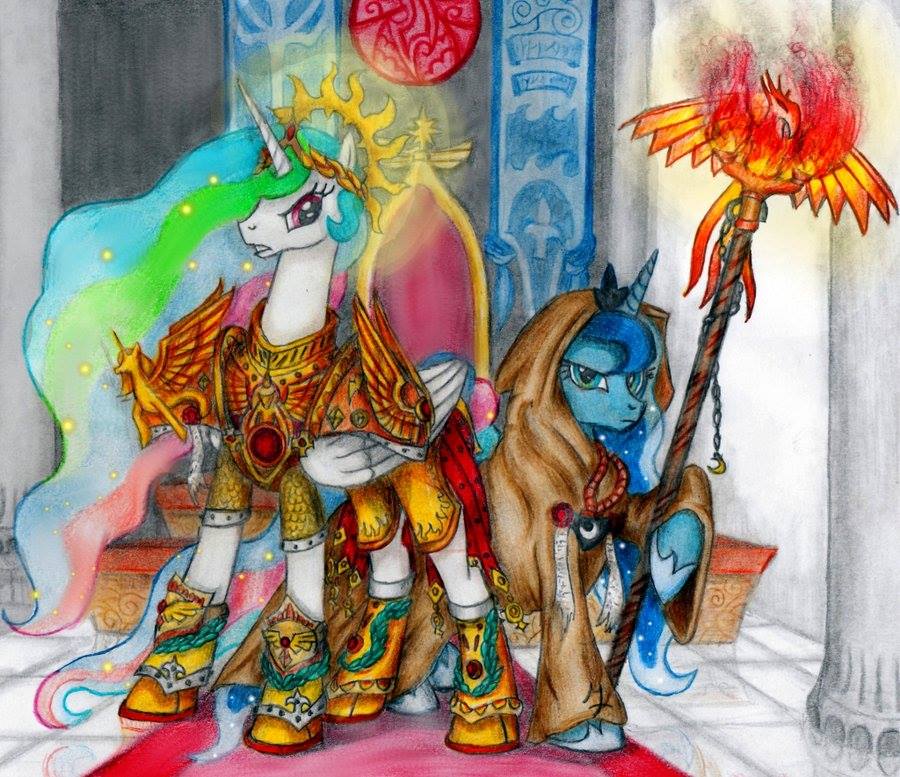
Which is what prompted me to object to someone who recently claimed that MLP canon has no religious aspects. Excuse me?

(non-MLP fans can probably stop reading here. Rest of the post likely won’t interest them.) Quoting myself:

I think you’re coming at this from a very modern/western perspective, which is why I disagree with you.

I consider Luna/Celestia to be much like the Greek/Roman pagan gods. They are basically just super-powered humans. They can throw lightning and they are nearly immortal, but they lust and drink and make mistakes just like humans did. They could be killed (with great difficulty), and they had clashing desires and goals that would bring them into conflict. Nonetheless, they were gods, and there are very few historians that wouldn’t consider this a religion.

(responding to “Celestia doesn’t lay down a moral code”) – Morality being the domain of the divine is a monotheistic invention, MANY religions don’t make the claim that what is moral is determined by godly fiat. Euthypro’s Dilemma comes to mind, but this is but one example among many.

(responding to “if you can see them, they don’t count as a god”) – Worshiping people you can see as gods has a long tradition in history. Many rulers were worshipped as living gods, from the Pharaohs down to pre-WW2 Japanese Emperors. I don’t think you can say that their religion didn’t count and was no more than “admiration” just because the worshippers could see their god.

Luna/Celestia worship wouldn’t count as a religion only if you restrict your view of what makes a “legitimate” religion to the modern purified theology of the Euro/American Christian tradition. Not surprisingly, this school of thought tends to heavily favor Protestant & Catholic views. :) Under a wider historical perspective, MLP has a perfectly workable religion.

The counter to my position is that none of the ponies are shown actually worshipping Luna/Celestia. Which, ok, fair enough. But hey, it’s a cartoon for American kids… I’m pretty sure that wouldn’t fly. :) Sometimes you gotta go on the implied.

Feb 132014
 

Wool1Wool, by Hugh Howey

They’re back! I did not abandon these reviews, I’ve simply been unable to do them for a while. Nov/Dec we only do one book per month, due to holidays. Then I was sick one week, and I didn’t feel I could do an honest “Book Club Review” if I didn’t see the book discussed in an actual book club. And after that we read a sequel to which I hadn’t read the original yet, and I couldn’t read both books in time for the meeting. So, after many weeks, finally I got to see my Book Club friends again yesterday! Yay!!

On to the review.

Synopsis: A generation-ship story set on post-apocalypse Earth, with a few twists (which I won’t spoil). Or: Fallout, before they opened the vaults.

Book Review: Another well-regarded self-published book which, as I’ve mentioned before, inclines me to want to love it and see it succeed. It is very competently written, at the level of many “traditionally” published authors. I loved his portray of a society on the edge of collapse, too complex for any individual to fully understand, so everyone desperately tries to keep it running just one more generation and hopes things won’t fall apart in their own lifetime. But as the book progressed, it started to lose its luster. As a fellow book clubber said: “Howey is very good at writing personal interactions, and politics. He’s not that great with the standard action-adventure fare. The first half of the book plays to his strengths, and the second half of book plays to his weaknesses.” This was a common consensus, so I’m including it. Despite being lengthy the book was a fairly quick read. However, in the end, it won’t stick with me. There was no soul-wrenching emotion, no biting insights, nothing that really spoke to me. I’ve already forgotten much of it, and by this time next year I don’t expect I’ll have any real memories of the book itself. It wasn’t bad, but my time is limited. Not Recommended.

Book Club Review: This is actually a pretty good book for a book club. It’s got a lot of good points, and a lot of flaws. The latter is primarily due to the genre – as Charles Stross has pointed out (in a post I can’t find now) Generation Ships are actually impossible unless you’re literally recreating an entire biosphere and putting an engine on it. Either you’re willing to gloss over the occasional suspension-of-disbelief-breaking for the sake of the story, or you aren’t. As such everyone will find something they feel is unrealistic to the point of forehead-slapping. The interesting thing is that the part that someone really loves, and the part that someone really dislikes, is different for every reader. Comparing which parts stood out for each person (both in good and bad ways) is fascinating, and reveals a bit of each reader’s life experience and expertise. You also get to learn a bit about psychology/sociology/engineering/whatever that reader’s specialty is that was violated. :) Also hearing if they thought the story was good enough to hand-wave the violations or not, and why, is great. Everyone had something to say, and we had one of the highest turnouts ever for this book, even though no one considered it among their favorites. So – Recommended.

Feb 122014
 

kristen-stewart-2I don’t get poetry. Sure, there’s a couple poems I like (literally, I can think of two). But for the most part it completely goes over my head. I much prefer poetic prose such as (if you’ll excuse me using my standard example) Comes The Huntsman.

I get spoken poetry. I love Storm and What Teachers Make, when performed. Because the emotion is in the performance.

So when I see people bagging on Kristen Stewart’s poem, I find myself very suspicious. I read it, and to me it looks just like most other modern poetry. I suspect that if the author was unknown, this wouldn’t be viewed as bad. Maybe not great, I dunno, I can’t judge poetry.

I think 95% of the ridicule that’s being thrown at it is by people who just dislike Kristen Stewart for whatever reason and want to hate on anything associated with her. I agree that she’s bland, and a poor actor her acting in the Twilight movies was uninspired. But I don’t see anything to separate this poem from most other poetry I’ve run across.

Maybe I’ve only ever been exposed to bad poetry? I suppose that would explain my dislike of it.

Feb 112014
 

How-to-treat-a-muscle-tearI have a problem with the old “No Pain, No Gain” saying. Pain is almost always a sign you’re damaging something. If your workout hurts, you’re probably doing more harm than good to your body. That saying is responsible for a lot of injury.

Furthermore, it is incredibly counterproductive. I’m sure it’s driven a lot of people away from exercise because they believe it should hurt. If something hurts them, people will stop doing it. I would. Any workout routine that ends up causing pain is dooming itself to extinction.

This extends to soreness. Doing plenty of stretches – before, after, and even during the workout – helps prevent soreness. Stay hydrated too. But if you end up sore the next day you are negatively impacting your life. When I’m sore I’m less capable of doing anything physical, which defeats the whole purpose! Sometimes it’s hard even to do basic movements like walking. This is unacceptable. Soreness means I’ve been overdoing it. I should scale back the weight or the reps.*

Not that working out should be easy. It should be hard. It should be a LOT of work. By the time I’m done I’m breathing very hard and covered in sweat. Generally my blood sugar is exhausted, my head is kinda fuzzy, and I can’t have coherent conversations until I’ve eaten something. I’m useless for any sort of physical activity for over an hour. Since exercise was originally an alcohol-replacement for me, this high is a feature. :)

But even if it wasn’t, it’s still worth the loss of productive hours, because it makes the rest of my life even more productive/enjoyable. It’s like sleep. I hate losing a third of my life to this awful catatonic state. But when I try to reclaim even an hour per day from sleep my entire life spirals into horrible awfulness, full of depression and absolutely lacking in any sort of productivity. It is, overall, much better to invest those hours in sleep so I can be effective during my waking hours. Exercise has the same effect, except it demands far fewer hours per week.

But hard work is not the same as pain. Hard work, yes. Pain, no. If your workout causes you actual pain, scale it back. Reduce the weights, or the reps, or the duration. It shouldn’t hurt.


*I have heard that when you first start working out you’ll be sore the first couple weeks regardless of what you do. It’s been long enough for me that I don’t recall my first few weeks anymore. :/ This might just be something that needs to be pushed through.

Feb 062014
 

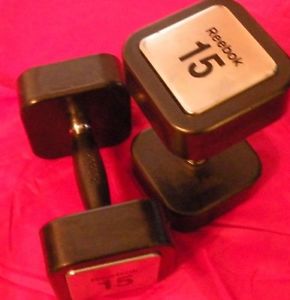
dumbbellsAs I’m sure we all know by now, regular exercise is an amazing life hack. Not just via the traditional benefits to your health, attractiveness, and life expectancy. It also improves your sleep, mental and emotional health, and gives you a Halo Effect boost. And it significantly improves intelligence, memory, and learning in a wide variety of ways, and delays cognitive decline and memory loss later in life.

If you aren’t exercising already, it’s a good idea to figure out what the greatest obstacle stopping you is, and demolish it. It took me many years to finally admit to what mine was, and I think it’s probably not that uncommon.

Exercising is goddamned undignified.

Your clothing gets soaked in sweat and sticks to you. You get all flushed and red, and you make all these stupid faces. You emit all sorts of grunts and noises. The whole damn process is an embarrassment.

So here’s the most amazingly easy way to get around this that I’ve ever discovered, and it works like a charm.

Exercise alone, in your own place, behind locked doors. Seriously.

All you need is a pair of dumbbells. They cost a little over a dollar per pound, and if you’re just starting out you won’t need very heavy weights. Hell, if you really want to cut start-up costs you can get by with just one (although that’ll be a bit less efficient).

Everyone’s always going on about all this equipment you need and how expensive it is. Bullshit. A pair of dumbbells and your own body weight is more than enough to work out almost every major muscle group. They take up almost no space and are easy to use.

Everyone’s always going on about how you need others to motivate you to work out, using peer-pressure. Those people are obviously nothing like us, because the LAST thing I want to do is work out in front of someone. It’s this kind of advice that keeps introverts out of shape.

How awesome is working out alone? Let me count the ways.

  1. You can be as undignified as you want and it doesn’t matter! Make faces, grunt and huff! It’s all good.
  2. You can strip naked. Not only does this prevent gross sweaty clothes from sticking to your body, it also helps reduce overheating, letting your workouts be more efficient. I can’t over-emphasize just how cool this is.
  3. You don’t have to drive all over town, wasting your life in further commuting. All your work-out time is ACTUAL work-out time.
  4. It doesn’t cost anything (after the initial purchase)
  5. You don’t have to be bored – you can have stuff playing while you work out! Probably not anything visually intense, but things that work mainly via audio are great. I always use this time to watch The Daily Show and The Colbert Report.

Lookit that, avoiding the major deterrent to working-out also nets you four bonus upgrades! And your life is better in so many ways.

In summary: you can be introverted and still work out. Just rejected the extrovert paradigm. They don’t know shit about us. :)

Jan 282014
 

mountain-top-viewIt’s good to clean up after oneself immediately whenever possible, but sometimes it’s not possible. Urgent tasks take precedence, or in some cases it’s actually more efficient to save up a chore and then do it all in one long go (like laundry).

Likewise, it’s good to keep a stress-free life, but sometimes unavoidable complications accumulate and weigh down on my mind, draining my mental reserves.

I’ve found a wonderful way to kill both this birds with a single stone. It is the Zen of Home Maintenance.

I used to feel overwhelmed when my house got too messy. So much to do! Where to start? No matter what I did, it wasn’t even a dent, there was so much more!

Now I just grab the nearest thing that is not in its proper place. I take it to its proper place and set it there. If there are any other things who’s proper place is in the same vicinity that I can grab along the way, I do that as well. It’s more efficient to make less trips, so I get a small jolt of pleasure from that – efficiency feels good. Efficiency is what has brought us to our modern quality of life. It’s just a game, but it’s fun.

(Do your things not have a proper place? Then they’re probably “stuff” and not “things”. You’ve made them homeless. “If you value what you have, then give it a home, or stop pretending you need it.”  Do you have too much stuff, but can’t tell what’s worthless “stuff” and not valuable “things”? Maybe you should move more often.)

Then I do this again. Pick up, evaluate, move, put down. Pick up, evaluate, move, put down. It becomes a dance. I float back and forth through my home, every step transporting an item from a messy spot of chaos to a precise ordered location.

Pick up – I identify a seed of chaos in my surrounding. I take that chaos into myself, cleansing it from the world. Now it burdens only me.

Evaluate – I can take this chaos within me and transform it. The unique powers I’ve been imbued with as a human allow me to visualize the order that can be, to see the potential for beauty in this destruction.

Move – Through an act of physical manipulation I can impose my will on the chaos. My body is my tool, it reshapes the environment in my image.

Put Down – I withdraw the object from myself and place it back into the world. Formerly of chaos, I have elevated it to order, and the world is better for my efforts.

Repeat. One, two, three, four. One, two, three, four. Push back the ever-encroaching entropy. As life-forms, at our most basic we are the incarnation of neg-entropy. It fulfills something deeply ancestral, to reduce the local entropy… something pre-vertabrate, even pre-multi-cellular. The first self-replicating molecules grasped in the chaotic soup around them and brought together the building blocks they needed, recombining them in a very specific order. One, two, three, four. One, two, three, four.

If you’ll pardon me the poetry.

And as you progress you’ll find less and less chaos around you. You have to start going further afield to find seeds of disorder to re-sow. Until, eventually, there is nothing left to clean. Everything is where it should be. The world is at rest, and it lowers you gently from your trance. It is a little sad to stop in the work, much as it is sad to finally reach the very top of a mountain and have no higher to go. But you have achieved something. And now that you are refreshed and at peace, you can face the day again knowing you’ve already accomplished something of value. The next task doesn’t look as daunting from here.

Jan 242014
 

Anne_Bradstreet_Memorial_N_Andover_CemIn a recent comment, Samuel asked if I’ve considered self-publishing. I had a similar IRL conversation not too long ago as well.

Yes, I have considered it. And it brings one back to “Why do I write in the first place?”

Ultimately, I write because I have something I want to say. The problem is, I don’t know if I’m saying it very well. I think I am. But generally EVERYONE thinks that they are. I acknowledge that I am in the worst possible position to evaluate my work. And the thing is, I don’t want to end up like one of those auditionees on American Idol. The ones who are convinced they are amazing, but who are so objectively horrible that even someone like me (with a tin ear) can tell it’s bad. They’re always shocked and dismayed when they’re told they’re awful, sometimes simply refusing to believe it… but they are so bad. And it’s because the only people they ever sang for were their friends and family who didn’t have the heart to tell them they sucked. Who had a subconscious motivation to praise them, and thus maybe even convinced themselves it wasn’t that bad. These people were terrible and they never knew.

I wrote before about how much I appreciate honest feedback from my friends, but I know that even they pull their punches. Publishing Editors, on the other hand, have no motivation to make me feel better. Their only motivation is to print the best stuff they can. So, like praise from Simon Cowell, their approval means a lot. It means that someone who doesn’t give a shit about me and just wants good fiction, someone with a refined palate and a good sense for the genre I’m writing in, thinks the work itself is good.

Of course popular approval can be just as rewarding. HPMoR, after all, is simply an incredibly popular fanfic. Fanfic is generally looked down upon by The Gatekeepers of Fiction. But as Rachael Acks says (one of the few actual published authors I know IRL) –

“I wrote one short little fic after I saw Thor: The Dark World and in the time since I put it online I have literally received more feedback on it than I have in total for every piece of original work I’ve ever published. It’s like pure black tar heroin for the sad little twitching addict that is a writer’s ego.”

God yes, this, this right here! I know the podcast is somewhat popular, it has over a million downloads. Every episode gets about a thousand downloads in the first week and steadily climbs to a few thousand over time. Those numbers mean it’s good, right? Yet there’s always a voice inside saying “Eh, it’s not that great.” I get about one email a month saying “Hey, I love you’re podcast, keep it up!” and those mean so much more than looking at download numbers. Somehow. Even though it’s just one email, vs thousands of downloads. Emotions cannot Shut Up and Multiply, they cannot math.

So could I self-publish? Maybe. But unless it was on a major forum like FanFiction.net it wouldn’t get enough readership to fuel that insecure, approval-hungry writer ego. And even if I could write fanfic (harder than one may imagine, staying true to other’s characters), it would never make it into the truly prestigious awards like the Hugos or the Nebulas.

Because I’ll admit – ultimately that’s the only thing that’ll ever really convince me. I read lots of fiction that gets published that I think is crap. Not to knock any published authors! They obviously know what they’re doing, because they’re published and I’m not. There’s just some things I read that I think “Wow. How did this ever make it into print??” And that knife cuts both ways. If that drek can get into print, than obviously if I get into print I could be as bad. I could be awful even AFTER getting published! How the hell am I ever going to know if I am actually accomplishing what I want to accomplish? How will I know I’m really good, and not just some poor shlub surrounded in his own Matrix-like bubble of people who want him to feel good about himself, and editors with questionable taste? The major awards are the only answer I can think of. Until then I am no more a writer than I was back in 3rd grade when my parents put my “poetry” up on the refrigerator.


This post has gone on long enough, but for those of you who say “Who cares what some critics say? They don’t get any right to decide what’s great.” On the one hand, yes, I agree. Often amazing works are overlooked (*cough* Vellum *cough*). This is worse in some fields… the Academy Awards for movies (aka The Oscars) are so mind-bogglingly retarded that most people I know don’t even bother following them anymore. Same with The Grammys. They simply don’t track quality anymore. But, as Bad Horse says –

“And yet I realized, as 2AM approached, that I cared about my story’s ranking. I cared a lot. Why? I already have my opinion of it, and the opinions of some people whose judgement I trust more than voting results.

[…] So do I care because I want to know that other people like what I wrote? I don’t think so. How much of a warm fuzzy feeling (or deliciously cold and dark) I get from my stories isn’t affected by the thumb counts. That just affects my opinion of the general intelligence of the human race.

I guess I just like the acclaim. Hmm. Not very logical of me.”

I’ve always looked up to the authors who win those awards. And until that is finally ground out of me decades from now, I will continue to care about them. Even though I can’t support it rationally.