Apr 112014
 

drowned citiesThe Drowned Cities, by Paolo Bacigalupi

Synopsis: Child soldiers in a crumbling American South try to survive.

Book Review: An interesting mix, because this is marketed as “YA”, but the subject matter really pushes the boundaries of that. It’s rare (to say the least) for YA to feature amputation, pre-teens using drugs/alcohol and visiting brothels, and committing war crimes. However the writing style often feels like YA, which is unfortunate.

The book has an extremely strong setting, I loved the over-grown jungles and crumbling cities of a war-torn South. The characters are all vibrant and distinct. They really grab you, and you feel like you would love to meet any of them (not because they’d be pleasant to be around of course, but because they are so interesting). The plot moves along at a good clip, and there are a lot of things in this book that will stay with you for quite a while.

On the other hand, the prose itself is lackluster. It lacks a strong voice, and never gets very intricate. It is also sometimes too un-subtle (and I am not a subtly fetishist). I often hear “Well, it’s YA, you have to make allowances for the book due to the target audience. It won’t be as intricate as an adult novel.” And frankly I think that’s intentionally setting the bar low. It’s the same complaint people have about self-published stuff. With the excuses of “Well, it’s self-published, you gotta let some things slide” it just lowers the level of the entire field because no one strives for excellence. This is one of the reasons I don’t really like to read YA. Drowned Cities could have been an amazing novel. But the excuse of “it’s YA, it doesn’t have to be as polished” let it aim lower.

Also there is too much reliance on Tool to solve every problem, and the ending is somewhat unsatisfying.

However the book is so good in so many other ways it’s really hard to come down hard on it. It is, overall, good. If you like YA (and can handle some atrocities), I’d definitely recommend it. If you’re like me and tend to avoid YA, I’d wish the fates were different but say not to make a special effort to pick it up.

Book Club Review: We had a massive turn out for this meeting. Everyone had things they wanted to say. Things they loved that they wanted to enthuse about with others, and things that rubbed them the wrong way that they really had to get out of their system. I mentioned in my introductory postthat generally the best books for book clubs are ones that have great highlights and also substantial flaws, so there’s things to talk about other than just repeating “Yeah, that was great.” This is one of those books.

It also, like all of Paolo’s writings, has a lot to say. Political/moral/social things, which people can agree or disagree with at length. It was pointed out by another member that this book takes the position that there is no such thing as a just war, or as virtuous violence. If fighting erupts in an area they only sensible thing to do is walk away, leave the animals to wipe each other out, then maybe come back later to pick up the pieces. Violence only ever feeds more violence. Intervention, even for good reasons, will only make things worse. I don’t know if this is the author’s personal position, but it was well presented in the story and made for some interesting comments.

The discussion was insightful and fun, and no one disliked the book. Definitely a solid win. Recommended.

Apr 102014
 

The-PrincipleTell everyone you know – a Christian documentary says famous physicists and cosmologists accept the word of God: the Sun revolves around the Earth!

There’s been a bit of a kerfuffle recently about many well-known scientists “participating” in a documentary that claims modern cosmology is coming to accept that the earth is the center of the universe. And which Kate Mulgrew (of Star Trek Voyager) lent her voice to. Of course none of this is true in any sense that matters – their voices are in the documentary, but they have been lied to and extensively quote-mined to make it sound like they are saying the opposite of what they actually believe. The standard, sane position that the Earth circles the Sun, which has been settled for centuries.

Naturally a lot of people are saying this is reprehensible. But I think this is one of the best things a group could do to discredit biblical literalism.

I was raised Jehovah’s Witness. Like all fundamentalist religions they can’t abide evolutionary theory, and they have their own handbook on how wrong it is. Like any good Jehovah’s Witness, I studied it so I could be ready for my biology teachers. Being a very geeky kid, I would argue online with non-theists and non-JW christian kids. It was through the wonder of the internet that I was first exposed to fact-checking, and was shown that the many biologists that were quoted in the JW book as coming out against evolution where doing nothing of the sort. Their quotes were plucked out of context to make them sound as if they were saying the opposite of what they were ACTUALLY saying. In one case it was almost literally a case of a biologist saying “I would never say that evolution is a crock of shit” and the part of the quote that made it into the book was “[…] evolution is a crock of shit!”

As an idealistic child who had always been proud of how honest and upstanding Jehovah’s Witnesses were, I was shocked. And I came to realize that if they were this deceptive about the scientists they quoted… they would twist around just about anything to seem to support their conclusion whether or not it actually did so. Evidence presented by the JWs was NOT TRUSTWORTHY on its face, because it was being presented by the JWs.

If I wasn’t an argumentative and precocious geek kid, I may never have stumbled across this information. Evolution is still seen as controversial by many people, almost no one questions a quote presented in a printed publication, so what trusting christian would go look up the quotes of every scientist (in a book their church presented!) in order to get the original context and intent?  Who knows how long it would have been before I realized these people are liars?

On the other hand, nearly everyone realizes that Flat-Earthers and Geo-Centrists are complete idiots. That the Earth orbits the Sun is common knowledge. If you see someone saying the Earth is the center of the Universe, you already know they are crazy, simply because they are claiming that!

And if you see a religious group producing a movie filled with respected scientists that have been quoted agreeing with them, no one thinks “Huh, they must be on to something,” or even “Those scientists are clearly idiots.” What they think is “Oh, a group of liars has taken a bunch of scientists’ quotes out of context, manipulating their words so it sounds like they’re saying the opposite of what they really believe.” It creates a very strong association between “Religious groups claiming things contrary to science” and “Liar idiots.”

It makes them look so incredibly sleazy and awful, that everything they say going forward will be more suspect. This act of deception makes them look so bad that it behooves us to spread their message far and wide.

I don’t think they could have hurt themselves more if they tried. It almost makes me think that this could be a false-flag operation by an atheist group to discredit religious fundies.

I’ve long suspected the same thing of Fred Phelps and the Westboro Baptist Church, incidentally. That group has done wonders for the gay-rights movement, by making the anti-gay bigots look so fucking ignorant, hateful, and despicable. Honestly, could a gay group wanting to turn popular opinion against the anti-gay hordes do ANY BETTER than to pretend to Hate All Fags, and then picket military funerals in the most despicable manner they could get away with? It’s genius. I don’t think it’s true, and that makes it soooooo deliciously ironic as well. Thanks for making gay-acceptance come quicker Fred Phelps!

But I’m getting off topic. Share this far and wide!

Apr 092014
 

You’ve probably already heard of the HeartBleed Bug. If not – here you go.

In short – Do you use passwords on the internet? Unless you use a unique password for every site, it’s time to change all of them. ALL OF THEM. (Although maybe wait a couple days for everything to get patched first, or even your new passwords will be compromised.)

I have been referred to a couple good unique-passwords-for-every-site-without-having-to-remember-a-million-password/site-combination resources (LastPass and PasswordMaker).

Obviously even unique passwords will have to be changed on compromised sites. And it may still behoove you to change everything.

But the really interesting part was the passwords I didn’t necessarily have to change. Of all the sites I use, exactly two have completely unique passwords. My bank account, and my podcast. It became immediately apparent what is most important to me.

Apr 032014
 

1148969_738229362884591_762369565_nThe Secret Gnostic Key to Aronofsky’s “Noah” that Everyone Missed – I always thought it was pretty obvious to anyone who really read the bible (at least the English/Protestant version that I got) that the OT god was the bad guy. He managed to win, and so He re-cast the serpent as evil and everyone worships Him in error, but somehow the record of his actions managed to survive (even with the spin). I’m glad to see there’s a whole lost religious tradition that agrees. It means there have always been some people in history that have at least one skill point in Reading Comprehension.

In the decade leading up to the big coal-ash spill, West Virginia had been deeply slashing regulations to appeal to the Coal Dragons. To the point that the government couldn’t even effectively go after willful violators. Humans – reaping what they sow, since forever.

Breaking through nihilism
“The actual fundamentals of the universe that we have learned from centuries of investigation are so completely and utterly alien to we tiny little humans and our worldview that they cannot even be called malicious!
… Because the universe lacks any agency, it cannot actually stop us.”

Avoid Catholic hospitals, they might kill you if it means not having to end a pregnancy that isn’t viable anyway. Unfortunately, some people don’t have any non-Catholic options, as the Church keeps buying up hospitals. Why the hell are we allowing religious organizations to buy hospitals???
Oh, right, because religions are big business. 
“doctors … did not tell her that the fetus could not survive or that continuing her pregnancy was risky and did not admit her for observation.

She returned the next morning, bleeding and in pain, and was sent home again. That night she went a third time, feverish and writhing with pain; she miscarried at the hospital and the fetus died soon after.

the United States Conference of Catholic Bishops … require Catholic hospitals to avoid abortion or referrals, “even when doing so places a woman’s health or life at risk.””

TYPICAL MIND AND DISBELIEF IN STRAIGHT PEOPLE
…”imagine that you’re one of those people Dan Savage was talking about – a closeted gay guy who doesn’t realize he’s a closeted gay guy. He just thinks – reasonably, given his own experience! -that the natural state of the human male is to be attracted to other men, but that men grudgingly have sex with and marry women anyway because society tells them they have to.
In that case, exactly the anti-gay position conservatives push makes perfect sense for exactly the reasons they say it makes sense.”
BWA HAHAHAHA!
It’s sad, but in such a funny way.

The Germ Theory of Democracy, Dictatorship, and All Your Most Cherished Beliefs. The title pretty much says it all, but…
“If promoting democracy and other liberal values is on your agenda, he says, health care and disease abatement should be your main concern.”
Still a new idea, so take it as informed speculation. But worst case scenario, you’ve still helped to prevent/cure diseases, which is awesome in its own right even without the democracy bonus.

Due Process When Everything Is a Crime
“a popular game in the U.S. Attorney’s Office for the Southern District of New York was to name a famous person—Mother Teresa, or John Lennon—and decide how he or she could be prosecuted”

“the actual decision of whether or not to charge a person with a crime is almost completely unconstrained. Yet, because of overcharging and plea bargains, the decision to prosecute is probably the single most important event in the chain of criminal procedure.”

8 Reasons Straight Men Don’t Want To Get Married
I’d also like to add #9: If both partners work, there are almost no tax benefits to being married, and nowadays almost always both partners work. Can’t even bribe people into marriage anymore.

Did you buy almost any piece of electronics between 1998-2002? Fill out a 3-minute claim (easiest one I’ve ever seen) and get back $10+. Unless you make more than $3/minute already, this is worth your time.

A friend’s Facebook flare-up reminded me of this. A large black dude talks about what it takes to keep strangers from being scared around him. White guys often don’t realize this is a thing for women *all the time*.
Thinking people should automatically be comfortable around you just because you’re such a great guy is a hallmark of privilege, and the most privileged people never realize it.
“Now there are two ways I could react to these encounters. I could rail against people for being racist and sexist and size-ist (if that’s a thing) – I’m so gentle and warm and loving! How dare they act as though I’m not? That’s one way – and it’s the stupid way. The other way is to recognize that while I strongly dislike the fact that people see me as dangerous because of how I look, it is up to me to decide what to do with that information. If I don’t care about spooking my neighbours, I don’t have to shuffle my feet – let them deal with their fright. But if I do care, then I have to find some way of mitigating that fear so we can coexist harmoniously.”

Cory Doctorow: Cold Equations and Moral Hazard
“Every time you hear that education is vital and taking care of the poor is our solemn duty, but we must all tighten in our belts while our lifeboat rocks in the middle of the precarious, crisis-torn economic seas, ask yourself whether the captain of our lifeboat had any role in the sinking of the ship.”

If you click no other video this day… 50 Cent dubbed over Jehovah’s Witnesses trying to get deaf people to stop masturbating

and the translation: http://www.youtube.com/watch?v=ytYykOop6HI
(don’t know sign language so I can’t verify it’s accurate. However it does accurately represent what I was taught as a kid.)

I am forced to approve of this. Moonrise: A MLP Symphonic Metal Opera

Apr 012014
 

Rebel-Without-A-CauseMe and my SO saw Rebel Without A Cause for the first time yesterday, which has long been considered a classic. It didn’t age well. Specifically, changes in social norms have made it impossible to relate to anyone we were supposed to relate to.

Before before we begin, can I ask if there was a shortage of teen actors in the mid-50s? I’ve never seem so many 30-year-olds attending High School gathered in one place!

Back on topic. Overall this is a pretty good flick about being an isolated teen. No one understands you, your parents suck, and bullies are making life terrible. It has a great “things spiral out of control and tragedy ensues” arc, which I normally enjoy quite a bit. But unfortunately, there is no way to identify with anyone in this movie anymore. The creatures on screen are weird alien lifeforms that you don’t want to associate with, and so it’s much harder to identify with their angst.

James Dean’s character – the protagonist in this piece – isolates us in the first scene of the movie. He complains to a cop that his mother is too bossy with his dad, and then says (direct quote) “If he had guts to knock Mom cold once, then maybe she’d be happy and then she’d stop picking on him.” Yes, that’s right. The lovable rogue is an advocate of spousal abuse. If only his dad would beat his mom then she’d be soooo much happier, and everything in their family life would be great! This is the reason I can’t watch most things set in the 50s/60s (I couldn’t even finish the second episode of Mad Men). They make my “murder all of society” levels rage into Hulk-Smash mode, and I can’t enjoy shit.

This isn’t an accident either. Later in the movie his dad is shown to be a weakling that his son can’t respect because, when he drops a plate of food he was carrying, he crouches down and starts cleaning it up!! “WTF Dad?? Cleaning is WOMEN’S work! Get off the ground and make the bitch do it!” These aren’t Dean’s exact words, but that’s the message that comes across.

And this makes it very hard to relate to him in his other trials, particularly his girlfriend issues. The female lead in the movie is established to have an abusive father, and so we figured this would be a movie about the cycle of abuse, and how victimizers seek out victims, etc. Nope. Instead they make lovey-eyes at each other, and have a typical teen romance. Which was so nausea-inducing that we kept interrupting the screen with things like “I can’t wait to make you my wife, so I can beat you every day,” and “Once we live together in this mansion, I won’t have to go to your father’s house to beat you.” Etc. I guess in the 50s it was considered cool to beat a mouthy woman unconscious. You could be a proponent of that and still be taken seriously as a gentle romantic lead. But morality has progressed to the point that all you can think of when you see James Dean’s character is “Vile Wife-Beating Piece of Shit.”

The other major character we’re supposed to feel sympathy for is a younger boy who has basically been abandoned by his parents. He hasn’t seen his father in years, and his mother leaves him alone for weeks. In the end it’s the family’s housekeeper who weeps over his body crying “This poor baby got nobody! Just nobody!” It would have been a powerful scene, if we could in any way feel sorry for the kid. But honestly, we’re glad he’s dead.

Because ALSO in the first scene of the movie he’s introduced as a serial-killer-in-training. Seriously, he gets his mother’s gun, gets some puppies, and then MURDERS THE PUPPIES. I guess in the 50s they didn’t realize that cruelty to small animals (especially killing them) is an early warning sign of psychopathy? The cops let him go with, I dunno, a warning?

I seriously thought he was being set up as the villain of the movie. That in the end they’d have to fight off his crazy murder-spree or something. And I kept thinking I would be right! The kid always talks and looks creepy. He stalks James Dean throughout the whole movie. He’s shown constructing elaborate lies about their past relationship. Every single sign points to “this kid is just a step away from being Ben Foster in “Hostage”” (fucking amazing movie, btw). But then at the end it turns around – he gets picked on and bullied, and we’re supposed to feel sad for this poor broken kid, and sympathize with him. No. Nope. Nuh-uh.

I think we (me and SO) need to restrict ourselves only to movies made post-1980-ish. The morals of the past are so bizarre that it’s hard to relate to them. My Fair Lady had a similarly shocking ending. It’s hard to imagine that our grandparents grew up in this sort of environment. I am much more impressed with their ability to adapt and grow as morality evolves, based on this.

Mar 272014
 

Tregillis-SomethingMoreThanNightSomething More Than Night, by Ian Tregillis

Synopsis: A murder-mystery set in the near future, told by two protagonists. The murder victim is an angel. One of the protagonists speaks entirely in 40’s Noir patter, and is also an angel. The existence of angels is not well known.

Book Review:  I don’t know where to begin on this review. The narrative style is amazing. If you love over-the-top-Noir like I do you will get a huge kick out of this. There are some beautifully crafted sentences. If you don’t smile while reading Bayliss’s POV chapters you may have misplaced your soul.

The plot is good, and manages to avoid several common tropes which I don’t want to get into for risk of spoilers. Let it be said that if you groan and /facepalm when running into received-wisdom Deathist tropes in standard fiction, you will be pleasantly surprised by their avoidance here. There is a strong thread of transhumanism throughout.

On the minuses, the settings/sense-of-place was sadly lacking. And while it starts strong and ends strong, it drags a bit in the middle. Finally, the climax is a bit lacking in catharsis.

Also – have Wikipedia open nearby while you’re reading. It’s not necessary, but it did increase my enjoyment of the book. It is quite obvious that the author works at Los Alamos. I, for one, love learning while I’m reading. :) You will be entertained and challenged at once!

All in all, a good read. Recommended.

Book Club Review: There was a fair bit to talk about in this. It had some flaws to offset its successes, which is always a plus. It gives people something to disagree about. Several of our members thought the Noir patter was over-the-top and should have been dialed down. There was also a strong bit of disagreement over whether the author “cheated” near the end, which was exciting.

Unfortunately there was no theological debate to get into, because the angels in SMTN are not religious entities. They are extremely-powerful, trans-dimensional, immortal and semi-incomprehensible beings. Their physical descriptions are informed by biblical accounts, and there’s theological influences on the narration, but ultimately there are basically zero ties to religion as we know it. This isn’t a bad thing– Tregillis simply wasn’t writing a religious story. That would have been a very different book. But don’t go into it expecting this to spark theological conversation.

There are, however, discussions to be had about the choices made by both the angels and the humans at the end. Themes of responsibility vs servitude. The book also comes down on the practical side of the power-vs-morality struggle, which is fortunate for the humans in the end, but feels like it was left unexplored. It’s a bit too pat that the human heroine managed to find such an optimal solution that was near perfect in every regard. Maybe that’s just my dislike of happy endings. At any rate, I look forward to a sequel that reveals all the choices made at the end where actually disastrous. ;)

Yes, also Recommended.

Mar 252014
 

hugo-awardsThe deadline for the 2013 Hugo Nominations is almost upon us! It seems less popular to blog about who you’re nominating this year, but I think it’s a fine tradition, so I’ll be continuing it myself.


Much like last year, I’ve not had much time for reading this year, so my list is woefully short. But that just means that other people can still sway me to fill my vacant spots with their own favorite story recommendations if they hurry. :)


Short Stories

A Plant (Whose Name is Destroyed), by Seth Dickinson
audio

I’m a sucker for stories about gods. Big gods, small gods, angels, devils. If the story is good it reaches inside me and grabs me by my sense of the divine. It’s a very strong sense, and if I hadn’t been born into such a ridiculously literal religion I might not be an atheist. Now that sense needs to find expression in other ways, and by far the best way is amazing mythological god-stories, like this one.

A Plant explores a relationship between a mortal and a god. The consequences of omniscience on a being who needs to believe he has free will. The fallout of subconscious omnipotence on causal physics. It is sweet, and it is sad, and it is very human. Also, I believe this story counts as rationalist fiction!


Difference of Opinion, by Meda Kahn
audio

A great story about a highly autistic (but functioning) person, and how she gets around in a world ruled by neuro-typicals. I have to say I cannot believe how little buzz this has gotten, especially when compared to last year’s horrible “Movement.”

The stories are similar in that they center on an autistic character, in a world were a cure for autism is possible, and the protagonist does not want it. But while Movement is unqualified trash, Difference of Opinion is beautiful and terrifying and funny all at once.

The protagonist of Difference of Opinion is a real person, with agency and motivations and character. The protagonist of Movement was an object. Things were done to her, but she was not a person. And this wasn’t just a matter of how others in the story related to them – this was how the authors treated their characters. Meda Kahn respects her protagonist (Keiya). She sees her personhood and clings to it fiercly. That is why it is horrifying when society tries to alter her personality – the autism is part of what makes her who she is. They’re killing the person inside the body and replacing her with someone that fits into society better.

Nancy Fulda seems to think of autistic people as toys, or sympathy-receptacles. They are there to be babied and felt sorry for. They are useful as dependency super-stimuli, rather than as people. It’s kinda disgusting. And that’s why I sympathized with those coming to fix her autism. They were removing the thing that caused everyone – including the author – to treat her as a toy. Better to not be used like that.

Meda Kahn touches on this in her story as well. At one point her character says:

“(2) They want you to stay alive for them. For their inspiration, their edification.

(3) They start doing things like patting you on the shoulder and telling you they’ve been so privileged to meet you, that you’ve changed their outlook on life.”

Not only is it a respectful treatment of people with autism, it has an amazing prose style that really feels alive and speaks to you. And it has a tragic story about the powerless trying to stand up in the face of a remorseless, powerful machine and how society will chew you up and spit you out. I’m torn between this and A Plant for best story of the year. They’re both amazing.

I’d like to add that the audio version of this story is fantastic. It captures the voice of the character very well. You’ll remember Anaea Lay’s delivery of “Well fuckballs” for a long, long time. :)


All That Fairy Tale Crap, by Rachel Swirsky

I’m not sure I want this story to win. I really dislike the protagonist. I tend to dislike stories about people who don’t give a fuck, and decide the best course of action is to burn down the world around them while they try to steal and exploit whatever they can on the way down. That being said, the world the protagonist finds herself in is shit, and you can’t say it doesn’t deserve it. The character is a powerless shlub doing what she can to flip off the system that fucked her over in the first place. It plays with fairy tale tropes and feminism tropes and post-modernism tropes, and then it gets all meta on you and makes a shoulder-rush right at the fourth wall. As much as I disliked the protagonist, I loved what the story had to say, and how it said it. I am as much a sucker for structure-play as I am for gods. And I gotta say, this story will stick with me for quite a while. That’s worth at least a nomination, if nothing else.


Novelettes

The Truth of Fact, the Truth of Feeling, by Ted Chiang

Look, it’s mutha-fuckin’ Ted Chiang, do I even HAVE to say anything else? The man is a god among short fiction writers. If you haven’t read it yet, you should. He brings his signature style and analytic mind to the subject of memory plasticity, and the fairly modern invention of historic truth. Every time I read something by Chiang I start seeing it more in my normal life. Just a few months ago, after a venerable guest at a gathering related a very humorous anecdote about something that had happened earlier in his life, I had the temerity to ask “But did that really happen?” To which a third party gave me an incredulous look and asked “Does it really matter?” I had to think about that for quite a while. And I’m still not sure I have an answer. The story had the truth of humanity behind it, and it was enjoyable. Does it matter if every bit isn’t literally true? I still think it does… but I’m not so sure as I used to be. And that’s the great thing about Ted Chiang’s stories. Even when you’re done reading them, they keep affecting your life and your thinking for years.


Novel

The Wheel of Time (the entire series), by Robert Jordan
I only ever read the first book, and I didn’t really care for it. However according to the Hugo rules it appears that a series can be nominated once it is completed if none of its component novels have previously been nominated for a Hugo. From the link “The administrators of the Hugos have declined to rule on this interpretation unless and until it becomes an issue, and therefore that’s precisely what Jennifer (and many other WOT fans) propose to make it.”

Um, fuck yeah. I love making trouble for the establishment. :) And Wheel of Time has a large enough following that it has a shot at making this happen. Let’s do it!


Something More Than Night, by Ian Tregillis

This is perhaps the only novel I read in the past year that was published in 2013, so it’s kinda a shoe-in for my nominations. :) But it is a fascinating book, half of it is written in a lovely 40s noir style that is just a pleasure to read, and it is well-written and strongly plotted, like all of Tregillis’s novels. A strong contender, and I like it!

As a personal note, it doesn’t tickle my “sense of the divine” that I mentioned earlier, because the angels/gods within it are not true Religious Deities. They are extra-dimensional creatures with incomprehensibly vast powers and different physical laws. It’s an interesting contrast.


Words of Radiance, by Brandon Sanderson

I’ll be reading this next month, so maybe I shouldn’t technically be nominating it yet. But the deadline approaches quickly, and the first book in this series, Way of Kings, was so fucking amazing that I’m willing to give this one a pre-emptive nod. I have confidence that this will be at least in the same league as Way of Kings, and thus entirely worthy of a Hugo nomination/win.


Dramatic Presentation (Short Form)

Game of Thrones, “The Rains of Castamere” 

Commonly known as The Red Wedding episode. Because c’mon.


My Little Pony: Friendship is Magic, “Castle Mane-ia” 

This series is great, and it really should get recognition for it. Castle Mane-ia was one of the best episodes of an already very strong season, and it fell in 2013. You may ask “Why not the season 3 finale (Magical Mystery Cure), which also fell in 2013?” Well, MMC is not as enjoyable if you don’t already know the characters and the world. It requires some knowledge of the ponies’ personalities, as well as the importance of alicorns. Castle Mani-ia, OTOH, is completely enjoyable by even a first-time watcher. It would make a better intro for the poor, deprived souls who might first be hearing of MLP from the Hugos (and I’m sure there will be some).


Welcome to Night Vale, Episode 19: The Sandstorm

I was reminded of this and had to add it after this post initially went up. How could I forget WTNV?? This episode showcased the best this show has to offer in terms of oddness, originality, and creepiness. And as I’ve said before, I adore structure-play, and the way the two episodes intertwine (you must listen to both 19A and 19B!) is fantastic! Episode 25 – One Year Later – is also great, and really has the most storyline and character development of any single episode (at least of 2013). However it requires so much back-knowledge of WTNV to really enjoy it that it wouldn’t be a good introduction to any new listeners. I’m going with The Sandstorm.


No Dr Who. I’m so sick of that over-played, over-hyped mediocre show.


And while I’m not trying to imply anything, The Sword of Good was released in 2013. It’ll never get through the crush of Dr Who and GoT noms, but I couldn’t not say anything. :)

Mar 192014
 

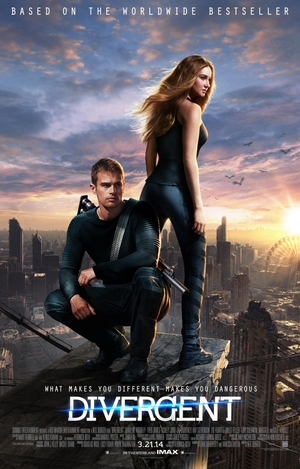
Divergent_film_posterI didn’t mention this in the previous post, because I got off on a dystopias-gotta-be-dark-or-they-don’t-work tangent. But there was one scene in the movie that was heavily modified from the book which infuriated me. It was such blatantly sexist gender-conformist bullshit that I want to strangle the asshole who made this decision. And no, it’s not the stupid ass-display poster. Not even close.

In the book, in Four’s fear-scape, his father comes after him with a belt to beat the shit out of him. Four cowers away, and Tris steps up to save him. She catches the belt, yanks it away, and lays into that abusive fuck. She stands up for her man. She saves him.

This is entirely appropriate. This is Four’s deepest fear. It’s childhood trauma, which is causing him to regress. It’s not Tris’s childhood trauma, so she can still act with rational agency. She’s been established as pretty bad ass, and she’s going up against an old drunk man. Everything about this scene was legit, it didn’t even strike me as something to question.

But apparently SOMEONE thought that this was SOOOOOOOOOO jarring that it couldn’t be left in the movie. A girl takes action to protect a guy??? Oh HELLS no! That is not allowed! Men are strong – grrr, rah! Women are weak – boo hoo, whimper. How dare anyone reverse this order, even when the man is a supporting character and the woman is the ACTUAL HERO OF THE MOVIE, and even when it makes complete sense and is exactly what would happen? No sir! Not while the penis-wielders have anything to say about it! And dammit, in Hollywood they most certainly DO!

So in the movie, when Tris steps up to rescue him, Four pushes her out of the way, grabs the belt himself, and decks his father.

Fuck you, Hollywood. Fuck you, whoever made that decision. You are worthless meat that doesn’t deserve a place in anything artistic.

Mar 192014
 

Divergent1I got to see an early showing of Divergent due to being in a super-cool SF/F book club. This is a review of the movie Divergent intended for people who have already read the book. So beware:

MASSIVE SPOILERS!

Turn back now or forever hold your peace.

Before we get started, can I make comment about how much Hollywood is Hollywood. There was almost no cosmetic difference between Abnegation and the other factions. They still put product in their hair, used make-up, and had immaculately groomed eyebrows (no mirrors my ass!). The only difference was that the older folks didn’t use wrinkle-concealer. Oh Hollywood.
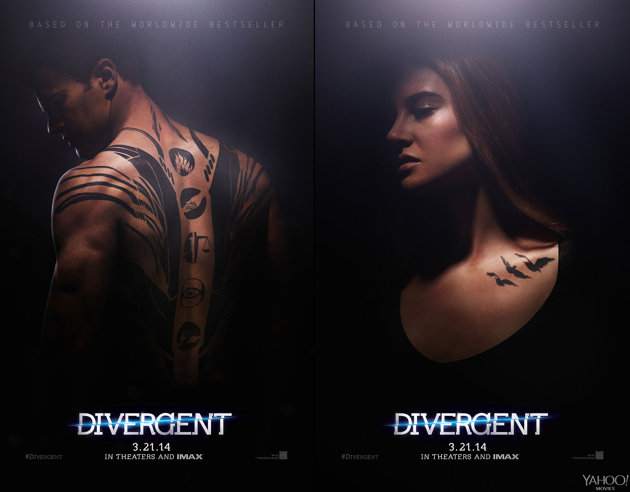
(and btw, Tris does not look anything like the above photo in the movie. Which is a good thing, cuz the role was that of “rebelious teen”, not “Freakish French Runway Model”. But why are they using this shitty un-representative photo?)

I previously mentioned several things that really annoyed me in the book, things that made me want to throw it across the room. The movie fixed these! Right off the bat we’re given some background about the world, and what happened to it (yay!). The gun- and computer-illiterate sections were gone! And best of all – Tris’s mother’s death is no longer COMPLETELY RETARDED. It was a legitimate death when they were taken by surprise out in the open. The actress (Shailene Woodley) really sells the grief, which was awesome. I actually liked the death scene! And finally, the majority of the climax actually made some semblance of sense. Rather than Four running the whole simulation by himself for some stupid-ass non-reason, the Erudite head-honchos were all there overseeing the whole process. So – mad props on fixing the crap parts.

Also, thank goodness they only used the name Tobias once, and then quickly went back to Four. :)

But all this came at a massive cost.

Peter was completely neutered. In the book you HATE him. Hate with the fire of a thousand suns. You see murder every time he comes on stage. In the movie he’s… just kinda a jerk? A completely forgettable nuisance. Seriously, anyone who didn’t read the book before – would they even remember Peter’s name after the movie? I really doubt it.

This hate also came with fear. In the climax of the book when they’re sneaking back into Dauntless HQ and Tris approaches the man guarding that first door, and once she’s close it’s revealed that it’s fucking PETER!? That moment sent a jolt of fear up my spine. Literally. My pulse jumped and my chest felt tight. Because holy fuck – it’s goddamn Peter. The vile asshole who can murder us dead but good. I felt Tris’s terror in that moment. But in the movie – meh. Nothing. We don’t know Peter, we don’t fear Peter. We don’t care.

Part of that is because there is no knife-in-the-eye scene in the movie.

You read that right. It’s gone.

Why? Why would you remove the most emotionally-impactful moment of the whole book? (Yes, more impactful than her parent’s death. By far.) That scene drives home our vulnerability in this new school. It shows the power of brutality and the abusive nature of Dauntless in general. It really cements Peter as a threat. Anyone can be permanently maimed. Their attacker will not suffer repercussions. And the victim will be ejected on the streets to live in squalor for the rest of his pitiful life for the audacity to be better at something than the bully. This was the core of what it is to be in Dauntless. This explained Tris’s decent into recklessness and viciousness. This is what drove Al’s decision to betray his friend and attempt to murder her at the bully’s behest. And it’s gone in the movie.

This affected Al’s motivation too. His betrayal scene kinda came out of nowhere without this prompting action. It wasn’t actually clear what the gang was going to do with Tris, and Al’s actions were so out of character and unexplained that if you hadn’t read the book you got the distinct impression that Al was being controlled by someone else. Perhaps an early test of the Eurdite mind-control. This is only strengthened by his “suicide” immediately after. Al was such a minor character that you don’t know any of his motivation, and it seems like it is strongly hinted that the “suicide” was actually a murder by the real actors to cover their tracks. Very sloppy film-making guys.

I think all of these problems can be traced back to a single failure by whoever was in charge of this movie:

They decided to make the Divergent society a kinder, gentler place.

Right off the bat – that Factionless guy that almost rapes Tris near the beginning of the book? That was cut. I didn’t remember this until later though.

The first thing you notice is that when the new initiates first jump from the train onto the Dauntless HQ roof, everyone makes it. There is no poor bastard moaning on the sidewalk five floors down with shattered legs as he bleeds to death. There were no people who stayed on the train and decided to accept a life of homelessness rather than take that risk. This movie is stripping away all the dark.

Once inside it’s hard not to notice that all the stairs and ramps have railings! Maybe this was required by work-safety regulations in California, but there had to be some way to get around this. The recklessness of Dauntless is key to their psyche, it helps make the world a dangerous and awful place. The railings were a subtle negation of that.

As someone who’s handled guns before, one of the things that most struck me as indicative of how degenerate their society had become was how cavalierly they treated their weapons. People would constantly menace each other with loaded guns. Even their fucking INSTRUCTOR put a loaded gun right up to the forehead of one of the children he is responsible for on the first day of their training. These people do not respect life at all. That was a major sign of their evil. That is a strong part of what pushes Tris to become brutal herself. It is what breaks down Al – a kind, gentle soul – to someone who feels he has to murder a friend simply to stay alive in this relentless grinding system, and then who kills himself in remorse afterwards. This is what a broken system does to good people. It destroys the ones that it doesn’t outright kill. In the movie, they don’t really handle guns at all. Certainly not with the abandon of the people in the book.

In every single respect, this movie makes their world kinder and gentler. It takes all the teeth out of the world, and the story suffers for it. Honestly, they should have simply written Al out, there’s no point in having the gentle soul in the movie anymore if he isn’t ground up and spat out.

Divergent the movie is not a dystopia. It almost looks like it’d be fun to live in that Chicago. Heck, they even made getting a tattoo painless and lame. How do you make tattoos lame? /shakes head

In the end, the movie fixed all the really shitty parts of the book, but it also tore away all the really good parts. So instead of a roller coaster of highs and lows that inspires both awesome cheers and disappointed groans, it’s just sorta mediocre throughout. It’s not bad, but it’s not memorable. And that’s a damn shame. I’d rather have something I can both love and hate, than something which I’ll forget about in a week. :/