Jul 032014
 

suburban-sprawlI really really dislike the suburbs. I grew up in the suburbs and I didn’t have a happy childhood, so that’s probably in part psychological. But the suburbs are a cultural wasteland. I find them barren of anything new or exciting. Everything is cookie-cutter, all of it feels like a fake plastic façade. Neighbors with painted-on smiles trying to fit in, hiding anything that doesn’t match the old Rockwell paintings. They feel hollow, and I hate ‘em. There is no place as isolating as suburbia.

I moved out as soon as I could, moved into a multi-family building with three floors, three neighbors against three walls and another below me. I still carried my isolation and loneliness with me, but it was a start. This is gonna sound kinda pathetic, but give young-me a break, I was only 19… I was so painfully alone that first night in my own place that I dragged my mattress over to the front door. I lay as close to the crack in the door as I could and let the human sounds of my neighbors going about their lives lull me to sleep. It was comforting.

You can’t hide behind polished images and fake lives when you live that close to so many people. (Well, maybe you can, but it’s a lot harder) And if any really serious shit goes down, your neighbors are right there to call the cops or whatever. Yeah, we don’t actually talk to each other or really acknowledge each other – when you’re tight in like that it’s best to let everyone just be. But it’s real in a way suburban living isn’t.

Not to mention that suburban living is monstrously inefficient. I don’t just mean that massive waste of radiating away all that heat in the winter, and all that cool in the summer, but that’s part of it. Energy bills are ridiculous for single-family houses. You know how much you save by sharing 3-6 walls with other people? Keeping that heat/cold amongst yourselves rather than just sending it out into the wild? The surface-area-to-person ratio is much better for multi-family buildings. No, what I’m really talking about is the insane waste of space. Yards are getting tighter nowadays, but still – think of the land area taken up four single-family homes! If that was consolidated into a three-floor multi-family building you could easily get five times as many people into that space. The resulting sprawl is unconscionable. How many thousands of additional miles of roads, sewer, and other infrastructure are required to support that? How much land has to be converted from wild human-capacity-supporting environment to lawns and pavement? This is how we get rat-holes like Los Angeles.

And that isn’t even the worst cost of sprawl. The worst cost is the uncounted millions of man-hours lost every year to commuting, one of the most hellish experiences people subject themselves to daily. Which also comes with an additional cost in billions of gallons of gas burned annually, and the pile-on costs of that, but I consider those less awful than the loss of hours of life on such a massive scale.

All of which is to say, after 16 years away, I’ve bought a house in the suburbs. :/ (Fortunately only about 2-3 minutes further away from work, but still…) It is an experiment, as the on-going life-satisfaction of my SO will be severely hampered if we don’t at least try this. For her, I’m willing to try this out for three years. Let’s see if it’s not as bad as I remember it, or if she doesn’t actually need it as much as she’s thinking. Check back with us in three years’ time. :)

Jul 012014
 

rejections(skip to bottom for the big reveal if you get bored)

In some of my spare time, I try to write Speculative Fiction. I’ve written a half-dozen stories, and every now and then I get people asking me “Why don’t you just self-publish online?” At the most basic level it isn’t terrible difficult, and I already have three years experience publishing this podcast thing. What’s the hold-up?

And my answer is always that I don’t know if I’m good enough to be worth it. There’s already tons of free fiction out there (some of it very good!), and I don’t need to be clogging up the inter-tubes with crap. Of course I think what I write is great, but I’m probably the least qualified person in the entire world to judge the quality of my work. And I can’t entirely trust my friends/loved ones either, as they also have a vested interest in not hurting my feelings. Even when trying to be impartial, simply knowing the author can often make things seem cooler than they would be to a neutral 3rd party.

It’s probably well-known that 99% of authors don’t make crap for money. Almost all of them have day jobs, the money from writing is not enough to support even a single person. We write because we love writing, not because there’s money in it. So why try to get money at all? Why not just self-publish everything?

Because the barrier that is money keeps you honest. If I just put up anything I write, I don’t know if it’s any good. In fact I had a very visceral demonstration of this once… I went back to the first story I’d written about 6 months after I first put it to paper and re-read it. When I’d first written it I thought it was amazing and brilliant and would win all sorts of awards. Upon re-reading it 6 months later I saw how crappy it was, and how much work it needed simply to get to not-being-pure-suckitude. Never had I been happier that instead of simply publishing it online I’d sent it around to get rejected by several magazines.

“Will an editor pay money for this” is a bit of a lower-boundary on quality, for me. I still don’t know if my stuff is good. But if someone is willing to shell out a few hundred dollars in the expectation that they’ll make that money back, it says to me that it is at least not terrible. It is the most honest barometer I know of right now.

Which is all a long-winded way of saying: I just sold a story for the first time! :D I’ll post more when I know more, but it’ll be coming out in Asimov’s sometime in the near future!

(In the tradition of Racheal Acks, above is a picture of all the rejections I’ve received up to the date of my first sale. Not all for the sold story, of course.)

Jun 272014
 

Holy_TerraOK, this is the spoiler-heavy discussion of Ann Leckie’s Ancillary Justice. All sorts of plot developments and twists will be discussed below, including the climax. Consider yourself warned!

So for me the biggest and most important theme of the book was the old question of which Ends can justify which Means. When we’re first introduced to the Radchaai Empire we’re seduced by the good that they are doing. They provide all the essentials of life (food/clothing/shelter) to ALL citizens free of charge. No one starves, no one is considered “Too Unproductive To Live.” Furthermore, the Empire is preventing the exploitation of the underclass and the third-world by the elites in the societies they’ve conquered. Where before the upper class was destroying the ecology of the planet that the underclass was trapped in, ravaging it for their own comfort and luxuries, the Radchaai put a stop to that. Under their benevolent Iron Fist the fish populations are starting to come back and the environment is healing. In addition, the lower classes, who had been excluded from opportunities for a better life, can no longer be prevented from achieving the goals that they can legitimately reach through hard work and the application of their own sweat and intellect. If you can do the job well you are allowed to do it, regardless of your parentage. It is the exporting of the American Dream. Justice and Impartiality are forced upon racist/classist and exploitative systems. Sometimes the only way to stop evil people doing evil things is the imposition of force (such as when we fought a civil war to stop slavery in the USA).

But of course this comes with a cost, and Leckie never shies away from showing it to us. The annexation wars are brutal. The occupation afterwards is arguably worse, with any displays of unrest or agitation being immediately responded to by summary execution without trial. Sometimes on a large scale. But in the end it was worth it. The ends justified the means. The protagonist states that the conquered people’s agree if you ask them, they say it was fortunate civilization was imposed on them. In the next sentence the supporting character asks “Would their parents agree? Or their grandparents?” The response is that they are dead, and the dead don’t matter. But it’s an interesting question. Where do we draw the line? Looking back on World War II, we say it was worth the cost in lives to end that great evil. But would the hundreds of thousands of civilians who were killed in the “strategic bombings” of that war agree? I guess it doesn’t much matter now.

The author really does play this to the hilt though. Because later on we learn that the Empire wasn’t always this way. Previous it had been a malevolent Iron Fist, extracting resources and oppressing people, not giving two shits about the underclass or the fates of worlds, enslaving races, etc. It was turned to a benevolent dictatorship by an intervention from an alien race. And the price of forcing this change upon the Empire was the total genocide of an entire civilization. Every living thing within a certain Solar System was wiped out. All its planets, moons, orbiting habs – everything. Exterminated in a cold-blooded calculated method that makes the Nazis look like amateurs. Now – was that worth it? An Empire spanning hundreds of stars is now veering toward good. The lives of uncounted trillions of people will be incredibly improved. All it took was one genocide.

And the really frustrating thing, which I don’t normally see, is that the author doesn’t seem to take a position. She leaves it up to us to decide.

And if that isn’t enough to start your morality compass wavering, in the end the protagonist sparks a civil war in this Empire, purely for personal revenge. A war which may have happened eventually anyway, but it’s hard to say. It’s possible it could have been avoided. But more to the point, her motivation wasn’t anything to do with the greater good of civilization, or freedom for individual peoples, or anything else noble. It was just revenge for the death of a single person which the protagonist loved. When the “means” is “civil war on a galactic scale” and the “ends” is “personal revenge for a single death” it makes it very easy to say “Ok, THOSE ends DO NOT justify THOSE means!” But this is the protagonist, who we’re supposed to identify with and root for, right? Or was the emotional distancing between us and the protagonist throughout the entire book done on purpose so we wouldn’t feel the temptation to side with her?


The second major theme I see is Determinism. It’s stated early on that most things are out of our control – we can’t control events, we can only control how we’ll react to them. This is demonstrated right from the start by One Esk running into Seivarden (random event beyond her control) and choosing to save her (her reaction). Not for any reason that makes any sense, but simply because that is who One Esk is. By her nature when she is put in that situation she will react by rescuing – it is a deterministic response. And it pays huge dividends later on.

Likewise, this is why she wants to kill the Emperor in every incarnation. She says multiple times that she doesn’t care if she’s talking to The Reformer or The Tyrant – both are merely aspects of the same person. The Reformer is the path that is determined for instances of the Emperor who are exposed to the Garseddai Genocide. The Tyrant is the path for instances of the Emperor who were not. Since The Reformer would be The Tyrant under slightly different circumstances One Esk doesn’t care that they are at war with each other and have opposite visions for the future, she wants them all dead. The Reformer would become The Tyrant if she had The Tyrant’s experiences. Since their differences are dictated by circumstance and not by intrinsic differences, they must all be eliminated. This, of course, is the same view of Free Will (or lack thereof) that I subscribe to, but taken to a very different conclusion than I would. I think that the circumstances of life are a large part of what makes us up, and so one’s circumstances are intrinsic differences. But it’s hard to say that One Esk doesn’t have a point, even if it is flawed.

The Emperor also points out that One Esk served her without qualm for 2,000 years. This is an interesting point, and raises some questions about our protagonist. There’s the intuitive excuse that One Esk is a machine – she is designed to follow orders. But, Firstly, all humans are no more than biological machines themselves, and they are often shaped by societies to follow orders unconditionally. Up until 80 years ago, “I was following orders” was a reasonable and legitimate explanation of any behavior. Punishment would be meted out only to those who gave the orders. Why do we now intuitively consider it OK for a machine to be “only following orders”, but not for humans to do so? Because, Secondly, One Esk could disobey orders, as we saw. She killed the Emperor after she’d been pushed past her Moral Event Horizon. And let us be clear that it wasn’t just The Tyrant that she killed, she spent 20 years plotting against all instances of The Emperor, and kills several of The Reformer as well. It’s also stated in the book that this isn’t unique and due to The Reformer’s tampering – sometimes ships “lose their minds” and stop following orders and go on revenge crusades.

But The Reformer’s tampering with Justice of Toren’s mind does bring up an interesting point… if The Tyrant had gotten there first, would we be reading the mirror image of this book? Would the villain be the corrupt and decadent Reformer, rotting a pure and righteous Empire away from the inside, under the sway of evil alien intellects without any care for mankind’s self-determination? Would One Esk now be the conscience of a Firm But Loving Reactionary Emperor? Is all morality purely relative, and no one thing can be said to be objectively better or worse than another, but merely the opinion of whoever managed to hack into your mind first?

And again, the author doesn’t seem to take any position at all. Do we have a choice in what we do? Well, here’s some things that happened, and here’s the circumstances surrounding them. I wish she would take a stance, to be honest. My enjoyment is lessened by the fact that she doesn’t. Say what you will about Larry Correia’s social views, at least he argues for them. The people who agree with him like him more, and the people who already disliked him do so more strongly.

I get that it’s just me, and a lot of people like this ambivalence. But I really would prefer to either have someone to cheer on, or argue against.


All this being said, you can see why I am kinda surprised all this attention is put on “OMG, their society doesn’t have gender roles or gendered pronouns, let’s all go nuts about that!” when there’s sooooooo much good, rich moral/philosophical commentary to really dive into!

Jun 272014
 

AJ Ann LeckieAncillary Justice, by Ann Leckie

Synopsis: A warship’s AI, inhabiting a human body, seeks revenge upon the ruler of a galactic Roman-esque empire.

Book Review: Fascinating! For starters, I absolutely love everything about this setting. From the extremely-Roman empire, to the opt-in procreation (yay for default-on contraceptive implants for everyone!), to the genderless society. In addition, I loved the protagonist, she was portrayed extremely well as a multi-bodied AI, and you could feel the panic and confusion whenever she was reduced to single-body-operations. Moreover the lack of emotional attachment to her body(ies) was well-portrayed. They were just vehicles, to be used up when the situation required it. The passages describing her losing her hands, arms, and feet were akin to someone describing a tire going flat. It was delicious! The themes the book explored were exactly the sorts of things I love to see explored, but I can’t really go into those without major spoilers, so I’ll be writing another post right after this for those who’ve already read the book. And finally, the plot had the sorts of political intrigue and subterfuge I had just been talking about a few weeks ago that I enjoy. On top of all that it’s very well written.

On the downside, it’s very hard to feel like you should cheer for the protagonist. She’s written with a bit of emotional distance that makes sense, but also makes her harder to relate to. Without a very deep emotional investment it’s much harder to excuse what she ends up doing to get her revenge. Also, there is absolutely NO technological advancement over a 1,000 year period. None. That was like nails-on-chalkboard for me. There really should have been some authorial effort spent on giving an in-universe reason why that is.

Still, an amazing book. Highly Recommended.

Book Club Review: If you’ve heard one thing about this book, it’s probably that it’s basically genderless, and the “she/her” pronouns are applied uniformly to everyone. For a genderless AI that controls hundreds of bodies, existing in a gender-neutral society, this makes plenty of sense. Sure, it’s a thing the author did on purpose for whatever reason, but so is everything else in a novel. This is just one of the many themes in the book, and frankly it’s a minor one. Determinism, Ends-Justifying-Means, and Classism are all far more central to the story, and receive far more attention. And yet during our book club meeting there were almost more words spoken about the genderless thing than the other three put together.

I wasn’t sure quite what to make of this, because there isn’t all that much to say in the first place. The impression from several members was that all the characters have gender, and that a character’s gender tells you a lot about the character and helps you relate to them, and this information was withheld from the reader, and they felt cheated and annoyed by that. Of course the genders different readers mentally assigned for the same characters where all over the map, which suggests that maybe the gender really doesn’t tell you all that much, and what it does tell is likely due in large part to roles that society has assigned to them rather than anything inherent in the person, but I digress. Please note that aside from this well-publicized aspect of the book, there is also a lot of political commentary, morality commentary, and philosophical speculation. Astute readers will NOT be lacking for things to talk about in a book club setting!

(Although, in fairness, while there is commentary on these matters, the author never seems to take a position on either side. She simply lays out some events and doesn’t do much judging as to how things should be. This, again, makes it hard to get emotionally invested in the themes. Why take sides on an issue when the author herself doesn’t have a stake in the matter? Perhaps this is why those other themes were overlooked in favor of the genderless one by most of our group.)

Again, Highly Recommended.

Jun 252014
 

The Russel's Paradox of MemesIt’s been too long since I last did this.

In the pic, a Facebook friend shared the meme version of Russell’s Paradox.

Supporting my assertion that all fiction is contemporary, Bad Horse reads some centuries-old stuff and says something very similar. The classics ain’t that great (to us).

In familiar “The past is terrible and we should never go back there” news – In the Golden 50s less than 1 in 3 people were happy in their marriage, poverty was twice what it is today, the average age of new mothers was seven years younger, and the teen pregnancy rate was twice today’s rate.

(quoting a friend) “California has reported 3,458 cases of pertussis, more commonly known as whooping cough, so far this year, with about 800 cases in the past two weeks alone.” IF ONLY THERE WAS SOMETHING WE COULD HAVE DONE TO PREVENT THIS”

High School Principal Cancels Entire Reading Program To Stop Students From Reading Cory Doctorow’s ‘Little Brother’. Some day, decades from now, I hope that one of my books will be banned in schools as well. One needs dreams.

What If We Admitted To Children That Sex Is Primarily About Pleasure? “I remember when the movie ‘Juno’ was out, and a sudden rash of curiosity broke out among my son’s class about what “accidentally pregnant” meant.
I realized why my son was confused. He was thinking “accidentally getting pregnant” was like accidentally burning yourself because you didn’t realize the stove was on. “Sweetie,” I explained, “most of the time that people have sex, they’re not having it to have a baby. They’re having it because it feels good. So you can get accidentally pregnant if you’re having sex for pleasure and you don’t use effective birth control.”
He looked shocked. Apparently I had forgotten to mention that sex was not just for making babies.”

Reading is at least as dangerous as it is useful. At least. If you love to read — really, truly love to read — it’s more like having an addiction than a superpower.

I read instead of clean. I read instead of sleep…. As far as I can tell, at this point in my life, reading is far more destructive than it is beneficial….
I’m sure that, in a way, reading sets you free.
But it also untethers you from the real world. People who fall in love with books never really stop falling.

If you love to read — really, really love to read — you never quite feel full. You never feel like the contents of your own head are enough. You’re always on a quest for new and more.
And nobody stops you. Nobody says, “You should really rein in all that reading.”
Reading is like Mother Teresa or breastfeeding. Untouchable. Unassailable. If you’re a kid with a reading problem, people pin awards on you. If you’re an adult, they pretend to be impressed.
But nobody tells you to stop.”

“Yes, the woman you love, the woman we all love, the incomparable Dr. Maya Angelou was a sex worker and she proved, in her life and her stories, that there’s nothing wrong with it.”

Interesting argument for the Citizen’s Dividend – the idea that no land should ever be privately owned, only leased by The People to individuals who can use it to turn a profit, and the revenue from that leasing be paid out to all citizens evenly.
“Landless laborers become entirely dependent upon landowners simply for their right to exist on the surface of the planet. … When the free land is gone, and the bargaining power that comes with it, wages tend towards subsistence. … The landlord will just increase the rent by however much the Basic Income is, because he has all the bargaining power. It is like trying to fill a bucket with a hole in the bottom. … We can plug up that hole by taxing the rental value of land to the fullest extent possible”

Fun, and I’ve run into a few of these problems myself. 25 Words That Are Their Own Opposites

I’ve never seen either Revenge of the Nerds or Sixteen Candles. I didn’t realize major protagonists in both of these were rapists. :(

Maurice Raving. Just because.


Anaea Lay on winning Writers of the Future. The good bits, the infuriating bits, and the bizarre stuff.

Shining light where we need it. Little Sis is a database of who-knows-who in government and business: “connecting the dots between the world’s most powerful people and organizations.”

The interesting story of how a book that’s not special in any way came to be worth (or at least offered for sale for) $23M.

Civilization is progressing. :) As Scott Alexander says “Hopefully someday soon a cop without a camera will be viewed with the same horror as a surgeon without gloves.”

How To Rob A Bank (or: Breeding Dragons)
“In the [80’s] Savings & Loan debacle we made over 30,000 criminal referals. Produced over 1000 felony convictions. … As of one year ago [we] made 0 criminal referrals.” (now up to 1!) In a crisis in which the losses and frauds were 70 times larger than the S&L debacle.

Incredibly Honest Yet, Disheartening and Infuriating, Confession from a Cop  “I’ve literally been yelled at by a superior because some asshole called in a DV (domestic violence) against his neighbor who he had a land dispute with, and I refused to arrest the guy because his wife wasn’t even in town when we got there (she had been out of town on business for a week…). It doesn’t matter to the higher up’s, because once you are arrested for even a bullshit reason, it’s money getting pumped into the system”

What it’s like to work in a hospital. Sung to the tune of Piano Man. You may not want to read this, triggers for mortality.

This is neat. May 7th was Tell Your Crush Day. Always something that’s kinda awkward, now there’s an official(ish) excuse to do it, so it’s not weird! I like this, I find the optimism heart-warming, but it’s probably still best not to say anything to people you work with.

Jun 242014
 

Someone asked me to comment on this video. So I did. And then, having written all those words, I figured I might as well throw them up here as well in case I need to refer back to them (since Facebook is a terrible archive).

I’ve run into Zeitgeist before, and I love their idealism and ideas. But I think as a society we’re already meeting most human needs. No one starves to death in America, and the vast majority of sustained homelessness is not due to lack of shelter but rather for mental health reasons. While they’ve got a neat model for post-scarcity economies, they don’t say how we can get there. We’re already halfway to post-scarcity, and powerful corporate entities are gobbling up all the gains society has produced, leaving the rest of us no better off.

He keeps straying into “We need to move away from a market-based outlook” and I get all excited and want to jump up and say “YES! This is why I’m here! Tell me more!” But then he veers away. :( Please tell me how to do this, and what we can replace it with. Even just a first step and a vauge goal-like image in the distance would be enough. But there’s never anything concrete to go on. Just lots of talk talk about how awesome future tech will be. So much frustration! That’s why I gave up on Zeitgeist previously, and why I think they are struggling to build up steam.

He spent too much time on tech solutions. I’m not interested in speculative tech, that’s not why I came here. Tell me how to CHANGE THE SYSTEM. Otherwise the current capitalist market system will simply take this new tech and use it, in exactly the same way they’ve taken and used all previous tech advances. Like On-Demand Production of Everything. Great idea, which the corporations will control and dole out just like they do now unless there are systemic changes implemented between now and when it becomes a reality.

I *LOVE* the emphasis on sharing of tools rather than owning (seriously, every single house in a neighborhood does NOT need a lawn mower! One per block *at most!*). But he doesn’t address the problems of who is responsible for maintenance and upkeep, and who can use it when. The difficulties of administering such a sharing system is the reason most people chose to fix the problem with the wasteful-but-much-simpler-expedient of “everyone owns their own damn mower” in the first place.

He also never addresses how their system would handle free rider problems, aside to assert there won’t be any.

It was nice to finally get a useful definition of property though! :) I will now use property as short-hand for “the legal right to declare who gets access to a physical object”, and modify as needed.

In the Q&A he kinda gets into how we get there from here, but extremely briefly. I guess there are some ideas. I really wish there was a talk that focused on THAT aspect of it.

Jun 232014
 

No-Lasting-BurialThe admins of Fantastic Reviews attend our Book Club, and they passed a copy of Stant Litore’s “No Lasting Burial” to me, as they figured it would be right up my alley (they were right). Litore is a local author, and he’s interested in reviews, so they asked me if I’d be willing to write a review for the book. I couldn’t say no to that, so here it is!


No Lasting Burial is part of Stant Litore’s “Zombie Bible” series – retellings of Bible stories in a world plagued by zombies. Right away I was intrigued, as I love religious stories and I thought a zombie infusion could make for some excellent reading. I was, however, somewhat led astray by the back-cover summary, which calls “No Lasting Burial” a retelling of the Gospel of Luke. At first I thought NLB was suffering from a bad case of Not Getting To The F*cking Monkey since we don’t see the Messiah until about 1/3rd of the way through the book (aside from a brief intro right at the end of chapter one). However as I continued in the book I realized this was not the fault of Litore, but of whoever wrote the back-cover summary. This is not a retelling of the entire Gospel of Luke, it is a retelling of the calling of Simon Peter, James, and John. So the first dozen verses of chapter 5 of Luke. However I don’t want this to come across as a criticism because the retelling is masterful and the book is the perfect length to explore the story that is being told with the full depth that Litore has given in. I just wanted readers to be aware so they aren’t frustrated.

Two major themes run through this book. The first is the survival of violent abuse. The entire village that the story takes place in suffered an extreme collective trauma, first as it was sacked by Romans, and then as it was overrun by zombies. The violence is gritty and real and portrayed from the viewpoint of a child, which makes it more horrifying. Fortunately the majority of the atrocities are only alluded to, as the child hides in a tomb and helps with a childbirth amidst the chaos. The psychological impact of this violence scars all the survivors and is reflected in their every action for decades. They were never allowed to heal, as the poisoning of The Sea of Galilee visits zombie incursions into their town sporadically. The tension, the constant PTSD-like fear, drips from the page. It’s an amazing portrayal of a damaged community, and I felt paranoia and despair clawing up my chest and suffocating me in every chapter. It is intensely well written, and it strongly affected my overall mood during the week I was reading this. Stant Litore knows his shit.

The second major theme is that of forgiveness. Specifically, the act of forgiving being the only way to heal and move forward in the face of such unforgivable acts. The burden of hatred, of revenge, of honor and law, keeps all these wounds fresh and keeps tearing people down. Souls are crushed under the strain, because it’s simply too vast to ever be reconciled justly, and the result is just more pain. But for everyone to come together and forgive, unconditionally, and start anew with a clean slate… to let the old hurts go so they no longer goad and spur and torment you… is nearly impossible. It would take an Act of God to move such a weight. Which is why people often will not budge until they finally break down into a full religious experience. In this case that religious experience is literal, as a Messiah half-mad with grief, and burning with destiny, comes into their community and slowly, against their thrashings and screams, brings them healing and forgiveness.

This book does a far better job of portraying the gospel message of forgiveness and God’s unconditional acceptance than the actual Gospels ever did. Which one could interpret as damning with faint praise, as the actual text of the Gospels is fairly lame. It’s always in the churches that the true message is conveyed, by powerful preachers and strong communities that understand what the text was trying to say. So let me clarify – this is a damn good book, and it does exactly what it set out to do with flying colors. If my childhood church had half of Litore’s understanding of the forgiveness message of Jesus, and even a fraction of his ability to convey it, maybe I would still be some flavor of Christian today. Maybe. They didn’t, and I am glad for that. But through this book I was finally able to understand just what it is so many people see in Christianity. On an emotional level it’s very appealing.

The book does have some flaws. Most noticeably, it tends to use too many words. Sometimes entire paragraphs could have been shortened to a single sentence without losing anything of substance, and some points are belabored a few times. It’s a small price to pay. I recommend the book highly.

Jun 202014
 

realzombies-187117Management was, overall, less fun than general volunteering, but it certainly did have a few exciting parts!

This year we had specific areas for queuing before panels, including a separate queuing room for Main Events, but for the really popular panels it just wasn’t enough. We did have special “overflow queuing” a little ways away (and one flight of stairs up) along a hallway, and coordinating the cut of one line and the start of another, and then moving all the people in at the appropriate time, was all sorts of stressful and fun. These were the moments I most remember, but it’s hard to convey the excitement without writing hundreds of words on it, so I won’t try.

We had to close the Arrow panel, as the room reached capacity, and we still had over 200 people outside the doors wanting to get it. I loudly informed the gathered people several times that no one would be let in for any reason, and they had to disperse. At this point I grabbed three other guys (the largest volunteers in the area) to stand in front of the doors next to me. The four of us couldn’t have done shit against 200 people, but again, the illusion of authority is what we’re going for. Someone asked whether they could go in if someone else exited halfway through the panel. This sort of thing happened all the time, at least two dozen people would leave without a doubt. And the 200 people here would all stay, clumped in front of this door, in hopes of being the ones to get in when that happened. Obviously the only correct answer is No. Hell No. No one else is getting in for any reason, so y’all should just go and enjoy the rest of the con. It took a few minutes for everyone to be convinced of this, but they did finally go.

Except for one guy and his daughter.

Ten minutes later, when I’m off to the side trying to scarf down half a club sandwich, I hear one of my door-guarding volunteers getting into it with someone. I sigh and come over to see what’s going on. The guy wants to see where it’s written in the policy that if a room reaches capacity no one else can enter later. Because when a room isn’t at capacity we leave one door open and new people can come and go as they please throughout the panel. Why is this different? (A few people have left in the intervening 10 minutes). So I tell him the truth. This is not official policy, there is no official policy. Nothing like that is written down anywhere. We let people come and go in non-capacity panels because there isn’t a mob. I cut off all entrance for this panel because it was the only way to get the huge clump of people to leave. Having them here was dangerous, it was blocking traffic, and we needed the area clear. I literally made that up, it was my call, and I’m sticking to it. If people hear that they can still get in later, despite what I said, as long as they stick around long enough, then there will be no reason for them to take my word seriously. They’ll stick around, the mob will grow, and the vast majority of them will never get in anyway. Preserving my ability to credibly tell people they will not get in and therefore move them along is extremely important to me.

The guy and his daughter understood. They were happy that I gave them an honest answer. They respectfully left, and later on that day thanked me! It was a great experience.

I had a similar-but-opposite problem for the Bruce Campbell panel. People started showing up for that two and a half hours early. We didn’t have anywhere to put them, because the queuing areas were still being used for the queuing for the panel BEFORE the Campbell panel. We told them to come back an hour before Campbell’s panel, but of course that didn’t happen. People just sort of milled around in the area, waiting for when they could get in line for Campbell over an hour later. By the time the event before Campbell’s event was opened and that queue started to clear, we had over four hundred people crowding the queuing area.

I’m of the opinion that we should have formed a pre-queue queue, but I was overruled. I dunno if you’ve ever been on the wrong side of four hundred people, but it is fucking intimidating. You realize that if anything should go wrong, there is literally nothing you can physically do. And these people are my responsibility. If people get hurt, it’s my fault. I was seriously unhappy with the entire situation. The energy in this mass of humanity was palpable, they were barely holding back from rushing forward and flooding the room. One bad shove from someone in the back trying to see what was happening up front and everything would go to hell.

Except nothing like that happened. When the last of the pre-Campbell people cleared the queuing area, all the Campbell people slowly funneled through the double-doors and into the room and lined up. There was no surge or crush. I thought the people who’d been there longer might rush to get in the door first, but everyone walked in calmly and without much jostling and no one freaked out if they weren’t right up front.

And I realized that this wasn’t a mass of humanity. Every person in that crowd was an individual person, who just wanted to see Bruce Campbell in person and didn’t want any drama, and they were going about the business of waiting to get into the room. I had stopped thinking of them as individual people with personal motivations and simply as “The Crowd”, a single organism with the single goal of getting into the queuing room. Once I was able to break them down into individual people in my sight it became much more clear that I’d been underestimating them. I was a bit ashamed at my “othering” of the attendees. And I also had my faith in humanity grow just a bit. :)

Jun 192014
 

cartman-500-x-341Authority is a weird thing.

Last year I had a great time volunteering at Denver Comic Con (DCC). I ran around, did what people told me to do, got to be part of the machinery that let tens of thousands of people have a great weekend. And I got to see a bunch of stuff for free! It was a good time. The head of the department I was in most of the time was impressed enough by me that he recommended me for a management-level position for this year, and I accepted.

First surprise – it’s not very fun to be management. When you’re a low-level volunteer, the management-level guys are quest-givers, and you get to go on fun quests! “Stand here and do this thing!” “Go run there to deliver this message and bring back these supplies!” “Check the badges of all the people in this line!” It was a cool IRL video game. You know why there aren’t any games where you play the quest-giver? Cuz it ain’t that fun. A lot of your time is simply giving out the quests. Then more of it is checking to make sure the quest is being completed (correctly, or at all). Then some time is spent checking with every PC to make sure their quest is progressing OK and they don’t need more help. And all the time you’re getting random questions about the quests which you aren’t really sure how to answer. You’re literally making up the answers on the fly, trying to keep the whole thing running as best you can.

I already knew this, from various reading and talking with people, but over the weekend it was really driven home: The most important skill of leadership is good acting ability. Specifically, you have to be good at acting like you know what you’re doing and have complete confidence in your actions. When someone asks “Hey, can we take pictures?” and this was never discussed in any previous meetings or trainings you get to snap back immediately with a confident “Sure, as long as there’s no flash” and pretend that it’s official policy you’re quoting.

Really the most amazing part of all this is that it works. People defer to the guy in charge simply because he is in charge. It’s the craziest damn thing. Someone said “Hey, you wanna be in charge?” I said “OK”, and boom – people are acting like I’m someone that needs to be deferred to. This isn’t that surprising in the case of volunteers, since they did sign up to be part of this game. We all agreed I’d play the role of quest-giver and they’d play PCs, so it’s part of the play. What surprised me is how the thousands of general attendees deferred to me in exactly the same way, if not more so. After every panel I’d approach the stragglers and say “Excuse me, I need you to clear the room for the next event.” When knots formed near egress doors I’d interrupt the group and say “Excuse me, we’re moving a lot of people through this area, I need you to move along.” Every time I expected push-back.* Not once did I ever get any. In almost every case people responded *immediately* like I was the school principal or something. A couple times there was some reluctance, but they didn’t actually protest or resist, they simply complied a little slower.

I think the radio helped a TON with this. As a management-level volunteer I had a radio clipped to my belt and a conspicuous earpiece. It looked official as hell. The thing itself was a pain in the ass, it was always interrupting my train of thought and 95% of the chatter didn’t apply to my team. But the psychological effect was astounding. (yes, I realize that being a tall white male probably helped as well) It was the costume that made the role complete. As long as I kept up the appearance of confidence and authority, people seemed to instinctively follow my orders. I didn’t even have to exert any effort beyond the acting, the compliance drive was entirely within themselves. It was like flicking a switch.

But I know I was just acting, and so it was exhausting as hell to keep it up for 12 hours straight. I can see why the ruling elite is a social class. This sort of thing would be much easier for someone who’s been raised from birth to believe that s/he should be in charge. Acting takes effort, it’s a constant strain (although it probably gets easier with practice). If someone wasn’t acting, if they internalized that role as part of who they are naturally and simply expected to be deferred to at all times, they could do this constantly without much strain. It’d be a hell of a social hack, and a massive advantage. Likely not just for them but also for their entire team, assuming the leader is competent in whatever skills and administration are needed.

Obviously this wouldn’t work with a hostile group. Everything went smoothly because everyone there wanted to have a good time with minimal hassle. But it astounded me just how easy it was to become the guy in charge. And I wasn’t even that high up the ladder.

Next time: a few specific experiences.


*Ok, by the time Sunday rolled around I had kinda gotten used to this, and wasn’t as surprised anymore.

Jun 172014
 

I worked in Crowd Control (technically “Programming”) at Denver Comic Con this year. I got bumped up to a staff position this year (from general volunteer last year) so they had me working basically open-to-close all three days. Which was my own darn fault for volunteering/accepting. :) It was fun and I learned some stuff… more on the nuts-and-bolts of helping to run one small section of a major convention later. Right now, just unloading some pics and related thoughts.


1965056_10204097804148147_6384891606384330385_n


This is the Mini-Main Events. It is the room I was in charge of for all three days. Three long, excruciating days. Fortunately I had a lot of help, mad props to all our volunteers!! This room seated 900, and hit capacity twice (first for Levar Burton/Reading Rainbow, and then for Arrow cuz (in addition to the show being good) the Green Arrow actor is apparently hot as fuck. I snuck in to see and yeah, he’s really damn good looking).


8707_10204097804108146_4644435747927838676_n

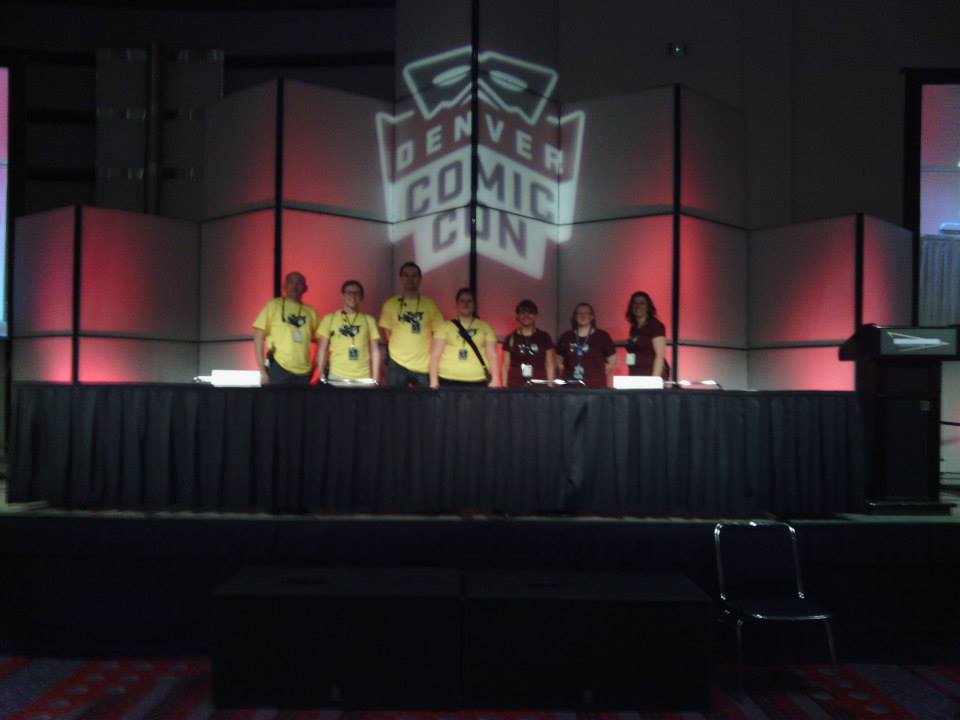
This is the Events Crew on the Main Events stage, bright and early Friday morning. We were still excited and full of energy.


10482904_10204097804188148_4669282451174166322_n

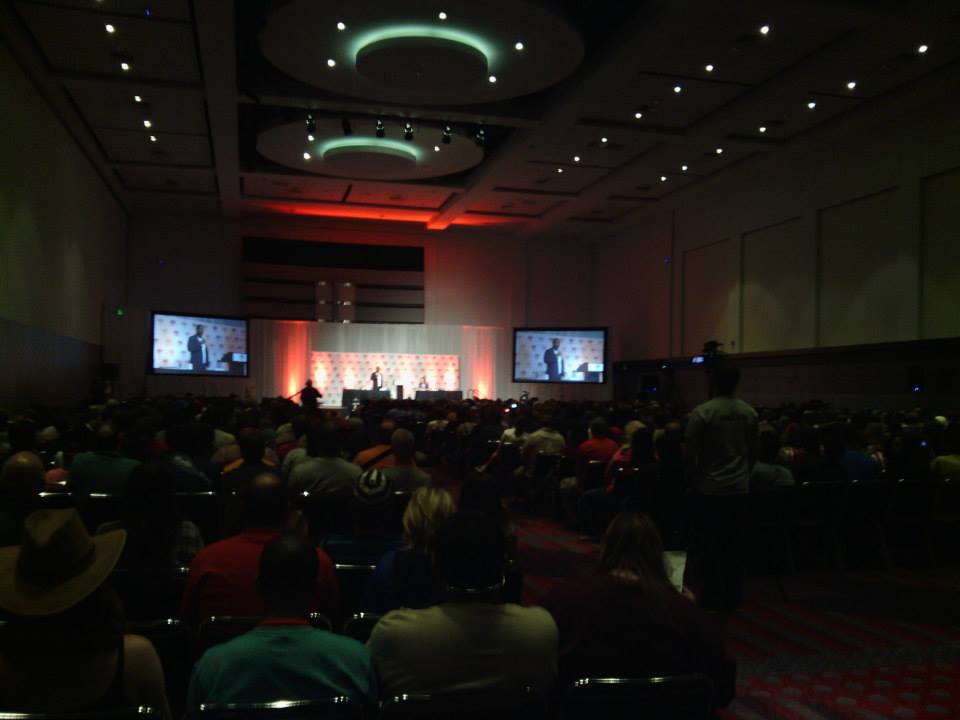
This is as much of the Main Events room as I could get with my cruddy phone camera, from the stage. It seated 1600, and hit capacity once, for Bruce Campbell. People were queuing up for him 2.5 hours early. THAT was an exciting two hours…


10403190_10204097821468580_5327812931618869277_n

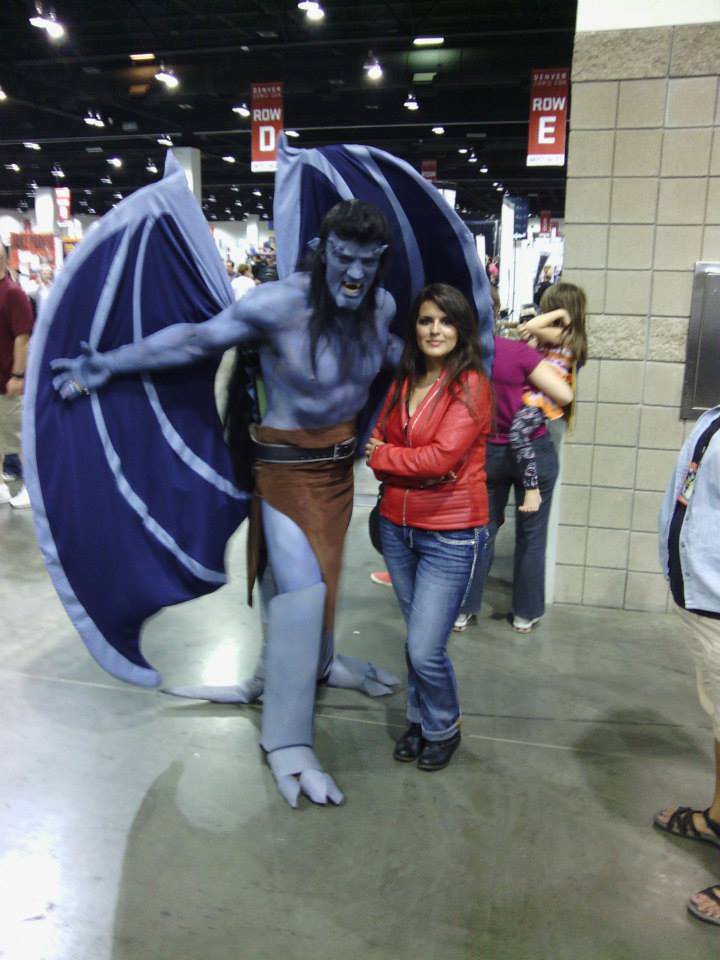
Awesome Goliath cosplay, and acceptable Elisa


10492580_10204097821428579_1473881384293439650_n

I heard a kid (late teens or early twenties) exclaim “YES! Dyson AirBlade! I love this thing!” with a bit of a surfer drawl. Weirdest thing I’ve ever seen anyone be super enthusiastic about. :)


10171917_10204097821268575_228454377369013378_n


Levar Burton during the Reading Rainbow panel.


10474181_10204097821748587_1493241355158263457_n

I barely had any time to snap cosplay pics, they had me working 12 hours a day. But I did get this shot taken. It’s not technically cosplay, these were models that were modeling some sort of synthetic-skin bikini, walking around at one point. Looks extremely real. Anyway, this was a fun picture to pose for. :) Altho jesus, that middle girl looks like she’s about to die.


1623646_10204097821868590_81776680616813495_n

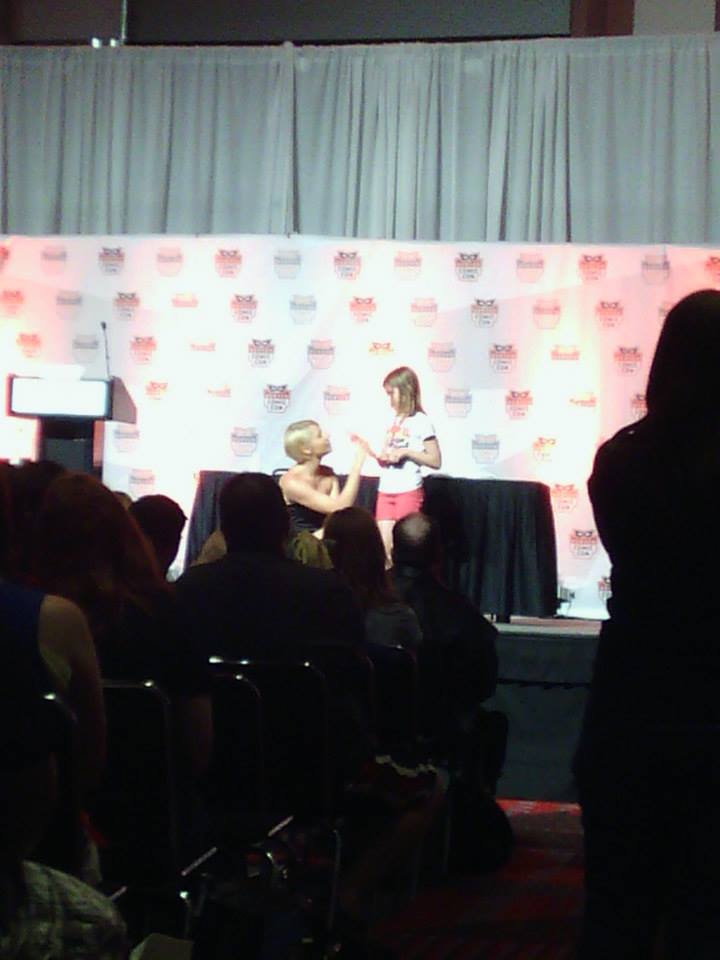
Gigi Edgly (Chiana from FarScape) during her panel. She asked this little girl to come up on stage to ask her question, and knelt down to talk with her on her level, which I thought was the coolest thing ever. It’s so awesome when celebrities are good people.


10304499_10204097846709211_5719797799961530806_n

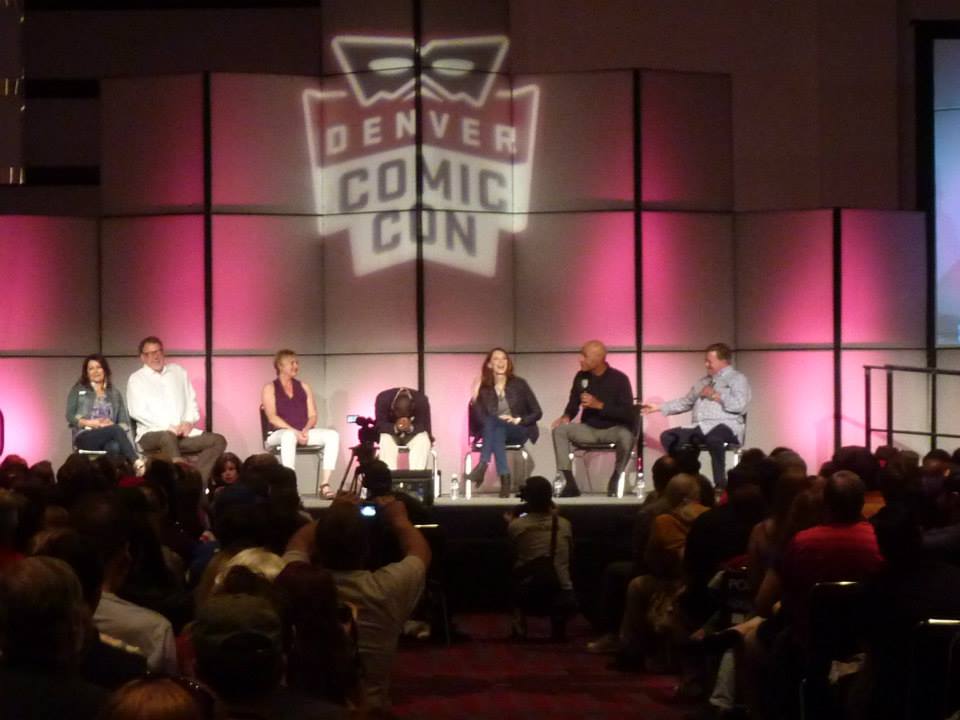
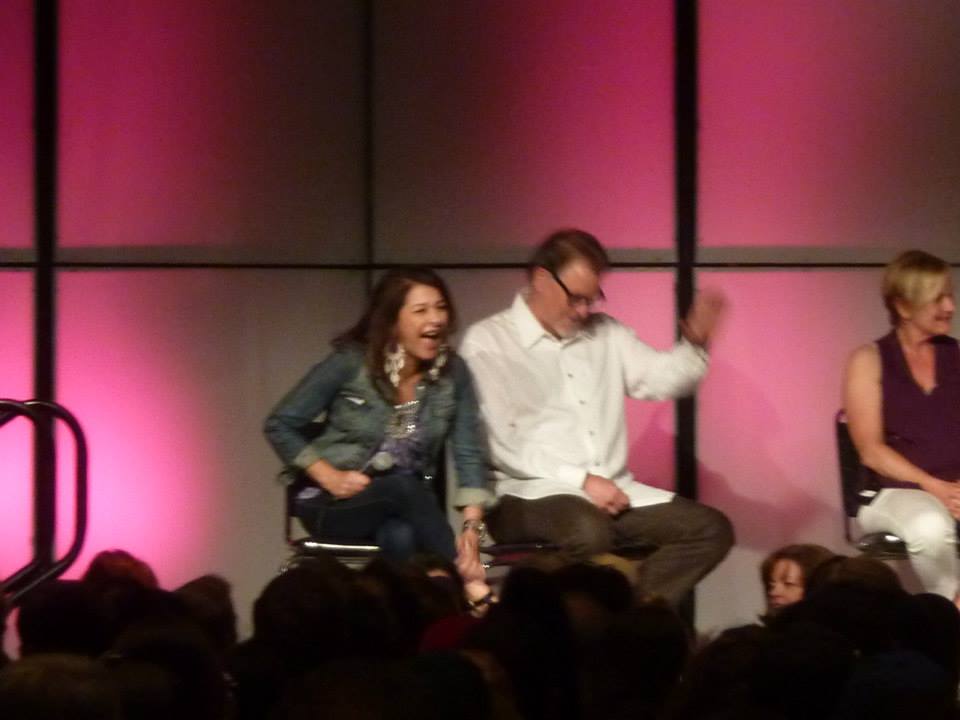
The TNG Reunion was the highlight for me, having grown up on that show


10401925_10204097846789213_9100894136344408271_n

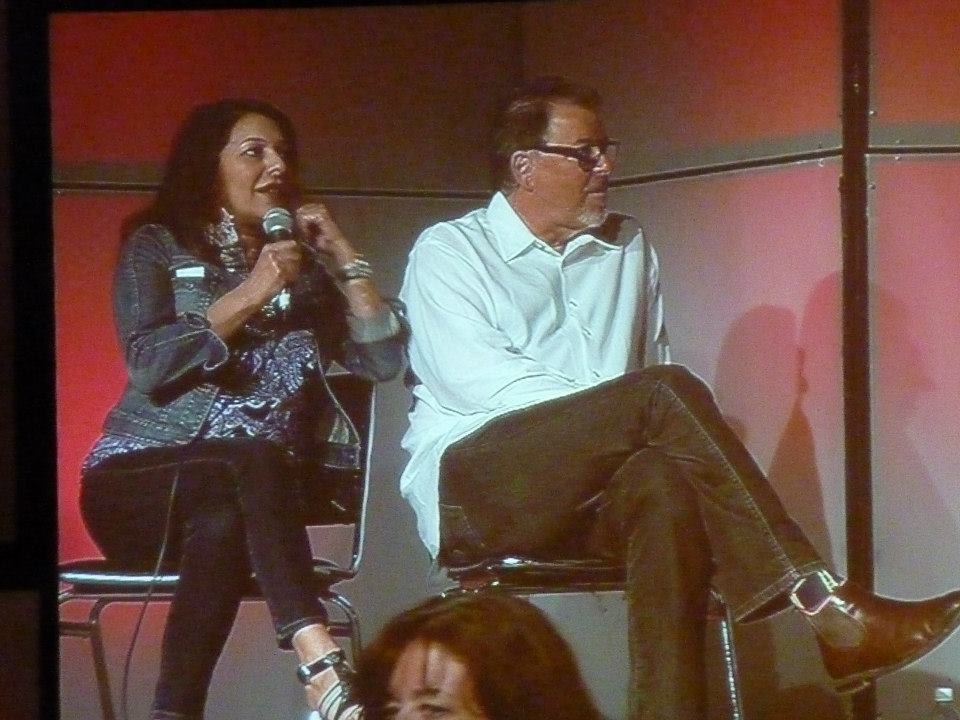
Marina Sirtis was my first crush. Turns out 20 years doesn’t let you forget that. She’s still got dem curves. :)


10444656_10204097846749212_7017521769408216830_n

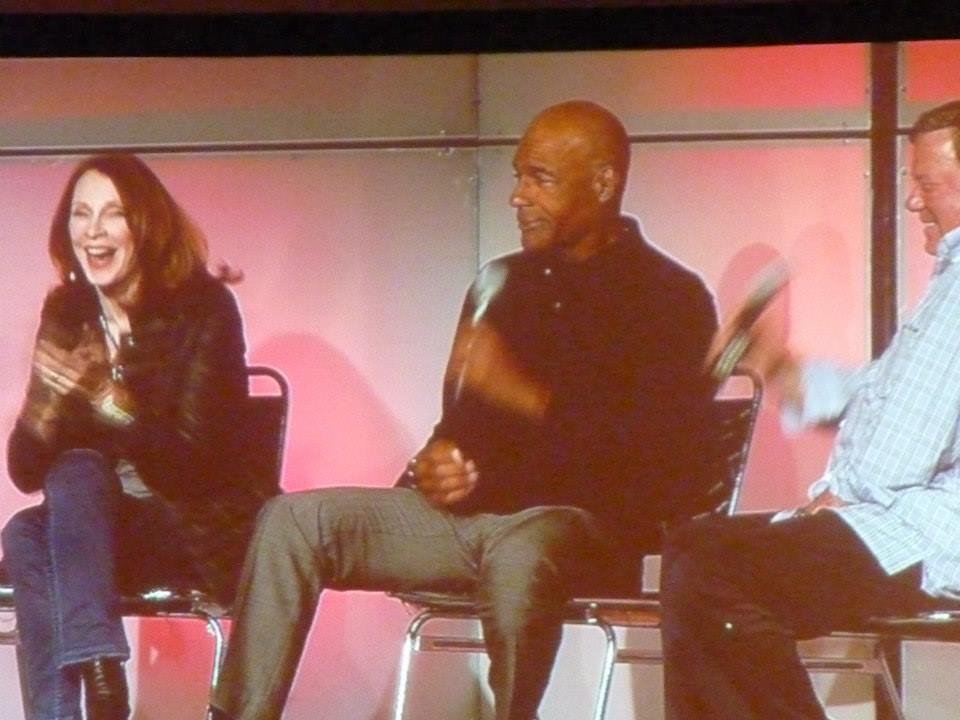
I was skeptical of The Shat being onstage with the TNG crew, but he actually made a darn good moderator/host.


1514949_10204097847269225_4561576512514442139_n

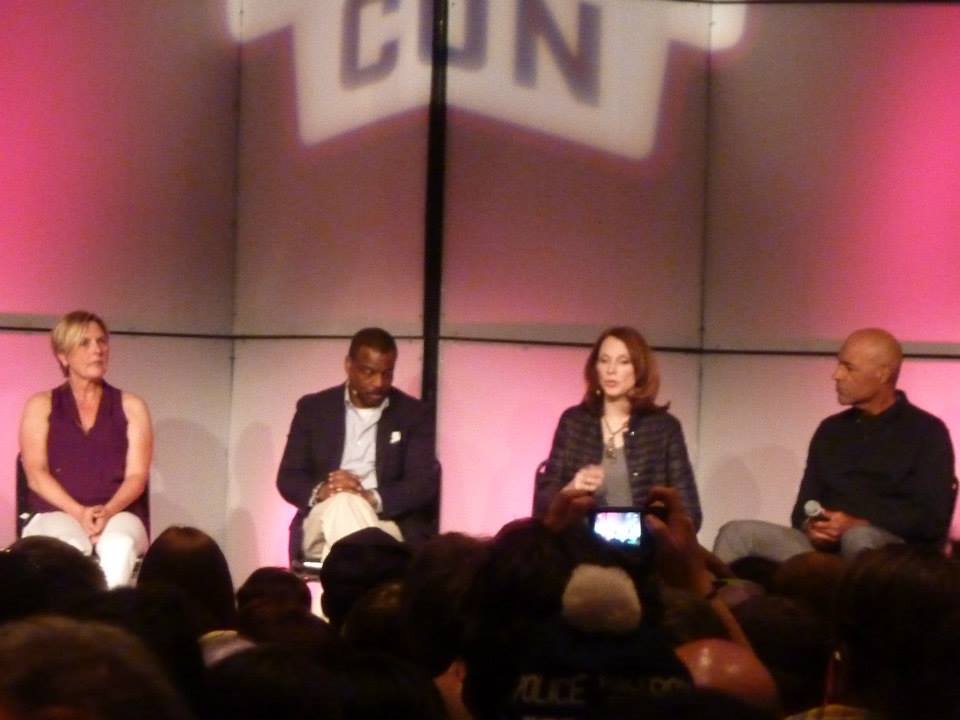
TNG Reunion. Left to Right – Marina Sirtis, Jonathan Frakes, Denise Crosby, Levar Burton, Gates McFadden, Michael Dorn. And Shatner as host. Sadly no Patrick Stewart or Brent Spiner, but it was amazing!


10402660_10204097847349227_7754654265605817753_n

One last one of Marina.

On the way home, riding the light rail, just as me and my SO were getting off at our stop a guy down the train car said he’d be willing to buy either of our Denver Comic Con volunteer shirts (all volunteers got free shirts, which they had to wear while on duty). I asked him how much, and he offered $20, which seemed fair enough. Especially since I had two more at home. I guess DCC wanted all their volunteers to be NOT STINKY, so they shelled out enough money to get us a new shirt for each day. Which was awesome of them! Anyway, it’s the first time anyone has literally bought the shirt off my back. :D