Oct 162015
 

Mort-coverMort, by Terry Pratchett

Synopsis: Death wants to take a holiday, so he takes on an apprentice to cover for him, and things go as well as you might expect.

Book Review: If you’re one of those people who hasn’t read Pratchett before and wants to know what the big deal is, here’s half of the big deal:

His writing is stellar. He creates a world that is charming and extremely fun. It shows a fondness for the tropes of sword-and-sorcery fantasy and mocks them affectionately while simultaneously using them to tell a good story. His characters have a joy-in-life but aren’t naïve. They are, in fact, generally very smart, and react the way an intelligent reader would react, rather than the way a stereotypical “hero” might.

Pratchett is genuinely funny, and often made me laugh. His turns of phrase are delightful. And he breaks the fourth wall frequently in his books, talking directly to the reader, so it isn’t a traditional narrative insomuch as it is a favorite uncle regaling your with a tall tale. In all of this his love of writing really shines through, you can feel the passion this man has for this craft.

That being said, this is only half of what makes him good, and isn’t enough to hold my interest on its own. The other half of what makes Pratchett great (with a caveat I’ll get to soon) is that he has something to say. He cares about our world, he cares about his fellow man, and he’s pissed off about the ways society sometimes fails us all. He will let you know what is wrong, and what can be done about it, in no uncertain terms. He’s assertive and has the strength of his convictions. In a word – he writes excellent message fiction.

The first book of his I read was Going Postal, one of his later ones, about why certain social services (in this particular case, the Postal System) are damned important, and a really good thing, and efforts to privatize it can go suck an egg. It is amazing. I fell in love right away. (The Truth is similar, for journalism)

So that caveat – Mort isn’t like this. It’s one of his early books, and he hadn’t come into his own yet. Maybe he was worried about offending people? You can still see hints of that passion poking through here and there, but it feels like he’s pulling every punch that he takes, and not even swinging at all most of the time. It ends up being a humorous little tale that doesn’t go much of anywhere or say much of anything. And it’s OK, I guess. But his later work is SO MUCH BETTER! Including his books focusing on Death. Although I haven’t read it yet, I hear The Hogfather is truly excellent, has things to say, and it will make you stop and really think about our society… while still being extremely funny and a great story to boot.

If you are reading your way through all the Discoworld books… well, in that case you don’t really need this review. But if you don’t have time to read even half the things you’d really like to, don’t spend that time on Mort. You’d be FAR better served reading some of Pratchett’s later works. Not Recommended.

Book Club Review: Basically all the things I said above apply here as well. It’s kinda fun to compare everyone’s favorite scene/joke/gag, but in the end the book just doesn’t have much to say, and so there isn’t much to say about it. It reads fast and it’s funny, so it’s not a let down, but it certainly didn’t spark anything either. Not Recommended.

Oct 142015
 

October is a very busy month for me at work. I’m working long hours, and don’t have much time on my breaks for typing. Hopefully in a week or two I can go back to more regular posting.

In the meantime, here’s a bit of interesting news – a gun store was held liable for illegally selling a gun! It’s sad that I’m excited by this, it shouldn’t be such a rarity. Anyway, from here:

The store was accused of encouraging an illegal straw purchase of the gun used in the crime. A straw purchase is when a gun is purchased in someone else’s name for another person who legally cannot own a gun.

Eighteen-year-old Julius Burton paid a 21-year-old friend $40 to come with him and buy a gun at the store. Surveillance video from 2009 showed Burton pointing to the Taurus semiautomatic he wanted and said, “That’s the one that I want.”

This was just a couple days after someone commented on my old Take Responsibility For Your Death Machine post. Coincidence?

(Yes. But still neat for me. I hope the 21-year-old faces consequences too.)

Oct 082015
 

grass-is-greener1I realize some people are just genetically monogamous. But if that’s not you, here’s yet another reason to not be afraid of opening up your relationship – it makes you appreciate your SO even more.

It’s a cliche that the grass is always greener on the other side of the fence. It’s because you can’t try that grass, so you end up idealizing it, and nothing in real life can compare to the ideals humans can imagine. It can drive a person to distraction, this constant feeling that you’re missing out on the best grass evar. And it’s right there, just in reach, but forbidden. Argh!

This sort of thing is toxic, but there turns out to be a really easy way to counter it. Just go and have some of the grass on the other side of the fence. You will realize that while it may be really darn good grass, it is still real-world stuff and not magical fairy food.
This metaphor is starting to outgrow itself, so to bring this back into the realm of the literal – when you develop extra-primary relationships, you reground yourself in reality. I have found that I appreciate my SO even more now. I’m not comparing our relationship to a Hollywood fantasy, I’m comparing it to other real people, and I notice all the things about her that make her ideal for me. No disrespect for my other partners, of course! I like them a *lot*, obviously. But you forget all the little things about your primary that makes life with them exceptional, and being involved with someone who doesn’t fit you as well reminds you in a hurry. I’m sure my paramores feel the same way about me vs their SOs. And the fact that we can all help each other remember what makes our primary so magical to us is a beautiful thing.
So, as I’ve said before, if you’re already with the right person, having an open relationship tends to make your relationship stronger. Don’t be scared of it.
Also, it really is nice to get that variety. :) No matter how much you love pinot grigio, a bit of sangria now and then to shake things up is vital.
Sep 302015
 

surpriseThis is really ridiculously sweet. Mom surprises her trans teenager with her first dose of hormones.

I was saddened to discover that Beaver Anus is only a miniscule fraction of food flavoring in the US. :( I apologize to anyone who I told otherwise. It made a great story.

Wil Wheaton on why he supports a video game voice-actors strike. I didn’t even know there was a dispute.
“Our employers want to be able to fine the union $50,000-$100,000 if your franchised agent doesn’t send you out on certain auditions […] If my agent doesn’t submit me for something, for whatever reason, that’s between my agent and me. Maybe I don’t want to work for a certain studio, so my agent doesn’t submit me for their projects. Maybe I don’t want to work with a certain director, or another performer or whatever I feel like because I’m a sentient human being who makes his own decisions.”

The best of computer-generated headlines, as voted by users. Uniformly hilarious, like reading the best Onion headlines.

Turns out “Bossa Nova” is an actual word. And that Chevy Nova was an actual type of car. ‪#‎TMNT1990‬

YES!!! Why Winning the Dancing Baby Lawsuit Is a Big Deal For the Internet No more mass takedowns issued by bots.
“The key part of Lenz’s legal case revolved around Universal’s blanket issuance of a DMCA notice, without first even considering if Lenz’s use constituted fair use — something that’s required under the DMCA.
Currently, big rights-holders like Universal and the RIAA use algorithms to generate DMCA takedowns — basically, they have computers trawling YouTube and Google, looking for video clips that violate their intellectual property, and send DMCA notices to whoever’s hosting the video.
But in doing so, they aren’t first considering if use of the material constitutes ‘fair use’, like a parody (or a baby dancing to said work).”

Someone needs to make Cat Valente’s suggestion a reality.
“Oooh, what if the awards were ACTUALLY for story? Like…aspects of story?
Best Ending
Best Twist
Best Worldbuilding
Best Villain
Best Action Scene
Best Romantic Scene
Best Death Scene
Best Dramatic Speech
Best Protagonist
Best Climax
Best Battle Sequence”

Trek v DavisNext Gen was the Best Trek

A fantastic episode of 99P!
[Lawns are] essentially a moral commons. It’s not your lawn, it’s the whole community’s lawn, and you’re responsible for this part.
YES! This is what you sign up for if you have a lawn! Don’t like it? Can’t hack it? Don’t get a lawn! (and I say this as a hater of lawns)

Scott Alexander’s Theses on Trump
“the establishment hates him. […] in signaling terms, what they’re unintentionally saying is “Moderates hate this guy! He’s too politically incorrect to win over Democrats! Only vote for him if you’re a real Republican.” And Republicans are eating it up.”

Streaming Music is Ripping You Off (and what you can do about it)  “One band made an album of completely silent tracks and told their “fans” to play the blank album on repeat while they slept. If a subscriber did as instructed the band earned $195 in royalties from that single subscriber in just one month. But if each subscriber only pays $10 in subscription fees, then where did the other $185 come from?
It came from people like you.”

Why People Want To Die  “The way to convert deathists isn’t to argue with them, but to get them interested in something. Twist them the way you’re twisted.”

If I get a call from a polling place, I know who I’m telling them I’ll be voting for.

The CDC is finally weighing in, stating that early school start times are a health hazard. It’s a start!

Now being a chicken owner, it suddenly seems a much bigger deal that Gaston eats 5 dozen eggs a day. 60 eggs a day likely is the entire output of 120-150 chickens! Which means A) Being Gaston is expensive. And B) Since Gaston can afford to be Gaston, he could probably provide a pretty decent life for Belle.
Although, admittedly, not nearly the same level as the local nobility.

Sep 252015
 

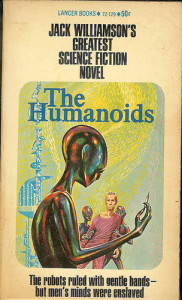
humanoidsThe Humanoids, by Jack Williamson

Synopsis: Failed Utopia: Benevolent AI is too paternalistic, doesn’t allow humans to do anything, humans rebel.

Book Review: Atompunk isn’t a term I’m terribly comfortable with, because I think the practice of adding the –punk suffix to everything is reaching the point of risibility. But for those unfamiliar, it’s a sub-genre that takes place in the future as it was imagined in the 50s. The best popular example is the Fallout series of games, in which the pre-apocalytic world is basically atompunk – 1950s Leave It To Beaver wholesomeness with chrome and spandex everywhere, and EVERYTHING runs on atomic power, from your car to your teapot. This feels like an atompunk book, for the most interesting reason – it was published in 1949. This is atompunk the same way that Pride and Prejudice is steampunk. Which makes it really interesting to read.

Stylistically, it’s quite a throwback. At times it’s charming, such as this line near the beginning: “For Starmont was not on Earth, nor Jane Carter’s language English; even her name is here translated from less familiar syllables.” I can’t even read that with a straight face, it’s so damn adorable! Other times it’s just tedious, with lots of narrative assertions and truckloads of tacked on adverbs.

But what about the content, you ask? Well. This novel is a one-trick-pony. It’s basically a straight helplessness-horror story, with a twist at the end. When it does that trick, it does it very well. The frustration and rage I felt at the machines taking away everything made me grind my teeth as I was reading. The constant paranoid fear of having to always present as super-happy in every moment of your life or risk being permanently drugged up with stupefying euphorics was terrifying. This was hell, and death would be better, if not for the glimmer of hope that perhaps the monsters can be overthrown. But unfortunately the trick doesn’t take a novel-length work to play out. It would be extremely effective as a short story or novelette (and indeed Williamson did originally write this as a novelette, which I hear is outstanding), but when it’s stretched out into a novel there’s many many pages that add nothing and seem to be just the protagonist spinning his wheels. It was kinda annoying.

The thing that kept me coming back was the ambivalence in the novel. It’s hinted that maybe the machines aren’t so bad. Our protagonist is certainly an asshole, and destructive both to himself and those around him, so you can’t say for certain that the machines are wrong in not giving him full freedom. You suspect he might not be a reliable narrator, and you keep going to see if there is a twist at the ending.

And there kinda is, but kinda not. Is it worth suffering through the middle for the reveal at the end? If this was shorter, I would say definitely. At it’s actually length…. Eh. Ultimately, I’m glad I read it. I would recommend skimming through the whole middle part of the book, but the strength of its horror-front and twist-back push it into Recommended.

Book Club Review: There will be spoilers in this section, so if you don’t want to read them I’ll simply say right now – for Book Clubs, I STRONGLY Recommended this. Discussion why below. It includes spoilers, so turn away now if you don’t want them.

.

.

.

.

Last chance.

.

.

OK, so. The ending to this is basically a mirror of the ending to A Clockwork Orange. It turns out that the machines gladly give humans the freedom to do whatever they want, including self-harming behavior, once they are mentally and emotionally mature enough to evaluate the risks and choose to take those risks from an informed position. It’s a lot like how we don’t allow children to buy alcohol or tobacco or refuse chemotherapy, but we do allow adults to do those things. Not only that, the machines actively repair damaged humans so they are raised to that level of maturity and can make those decisions – they are uplifting the species, in a sense. In this respect they remind me very much of the humans in Three Worlds Collide who repaired the Confessor’s Fetal Alcohol Syndrome and gave him therapy and whatever.

But the thing is, the author didn’t intend to portray this in a positive way. You can tell he meant for this to be horrific, in part because of the implicit claim that 99+% of humanity needs this upgrading before the machines will give them freedom, including our “normal” protagonist. He just did a shitty job of presenting it as horrific (IMHO). This led to a very interesting split in our reading group, between those who read it as it was intended, and those who read it the same way I did.

Since it’s obvious that the author wanted this to be horrifying, it’s easy to go along with that. It was argued that it’s evil that they forced this uplift on people who didn’t want it. It was argued that making everyone conform to one vision of “normal” destroys all the variation that makes life worth living. It was argued that the life of the super-happys is not worth living, we must be free to feel pain and disappointment and boredom. It was argued that without the ability to hurt and grow as people we are impoverished and we would lose not only our humanity, but also the art that lifts us up and glorifies life. You can’t have 10,000 Days without a suffering artist.

And first of all, this makes for some AMAZING discussion!! Both the arguing of the actual points raised (for there are counter arguments… shouldn’t we help this homeless person (trigger warning: extremely depressing) if we could? Is it right to make others suffer so we can consume amazing art? etc), which was stimulating and passionate! But also because ultimately I do agree with ALL those points! But the problem was that this isn’t the world portrayed in the book! The world portrayed in the book is one where the AI actually does a good job of balancing freedom and responsibility, where the machines fix people to make them more human, more the people we want to become! Williamson wanted to write the ending of 1984, where it is clear that people are being destroyed and mind-raped into loving the system that controls them. But he didn’t even get A Clockwork Orange, where reasonable people can say “The method is flawed, so even though the results are good now, we should be wary that this could be used on normal people instead of murder-rapist psychopaths.” Williamson went all the way into “How is this not actually a utopia?” territory. And I think the interplay between readers who are willing to say “Fuck you, even if they’ll thank you for it afterwards it’s still brainwashing and turns them into different people!” and those who say “Sometimes who we are could use upgrading” makes for really fascinating dynamics.

I’m still not even sure I’m on the right side, to be honest.

So yes, this sparked some of the best conversation we’ve had in months. STRONGLY Recommended.

Sep 152015
 

I’ve always believed that Humanity improves when cultures are allowed to mix and mesh. As such, “cultural appropriation” never made much sense to me. Where it’s meshing, it’s good, and where it’s racism, it’s bad. Why are some people conflating the two? So I was pretty happy about these two articles:

To the new culture cops, everything is appropriation

Reflections on Cultural Appropriation

I got some push back.


What is Cultural Appropriation anyway? I’m still not sure it’s even a thing. I don’t view the borrowing between cultures and mixing of cultures to be bad. I think it’s actually a positive for all parties. Does it impoverish other cultures if our teens start love the hell out of soccer, and start calling it “futbol”? Or does it give us more in common, make us more able to relate to each other, and enrich all sides?

I even suspect that it acts to weaken racists. If a stodgy old man can deal with his daughter or granddaughter wearing dreadlocks, he may have to come to admit that when he frowns at the black lady at his office wearing dreads he’s doing it because he’s racist and not because there’s anything wrong with dreadlocks themselves. His white granddaughter may very well be doing good by wearing dreadlocks rather than by shunning them.

And if I may bring up Hollywood – it’s been said that American Mass Media (primarily movies, TV, and music) has been the greatest force for exporting modern liberal values. While there are lots of fundamentalist types who think this is horrendous, I for one think that the spreading of liberal ideals is a great thing. Do we want to put a stop to THAT cultural appropriation, and tell people they can’t consume our media and must remain as foreign and segregated from us as possible? Why on earth would we want that?

I was informed that cultural appropriation is when the dominant group(?) adopts something from a minority and says “When people of my group do it, it’s cool. But when people of the culture that first introduced it do it, it’s not OK.” Like doing Yoga, but discriminating against Indians when hiring, or denigrating them for talking funny. I was given this example:

This is a made up and silly example, but maybe it could help: Let’s say Polish people *really* love cabage, and no one else knew about it. It this scenario, they’ve been enjoying cabbage for centuries, it’s a big thing to them. But… They’ve been fired from jobs for bringing cabbage for lunch. They’ve been run out of town for talking about cabbage publically. They’ve been tried in court for even smelling like cabbage. For centuries they have been negatively affected because the dominant culture is anti-cabbage for no real reason (it’s really just a convenient shortcut to be anti-Polish.)

Flash forward to now. All of those negative consequences are still there, just not talked about. Polish are still fired, shunned, etc. for their cabbage activities. But, the dominant culture has figured out how awesome cabbage is. (It is!) They’re having cabbage-meetup and cabbage-fests and cabbage-cleanses. So not only have the Polish suffered for centuries, they *still are* suffering, while watching the people around them eat cabbage, get media attention for it, etc. Do you see why that would be hurtful to experience?

Yes. But I think it’s stupid as hell to reply to this by saying that white people can’t eat cabbage! Please, share my love for cabbage! You see how awesome cabbage is now, right? So stop being a fucking racist. The way you describe it, claiming “cultural appropriation” rights sounds a lot like revenge. Which, in fairness, I totally get. I feel the desire for vengeance too sometimes.

To take a less made-up example, I sometimes wish that pro-lifers were denied abortions, and creationists were denied antibiotics. But in the end, I realize that’s horrible. When a pro-lifer is raped and wants to abort, I full support her right to do so, even though I kinda in the back of my mind am thinking “You should be forced to live by the shit you tried to force on my loved ones.” Because despite my desire for vengeance, I know that’s bad.

And to extend the metaphor further, even if I did think that pro-lifers should be denied abortions, I wouldn’t say that all Christians categorically should be denied abortions, because I know that lots of Christians are very much pro-choice! Denying it to all of them is even worse that just denying it to just the ones who in a poetic justice way “should” be denied.

So no, I don’t want cabbage denied to all white people. At best I only want it to denied to those who denigrate me for loving cabbage. But the solution is to fix racism, not to make up terms like “cultural appropriation” and say anyone who loves cabbage has to be Polish or else they’re appropriating imperialist oppressors. If Cultural Appropriation is “Hey, I like what you’re doing. You’re going to suffer if you keep doing it, but I get to do it all I want,” then I want to stop the “you’re going to suffer if you keep doing it” part.

I was told:

I too would love to see a dismantling of the systems of systemic oppression, but until we’re there you should understand that you get to do something that they don’t because you’re a part of that system. Saying “in a perfect world this wouldn’t be a problem, so get over it” sounds like a bad approach. It’s not revenge to say “maybe hold off on taking our culture until after you stop punishing us for the same behavior that you’re doing.”

To which I again totally agree. How far does this extend? Am I responsible for the behavior of others, or only my own? ie: if I’ve never denigrated anyone for liking cabbage, and treat cabbage-lovers as I would anyone else, can I eat cabbage? What if I’m not Polish myself, but I was adopted by a Polish family at age 6? Can I move out of a state that has anti-Polish laws to a state that has Polish-equality laws, and eat cabbage there? Or is it better to stay in my anti-Polish state but fight for Polish-equality laws?

In reply:
I don’t have great answers, because I’m the epitome of privileged, and will never have my culture appropriated, but I encourage awareness. We can be aware of our privileges, we can listen to those that are affected, and we can try to engage with those around us.

I realize that’s the “wise” answer, but I need a useful answer, not a wise one, because I want to be able to A) eat cabbage, and B) not be viewed as a monster by Polish people. And in this case, please feel free to swap out our euphemisms for real things that may happen in my life. ie: it’s actually important to me to know if I can use the c-word in my writing.


Then we got to the icky, sticky mess at the center of all this:

if I wanted to grow my hair out and get dreadlocks, I should probably talk to a few dozen of my black/African American friends and see what they say. If I don’t have a few dozen friends of a group that I want to pull from? That should be a giant flashing warning sign. How can I believe I could be respectful without feedback from knowledgeable people?

Even if you were adopted by a black family, and grew up in a black neighborhood, and all your friends say “fuck yes, you of all people are legit allowed to do that”, you know what will happen? You’ll be accused of “tokenizing” your black friends/family, and culturally appropriating the dreadlocks. You’ll be accused by people who don’t know you or your history, but they will see you are white, and that’s all they need. They will win, and you will be a monster. That is my problem with cultural appropriation.

think about people in the following Venn diagram:

( oblivious/privileged ) (correctly offended) (incorrectly offended)
While you might never please the ones on the far right (incorrectly offended), it’s the ones in the middle (correctly offended) you’re probably really concerned with.

And the thing is… no, it’s not. I believe that the “correctly offended” people will generally be very small, because I have faith in my education and upbringing to keep me from doing most things that are horribly offensive. I know that I will sometimes be offensive out of ignorance, and I further have faith that those who are correctly offended will help me to see when I’m ignorant and help me to overcome this. I’ll grow, I’ll apologize, and things will be ok.

No, the group I’m actually worried about is the “incorrectly offended” ones, because they can be far, far larger. And they are the ones who don’t care about you, your background, or your apologies. They are the ones who are willing to go to whatever measures they can to try to destroy someone socially. They are the ones who use “cultural appropriation” as a weapon. They are the reason I think it is by-and-large a BS claim, and people should stick to “You are being racist” rather than vague claims about my social background and the circumstances of power structures in my (local?) area.
Sep 112015
 

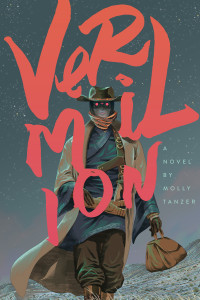
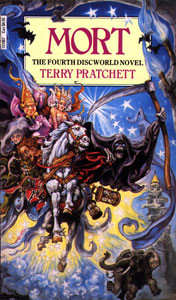
vermilion_cov_smVermilion, by Molly Tanzer

Synopsis: A weird western following a half-Chinese exorcist as she tracks down an evil force in the Colorado Rockies that’s killing her countrymen and turning them into undead.

Book Review: Boy am I conflicted about this book. It has all the trappings of something really great, but then it falls short of the mark in really frustrating ways. Let’s start with the good stuff.

The book is fun! It’s imaginative and well written, and the dialog pops! Tanzer has a fantastic way of bringing people to life through their words, letting them reveal their own character. It’s been said that Joss Whedon is an accidental feminist, because his strength is writing amazing dialog, and you can’t write amazing dialog with people who aren’t real to you. Tanzer has a similar strength, and no, this won’t be the last time I compare her to Whedon.

The writing is very modern and casual, in a the-narrator-and-reader-being-real-and-talking-with-each-other way. You feel like you’re a close friend of the narrator, and she’s just laying out her life for you. Lines like “[The couple] looked at Lou as if she’d strutted up and farted right in their mouths,” get you to love the narrator. The novel is full of this frankness and humor that is delightful to read.

It also starts out fairly light and wise-crack/adventure-ish, but keeps displaying flashes of darkness, and near the end takes a hard left turn into Quite Dark territory, with gore and torture and such. Again, very Whedon-esque, where he starts out with a wise-cracking cheerleader type and can take you into something like the Miss Calendar or Dark Willow episodes with stomach-dropping rapidity.

And, of course, the villains are just as real as the protagonists are. The villain and his wife (when not slipping into the abuser/battered-wife dynamic they sometimes have) are ABSOLUTELY ADORABLE! I loved them! The fact that you can relate to them, but still really hate the fucker and want to see him die a horrible death is fantastic.

And the cast of supporting characters is quirky, strong, and interesting. You see all the reasons to love it, right?

I do feel there to be two major flaws though, one which hindered my enjoyment, and one which hindered everyone’s enjoyment.

On the personal level, it never went very deep. It started to, several times! When a vampire-sympathizer brings up the protagonists hypocrisy because she eats the flesh of mammals and doesn’t think twice about it, I thought we were really going somewhere! Especially when she considered for a while, and conceded that maybe it was so bad, as long as they were otherwise good people and stuck to hospices for the dying to “feed on the weak and sick, like any other honest predator” she might have no beef with them. Unfortunately this is never explored again. It’s just left there, and we never have to worry about it because it turns out our villain is quite evil. Likewise, when the vampire-sympathizer points out that the undead are hunted simply for existing, our exorcist protagonist flirts with a crisis of conscience. She thinks maybe the undead are people too, and instead of forcibly expelling them from our existence – basically re-killing them – maybe they have some right to un-life like real people do. Then she never again worries about anything like that, and keeps doing her job of killing ghosts and zombies and vampires. It’s super-disappointing to have something that potent brought up, and then just dropped and staying instead with surface-level action and unrequited-love stuff. :/

A more general complaint is that the stakes are never very high for the protagonist. One might say they’re almost non-existent. She doesn’t seem to care about anything very passionately. We never get the feeling that if she loses it’ll matter. There’s no one she’s fighting for, no fate of the world at stake, etc. Even when her own life is in danger it doesn’t feel like that big a deal, because she’s so cool and jaded about everything. As readers we never have an emotion stake in her winning, aside from the “well, she’s the protagonist” thing. This left me (and the other people in my book club) feeling very unsatisfied by the novel. The trip was fun, but in the end it didn’t seem to matter much and it was hard to figure out why.

Which leaves me at an uncomfortable place – I am honestly not sure if I would recommend this book to past-me or not. I like things with substance to them, and this novel felt like it had great style and flair but lacked heft. I guess I’ll have to put it down as “Recommended if you’re looking for reading material, but don’t bump it to the front of your reading list.”

Book Club Review: Due to a confluence of unrelated factors, our turnout was pretty low this week, so I’m not sure I can judge how well this works for book clubs in general. However even with just three of us there ended up being quite a bit to talk about, as we tried to figure out why it was that we seemed to both like this and not like it at the same time. And, to be fair, some people liked it quite a bit, while others were far less happy with it. Having a wide spread of opinions like that is also quite conducive to good conversation, leading us to compare notes and argue points. That fact that it was enjoyable on a page-to-page level helps too. Though I’m not as confident as normal, I would say that for book club purposes, this is Recommended.

Sep 102015
 

blatent lyingThis add is getting a lot of buzz because of how clever it is. Benjamin Lee at The Gaurdian gave a movie two stars (a rather low review), and the movie studio used that rating on their poster. It’s circled in the picture. I had to search for it a bit, because I couldn’t figure out where the low rating was.

Everyone seems to be swept away by how clever this was, since technically the poster displays the exact rating that Lee gave. I’d just like to take a minute to point out these guys are liars, and assholes. They intentionally presented the information in a way that any reasonable person would interpret it to mean that opposite of what it actually means. It looks like the rating given is much higher. It’s no different from quoting someone that said “No one in their right mind would consider this piece of trash to be a masterpiece!” as saying “…a masterpiece!”

If you intentionally give people information that you hope will cause them to form beliefs that you know are false, YOU ARE LYING, even if technically every word you said is true. You should be branded as a liar, and take the appropriate social hit. No excuses for cleverness.

(yes, HJPEV hides behind this a lot. It may be fun in a story, but he’s a deluded kid if he thinks he can claim he doesn’t lie to people’s faces all the time)

Sep 042015
 
George Carlin

George Carlin

Why can’t you slur a straight, white male?

From what I’ve been told (and what I remember of my childhood, though that’s probably very skewed) words like “fuck” and “shit” used to be a big deal. You couldn’t say them, and you couldn’t print them. Nowadays, unless children are around, no one really cares. They just mean you want a bit more emphasis in a particular sentence. You use ‘em on Facebook and no one blinks.

There are still some words that will elicit strong reactions. It’s difficult to use them in fiction without a lot of forethought. They will upset people on Facebook. There are only three I’m aware of, and they are:

Nigger

Cunt

Faggot

What’s interesting about them is that they are slurs against a specific group. You’d think you could extend the pattern, and find equally bad slurs for the counter groups, right? But you can’t.

Honkey or Cracker? Those have no punch at all. They’re so silly that they’re often used as jokes.

Prick has some insult behind it, but not much. It isn’t directly sexual (at least, not to anyone I know), and is basically just a variant of asshole. It’s mild enough that it gets used in PG-13 movies.

Breeder isn’t even that well known, and it again sounds more like a pun than a slur. You can kinda see the intent, but it’s hard to feel it.

What the first three words have that Honkey/Prick/Breeder don’t have is a history of violence. And not just any violence, but state-approved violence. When one is subjected to violence, there is a general threat of reprisal – there are laws against this. If the offending party is caught, they will be stopped. The victim can press charges afterwards. The Leviathan is fallible, but at least in theory the perpetrator of the violence is doing something wrong.

The three slurs listed come with the promise that the victim has no recourse. Society won’t just look away, society actively approves of their victimization. In fact, if the victim tries to defend him/herself, s/he will be punished for it by the Leviathan. The victim is powerless, a piece of refuse that is only allowed to exist because most people can’t be bothered to stomp it themselves. And this promise was loaded into the word by decades of exactly that – violence against those called such names, approved of by the state. They carry a meaning far deeper than mere words can lend them, they carry the weight of physical acts and lost lives.

I’m glad those words are considered as awful as they are. It means that we, as a society, now understand how horrific that legacy is. What words a society decides are too vile to be commonly used reflects upon what that society values. It’s a good sign that we value human dignity for all.