Jun 102014
 

not all men mr koolaidSo apparently even John Green (yes, that John Green) is being attacked as a terrible transphobic misogynistic racist, or whatever. One of the nicest people in the world, certainly the nicest since Mr. Rodgers, is getting threats and hate from the extremist left.

This is something I just would have written off as lunacy not long ago. Like the #CancelColbert surge, or Dan Savage’s “hate crime”. Then I learned about the harassment of one of the most sex-positive and amazing people on YouTube, Laci Green, which scared her off the internet for a while. And it started feeling like a thing that actually has some effect, rather than just two kooks ranting in a basement somewhere while everyone sane ignores them.

Honestly, I’m happy that these people are going after targets like Colbert and John Greene. Exactly because they are such good people that the extremists are made to look like ridiculous asshats.

Until a few years ago I was shocked (and dismayed!) to 
discover that anyone other than racist misogynistic trash was ANTI-feminism! It was like a literal smack. It took me a while to realize that what they were *actually* against was these sorts of extremist assholes who managed to tar the rest of us by claiming their blind hate was in the name of progressive ideals. I know someone who is better and kinder than just about anyone in any progressive movement who calls himself anti-feminist because of the rabid attacks by these left-wing Fred Phelpses.

When those asses go after obviously good people it reveals them for what they are – the left’s equivalent of the Westboro Baptists. And I hope this will make it much easier for those of us who really want people to just be decent to each other to be able to say “Yeah, look at those dick-waffles over there. THEY are the crazy fucks, NOT us. We are not like that, so please don’t think we are here to attack you. And feel free to join us if you ever want to, because everything you espouse is exactly what our ideal world is.”

The thing is, we all have to be willing to point them out and denounce them, publicly. I really wish they’d organize into a group to make that easier, but for now I’m calling all such people Westboro Leftists. So let me throw in my hat with those saying “Most feminists and leftists are NOTHING LIKE THESE ASSHOLES, and we despise them.”

(yes, I’m saying Not All Feminists Are Like That. Cuz I think it’s a legitimate argument, and I’ve suspected the “Not All Men” meme, while it did have a point, was another aspect of a Superweapon)


added: It was pointed out by a commenter that Fred Phelps identified as a Democrat (the Left party in the US) and ran for office several times as a Democrat. That really surprised me, since religious opposition to gay rights is traditionally a Right position here. So my use of the term “Westboro Leftists” is a bit of a misnomer, as it implies that the Westboro dicks were Right-identified. I should’ve just said “Let’s not be like the Westboro Baptists on any issue.” My bad.

Jun 042014
 

oz cagedtrigger warnings – recent tragic events, suicide

A few days ago I complained that our society doesn’t care to treat mental illness. And that we reap occasional mass killings as a result.

In my last post I said that we are so averse to allowing a tiny chance of a bad outcome that we far overspend on medical care, which results in medical care being so expensive that our system is collapsing, and most people cannot afford basic care. I said it would be better to have occasional terrible outcomes like 50 years of pain if the overall situation was improved enough to reduce total suffering by a greater amount.

It did not escape my attention that these are potentially contradictory concerns. It may be that if we focused as much money and effort on mental health as we do on “healthcare,” we would end up in a similarly worse-overall situation. It may be that the occasional bullet-spewing lunatic is the “tiny chance of a bad outcome” we need to absorb in order to prevent worse long-term aggregate effects. After all, annual number of deaths by crazed gunmen is actually extremely small, it just really gets our attention.

This, of course, makes me extremely uncomfortable. I am particularly affected by these killings as A. I suffered from mental health issues myself in my late adolescence, and B. a family member of mine is having extreme mental health problems right now. I’ve seen the mental healthcare in this country failing horribly firsthand. It’s a joke. And it would not be cheap to fix.

I don’t actually know that this is a torture-vs-dust-specks sort of problem. Perhaps the solution to this problem is not, in aggregate, worse than the problem itself. I certainly hope so. But I must accept that this could be the case. Are people like me/my family member the risk society accepts in order to keep working at an acceptable rate of efficiency? Or, put another way – would society be better off if young-me/my family member were to choose suicide?

Obviously it’s not the case that current-me should choose suicide. But 15 years ago I didn’t have knowledge of the intervening 15 years. Given the information I had at the time – maybe suicide really was the correct choice, to minimize the risk of social cost. I do not think my family member should choose suicide. They can get better. But it’s possible that suicide may be the safest choice given enough knowledge of the actual percentages/risks.

So where does that leave me? I am not an advocate for putting down the mentally unstable. So am I pro-dust-specks after all? Or is there some sort of balance between the two I can strike?

Jun 032014
 

dust-speckThose of you familiar with Less Wrong may already be familiar with the torture-vs-dust-specks controversy. It asks one to imagine someone going through 50 years of severe pain. Then imagine the smallest possible hurt that still registers as pain (such as a speck in the eye, or a stubbed toe), and imagine a number of humans so inconceivably vast that if they were ALL to experiences that tiny hurt, the total pain would still add up to much, MUCH more than the 50 years of severe pain for one person. The question is raised – which is preferable? Greater total pain spread out, or far less total pain concentrated on one person?

I used to be solidly on the pro-dust-specks side. Spread it out!

A year and a half ago, I injured my knee while skiing. I went to see my doctor and based on various manipulations and questions he said that I most likely had a slightly torn meniscus. If I stayed off of it for a month, did some basic exercises daily, and was extremely gentle with it for six months, it should heal up after about a year.

Of course there was the miniscule probability that it was something more serious, which would require surgery. If that was the case, waiting until this was apparent really wouldn’t make the situation worse. But I could get it checked immediately by getting an MRI. At the time I had minimal insurance, so it would cost me between $1,500-$3,000 out of pocket. Given the tiny probabilities involved, I was comfortable not paying all that money. That’s a good fraction of the down payment on a house.

Nowadays I have pretty decent insurance. My back was bothering me, my doctor thought it was no big deal, but went ahead and ordered X-Rays for me. I paid almost nothing and was told “Yup, looks like normal wear due to aging.”

Now, X-Rays are much cheaper than MRIs already. But my knee issue was much more serious, and if I could have gotten an MRI for $100ish dollars, I very well might have. And in fact, this seems to be what everyone does. When someone else is paying for most of the bill, you buy a lot more of something than you otherwise would, and you get what we have in the USA – a completely dysfunctional health system. Healthcare costs have been rocketing for decades, always growing faster than the general economy, so that now Healthcare spending is almost 1/5th of ALL spending in the USA. It’s projected to keep going up.

One could imagine a world of a nearly-infinite number of skiers who hurt their knee like I did. Out of this vast number, there is one person who really did have a hidden but very serious injury, which will be made much worse if he doesn’t get into surgery immediately. He will suffer from 50 years of extreme daily pain in his knee. Basic daily functions will be nearly impossible, and excruciating. His life will be awful until the medical tech is created which allows him to get a cloned knee replacement, a very costly and also painful surgery with several years of recovery. All this could have been avoided if he’d simply gotten an MRI. This is the “torture” world.

On the other hand, we can give an MRI to every injured skier with only a nominal copay (as I would have gotten if I’d had “health insurance”). For all but one person this will be a trivial waste, but that one guy will be really happy. This is the “dust speck” world.

This is also pretty close to the world we actually have right now. The world where vast overuse of medical care, due to the off-loading of the cost, has led to such high inflation that now many people can’t get care at all. We all know the horror stories, but for many people suicide is preferable to getting life-saving healthcare because they cannot afford it. The aggregate effects of us as a society choosing dust-specks over and over have added up fairly quickly.

Let’s face it – not getting the MRI was the correct overall choice at the time, regardless of whether I had insurance or not.

I think I’m starting to be swayed to the very-unfortunately-named pro-torture side.

May 272014
 

I’m not going to comment directly on the Isla Vista massacre. I managed to avoid it for four days, and I don’t want to get dragged in. But I will finally post something I’ve been kicking around in my head for months (years?) but I’ve been unwilling to say out loud. And maybe still shouldn’t.

Maybe some lives really aren’t worth living. It seems that humans have natural happiness set points. Life events will temporarily raise or lower your happiness, but eventually you revert to your natural set point, resulting in the Hedonic Treadmill. Which is why some people in abject poverty are, overall, happy and fulfilled; while others living in a modern economy with no material wants and every advantage in life are miserable and end up killing themselves. If Hemmingway and Cobain couldn’t find peace in their accomplishments, what chance does anyone else have?

We acknowledge that some people, suffering from terminal diseases, have more pain than joy to look forward to in the remainder of their lives. The humane among us accept that they should have a right to end their lives a bit early. What of those who are fairly young and in decent physical health, but whose underlying emotional or neurological damage means the rest of their life will always be more pain than happiness? I doubt that we can identify someone like that with any accuracy – it seems that very often those who think their misery is unending find that five or ten years down the line it really does Get Better. But there can’t not be people whose lives really will be awful forever, who really are better off dead. It seems cruel to chain them to an existence that they don’t want and can’t bear.

And every now and then, one of those people will snap and lash out, killing innocents on their way down. I cannot advocate suicide, as for most it will get better. They shouldn’t abandon their lives just as it looks gloomiest. With the notable exception of those who are on the verge of taking others with them. Anyone like that really should keep the damage localized to just themselves. Societies in the past have been pretty good at encouraging suicide under certain conditions. Maybe it shouldn’t just be about honorable deaths for captured or disgraced warriors. Maybe we should have a term for the honorable suicide of one who fears they could be a danger to others; and celebrate such selfless acts when they occur. It may be better than the alternative.

The really sad part is that I think this, as outrageously unlikely as it is, is still more likely than our society deciding to spend the effort to seriously address mental health issues.

May 192014
 

leadershipSo to follow-up from the last post

…what I really wanted to say was that this was a stunning example of how quickly and easily humans are hacked. Because this exercise was simply “count the Fs” to teach us an attention-to-detail lesson. After we counted the Fs, a Teacher drew numbers on whiteboards across the room, from 1 to 9. As he drew each one he said “Everyone who thinks the statement had x F’s, come stand by x.” Therefore everyone in the classroom publically committed to a number, and was joined in brotherhood with others who agreed with that number.

Afterwards, everyone was given another 15 seconds to read the sentence and re-count. Then every group was approached, and everyone within it asked “Would you like to change what group you’re in? If so, please do so now.” This led to either renunciation of prior membership and joining a new group, or reaffirmation of loyalty to your original group. This happened to every group in turn, in a public ritual.

By the time they were done, we were no longer just some people who’d counted some letters on a paper. We were coalitions. Being a 6Fer or a 9Fer was part of your identity. It was a defining trait, and a bond.

That’s what really stunned me. Fellow accountants, very detail-oriented people, had been sorted into the 6F group (the supposedly non-detail-oriented group) due to a grammatical trick. In any legitimate test they would have been sorted into 9F. And they attacked 9Fers as being nerdy, short-sighted, nose-in-the-books types simply because they were the “other” group. This was an amazing example of how to use identity politics to get people to attack their own interests.  An incredibly simple trick to form groups and manipulate them.

This matched nicely with one of the first lessons of the first day. We were told that after we’ve explained the current situation to the group we’re leading, (direct quote) “then it’s important to create dissatisfaction with that current reality.” Which looks to be good advice, and reminds me of the old story of a boss spurring on employees who had been happy working just 10 hours/week by mailing all of them a Sears catalog.

And they used this technique not even for any high and noble purpose. Simply for a demonstration of what could be done. The manipulation of minds as an object lesson of how easy it is to manipulate minds.

The lesson that stuck most after the first leadership training session was that Corporate Leadership (and maybe all leadership?) is Dark Arts. You have a job to get done, and the mental integrity of the tools you use to get it done is not a priority. Why should it be?

May 152014
 

gemeinsam diskutierenI’m currently enrolled in a leadership-training program (for reasons I won’t get into). I was told to give a brief presentation on the most impactful lesson from our first training session, several weeks ago. This is the text of what I presented. The last part was… modified… to fit into corporate expectations. I’ll post what my summary would have been if I’d been able to air my true feelings early next week.


In what I’ve come to think of as the 6F/9F Event, we were given a paper, face down. As a group we were told to flip it over and count the number of Fs on the other side, and given 15 seconds to do so. This sentence was on the other side.

Fairness is the final result of years of effective effort combined with the experience of diversity

(note: this next comment wasn’t in the presentation: can we take a moment to marvel at this masterpiece of meaningless feel-good-isms? It’s like the corporate overlord version of a fortune cookie)

If you try to count the Fs yourself you’ll see that there are 6 Fs. Except there aren’t. There are actually 9. However almost all fluent English readers will count 6. The reason for this is the word “of”. Of is a simple preposition, and contains no information in itself, it’s a basic modifier for other nouns. As such, fluent English readers basically integrate it and skip over it as they’re reading. There are three “of”s in the sentence, and since they’re skimmed over the 3 Fs in them aren’t counted. This was of course made worse by the time pressure.

What I found infuriating about this, and why it still comes to mind sometimes, is that it was used as an example of detail-oriented personalities vs. broad-picture personalities. It was claimed that people who saw 6Fs were more of the broad-picture, over-arching master-planner types, and people who saw 9Fs were more the meticulous, attention-to-detail types. They even gave these people names –  the 6Fs and the 9Fs.

But this was wrong! This test doesn’t differentiate those personality types at all! It only points out an interesting side effect of how parts of grammar are processed by fluent readers! The only sorting of people this test can do is to separate those who’ve seen this test before and remembered the trick, and those who haven’t. Needless to say, nearly everyone was in the 6F group.

Yet, amazingly, this didn’t stop anyone from accepting their new identities. A test was administered, and tests are definitive. So people who I know are highly-detailed people, and who admitted in that lesson they’d always thought of themselves as “9Fs”, were now generating reasons as to why 6Fs are superior. Specifically why being a person who counted 6 Fs is more desirable than being one who counted 9. I was speechless.

But eventually I came to the conclusion that this was a good lesson. Earlier we had a section titled “Tailoring Your Leadership To Your Audience.” It was mainly a generational-difference sort of thing, and we moved past it pretty quickly. But in retrospect, the 6F/9F Event was a perfect example of that sort of tailoring.

It didn’t matter that “of”-skipping didn’t actually measure how intensely people paid attention to details. What mattered is that as long as people thought that it did, it served as a very useful and very memorable tool for demonstrating different natural levels of detail-orientation. The way the test smacks you in the face with those three missing Fs is really pretty jarring, and it really brings a very visceral aspect to the lesson. It doesn’t matter that it isn’t true, what matters is that it’s a very good teaching aid.

As such, I think the lesson worked double-duty. In addition to the nominal “difference between detailed-view/broad-view people” lesson, it was also an object lesson in the very essence of tailoring how you do something to have the biggest impact on your audience. It obviously worked on me. I’m still thinking about it.


May 132014
 

kids world of warcraftFollowing up from the last post – there was a time I felt particularly needed. When I was in a raiding guild in World of Warcraft. I was one of only 40 people who could accomplish a goal, and to accomplish it all of us were needed. Every single member was vital. It was an intensely cool feeling. Even though I knew it was just digital loot kept on a server somewhere, it didn’t matter. I was important to the group.

What killed it was when Blizzard allowed at-will transfers between servers, and I moved to a different server and joined a raiding guild there (for reasons). Servers only housed a few thousand people, and only a small percentage of them raided. If you quit your guild, it wasn’t that easy to replace you. Once travel between servers was possible, the world expanded. Suddenly there were hundreds of thousands of people in the same pool as you. The fragile illusion of importance was shattered. The obligation to raid turned from a duty to help people who relied on me, to just another position that thousands could fill. It was now a job, and not one I was willing to do if I was being paid in virtual loot. :/

I hear there’s a cheat code to Life’s Expansion. Having a kid it said to give one’s life a sense of purpose and meaning. But that really seems like a game-ruining cheat. The way to become important to someone is to bring into existence a human so completely helpless that they literally rely on you to move them from one place to another, and put food in their mouths? That’s not really something I feel I should be proud of… it’s not hard to be important to something so completely useless. Is that really an accomplishment? Like, if you walk through Doom after IDDQD’ing, so what? Why’d you even bother playing?

Furthermore, it’s not like you’re doing anything special – literally almost every adult alive has done the same thing. If it wasn’t for the evolutionarily-installed hormone high that it brings, no one would care. And on top of that, I have doubts that it’s a good long-term strategy. I look at my relationship with my parents… I visit them maybe 10 times a year? We live in the same city. I’m sure they have stronger relationships with their peers than with me. If I needed to move away for work, or if they did, that wouldn’t be a problem. I suspect that child-rearing is just so labor-intensive that people are distracted enough to not realize it doesn’t much matter until they’re old enough that they don’t care anymore.

But whether it’s Parenting or it’s World of Warcraft, it seems most of the importance people find is just a veneer, artificially imposed. Surely we can do better.

May 092014
 

kitchener_2634167bI’m reading a book set in the British colonial period. Early on an alchemist is pressed into service on a ship. “Britain needs your skills. By the power of the crown I compel you to serve.” That man was unique, and he was needed. The ship could not function without him, and they forced him in. On the one hand, that sucks. On the other hand, it’s nice to be needed.

The world was still small back then. The world population was a fraction of what it is now, and maybe more importantly – it was extremely fragmented. It was quite possible that by lucky genes, good upbringing, and a lot of personal effort, someone could become the best at something. Sometimes only two of the three were needed. Sometimes just lots of hard work. You could be the best carpenter in the local area, which was for practical purposes indistinguishable from being the best carpenter in the world. Or the best soldier. Or the best musician. And even if you weren’t the best, as long as you were good at what you did, you were needed.

That is no longer the case. The world is small, and the population is vast. With the exception of a tiny handful of people, no one is really needed. Regardless of what you do or who you are, there is someone within a few day’s travel that can replace you, and is probably willing to do so. We are all fungible. No one really matters.

Yes, it’s nice to have the freedom to leave whenever I want, to do what I want. I wouldn’t want to be pressed into service for years aboard a sailing ship. It’s a relief to know that no one’s life will be ruined if I decide to quit, someone else will step in the pick up the slack. But it makes the things I do feel less meaningful. If Finding Purpose is life’s expansion pack, I’m still not very good at it.

I almost didn’t post this, since I try to keep upbeat about things and not dwell on gloomy crap. Happiness is a choice, after all. But it has been dwelling on my mind for well over a week, and I needed to get it out. It’s been blocking up other things.

Apr 232014
 

Jamie Cersi RapeEveryone is freaking out about how HBO is making Game of Thrones extra rapey. From The AV Club: Why are the Game Of Thrones showrunners rewriting the books into misogyny? and from navigatingwonderland on Tumblr: I guess consensual sex isn’t edgy enough for hbo.

Let me quote from that last one.

Book:    “He stopped then, and drew her down onto his lap. Dany was flushed and breathless, her heart fluttering in her chest. He cupped her face in his huge hands and looked into his eyes. “No?” he said, and she knew it was a question.

She took his hand and moved it down to the wetness between her thighs. “Yes,” she whispered as she put his finger inside her.”

Show:   rape

Book:    “Hurry,” she was whispering now, “quickly, quickly, now, do it now, do me now. Jaime Jaime Jaime.” Her hands helped guide him.

Show:   rape

Let’s start with the Daenerys/Drogo case, as that one is easier. She’s 14 in the books, maybe 16 in the show? Let’s split the difference and call her 15 years old. As a society we do not accept that a 15 year old can give consent to a 30 year old in any meaningful sense. ESPECIALLY not with such a huge power differential (as he’s a king, a violent warrior, and has just purchased her). Is there any scenario you can imagine where a modern-day congressman or general is caught in bed with a 15 year old girl, and we let him go because she’s consenting? Not a chance in hell.

Now say that HBO portrayed this scene as it was played out in the book – an adult male buys a child bride, gets her permission to have sex, and the two of them consummate their relationship. Can you imagine the shit-storm that would ensue? The cries of pedophilia and rape-apology? HBO realized that Americans are not good with nuance. Any rape must be shown to be unequivocally bad. HBO’s safest course of action is to remove all doubt and simply show Drogo throwing Daenerys down and raping her as she’s crying. Because at least then there’s no implication that anything other than pure evil is happening here.

And I am NOT defending statutory rape! Drogo should go to jail for that scene, even as it was written in the books, because he is evil. What I’m saying is that many people would not have understood that if HBO didn’t portray it as a violent rape, and would have attacked HBO for “promoting rape.”

Moving on to Jamie/Cersei.

The quote above makes it pretty clear Cersei is willing. One could make this even more clear by quoting the next couple lines:

“Yes,” Cersei said as he thrust, “my brother, sweet brother, yes, like that, yes, I have you, you’re home now, you’re home now, you’re home.” She kissed his ear and stroked his short bristly hair.

But that’s jumping the gun just a bit. Let’s rewind a few paragraphs.

“No,” she said weakly when his lips moved down her neck

and

She pounded on his chest with feeble fists

What’s going on? Let’s take the passage as a whole.

She kissed him. A light kiss, the merest brush of her lips on his, but he could feel her tremble as he slid his arms around her. “I am not whole without you.”

There was no tenderness in the kiss he returned to her, only hunger. Her mouth opened for his tongue. “No,” she said weakly when his lips moved down her neck, “not here. The septons…”

“The Others can take the septons.” He kissed her again, kissed her silent, kissed her until she moaned. Then he knocked the candles aside and lifted her up onto the Mother’s altar, pushing up her skirts and the silken shift beneath. She pounded on his chest with feeble fists, murmuring about the risk, the danger, about their father, about the septons, about the wrath of gods. He never heard her. He undid his breeches and climbed up and pushed her bare white legs apart. One hand slid up her thigh and underneath her smallclothes. When he tore them away, he saw that her moon’s blood was on her, but it made no difference.

“Hurry,” she was whispering now, “quickly, quickly, now, do it now, do me now. Jaime Jaime Jaime.” Her hands helped guide him. “Yes,” Cersei said as he thrust, “my brother, sweet brother, yes, like that, yes, I have you, you’re home now, you’re home now, you’re home.” She kissed his ear and stroked his short bristly hair. Jaime lost himself in her flesh. He could feel Cersei’s heart beating in time with his own, and the wetness of blood and seed where they were joined.

It becomes clear that Cersei does want to have sex, but she’s worried about the risk of them being discovered. Jamie says “Fuck the risk, I don’t care.” She protests initially, then grabs his dick and guides him in. Was this consensual?

Discussing the book, one friend said “the original scene was complex but ended with Cersei enthusiastically consenting.” But in a separate discussion regarding the HBO scene (in which Cersei is very obviously raped, yet some people thought maybe not?!) she said: “ “No” is potentially the least relative term that exists in the English language. Everyone just needs to realize that when it comes to consent, NO LINES ARE BLURRED.”

But she said “no” in the book as well, at least once. She retracted that no soon after, isn’t that some blurring of the lines?

The answer that some people give is that it doesn’t fucking matter. The word “no” was used.

Imagine, again, that HBO had aired the scene as originally written, where Cersei first says “No.” It doesn’t matter if both of them wanted to have sex. Jamie was less risk-averse and he pushed Cersei for sex after she said no. If HBO had shown Cersei relenting under such “enthusiastic encouragement” and then enjoying the following sex act? Oh my fucking god, the internet would have EXPLODED. The Blurred Lines controversy would have nothing on this. Rape-apology, rape-promotion, “telling boys it’s ok because the slut wants it”, etc. Again – all of these are very real problems, and traditionally society has blamed the victim and let the rapists get away with it. There’s a reason that there is all this pent-up emotion behind such portrayals.

So HBO took the safe route. They jettisoned nuance, they jettisoned the complex sex real adult couples in relationships have, and instead they showed a violent rape with a crying woman. Perhaps it says something about our knee-jerk reactions when HBO considers it safer to show a violent rape than to show a troubling scene of consent granted under pressure.

A different friend said “GRRM is really out of touch if that he thinks that what he wrote was consensual. That scene was always rape to me.” HBO wanted to avoid that controversy.

Apr 212014
 

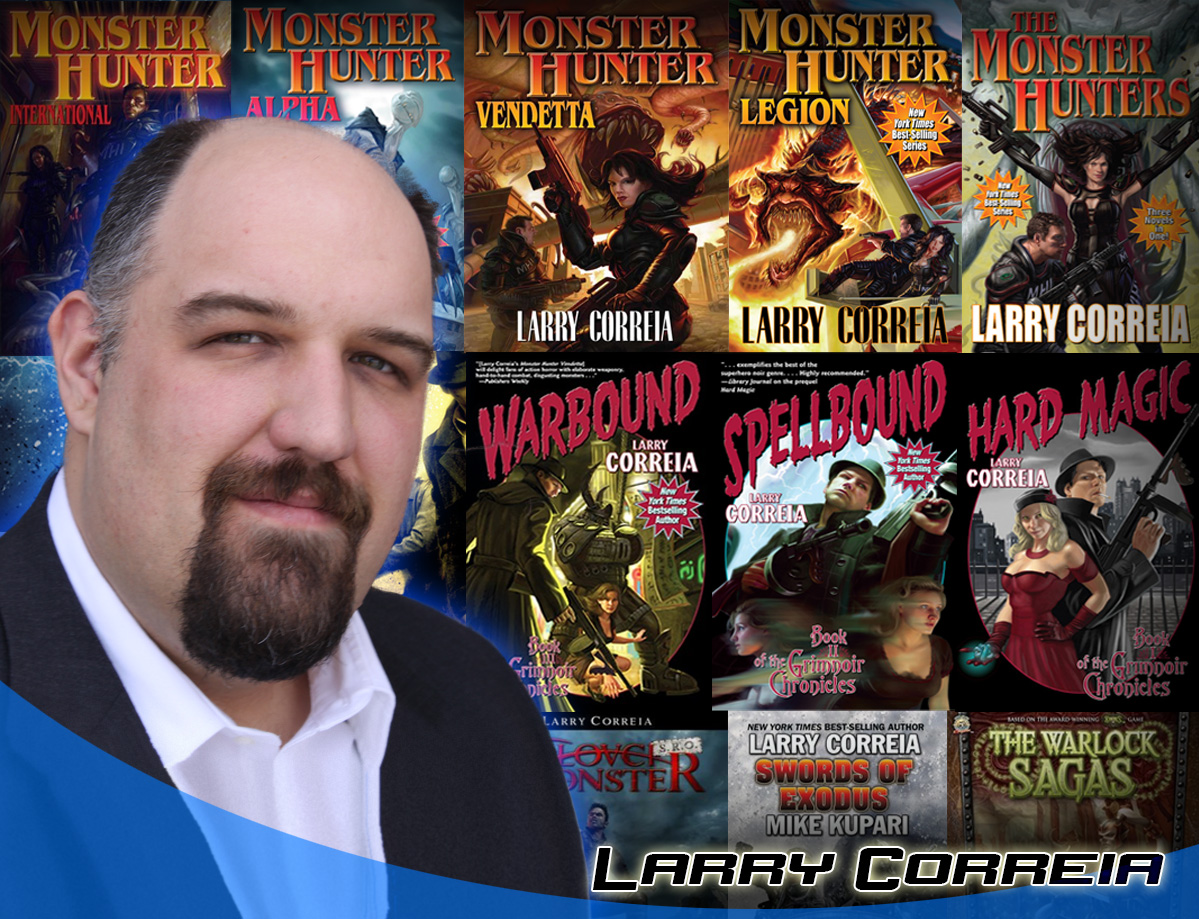
Larry-CorreiaLarry Correia had a problem – he was getting what he wanted. For years he’d been whining about the “liberal intellectual elite” that run the Hugo awards (which is laughable to anyone who’s seen the sausage made… but I digress), and how they would never give a conservative down-to-earth guy like him a fair shake.

Fortunately for him, Larry is a popular guy. Say what you want about his politics or his attitude, he’s got some major online charisma. I may disagree with some of his politics, but his blog is a great read. This man can lead and inspire. So he does what any popular guy who wants to win a popularity contest does – he told his fans to vote for him.

Larry runs on the same formula that a lot of the “persecuted majority” use – anger at what they view to be an authority figure for failing to give them the recognition they feel they deserve, combined with contempt for that authority figure and constant crowing about how much better he is than them (he often brings up that he’s in the top 1% of authors based on royalty income). It’s the classic inter-generational conflict story, anyone who’s had an asshole father can relate to it. It inflames the passions and makes you want to cheer for the young challenger, and we all love it.

The problem comes in the winning. Once the challenger marshals his resources and overcomes the haughty authority figure it becomes apparent to pretty much everyone that he is now the institution he hated. Now that he can point his legion of followers at the works he most wants to promote and have them respond, HE gets to wield the power of approval to decide who should get the coveted acknowledgement from on high. Oops.

Moreover, all that talk about how they’re a bunch of dicks and he doesn’t care about their stupid approval anyway, cuz fuck those guys, is shown to be a sham. Obviously he did care about their approval, because he went to great lengths to secure that approval. Before he was all Groucho – “I wouldn’t want to be part of that club even if they would have me,” now he’s all Honey Boo Boo “I should be getting this prize!!!”  Makes him look like a kid with daddy issues. Double oops.

But Larry ain’t dumb. In fact, Larry is a friggin genius. Because Larry has a secret weapon. Larry had his fans get Vox Day nominated! As Larry knows, the majority of the SF community *hates* Vox Day. Mainly because Vox Day is a neo-reactionary and loud about it. He’s famous for his racist, sexist, anti-liberal rants. He’s the guy that shows up at the party with a giant sack of ripe dog shit and starts throwing shit at everyone. Predictably, the SF-blogosphere has a collective seizure. Instantly all attention is off Larry and onto Vox Day. Success!

Moreover, this thumb-in-the-eye probably feels awesome for Larry. All those stuck-up pricks now have to include this guy they hate, because they were dumb enough to trust in their stupid system which they thought would exclude people they didn’t like! Their party will be, well, probably not ruined… but certainly marred! This will stick in their craw for a long time. Vengeance has been achieved. Double success!

And, of course, there is both the prestige of receiving a Hugo nomination, and the increased sales it will generate. And the validation that one gets when successfully pulling off a move like this. Quadruple success.

In the social status game, Larry manage to strike a decisive victory this year. I doff my hat to him, it was a master stroke. I assume that for the coup-de-grace he will shun this year’s Hugo ceremony. While his attendance may irritate some people, it will give them the opportunity to either shun him, or show their good graces by accepting him anyway. Either option will be a bit of a loss. Showing his contempt with a pre-emptive rejection of the entire affair is the best possible play, as far as I see it.

I’m excited to see what the next move in the game will bring. :)