Nov 062014


10485833_10154806582505704_1817723571991009999_n
Recently seen on Facebook. For those who can’t view the pic, it says “1. Guy Fawkes was not an anarchist, or even an anti-monarchist. The Gunpowder Plot was a religiously motivated attack, with the intent of replacing a Protestant King (James I) with a Catholic ruler (Princess Elizabeth). The notion of Fawkes as an anarchist revolutionary comes entirely from Alan Moore and David Lloyd’s imaginations. 2. Time Warner owns the rights to the popular Guy Fawkes image used by groups like Anonymous. With each purchase of a mask, you are actively giving money to one of the largest media companies in the world, thereby feeding the beast that you claim to be opposing”

It’s things like these that make me love watching the dance of humanity. We’re fascinating to watch. It’s much like the fact that Che Guevara shirts/images make tens (hundreds?) of thousands of dollars for capitalist companies every year. In the end, does that really matter, or is it what people nowadays make of it that matters? Jesus (or the person he’s based on) certainly didn’t intend to become a religious icon, but his re-interpretation by Paul has had more impact on human affairs than the original man could have ever imagined, or likely even wanted. Aren’t Moore/Lloyd/Time-Warner modern Pauls, and therefore creating modern myths that channel the zeitgeist in a very valuable way?

This is all to say – I like my myths, and I don’t care about original intent. This is the application of Death of the Author to real life. I think these tales are more romantic and I like that they’ve been twisted and mythologized)

Oct 282014
 

GeorgeCarlinI’ve run into a weird form of selfishness lately.

Anyone who knows a writer can attest that writers are neurotically insecure about themselves. I don’t know if the following is the case for other writers, but my every act of creating something and putting it out is a plea for attention. “Look at what I did. Affirm my existence. Validate me.” I am unapologetically narcissistic – I write because I want attention, and I strive to write well because I want a lot of attention.

As such, I consider writing to be a fairly selfish activity. I’m not doing it to better the human race, I’m doing to feed my own ego. I feel that if I really cared for the human race I’d go back to college and become a research scientist.

But working for myself on something no one else will see triggers selfishness feelings as well! Right now I’m building a chicken coop with my SO (OK fine, she’s doing most of the work, I’m just helping). It feels good to be bringing something new into the world. We are literally creating wealth. Huzzah! But who will be the beneficiaries of this labor? No one but ourselves. No one else will enjoy it or get use out of it. It is, again, something I’m doing for myself. And despite the fact that it’s making a new thing, it feels tainted.

Our house renovation feels similar. Who, right now, benefits from this house being fixed up? Who will enjoy this new beauty? Primarily just us…

Oddly, I consider going to work somewhat altruistic. I’m doing something unpleasant for someone else. Or if not unpleasant, at least something they can’t do for themselves. The fact that they are willing to give me money to do it means they value what I’m doing. I wouldn’t do it without that bribe, so it’s obviously not something I want to do. Unpleasant, and for someone else – fits the basic criteria for altruism. Furthermore, since I’m working at a for-profit company, they are making some amount of money off of my labor (no point in going through the trouble of employing someone if you aren’t making money in the process). Whatever that extra amount may be, it is wealth I’ve created and not taken for myself – thus an altruistic contribution.

At some point, either in the school system of middle-class suburbia, or the Puritan churches of middle-class suburbia, or perhaps a mixture of both, I managed to internalize an ethical system that works out really really well for good ol’ American Capitalism, by keeping the working class solidly working for others and non-bootstrapping.

This is kinda fucked up.

I will take solace in my 40-hour-a-week communion.

Oct 222014
 

berlin-wall-flagMy parents escaped from communist Poland when I was a wee baby. And there was a level of actual “escaping” involved, the country was trying to prevent their leaving. Preventing one’s citizens from leaving a country, despite their wishes, is a pretty infamous characteristic of totalitarian regimes, especially communist ones. Our media still criticizes North Korea for it.

How are the Western countries trying to stop people from leaving their state any different?

For that matter, can anyone figure out why the UK (and other countries) are trying to prevent their citizens from running off to the middle east to join IS? Shouldn’t that be encouraged? It’s gets dangerous radicals out of your country, and it makes them happier. AND it makes all their former neighbors safer and happier as well. What is the downside? Everyone wins. And you aren’t faced with the bad publicity of attacking your own citizens within your own borders, which has always been a red flag of totalitarianism. Do we really want to become more like the very societies we’ve been taught are evil for so long?

What am I missing here?

Oct 152014
 

open-doorContinuing from yesterday, there is nonetheless a bit of fear when one first opens up a relationship. Intellectually you know it’s silly, but on an emotional level there’s still that hesitation, that worry that you’ll lose the one you love. It’s a lot like the first time you’re going to jump off the high diving board into a pool. At some point you just gotta trust your reasoning and jump.

One of the biggest steps forward in my current relationship was when I wasn’t scared of losing my SO anymore. Like, she can go and have fun, and I know she loves me, and I don’t worry about losing her to anyone else. They might be a fun lay, but they aren’t me. I’m not worried she’ll leave me for people she enjoys shopping with, or gardening with, or whatever. This is just another activity, and I’m not gonna lose her to someone else she does it with from time to time either. Having that trust is really what makes it easy.

The thing is, the openness is what builds that trust. The first time you don’t really know, right? You have faith, because you love the person and you think they love you back. But it’s just faith, it isn’t knowledge. And then once it happens a few times and you still love each other and the world didn’t end, that’s when it really sinks in. “Oh, yeah. This is real. I can totally trust her, and she’ll stay with me anyway” It’s kinda cool.

The level of comfort that sort of trust brings is awesome, and it makes the relationship better in every other aspect. The guarding, drama, and fear/uncertainty of monogamous relationships? Ugh – no. Would not buy again.

Oct 142014
 

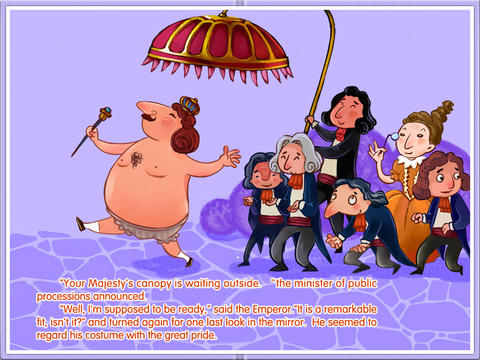
Emperor's New ClothesI was just talking with someone interested in monogamish relationships and the looming specter of Jealousy (insert ghostly “oooOOOOoooOOooo” sound). As far as I can tell, jealousy is an entirely invented social construct. It’s like God, in that we all have to pretend to believe in it, and act like we believe in it, when we don’t really feel it at all. But we see everyone else acting as if it exists, which convinces us that it is real, and so we have to play along as well or risk being the one weirdo freak. And no one realizes that everyone is faking it.

When I let it go I found that it was complete BS. Maybe it really does exist for some guys? But I think more than anything it’s just that we’re told over and over “You have to be jealous and beat up anyone who looks at your girl, or you aren’t a real man!!” And losing your man cred in this society is fucking TERRIFYING.

I think that’s what the real motivator is. Everyone knows the patriarchy is shitty for men as well as women, but they don’t mention it too much because it’s a lot shittier for women. Well, here’s one way it’s shitty for men. You have to pretend to be jealous, and bluster about and say you’ll attack anyone who touches your mate, because if anyone sees someone other than yourself engaged in sex play with your mate you are automatically less of a man. You lose status, you can’t be taken seriously, you are something to be pitied.

Fuck that. I’ve powered through status-shaming several times already in my life, and every time I’ve been better, freer, and happier for it. Now I respect people who are in open relationships far more than those still stuck in the social straight-jacket of enforced monogamy. With the limited number of years we have here, why would you do that to your life? It’s kinda sad.

And once I let that go, and said “Fuck society, this is bullshit” I actually found that the opposite of jealousy happens. I was happy to see my girl getting that sort of pleasure. Why wouldn’t you want to see the person you love happy? And more than that… it was a complete turn on. It’s really fucking hot. At least, that’s been my experience.

Oct 082014
 

snob1Up until yesterday I completely agreed with Bad Horse’s assertion that art has been caught in a spiral of self-isolation.

>The elite learns to associate inaccessibility with quality, and criticism with amateurism, and produces more and more inaccessible works

The song linked at the top of his post sounds to me like cats walking across untuned fiddles, rather than a masterpiece of “the greatest living composer”.

Then yesterday I was introduced to Mike Oldfield (thanks to Floornight). And while this isn’t something I would play at a party or recommend to most people, I enjoy large parts of it and find them quite musical. Which seems to me like I’m not applying consistent standards across Oldfield and Ferneyhough.

I’m reminded of the RadioLab episode that informed me of the riot following the 1913 debut of Stravinsky’s Rite of Spring. It’s a good story, but to sum up – it appears people most enjoy music that is similar to what they know, but different enough to challenge them a bit. The brain naturally predicts what is coming next in a song based on melody, beat, experience, etc. And when that prediction is wrong in a way that is surprising but still seems “fair”, the brain is delighted. Rite of Spring was slightly too different for its time, thus causing the pain/hate.

This explains why as I’m getting older, less and less new music appeals to me. I’ve heard much of it before. Humanity has been rewriting the same basic songs for generations. Which is OK, the young kids coming up need their own version of Madonna or whoever. Everyone needs that foundation to build on, there’s only so many variations on those basic building blocks of music, and using your parents songs about Vietnam certainly isn’t gonna cut it. (Seriously, watch the Pachelbel Rant video, it’s great and makes this point better than words can)

We get bored as we become familiar with the basics. This is the instinct that makes people say things like “The best music/video games/whatever came out when I was a teen.” They still had new and interesting things to discover and be delighted with then, before they’d become familiar with what was widely available. I remember when the new X-Com: Enemy Unknown came out, and all I could think was “I liked this a lot better back when it was called Shadow Watch” But no one else had played Shadow Watch, so everyone else loved it. /shrug

Which brings me back to Oldfield. I suspect that if I hadn’t listened to a lot of modern music, I would consider it noise. But as it is, I’ve been swimming in rock/alt music for 30 years, and so I recognize a lot of musical tropes and habits in Amarok that draw me in and have me guessing about what’s happening, before screwing with me a bit. And it’s kinda fun. Either I haven’t listened to enough rock, or else the song is still partly crap, because some parts of it just sound jangly and awful to me. But I’m starting to see how with another decade of being submersed in rock music even those bits might begin to take hold.

I never listened to much classic. I can identify maybe a half-dozen orchestral songs (Beethoven’s 5th, Flight of the Valkyries, Oh Fortuna, Canon in D, the William Tell Overture, Fur Elise… what else? Not much.) So I don’t have any of the foundation needed to appreciate Ferneyhough – assuming that there’s anything there to appreciate. Point is, I wouldn’t know either way.

In a way, I’m sad for humanity. We are stuck on the entry-level of music appreciation, as we keep dying every few decades and the new generation has to start from scratch. But it gives me hope for the future. Various people have said they can’t imagine living for eons, that they’d get bored of everything. These people probably are stuck listening to what is being played on the radio, or re-listening to their formative albums. There ARE people digging deeper into the minutia of music, creating things that sound bad to new listeners, but which appeal to the hardened genre-savvy antediluvians. The more esoteric it gets the smaller the listenership, so it doesn’t seem like something that could support many people. But fortunately, art isn’t always driven by monetary concerns.

Oct 012014
 

640This post is just me being intensely annoyed with “my tribe.”

For those unfamiliar with the injunction against feigning surprise, the origin (AFAIK) is from Hacker School’s first social rule:

No feigning surprise. The first rule means you shouldn’t act surprised when people say they don’t know something. This applies to both technical things (“What?! I can’t believe you don’t know what the stack is!”) and non-technical things (“You don’t know who RMS is?!”). Feigning surprise has absolutely no social or educational benefit: When people feign surprise, it’s usually to make them feel better about themselves and others feel worse. And even when that’s not the intention, it’s almost always the effect.

And I think we can all agree it is bad form to create a caricature of an opposing position and then try to spread the belief that the caricature is an accurate portrayal of your opponent. I am sorely tempted to call this an Eggers-Man strategy, but that might be construed as Eggers-Manning Dave Eggers.

But what’s really irritating is seeing a satire being shared half a dozen times with OMG! feigned! disbelief! that anyone could do something so ridiculous!

Yeah, I’m talking about the “Fundamentalist Christian Rewrite” of Harry Potter.

Yes, I know about Poe’s Law. And I’ve read plenty of Chick Tracts. But claiming to not know this is a satire (or an extreme outlier) and that you could confuse it for normal christianity is to say you’ve never in your life met a Christian, and you suspect they have horns and can be warded off with garlic. People are simply pretending to not know this is satire so they can publically demonstrate just how stupid they think Christians are. It’s a game of “I think Christians are even stupider than you think they are! I am honestly befuddled by this satire, it is indistinguishable from how stupid all believers must really be!”

Remember how confounded you were when all those Red Tribe people started sharing that Onion article about Planned Parenthood opening an $8B AbortionPlex? And how you thought “There is absolutely no way anyone thought this was real. Anyone who mistook this for real must live in a completely insulated reality where liberals are the Dark Ages equivalent of baby-murdering Jews, and must also be completely and utterly retarded.” If you shared one of the “ZOMG Look At What These Christians Are Doing LOL” articles going around, congratulations. There is no functional difference between you and the AbortionPlex sharer.

The thing is, there’s plenty of real stupidity in christian belief. We don’t need to go making things up. And the complete lack of reading comprehension just makes me want to claw my eyes out. Is our side really that unable to read things? Then how the heck can they claim to be the smarter side? Or are they just that willing to misrepresent and mock the other side? Then how can they claim to be the less evil side? Is this what we want our social discourse to be? People sharing parodies of the other side and pretending they’re real? Do we see this going anyplace good?

If not, cut that shit out. And maybe comment on your friend’s relink with “Don’t be dumb, it’s a satire. We’re better than this.”

Sep 302014
 

The_Doors_of_Perception_by_cheapexposureI read an article on the internet, as I am wont to do. This one was about how modern games are lacking a certain innovation that was around in the classic era of gaming, and speculates it may be that older hardware restricted older games to have to focus tightly just on the really good stuff, whereas modern games can sprawl and waste resources and lose focus. Maybe that’s the case, I dunno. But I suspect something else is at work here.

I lean heavily toward bio-determinism. I suspect that older people are more cautious and younger people are more headstrong and reckless not because of differences in life experience, but overwhelmingly due to hormones and biochemistry. If you were to somehow magically stick a 60-year-old man into the body he had at 18, he’d start acting much more like a reckless teenager rather than a wise patriarch, life experience be damned. Stick a teenager in a 60-year-old body and he’d slow down right quick and see the wisdom of contemplating his actions a bit. (Tangentially, I suspect the trend of the constantly-raising-average-age of the population over the last century is at least partially responsible for the lower rates of open warfare in industrialized countries. Wars are at least partly hormonal. I think one of the reasons we jumped so quickly into Iraq after 9/11/01 was because the Taliban fell too quickly and our society had not yet collectively burned through the desire to hurt Arabs in revenge, so we went looking for another target to vent on. Maybe a good leader could have redirected that energy rather than encouraged it. But I’m getting off track.)

It’s been noted quite a bit in the past decade(s) that play is the natural way humans learn. In many cases, simply encouraging play is about as effective as forcing kids to go to school. Game designers already know this, a large aspect of game design nowadays is how to manage the learning curve – effectively teaching the player a new skill in a way that is challenging them to explore new aspects of this skill at every level, right on the edge of their ability without being past it. Portal is one of the most acclaimed games of this century for this reason – every time the player is reaching mastery of a portal technique a new aspect of portaling is revealed to them, a way to apply what they’ve learned in a novel way that unlocks new avenues to explore and learn. It is a learning super-stimulus. (plus GLaDOS is awesome).

Two things happen as you get older. The first is simple experience – once you’ve gone through your first good FPS, or Tower Defense, or RTS, you’ve exhausted that learning path. Further games in that genre will always be less compelling unless they introduce a new mechanic to learn. But much more salient to my point – the older you get the less biologically driven you are to learn things at all.

While I don’t think learning ever becomes not-fun, it becomes less and less fun compared to other activities as one gets older. And since play is the act of learning, play itself simply becomes less fun due to hormonal reasons. I’ve started to notice this in myself as well – I get less enjoyment out of learning new things than I do out of creating lasting stuff (like a chicken coop, or a YouTube short, or a podcast). Before learning would be an end in itself, and if I never applied any of it I didn’t care. Now it’s often a means to an end, and I get impatient with learning things that I don’t think I’ll have much use to apply in the real world. Video games and boardgames just aren’t that interesting anymore.

I can see how this trend could continue, to where I get annoyed with having to learn new things even if they ARE applicable. Like how to use that new-fangled VCR or SmartPhone. I just want to Do My Thing, why’s everything gotta be so complicated?

I am tempted to throw out evo-psych justifications for this (early life is for learning, mid-life is for doing. What’s the point of just learning if you don’t do stuff with it before you die?) But we’ve all been warned away from falling into the trap of inventing just-so stories for our pet observations, so I’ll leave it as a parenthetical and not expound on the issue.

What I’m driving at is this: it’s not that new games suck, and there was a golden age of gaming. This is just yet another instance of a generation aging and saying “Thing X really reached its peak back when I was in my teens & twenties. That was the golden age, the new stuff just isn’t as good.” And it’s not that the new stuff isn’t as good. I see tons of 20-somethings who love the hell out of the games coming out now, and raise an eyebrow at what we call the Classics. It’s that we’re getting older and our brains are resistant to New Things (including new learning and play). I find this is the case with everything ever labeled as having a “Golden Age.” Sometimes I look at the Golden Age of comics and I think “Wow… I’m glad we live in an awful degenerate age, cuz that Golden stuff is crap.” When we try to play and expect to get the same reaction as we did back when our neurochemistry was primed to most enjoy playing, the fault isn’t with the games nowadays, it’s with your understanding of what is enjoyable to you given the body you are in.

Sep 182014
 
writer-at-work-229x300Colleague/Acquaintance (and possibly Friend? I always feel a bit weird using that word if it’s someone I don’t hang out with regularly. We have a great time when we’re together somewhere, but I don’t think I’ve ever been to her house for a party, or vica-versa, and I don’t want to make claims to a friendship that isn’t actually there. Due to a very isolated childhood I consider people either very-close friends or strangers, and I’m not sure what to label the in-between areas. So lets go with Acquaintance) Rachael Acks posted yesterday about the Amazon/Hachette throw-down. I have one point of disagreement in a large (and well-written) post, so as dictated by long internet tradition I will now blog about that disagreement and not comment on anything else. 
> Companies are not going to value us or our work as long as we treat it as a thing without value. This is our problem to solve, because we let this happen. […] we’re too fucking cowardly and blind as a society to smack [corporations] with a rolled up newspaper and say NO.
 
That’s all well and good to say, but the problem with us doing anything is that the vast majority of us aren’t controlled by me. While making money off writing is the dream, it is not the reason that anyone I know of writes. People write for the same reason they create music, or act, or make any other piece of art – to be seen by others. That’s putting it crudely, it’d be more charitable to say something like “To touch others, and connect in a more fundamental way through sharing this piece of ourselves.” But you can’t do that without being seen. The real payment is wide-spread publication, the money is just a bonus. Everyone I know who writes would still write for free if getting paid for it wasn’t an option. Heck, Rachael published free fanfic and raved about how good it felt.
 
So while one can say “We should all stop devaluing our work! No more providing Service X (stories, in this case) without decent compensation!”, how does one actually stop the vast majority of writers who just want to be noticed and appreciated from making their work available, without compensation? Force is out, and social shaming is becoming less and less popular. Even Rachael spoke out against it (see previous link). As long as people love to write and do it for it’s own sake, wages of writing will be depressed. It’s the same reason that it’s nearly impossible to make a living as a straight male porn actor. People would do it for free in their spare time, so why would producers pay extra?
 
Money is used as a motivator to get people to do things they don’t want to do. I would not be doing accounting in my spare time if I was independently wealthy. I’d drop that like a chocolate donut I picked up and then realized was actually a round-shaped turd. People generally don’t get paid to do things that people love to do for their own sake (like eating actual chocolate donuts).
 
Every year a few people win the Writing Lottery for reasons that appear to be entirely random, and they can make a career of it. I admire them, and wish them all the best. I read quite a few of them. If I were to ever win that lottery for doing something I already love to do, I would be crazy happy about it. But I don’t count on it. I expect, like almost everyone, to hold down a job that produces something people need enough that they’re willing to give someone else money to produce it, and also write when I have time simply for the love of writing. If I can make some money on the side, all the better.


Sep 142014
 

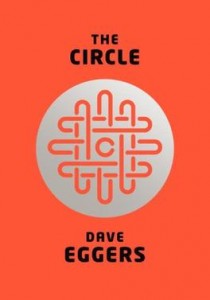
The_circleThe Circle, by David Eggers

Synopsis: Old Man Eggers gripes about social media and kids these days not having enough concern for privacy.

Book Review: Sometimes you hate a book so much you just have to dedicate hundreds of words to expressing that hate. This is one of those books.

I said before that I’m not that great with subtlety, but holy moses does this narrative over do it! Eggers lays it on with a trowel! The first twenty pages are nothing but saying how this company is the best company EVER and Mae loves it SO MUCH and all her previous companies SUCKED and describing in detail just how great every single thing is! An eloquent speaker is shown to be really gifted not by any action on his part (he is entirely ridiculous throughout the book) but by being described as “eloquent and inspirational, so at ease in front of thousands.” Informed Abilities, yay. :/ First the believability of the prose tanked, then the believability of the characters, and then the entire world came soon after. But I’ll get to that.

I’ve also mentioned that I can’t stand plots that only exist because the protagonist is absolutely pathetic, or stupid. Mae is both. She is the most pathetic imitation of a human I’ve seen in ages. Whining, simpering, idiotic, and never once stands up to anyone for anything. When she finds out only 97% of her co-workers love her she starts jibbering about how 300 people despise her and are looking for an opportunity to actually murder her. But if anything she’s above-average for this world, because…

This story could only exist in a world populated by Jersey Shore cast members. The entire world is completely retarded, and entirely self-involved. When it’s revealed that a character’s distant ancestors owned slaves she has a melt-down, and the vast majority of the people around her abandon her because (it is said) everyone believes slave-owning is genetic. Or when the government figures it would be a great idea to allow direct voting on all issues and let a single private company be in charge of all vote counting in the nation. Because that’s exactly the kind of power governments hate holding for themselves!

This book is a modern-day Atlas Shrugged in the feverish way it must warp reality and mutilate human nature in order to make its ideological point. It is an ideological point that pertains only to an imaginary universe, and so completely fails as a wake-up-call or dire-warning or whatever it was trying to do. At least Atlas Shrugged had some damn good Competency Porn to keep me interested. The Circle just has floundering jackasses. And what is the message it’s trying to promote?

Kids these days and their damn social medias!! They’re over-sharing and destroying all privacy!! /cane-shakegrump kong

I took this somewhat personally because I recognized that he was attempting to caricature my culture in the book. It’s like seeing the most grotesque straw-man of your culture being railed against because of the horrors it will impose upon us all, and realizing that someone may think this is actually representative of what anyone sane thinks. (Privacy Is Theft? WTF?)

Reminds me of NPR’s recent idiotic story about Why Atheists Need Captain Kirk” which sparked a minor internet backlash by claiming that most atheists are “Spockians” and “in a Spockian universe there is no such thing as nature, there is just material process, particles and fields, in the void. Nor, for the Spockian, is there any such thing as wonder, not really; for what is an emotion, but a conjury of particles in the nervous system?

Which makes me wonder if the author has ever met a single atheist. While everything in the article is technically correct, the implication is that the world is over-run with Spockians and what we really need is some Kirks to bring humanity to atheism. When in reality the Spock-ism is (at the most) a phase that teenage atheists go through for a few months when they first deconvert, and EVERYONE ELSE who actually exists in the atheist world is VERY MUCH like what the author is impassionately pleading for. It’s like Noe has never read an actual atheist, and is instead stuck with caricatures that the opposition paints of them. I believe that accounts for the vast majority of the negative reaction the article received.

This book is doing the same thing. Being portrayed in such an alien manner and then lectured at for the sins of the caricature is intensely irritating!

Obviously railing against Kids These Days has been popular for millenia, and Eggers is just jumping on the bandwagon (which, BTW, fuck you very much. Millenias are fucking awesome). But here’s the thing, I’m 34 and I don’t even really count as a Millenial. I’m barely a decade younger than Eggers is. I just happen to have friends that are younger than me! How insulated from the younger generation must he be to think this is in any way a decent portrayal?

There was a few people in our book club who really enjoyed the book, one my own age that said it was obviously a hilarious, over-the-top farce. A wacky comedy that is intentionally way out of proportion and ridiculous in order to be funny. Looking back on it, I can see that may have been the intention, but it was poorly executed. It felt much more like an Atlas Shrugged style trainwreck than a Terry Gilliam piece.

But more to the point – it wasn’t self-parody, it was distorting and mocking others. It felt like blackface. The minstrel shows may very well try to excuse themselves by saying “Look, it’s all in good fun! We know black people don’t act like this, it’s just a joke! Can’t you enjoy the comedy?” To which the only reply is Fuck You.

And on a final tangent, aren’t cautionary tales supposed to be about bad worlds? In Atlas Shrugged the entire world falls apart. In 1984 a military dictatorship controls all thought and expression. In The Circle… the vast majority of the population gets exactly the government they want, and they have the tools they need to share everything exactly the way they love to! It’s kinda a utopia for them. Yes, they’re all flaming idiots, but that was presupposed by the world and is not due to the tech we’re being cautioned against. Of the three or four people in the world who actually want privacy, as long as they aren’t friends with Mae they can live as hermits or something. When the overwhelming majority of your population is happy and fulfilled, you have kinda missed the point of a cautionary tale.

So yeah – literally incredible world, unlikeable protagonist, sledgehammer metaphors, stupid message, and pissed me off personally. I realize Eggers is laughing all the way to the bank, but obviously I’m giving this a Flaming Not Recommended.

Book Club Review: I hate to say this, but this was one of our most lively discussions this year. One saw it as hilarious parody, a couple thought the book was a wreck, a couple thought it brought up good points about privacy, and one thought it was a cautionary tale about the danger of cults. Getting a lot of people together who have strong opinions on a book, and having those opinions be greatly varied, makes for good discussion. If you can stomach the book, and you have a moderate+ spread of world-views in your book club, this makes for some really good talking. So, as much as I hated it, I must say that for book club reading: Recommended.