Nov 152013
 

UseofWeaponsUse of Weapons, by Iain M. Banks

Synopsis: A series of shorts taking place during lulls in violent conflicts, examining the banality and futility of war, of redemption.

Book Review: Technically there are two storylines in this book, my synopsis only covers the important one, which is told in reverse. The normal-progressing storyline is too long, and drags in many points. The two storylines are interwoven, and thus the chapters alternate between them, but the book would have been better served if two-thirds of the forward-progressing story had been cut. I suspect he felt the same, because Banks’ prose never rose from the page in those sections. I could see the right words being used, in the right order, but somehow the descriptions never kindled my imagination, the world never drew me in. I put this criticism up front, because the meat of the novel is mind-blowingly awesome.

The reverse-order storyline is incredible. Every single story is purified, concentrated shot of isolation, disassociation, or resignation. A silent, screaming, desperate pleading for purpose, or forgiveness, or ending. The journey is slow in places, but the payoff is amazing. Banks’ use of reverse structure is phenomenal, and we all know how much I love structure-play (so much that Vellum is my favorite book ever). Even better – the story could not be told if he had used the traditional structure. His use was not only well-done and very aesthetically fulfilling, it was necessary due to the story he was telling. I know I’m decades late to the party, but – Highly Recommended.

Book Club Review: Also a stellar book for a book club. There are several themes that run deeply in this book which afford great exploration in conversation. The titular “Use of Weapons” is a rephrasing of the question “what means are justified by the ends?” What weapons are you willing to use in order to achieve a greater good? Is the horror of war justified if it leads to a better world? What atrocities can be overlooked for victory? The question is repeated over and over in dozens of forms – Should we retreat from this area, which holds a sacred temple but is indefensible, in order to win the war? Should I leave dozens of people disfigured to escape with a diplomat who can avert the next war? Banks goes from the broad strokes and focuses down to the extremely small – a single person, a single relationship – to really bring home the question and truly make it personal. Are these means justified by the ends? He even manages to make the ends abstractedly good by never telling you why the people at war are fighting. The protagonist is convincingly shown to be a deeply good and deeply caring person. His guilt and quest for redemption consumes his entire existence for decades, maybe centuries, yet he never repents his original act. This really drives home that what he was fighting for was, at least in his mind, the greatest of all causes. We are not told what it is, and so we insert our own dreams, our own most holy values, and ask… what weapons would we use to defend them?

Highly Recommended.

Oct 252013
 

spider goddessI said yesterday that I get the impression Daniel Abraham is not as impressed with truth and honesty as most people say they are. He almost seems to be saying there are times when it is better to suppress the truth and lie to the public, if it results in better outcomes. It even looks like he’s saying that the Freedom to Lie is an important one, and to take that away from people is to destroy a portion of our free will.

I have been called naiive for this, but I disagree with that on a cellular level. That is a freedom we’re better off without. And it’s probably just a projection of my own bias, but it leads me down an interesting path…


BE YE WARNED – HERE THERE BE SPOILERS


Daniel Abraham does look to be saying in these books that outcomes are more important than intentions. Geder is good-hearted and personally likable. He simply wants to be shown some basic human respect and left to read his speculative fiction/essays. His intentions are relatable and if not “good”, at least not blameworthy. And yet despite his good character and innocent intent he commits atrocities – nuking a city, giving power to foreign cultists, and starting a war of conquest.

Dawson’s intentions are honorable. He wants stability and order. For the law to be upheld and honor be served. He is strong-hearted and firm, even if he is a bit of an elitist prick. He is basically a good person. And yet his actions lead to a devastating civil war that almost tears his kingdom apart.

Both are cases of good intentions, but bad outcomes.

The Priests of the Goddess, on the other hand… they are painted as evil. They’re religious fanatics from the desert. They want to convert everyone and bring the world under the rule of their goddess. They worship a giant bug. They have spiders living in their blood – their flesh is literally corrupt. But what are their outcomes? They abolish falsehood and deceit wherever they go. They want to unite the world to put an end to all war. All we’ve seen them do in the narrative so far is A) reveal when others are lying, and B) use their powers as weapons of warfare – which anyone involved in a war would do… and which saved lives when employed! If Dawson hadn’t had been so stubborn they could have ended the siege in a matter of days, saving the lives of soldiers as well as preventing the death by disease and starvation of hundreds (thousands?) of serfs and peasants! Oh, and I guess they’re also hunting for a heretic that is trying to undermine them and kill their goddess, but you can’t fault them for that.

I am reminded of The Sword of Good (also available in audio). Could this series be a more in-depth exploration of that theme? Will this end up being a parable about how intentions don’t matter nearly as much as outcomes? That maybe you should shove your “good intentions” up your ass and go with the outcome that results in millions fewer people dying? I hope so. :)

Oct 242013
 

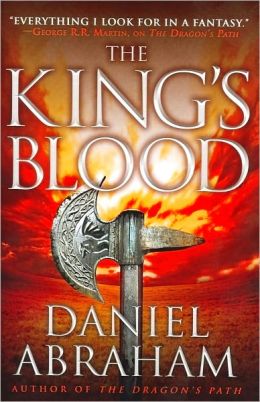
king's bloodThe King’s Blood, by Daniel Abraham

Synopsis: A religious order works to bring their ancient evil goddess back into a high-fantasy world. Wars, intrigue, and civil revolt erupt. This is the second book in a series, preceded by The Dragon’s Path.

Book Review: Daniel Abraham excels at characterization. Every single character is a vibrant, living individual, with a strong personality and internal motivations. They live beyond the mere pages of the book. His plotting is also well-thought out and intricate. The political realities of his world, combine with this characters he’s populated it with, lead inevitably to tragic outcomes. However these results are never due to contrived situations or authorial fiat, but arise naturally and unavoidably because due who the characters are. The seeds of their demise are sown deeply within themselves. There are many class conflicts and deep-rooted problems. This is intelligent fiction for intelligent readers. Unfortunately his prose is a little flat, I never truly fell in love with the world like I did in Way of Kings, or Daniel’s earlier Leviathan Wakes
(with Ty Franck). The book also suffers from Second Book Syndrome – it feels primary as a way of bringing the action from the first book to the next book without being critical or exhilarating in its own right. Compared to Dragon’s Path, the stakes in this book are less personal to the protagonists (generally), and the tension is less tense. This is a good book on its own, but not a great book. I would Recommend the previous book – The Dragon’s Path – and I want to say this one is right on the edge of Recommended, but I honestly think that will depend on the following book(s) in the series. So – provisionally Not Quite Recommended.

Book Club Review: This is another great book for book clubs. Abraham makes a lot of commentary on issues that are ripe for discussion. The conflict between the monetary power of the merchant class and the political power of the noble classes is explored. Our society has decided that the merchants are more deserving of their power, having earned it – but their mercenary dedication to profit seems to hurt us in other ways. Wouldn’t a noble class with a mandate to rule well and a strong sense of noblesse oblige work as well or better? Geder seems to represent the forces of Progressivism, being liberal and educated and very geeky, and he is responsible for atrocities and is an absolutely awful ruler. I don’t know if Abraham is as interested in the Neo-Reactionaries as I am, but Dawson seems to represent the forces of Neo-Reactionism very well. He is intelligent, honorable, and rules well and with integrity. However he’s also an elitist prick who considers the common people to be in a class slightly below human… and he ends up plunging the kingdom into a vicious civil war. Abraham is as good at taking both sides of a complicated issue as he is at portraying all sides of a complicated character.

Furthermore, based on this book and Leviathan Wakes, I get the impression he is not as impressed with truth and honesty as most people say they are. He almost seems to be saying there are times when it is better to suppress the truth and lie to the public, if it results in better outcomes. Or does he? His nuance, intelligence, and ambiguity make for great discussion, we went on for quite a while. Recommended!

Oct 142013
 

VoodooMenDogs_smSeveral of the people in our book club who disliked Tricia Sullivan’s Maul said they were disappointed by the fact that it was billed as “feminist SF”, because they didn’t consider it to be particularly feminist. Certainly not in the ways of older feminist works that explore gender politics and imbalances in societal power. In contrast, I thought it was quite feminist, but in a more internal way.

Sex has always been a part of feminism. Obviously sexual agency is paramount to all humans, but there has been some disagreement as to what sexual agency really is. There are a number of leaders who believe that women shouldn’t ever go out of their way to be pleasing to men – that this cheapens and demeans them. After fighting so long and hard to be viewed as more than simple sex objects, it’s a travesty to choose to objectify oneself.

But the thing is – being objectified can be fun. When you feel safe and you like the people around you, it is pleasurable to know that they take pleasure in looking at you. Sometimes it’s exciting to be used as an object for someone else’s sexual gratification (yes, only with consent). I find that pleasurable, and I know many others who do as well.

I struggled for a long time with the fact that what is sexy (objectification, submission, machismo, etc) is also intellectually unpalatable. We’re supposed to respect each other and treat each other as equals at all times, right? This was part of the discourse as well – Dworkin once stated that all penetration is violation.

Ultimately, respecting someone includes respecting their desire to be objectified in certain settings. (Or as Daphne Greengrass would say “girls should be allowed to pursue boys in whichever way they please”). Treating each other equally means acknowledging that someone has the mental capacity and maturity to decide what they’re attracted to and how they want to fuck. It means being able to draw a line in life, saying “This is how we act in the real-world, because all people deserve this respect and dignity. And this is how the two (or three or however many) of us act in the bedroom, because we deserve to enjoy the sex we have.” Acknowledging that how we fuck has no impact on who we are outside the bedroom, and has no implications for how we deserve to be treated, is a fundamental part of fixing the sexuality issue.

If we want to rip off our clothes and twerk on some guy’s crotch on stage, that’s how we roll. It doesn’t mean we have any less rights or deserve any less respect. We can still own property, get married to each other, and should be paid as much as anyone else in our skill-level.


I consider Maul to be a feminist book because it explores these sorts of issues. Sun (teen girl character) is deeply chagrined that what is sexy doesn’t seem very liberated. It was refreshing to watch someone going through the same struggles I did at that age.


Even better – in the future-timeline story, women control all the power in society, and men are very rare. In that world, the average woman is left without any male sex partners, or any ability to procreate. Meanwhile the rich and powerful women at the top have dick-on-tap. All the dick they can handle, and in 31 different flavors. Moreover, all of society has simply come to accept that macho, arrogant, risk-taking behavior is sexy in men, and therefore the males all have to over-exaggerate these features and display them for the women. Even when it’s all a charade. The women, OTOH, don’t care what they look like or bother to spend much time appealing to what men desire. It’s a beautiful reversal of current society, where women are prized for the features that most men find sexy and women display and exaggerate those. It reinforces that it’s not what is considered attractive that’s the problem, it’s the failure to divorce sexuality from other non-sexual concerns.

Oct 112013
 

maulusmedwebMaul, by Tricia Sullivan

Synopsis: Two story lines. 1 – Rival teen girl gangs battle in a mall in the present day. 2 – In a future where men are nearly extinct, women use desirable ones as sex slaves and ugly ones as virus test subjects. Two such men meet and try to escape.

Book Review: I saw this billed as a cyberpunk novel and was wary, as I grew up on cyberpunk and this was published in 2003 (long after the era of good cyberpunk). Fortunately it is very cyberpunk in its style and attitude! I give it my cyberpunk stamp of approval. :) It is gritty, profane, and violent, while exploring intellectual themes. The plot moves along vigorously, and the characters feel genuine. The teenage girls actually feel like teenagers (which most authors cannot pull off).

That said, the book does have some problems. Sullivan is terrible at physical descriptions. I didn’t realize 10Esha was black until halfway through. It took me a while to understand the castellations are underground, and I never got a clear picture of them. If I wasn’t intimately familiar with malls I’d have no idea what was going on during the mall half of the book, and even so a lot of the action was displaced and fuzzy. However the many strengths of this book outweigh those problems. Recommended.

Book Club Review: This is one of those books that you can’t simply read and put down. You need to discuss it with someone else, because it’s very non-Western in how it approaches intellectual topics. Western works tend to have a thesis, a point that they are trying to make and drive towards. They must say a specific thing, and clearly, or they’ve failed. My main exposure to the antithesis of this is anime, and so this book reminded me strongly of works like Akira or Ghost in the Shell. It has a lot to say, and often takes philosophical tangents and introduces fascinating ideas. However it simply presents them to the reader to think on, rather than wrapping them together and pushing to “and thus my point is X”. It’s disorienting, and it’s a nice change, and it is perfect for book-clubs!
Different readers will take different things from it for this reason. Those in our book club who focused on the violence and politics ended up not liking it as much, as those were overblown, and this random sex stuff kept getting in the way. Those (like me) who viewed this as a treatise on human sexuality and viewed everything else as simply a motor to drive that conversation – intentionally exaggerated in order to explore the sex issue more thoroughly – ended up liking it much more. This in itself makes for good discussion, and only adds to all the other topics the book covers. Even for those who dislike the story inside, the book makes for great conversation. Strongly Recommended.

Sep 272013
 

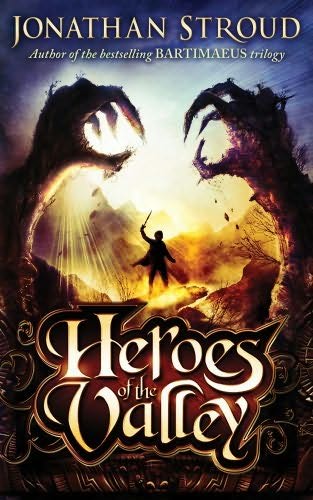
Heroes_of_the_valley_stroudHeroes of the Valley, by Jonathan Stroud

Synopsis: A coming-of-age story in a Viking village

Brief Book Review: A fantastic YA novel. Stroud really knows how to make a story live within its world. The Valley feels like the entirety of the world, and it’s a rich, vibrant world that lives and grows far outside the pages of the novel itself. The characters are self-determined and display constant agency. The female characters are strong in the real sense, rather than just the “I know kung-fu and wear leather pants” sense. The protagonist moves from an innocent, precocious boy full of naïve ideals to a mature young man who avoids becoming jaded and retains reasonable idealism. There’s plenty of humor, conflict, and action along the way and all of it flows naturally. The way that nothing ever quite works out the way it’s intended to makes for captivating storytelling. And the twist at the end is fantastic.

I’m going to go off on somewhat of a tangent, but it will be relevant to the review.

I’m not a reader of YA. I never choose to read it myself anymore – the few times I have done so in the recent past I’ve always regretted it (Harry Potter, Hunger Games). Not because they aren’t good (they are!), but simply because this genre no longer speaks to my interests. I’m strongly in favor of the current effort to introduce a YA category to the Hugo Awards. I think that they should be recognized, and that they don’t get enough recognition because most Hugo readers feel the same way I do. I also would like the YA’s not to get mixed in with my non-YA Hugo considerations, but that basically never happens because YA’s just don’t get nominated. This book is an excellent example of why there should be a YA category. This book deserves a Hugo nod at the least.

A fellow book-clubber once said he hates reviews that end with “If you like Urban Fantasy, you’ll like this book” because it tells him nothing of value. “Yes, if I like this kind of book, I will like this kind of book. Thanks.” What he wants to know is if the reviewer would recommend the book on its own merits, not just to people who will like that type of book. People who’ve calibrated my taste against theirs (via previous reviews, or the My Top 5 Books post) will want to know if I would recommend this book to me. Of my top 5 books, 4 feature graphic violence. 2 have sexual assault. Gods and post-human entities feature strongly in 3. Identity/self confusion is a central theme for all but one. Those aren’t YA books, and I haven’t been in the target audience for YA books for a long time. This is a great YA book and I’d have recommended it to the me from 20 years ago, or to any young nieces/nephews I have. But despite all that, it’s not a book I’d recommend to me, so – regrettably – Not Recommended.

Book Club Review: Seriously though, this is an excellent YA book. It makes for a good change if there’s been too much heavy serious stuff lately. And there is SO MUCH to talk about because the book has SO MANY layers! It is a story about how the stories/lies we tell our children end up distorting their view of reality and coming back to hurt them. These old fables start off each chapter, and they corrupt our hero’s view of the world and end up hurting him both in the developmental and literal and (ultimately) extremely-literal sense. There’s a lot of ambiguity – the bad guys are bad and the good guys are good, but the story also explores bad people doing good things, and good people doing bad things. There are power struggles that go beyond the surface confrontations, trade-offs between idealism and practicality. Initially the valley is a fairly peaceful place, and the book explores the uses of violence and initiation of force from game-theoretic angles. What seems at first to be a story about the importance of honor turns to a story about how honor doesn’t justify killing, turns to a story about how sometimes violence is justified. There is no lack of meaty topics for discussion, we actually went late at our meeting. Definitely Recommended.

Sep 132013
 

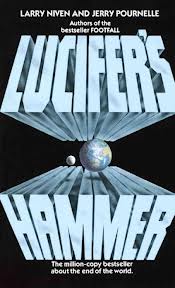
Lucifer's HammerLucifer’s Hammer, by Larry Niven and Jerry Pournelle

Synopsis: A comet hits Earth, post-apocalyptic survivalism ensues

Brief Book Review: /sigh

I’m going to get a bit off track here. I’ve long felt that all fiction is contemporary. Sci-fi is ostensibly about the future, but really it’s just a way of examining current issues under a different lens. You can often get a feel for what decade a SF/F book was written as you’re reading it. And for that reason, fiction really doesn’t age well. I think it can be “good for its time” and respected as laying the foundations of what we have today, but it’s often not good by current standards. Much like the Founding Fathers. It’s one of the reasons I dislike and distrust “Top 100 xxx of All Time” lists. They often list things that were influential or foundational, but not actually good.

Lucifer’s Hammer often makes these lists, and the people who read it when it was published (the 70s) say it was great. But this book is crap. Sci Fi has always had its progressive side (which it’s known for) on the one hand, and it’s old boys club (who are well-known) on the other. This is very much an old-boys-club book. The white male characters (and the only ones who matter are white males) are all entitled full-of-themselves pricks who are absolutely insufferable to read. The book is sexist – women are primarily valuable for their baby-making ability and should stick with that. The men take care of running society. It’s also racist – the black people are animalistic cannibals, who are organized and led by a white man (of course). The one good black person only associates with other white people. The douche-baggery drips from every page. I abandoned it before reaching the end.

If that wasn’t enough, the writing is flat. None of the imagery is evocative. Somehow they even managed to make a comet smashing into the earth boring. And it wasn’t until literally 1/3rd of the way through the book that the comet actually hit. It was like being forced to sit through hours of Real Housewives of New Jersey to get to Armageddon. Except comparing this book to Armageddon would be an insult to Armageddon. Vigorously Not Recommended.

Book Club Review: It’s actually not awful as a book club book. There’s a lot to be said about seeing how far we’ve come as a society. About reading what was considered “normal” and discussing the casual sexism and racism of that era. (Incidentally, I couldn’t read this book for the same reason I can’t watch Mad Men, I don’t need that kind of blood-pressure spike. People who can stomach that, in the interest of historical perspective, hated it less than I did.) The insight that fiction brings into how people of a certain age thought is hard to understate. And let’s be honest – it’s always fun to rip on bigots for a while. So I can’t say this book is a complete loss. If that is the sort of thing you want to discuss, this book would be perfect. However to me that feels like more of a directed study than a club activity. It would feel much more appropriate for a gender-studies or racial-studies class, than for a casual reading-SF/F-for-pleasure group. So – Not Recommended, but with less vigor.

Aug 302013
 

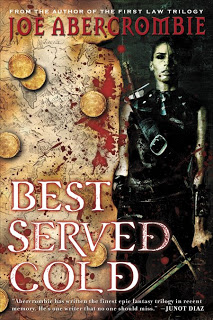
Best Served ColdBest Served Cold, by Joe Abercrombie

Synopsis: A Grimdark Count-of-Monte-Cristo style revenge story.

Brief Book Review: What a difference a skilled writer can make. I can’t help but compare books I’m reading to one’s I’ve just finished, and the difference in quality and craftsmanship between this and Mira Grant’s Blackout slapped me in the face on page one. This is an author who effortlessly draws you into a richly detailed world with robust characters and a tried-and-true plot structure. Once you (quickly) realize that each of the seven revenge murders will involve an elaborate setup and then explore how it goes wrong you fear that this will get tired and repetitive fast. It never does. The book keeps you hooked, and it’s an enthralling read. A word of caution – the violence is relentless. This isn’t a horror or torture-porn (which I will not watch or read), but it is bloody and doesn’t pull any punches. I reached my annual limit of unrelenting death about 2/3rds of the way through, and still had hundreds of bodies to go through before the end. However that only contributes to the story and its exploration of the senseless nature of violence. This book is fantastic. Highly Recommended.

Book Club Review: There is a treasure-trove of discussion in these pages. There are so many highly memorable scenes and lines that people will be bringing up their favorite moments for quite a while. The two main characters start with very different moralities, and as the book unfolds their views slowly switch in magnificent parallel character arcs. The exploration of a world without order makes for strong talking points, especially the contrast of Cosca and Friendly. These two characters act as foils, one pragmatically accepting the world as it is and riding atop the chaos, the other rebelling against the anarchy in a unique sort of optimism. The choices made, the twists, the downward spirals – they all contribute to a great churning discussion. There’s even a few minor things to dislike, for the nit-pickers in the group. :) Highly Recommended.

Aug 162013
 

Grant_Blackout-MMBlackout, by Mira Grant

Synopsis: A zombie B-movie in book form

Brief Book Review: My dislike of Deadline is well documented. So it may be surprising that I didn’t hate Blackout! Many of the things I hated in Deadline are fixed – there aren’t long boring stretches and the climax actually happens on-stage. Whereas Deadline was like a bad home movie, Blackout is more like a mediocre B-movie. This is definitely a step forward! It’s kinda ridiculous just how B-movie-esque it is, from the generically-evil bad guys, to the incompetent amateurishness of everyone, to the mad scientist, to the conviction that adding a death will make things dramatic(!) simply because. Actually, if you like B-movies and keep firmly in mind that this is a B-movie you can enjoy this book quite a bit. There needs to be some sort of way to signal to readers to change their expectations in novels the same way you know to change your expectations when you’re going to see Jesus Christ Vampire Hunter
(such a good B-movie!!). You can tell just by looking at the cover of JC:VH the sort of treat you’re in for. You would be forgiven if, based on the cover of Blackout, you thought you were getting something other than intentional camp.

There are some genuinely good parts to Blackout. The blog posts between chapters were rarely bad, and often downright poignant. I would have enjoyed a book that was written with that sort of sensibility. However I am not generally a fan of B-movies, so – Not Recommended.

Book Club Review: Funny thing about B-movies – they can be a lot of fun to watch with a group of loud friends. Mike Nelson of MST3K and RiffTrax fame has made a whole career out of lampooning bad movies. That same dynamic can work here if you have club members with a good sense of humor (and I’d imagine all do). There’s so much to shake your head and laugh over that there can be a lot of fun had by the whole group. The book reads fast, so it’s not that big a time commitment, and it isn’t nearly as infuriating and slog-like as Deadline was. Unfortunately this is the third book of a trilogy, and those in the book club who’d had the good fortune of not reading the previous book were left in the dark on several plot elements. That’s to be expected, but it means this book isn’t as great of a Riff-target as a stand-alone would be. And I cannot in good conscience ever recommend anyone read the whole trilogy just for this purpose. We had a lot of fun, but – Not Recommended.

jesus-christ-vampire-hunter-original

Jul 302013
 

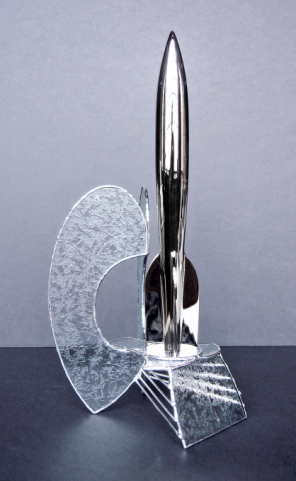
HUGOtrophyI’ve just submitted my Hugo Ballot. Here’s my votes, and why. I’ve omitted categories I didn’t vote in. For those unfamiliar – it’s a preference ballot, meaning you rank your choices and if your first pick doesn’t win your vote goes to your second pick instead, and so forth.


Best Novel

1. Redshirts – Well written, exciting plot, believable characters, and contains quite a bit of depth as well! It champions the 2013 ethos of awesomeness and is a good book in its own right. This would have deserved a Hugo nomination even in a General Election, rather than this more-focused No Angst year. The best choice for Hugo this year.

2. Blackout – Poor plotting, but the writing itself isn’t bad, and it exemplifies the ethos of awesomeness more than any other book in the list. I don’t think it’d be worthy of an award in normal circumstances, but it gets huge bonus points for doing this year’s theme so well, and that earns it an acceptable second place.

3. 2013 – Good writing, and the main character certainly pursues awesomeness in all its forms, but it’s a very low-energy book that failed to catch my attention. I’ve already forgotten too much of it to make me care if it wins anything.

4. Captain Vorpatril’s Alliance – Strong writing, and certainly sticks to the “life is great, stop whining” theme, but nothing of note happened in the whole book, and the central section should have been excised. Too much wit, not enough substance.

No Award – Throne of the Crescent Moon – This book is a giant turd, it shouldn’t ever win any award, except maybe the Award for The Biggest Pile of Turd That Isn’t Save the Pearls.


Best Novellete

1. Fade to White

2. The Boy Who Cast No Shadow

3. In Sea-Salt Tears

See here for reasons

I’m voting No Award over The Girl-Thing Who Went Out For Sushi and Rat-Catcher. Neither of these are bad! I found them both ok, if not stellar. However they were not available online. I know that isn’t the author’s fault, but it makes me grumpy enough that I won’t vote for them. If either one was amazing I would’ve said “Screw this, I’m voting for it anyway, it was bad-ass!” But mediocrity isn’t enough to overcome my annoyance at the inaccessibility.


Best Short Story

1. Immersion

2. Mono no Aware

3. Mantis Wives

See here for reasons


Best Dramatic Presentation, Short Form

1. Game of Thrones, “Blackwater” – Because GoT is great, and I’ve never really seen the appeal of Dr Who.


Best Pro Artist

1. Chris McGrath – because look at those backgrounds! Too many artists neglect the background. In his art it’s as important and intricate as the subjects in the foreground. Really cool!