Aug 292014
 

ash_malindalo_500Ash, by Melinda Lo

Synopsis: An asexual lesbian retelling of the Cinderella story

Book Review: I’m reluctant to say bad things about this book, because it seems to have come from a sincere place. So I’ll start by saying it was nice to see some depth in the evil step-mother and step-sisters. They were still evil, but not for the sake of generic evil-doing, but for good reasons. We as readers could detest them properly, the way real shitty people deserve to be detested. :) And the imagery in the book is beautiful, Lo knows how to turn a paragraph into a painting. The important things pop out and grab you.

But that being said, I’m glad I had heard beforehand that this was a lesbian retelling, because I wouldn’t have known it until halfway through the last chapter otherwise. Not once did I get the impression Ash was attracted to the huntress. I don’t expect erotica, but even a mention that her pulse quickening would be something. Honestly, I feel more passion toward my platonic male friends than Ash did to her love interest. Which is why I said this was an asexual lesbian retelling – but in retrospect, that is unfair to asexuals. Because it wasn’t just a lack of sexual attraction or tension – Ash doesn’t seem to feel any strong emotion at any point in the book. Reading this was very much like watching Kristen Stewart act. There is only one expression, and it is always Bland.

I was also annoyed by how many times something really interesting and potentially emotionally-involving is brought up, and then is never mentioned again. The “dry, atheist philosophers” vs “earthy, nature-based spirituality” was being set up very nicely, and I thought I could get good and steamed about that, but no – nothing. It just petered away. Same with the conflict between the male and the female fairies. And Ash’s mother’s journal. And on and on. So many things that I can’t even call “missed opportunities”, because they were clearly being capitalized on! Before they are entirely forgotten.

And finally, the way Ash gets out of her obligation to the fairy at the end is simply a reinforcement of every negative stereotype of women that every MRA-douchebag has ever vomited forth, and just made me give up in complete despair. If that’s what love is, you can count me out.

But more than anything, the book was just boring, primarily because of its lack of emotion. Not Recommended

Book Club Review: Even if there had been good emotion and strong plotting and I enjoyed the story, I still don’t think this would make a good Book Club book, because it just doesn’t have anything to say. It’s a “Thing That Happened” story. It doesn’t champion any struggle, say anything about the human condition, or question any assumptions. It doesn’t even have a new take on the Cinderella story. It’s just there. Swirsky’s “All That Fairy Tale Crap may have an unlikable protagonist, but it has more to say in a few thousand words than Ash said in a full novel. Not Recommended.

Aug 272014
 

ozymandiasYesterday’s post was a sort of prelude to today. At our last book club meeting we read The Left Hand of Darkness. This is considered a classic of SF. It won both the Hugo and Nebula. People still speak of it with admiration. It broke new ground and pushed the genre forward. And when I read it, 45 years later, I didn’t find much to interest me. Which is good in a way, it means that it won. The view it had been pushing has become so mainstream that it’s no longer “speculative.”

I had a similar experience with Dune.

I guess this is a consequence of being a foundational work. Others will build on what you’ve done until it reaches memetic fixation. This is probably exactly what one would WANT to happen – this is what having a large and permanent effect on the world looks like .One could argue that every act of creation is an attempt to imperfectly propagate yourself into the future.

But it also makes me sad. If two multiple-award winning foundational books can be read by someone just a couple generations removed, less than a half century later, and elicit a reaction of “Eh, not bad”…. what chance do any of us have for doing anything meaningful? Shit keeps getting better, which is great, but it also means all things fade away. A few centuries from now nothing I’ve done will matter.

I want to say that the way to stay relevant is to stay alive and keep active. Keep producing new things. But almost every major innovator has only made one great contribution, and everything else after that has been encores. How many people can you name that just keep putting out better and better work? Probably less than a dozen.

Still, it’s been done, so it’s not impossible. And the alternative is guaranteed defeat anyway. At least as long as you’re alive you can keep trying, and sometimes gain a level or two.

Aug 262014
 

Dark_Hourglass_by_Sharingan_girlieDuring my alcoholic phase I had a pretty major blackout. Not as bad as some I’ve heard of, but my worst – I found a party boring, so I left at about 9pm. When I woke up the next morning I couldn’t find my car. I asked my roommate where it was, and he informed me that I was wrong about the previous evening. I found the party boring, so I figured drinking a lot would make it more interesting. I was a complete ass for hours, until my roommate finally drove me home at 2am. I remembered nothing of that. Hearing the previous night’s details recounted was like my own personal The Hangover.

And it occurred to me – from my point-of-view, last night might as well never have happened. In my timeline that night was erased, and replaced with sleeping. What was the point of even having lived through those events?

I’ve always had a bad episodic memory. I have a hard time remembering a lot of my life. Years go by and I look back and think “What the hell happened? Where was I during that time? What was the point of living through that crap?” Years of not-drunkenness, to be clear. Years of playing video games, and reading, and surfing the net. Years that might as well have not existed.

In a desperate attempt to be relevant, to do anything of value, I started the HPMoR podcast. Because I believe in Eliezer’s vision of what humanity can be, and this seemed like a non-offensive and very fun way to help spread that, just a little. And it’s worked… not too long from now the podcast will be complete, and there will be a new thing in the world, a thing that wouldn’t have been here otherwise. I have something to look back on and say “There. That thing is a result of my living.”

That’s just the most drastic example, of course. Soon I will have a house that has been turned from a smoked-out dump to a nice place to live! Every time I work out I consider it a step toward building a body that is a nice body to live inside. I can look at old pictures, and look in the mirror, and say “I have changed a thing for the better.”

And of course now I’m starting to write as well. All this crap is hard, and I don’t spend all my time on it. I still play games or read or drink a bit, to rest and relax and recharge. But now those things are rest stops on the way to being productive. And being productive is no longer a chore, no longer work I have to trudge through until I can play again. Now it is what I do so that I matter, and play is a way to get back to doing that well. I don’t want to lose years of my life without anything to show for it again. If I go all my years and never accomplish anything, then why did I even bother living in the first place? Might as well have skipped right to the end with a jump out a window and saved myself a lot of trouble. The time for doing things is now.

Aug 212014
 

jesus-santa-bff-selfie-l1Thinking about people who don’t exist is hard to do. The most emotional response I received yesterday was:

> I’m not disagreeing that there is some benefit to society when there are fewer people with severe problems, and I’m not saying I would never do something like select not to have a child with severe problems if given a choice (my husband and I talked about that when we were going through fertility treatments), I am saying that categorically saying at a societal level that those people should never exist is terrifying. And by saying that those people should never exist because their life would be too hard does in effect say that I should not exist

It seems to be what a lot of people get hung up on, because it’s very hard to imagine the counter-factual world where these people weren’t born. It’s the same argument used by every pro-lifer who trots out the adorable/smart/loving child of a mother who struggled with the abortion question but ultimately decided against it, saying “Pro-choicers say that this child should never have existed!” It works because we see a valuable person (as all person are valuable) and think “if they were aborted they wouldn’t exist” and emotionally this feels like saying “They shouldn’t exist” = “Kill that girl!!! Chaaaaarge!!!!” Which makes us squirm at the very least, if we are good people.

But when a biological process is stopped or prevented before a person can form, it is not the killing of a person. It is simply replacing them with another person. (I won’t even get into whether the planet can support a limited number of people – it’s more relevant to note that any given couple can only support a limited number of children. So choosing to bring one child into existence is denying life to another child that would have been born in their stead. The egg that released the month prior or after, perhaps.) And since almost nothing can be known of someone before they are born, in the aggregate it’s most accurate to think of the potential future-children of any given couple as undifferentiated entities. The replacing-person is best modeled as the same as the replaced-person EXCEPT for the things that can be known about them before they are brought into existence. If a genetic test shows that the egg released this month will give you a child with blue eyes, and the egg released next month will give a child with brown eyes, the question is not “Should we murder the child with the blue eyes or the child with brown eyes?” Because it is impossible to birth both of them. The question is more accurately modeled as “Do we want a baby Eneasz (or baby Steph) with blue eyes or brown eyes?” Think of the two potential children as the same potential person, differing only in the characteristics that can be determined beforehand. Thus, the question isn’t “Should we murder Mary Sue with Downs Syndrome to birth non-Downs Sally May?” it is “Should we birth Mary Sue with or without Downs Syndrome?” In which case the answer is sorta obvious.
(When taken far enough, the inability to correctly think of persons who haven’t come into existence as substitutes for persons who have, results in the conclusion that any attempt to prevent a pregnancy is morally equivalent to murder, and condoms/birth-control are history’s greatest holocaust. And, indeed, any effort to do anything with one’s resources aside from maximizing the total number of people who are born is morally reprehensible.)

And if one accepts that such a program doesn’t kill people, it only makes the people who are born better off, it means that – as hard as it is to imagine – in the counter-factual world where such a program had been around when we’d been born we’d be healthier, smarter, and have had happier childhoods. Not that we’d be dead.

Aug 202014
 

SayNo-Babies(The Title and Picture are for humor only)

An exchange on Eugenics:

Simple idea, but it needs to be said. Give all kids a birth control implant and don’t turn it off until they are 20 and can prove they aren’t likely to binge-drink while pregnant or flunk basic parenting skills.

“what’s the result of this (current) laissez-faire attitude? Catastrophic suffering. Millions of children born disadvantaged, crippled in childhood, destroyed in adolescence. Procreation cannot be classified as a self-indulgent privilege—it needs to be viewed as a life-and-death responsibility.
…In the USA, 4.82 children die per day of abuse and neglect”

Objection: No institution can be trusted with this power.

Reply: The same argument could be made about any restrictive power given to any agency. People DO end up on no-fly lists for political reasons. Drug use screws you out of vast numbers of jobs. People convicted of felonies (even bullshit ones) lose a lot of rights and are almost unemployable afterwards. Atheists are prevented from holding public office with 99% effectiveness (if you’re open about it). All these things suck. But deciding that the correct amount of regulation is Zero is also a choice. I think that saying “There should never be anything that can disqualify you from having a child no matter how stupid or evil it is, no matter how much it will hurt the child and possibly harm society” is overreacting way too much in the other direction.

Objection: This idea would never see the light of day, but some jacked-up, terrible “compromise” version could, in theory. And that version is probably pretty awful. Like no-fly lists.

Reply: Every program we have is a jacked-up “compromise” version, from our tax code down to who can vote. If only completely perfect programs could be implemented, we would have no government at all. This seems like a case of letting Perfection be the enemy of doing Good.

Objection: Who are you to say what’s best for everyone?

Reply: The standards proposed are very basic – can the parents stop binge drinking and using drugs for a period of time? Do they have enough sense to lie on a basic test to CLAIM that they think punching children is a bad idea, even if they don’t personally think that? And I’m not sure about your objection that some people think they know what’s better for others. Isn’t every single law in existence a claim that the lawmaker(s) know what is better for everyone than those who’d prefer not to obey that law?

Objection: WHAT?? Let’s euthanize anyone who doesn’t meet our idea of perfection – their lives are not/will not perfect, so why bother let them live at all? (note: not a strawman, I actually received this objection)

Reply: This is not a claim that everyone needs to meet the perfect ideals of the Aryan Superman, these are very basic safeguards which are better for everyone involved, *especially* the very children who would have been born into that environment. There is a huge and absolutely unsupported jump to get to “Kill all the non-Aryans” from “It’s better for children to NOT have Fetal Alcohol Syndrome.”

More to the point –  this is a conceptual confusion. No one is saying you should be killed, or you don’t have a right to exist. They’re saying that it would be better if you didn’t have as many medical problems, and if you weren’t abused. To prevent a birth is not to kill someone who already exists. It is to ensure that when a person comes into existence, they will be better off. The claim isn’t that the kid with down’s syndrome should be killed, it’s that the kid would be better off if she didn’t have down’s syndrome. The latter is the goal of such a program, not the former.

Objection: This is eugenics. [when asked to define eugenics] – Preventing the birth of those of lesser value (arbitrary definitions of “lesser value” would still qualify, IMO), and encouraging the birth of those of greater value. Yes, it’s a slippery slope argument that preventing deformed or abused babies leads to eugenics, but I think the slope is actually slippery in this case. Truly not to be inflammatory, but it’s the same phenomenon as Karl Marx. The society described in The Communist Manifesto sounds awesome, but trying to reach that goal fails, and the failure scenario is awful.

Reply: I’m gonna take a risk and say something that may sound bad on the surface, but I hope everyone reading this knows me well enough to not think I’m an evil monster for contemplating the following ideas rather than instinctively/immediately jumping on the safest-answer bandwagon.

Given that definition (preventing births of lesser value, encouraging births of greater value), I fail to see what, conceptually, is bad about eugenics. If I could have been born 10% healthier, or 10% smarter, or 10% sexier (aw yeah!), I totally would have prefered that. Likewise, I’m glad I *wasn’t* born with 10% more emotional disturbances (I’ve got problems enough as it is!). And I’m not just being selfish here… I have a hard time seeing it as anything but a positive if the *entire population* was 10% healthier/smarter/etc.

I can see how the execution could fuck everything up. If the “greater value” ends up optimizing for 10% less skin melanin, or if it turns out that 10% more intelligence also results in 12% more susceptibility to crazy utopian ideas that destroy all of society, or something. But that’s a failure of execution, rather than the concept itself being bad.

I think our current do-nothing program is far worse, with the numbers given in the article as support. If you disagree, I think it would be more productive to implement on a small scale in limited areas and observe results, rather than claim a priori correctness. Similar but far-smaller steps have already been shown to be very effective.

If you disagree on basic principles and don’t think we should ever try to improve humanity at all… shit, I don’t even know what to do with that. Get thee behind me?

Counter-reply: To your point about the teen pregnancy article, the critical bit there is that it’s voluntary. We should be doing more of that. We should be educating and publicizing the availability of those types of programs. Leaping from there to forced (but reversible) sterilization is a pretty big leap.

Reply: It’s a leap we should take. Those who most need those programs won’t get them. All procreation should be opt-in only. I’m ok with the decision to create a new sapient life form requiring as much paperwork & bureaucracy as buying a house.

Objection: This program would in effect say that I should not exist, because I would not exist if those policies were in place when I was born.

Reply: This program can’t hurt you, you’re already here and we think you rock. All it would do is make future people better and happier.

Post-script: I won’t be defining/defending “life-diminishing illness” or “weirdness”, as I don’t agree with everything in that article. I think the basic concept is solid. I’m not going to defend the parts I think are wrong-headed.


Aug 152014
 

LeftHandOfDarkness-40thAnniversary-PaulYoung_250hThe Left Hand of Darkness, by Ursula K. LeGuin

Synopsis: The spiritual journey of a fixed-gender human who, while living on a world inhabited by humans who alternate between genders, gets caught up in their political schemes and is cast into the wilderness.

Book Review: The first thing I noticed about this book is the writing style. It was published in 1969, and much of that 60s/70s era sci-fi has a distinct style that you can almost taste. It’s a bit more rigid, more formal. It does more telling and less showing in terms of the action that’s happening, but it is less explicit in the points it’s driving to. It feels like the sort of thing Jean-Luc Picard would read while sipping his Early Grey. It wasn’t unenjoyable, simply different. However much of the book is dated – it’s 45 years old now, and it suffers for it. Psyonics was still somewhat-plausible back then, and quite the staple of SF. It’s not the fault of those authors that it’s been thoroughly debunked in the intervening decades, but it’s painful to read it being taken seriously. Soon all the quantum-magic books of the 90s and 00s are going to look the same way to the next generation of readers.

The writing itself is absolutely gorgeous. There are so many breath-taking scenes I don’t even want to get started listing them all. Not only are they exquisite, but they aren’t over-wrought. The trip to the internment camp, where the protagonist bonds with strangers without ever talking to them, only by sharing air and what little water they are given, and by watching two other prisoners slowly die, is emotionally harrowing without being dramatic. It is simple and elegant and utterly compelling. This happens multiple times in the novel.

Unfortunately I never quite understood the point. When I was done I felt a deep melancholy, something within definitely pulled at me. But I couldn’t tell what. The message was so deeply buried/implied that I never caught a glimpse of it. I don’t want things to be garish, but I’ve never been very good with subtlety. If you don’t give me at least a few big clues, I probably won’t catch on.

In addition, this is a book whose mission has been accomplished. I gather that it’s some sort of treatise on gender equality. To me it felt very much like reading a work containing impassioned pleas to consider non-white races as equally human, and maybe abolish slavery. I, and everyone I know of my generation, has already deeply internalized this message. Most of us consider ourselves feminists. I understand this book had an important job in the past, and I can honor those who came before for providing the foundations we now stand on, and respect their great work. However it’s not a book for me. There wasn’t that much to hold my interest. If you are exploring your SF roots and want to read a foundational work, this book is exemplary, and won both the Hugo and Nebula when it was published. But 45 years later, I can’t really recommend it to anyone like me for general reading. Not Recommended.

Book Club Review: This part is a bit harder. There is a fair bit to talk about. It’s interesting that all the alien characters, while supposedly gender-neutral, read as men. Was this a subconscious way of LeGuin expressing that in a world without the restrictions imposed by society and biology the “male” experience is the purer, more agenty one? But the protagonist, despite self-identifying as male and being described as masculine many times, reads like a female character (and it wasn’t just me that thought that). The book’s protagonist is a heroine, despite the male presentation. Is that a comment on the alienation of being a strong woman in a male-dominated world? We were very lucky that one of our book club members is a literary genius and was able to pick up on a lot of subtle points in the book – explaining the “left hand of darkness” metaphor, cultural imperialism vs going native, and a few others. I never would have picked up on those, and it made the discussion far more interesting. Without that, I fear we might have not spent too much time discussing the book itself. If you have a good mix of ages and life-experiences, this could be a good book for your club, and I’d recommend it. If, OTOH, your book club contains only younger readers who never experienced in-your-face old-school sexism, I would not. The world has changed. Which is for the better.

Aug 122014
 

napoleon-dynamiteRationality, it has been said, is about winning.  And winning is often heavily influenced by who can best exploit the infrastructure they find themselves in. It’s what the losers often call “cheating”, what the winners call “technique”, and what most people I know like to call “hacks.”

It’s no secret that attractive people have an advantage is almost everything. There’s countless studies, I’m sure you’ve seen at least a few. Like most intellectually-oriented people, as I was growing up I thought this was bullshit. Not in that it was untrue, but in that it was unfair and thus to be scorned. People should be judged by the content of their character, and the brilliance of their minds. Physical attractiveness is nothing but a genetic crapshoot and I didn’t want it to matter. I didn’t put any effort into presenting an attractive exterior, and I didn’t pick my friends based on looks either. Cuz fuck that.

Four years ago, for entirely less-than-noble reasons, but reasons that fulfilled my utility function nonetheless, I started to put a lot of effort into my physical appearance. I started working out a fair bit, not for any of the health reasons or whatever else, but purely to try to look better. I expected only that I would look more attractive to others. I discovered something far more startling.

Being attractive is the BIGGEST FUCKING HACK EVER. It’s ridiculous. I became more interesting to other people. Not just to women around my age, but to people all ages and genders. My jokes were funnier. When I screwed up people were quicker to wave it off. My insights were more profound. For Merlin’s sake, I was taken more seriously at work!! My coworkers and my bosses were all distinctly more impressed by my contributions, and more willing to defer to my expertise.

I want to make it clear that very little of this is because I’m ACTUALLY better in these respects. I’d like to think that I’ve improved in all areas over time as I’ve aged, due to experience and (maybe?) maturity. But the leaps and bounds that I “improved” across all areas over the 18 months I put into becoming less of a shlub were greatly out of proportion to how much I could have actually objectively improved. And seriously, nothing changed at my job except my appearance. I didn’t magically become better at spreadsheet-jockeying or more authoritative at number-explaining.

I suspect that our monkey brains see a person that looks healthy and near sexual prime and wants to be near them for various reproductive reasons, and our conscious self, being the PR firm of our psyche, translates that “urge to be near person X” for less-than-noble reasons into a feeling that “person X has desirable traits in this situation.” Obviously that’s why I want to be near them! And that is fully generalized to whatever the current situation is, be it conversation or joking around or work.

Yes, it’s still not fair. Yes, you may not care about physical attractiveness. It doesn’t matter, because the vast majority of the world does. If you are not exploiting this hack you are leaving valuable tools unused.

I know some people can’t. And I know there’s a bit of genetic luck involved. But you are probably using motivated thinking to overestimate how much is out of your control. I’m not a huge genetic winner, I’m about average on the whole. There’s a lot more that most people can do than they are doing, and it’s worth it.

Think of it like sleep. Remember when you were younger, and you said “Sleep is for the weak. I’ll sleep when I’m dead.” so that you could get a few extra hours every day to do stuff you actually wanted to do? To LIVE life, rather burning your life away lying comatose in the dark? Me too. And the results were disastrous. Years lost to constant fatigue and emotional disturbance. Eventually we learned that sleeping the full 8+ hours every night is the best way to get extra time. The productivity boost from being well-rested more than compensates for the extra hours we would have been awake. We felt like we were doing more when we sacrificed sleep, but in reality we were doing less, and degrading our quality of life to boot!

Spending time on being attractive is the same way. It’s not a waste of time that you could be doing something else, something important. It is an investment of time. The remaining hours you have will be more efficient. You’ll get closer to your goal after a year’s effort than you would have if you’d taken those extra 200ish hours and used them directly for working on your goal. Being attractive really is *that much* of a hack. People want to do things for you. It’s crazy.

Maybe you only interact with other rationalists, and so this advice would have minimal impact on your life. In that case, I greatly envy you. But for everyone who has to deal with the mad world on the outside on a regular basis – OMG, you won’t even believe this shit until you’ve tried it yourself.

Aug 092014
 

10355875_10204202470444739_2434810086950501287_nBeen too long since I’ve done this, stupid life keeps getting in the way.

The most fascinating Treasure Hunt story I’ve read in a long time. For over 210 years humans have been trying to dig 140 feet down on an island in Canada, and failing over and over. Tons of man-hours, money, and a number of lives have beenlost in the attempt. One company even built a bridge from this otherwise worthless island to the mainland to facilitate the hunt. It ends kinda like you’d expect. 

Moderate voters are a myth?
“Moderates are just as likely as anyone else to hold extreme positions: it’s just that those positions don’t all line up on the left or the right.
“There’s even reason to believe “average voters” hold more extreme opinions: engaged Democrats and Republicans tend to adopt the positions held by their parties, and parties tend to adopt positions that are popular, achievable and workable.
“the idea of the moderate middle is bullshit: it’s a rhetorical device meant to marginalize some policy positions at the expense of others”

The US Sought Permission To Change The Historical Record Of A Public Court Proceeding. How many years away are we from Eurasia Has Always Been At War With Eastasia?
We’re hearing about it because the judge said WTF and “ultimately, the government said that it had *not* revealed classified information at the hearing and removed its request.”

In Moloch news – This post (Gnon and Elua) is so thick with jargon that it won’t mean much to most people, but the argument in summary is this: A world of conflict, where one can live and struggle and die with purpose, is preferable to a hedonic utopia where there are no goals or challenges, only an eternal heroin bliss. Or, put more simply, a shitty difficult life on earth is still vastly preferable to Heaven.
I find myself agreeing with this position very strongly.
But it was pointed out by others that if we humans really need struggle for our values to be fulfilled, then that is part of our Eutopia. If our benevolent god can’t make a utopia better than a perpetual heroin dream, it’s totally failed at God-ing.

Sayeth John Scalzi“why does their Kindle Direct boilerplate have language in it that says that Amazon may unilaterally change the parameters of their agreement with authors? … between my publisher and Amazon, one of them gets to utter the immortal Darth Vader line “I am altering the deal. Pray I do not alter it further” to authors doing business with it and one does not.”

Ayn Rand’s Harry Potter and the Goblet of Fire. With lines like:
“If you want my advice, Cedric, you’ve made a mistake already. By asking me. By asking anyone. Never ask people. Not about your work. Don’t you know what you want? How can you stand it, not to know?”
Cedric shook his head. “How do you always manage to decide?”
“How can you let others decide for you?”
They’re doing the entire series. This reminds me of why I liked Atlas Shrugged. I miss this sort of writing style. I guess I’m still a melodramatic goth kid at heart.

I think I’m starting to enjoy this particular religion. :) Satanists want to use Hobby Lobby decision to exempt women from anti-abortion laws.

Superman taught me to kill
“Today’s online first-person-shooters might make kids enjoy violence. I don’t know. But at least these kids learn that violence has risks, and that it’s easier to start a fight than to end it. Video games don’t show kids over and 
over that the good guys are super-powerful and could easily solve everybody’s problems without anybody innocent getting hurt if they just stopped being wimps and killed all the bad guys. Counterstrike might have lead to school shootings, but Superman led to the invasion of Iraq”

Why a fanfic?
“if Azkaban were a feature of a world of my own invention, someone might ask whether Harry’s reaction to it, or the fact that other people in magical Britain seem not to notice it as a moral horror would rest on wobbly floors. They might accuse me of having constructed an absurd parody for political purposes, where Rowling is not as easily subject to this charge.”

Lawsuit alleging the Happy  Birthday song is not in copyright, and Warner owes the world hundreds of millions. I hope they win SO HARD.

This is fun! Literary Genre Translations. Original Text: “I ate a sandwich and looked out the window.” (SF version: “I placed the allotted nutrition capsules on my tongue bed and looked to the Nahin VI-8373 space podhole.”)

First – NICE! Sneaky and clever and effective. So much win.

Second – I completely relate because THAT IS MY JOB. Well, ok, that is one aspect of my job. But I would be the guy going “OK, WTF is with all these transfers on our bank account, and how do I fix it?”
(FWIW, I’m quite low on the totem pole. It’s likely the *actual* CFO of most of these corporations never saw anything. Their time is too valuable to be looking over friggin bank statements.)

Oh teh lulz!
“HeartMath’s website is impeccable. Their representatives gave a presentation to a hospital full of doctors – including cardiologists and neurologists – without any missteps that made them look anything less than reputable. 
...And then you look a little deeper and you find out that their cute little relaxation exercises are actually a plot to connect to higher dimensions beyond time and space and immanentize the eschaton by messing with Earth’s magnetic field, possibly with the help of $60,000 worth of giant coils and/or Yog-Sothoth.”

How to make Twilight not suck! (good head-canon)
(original here)

A great post from one of the supposed target demo of YA novels about what she actually wants.
“I’ve had my own friends go over YA parameters they disagreed with but feel the need to adhere to. They’re always something like this:
No blatant sex, drugs, violence, or cursing.
Nothing too complex.
No adults.
Stick to characters and themes that are easy to understand.
Otherwise, the book “won’t sell”. Won’t sell to whom?
I’d sure as hell buy something that went against each and every one of those points.
…I grew up in Detroit—America’s capital of violent crime and murder. If you know anything about Detroit, then you know it’s closer than any city in America to becoming a modern urban dystopia. And yet the only message I’ve managed to pull from half the dystopias on shelves is that “the government” is “after me”.”

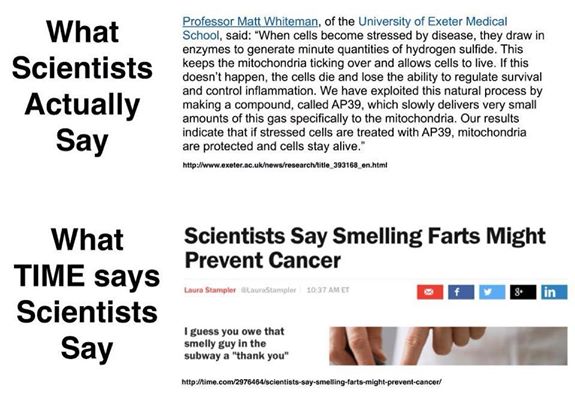
I hate “science reporters” so much….
10314713_10152191824321179_6951003947952215847_n


.

In well-worn “the past was terrible” news – Children aren’t worth very much—that’s why we no longer make many
“before the demographic transition, children were essentially the property of their parents. Their labor could be used for the parents’ good, and they were accustomed to strict and austere treatment. Parents had claims not only to their children’s labor in childhood, but even to their wealth in adulthood. To put it crudely, marrying a wife meant buying a slave factory, and children were valuable slaves.”

I learned something new and, frankly, absolutely funktastic.

LOYDSIR-NOSE-VOID-OF-FUNK“Starchild’s nemesis is Sir Nose D’Voidoffunk … His goal is to place the minds of all humanity into a state called the Zone of Zero Funkativity. Starchild, on the other hand, uses his Bop Gun to achieve “Funkentelechy” for all humanity. With the Funky powers of the Bop Gun Starchild causes Sir Nose to reach Funkentelechy, and find his Funky soul. He then dances away the night.”
There is more.

In keeping with the government’s theme of “Let’s crack down on these uppity women and their so-called ‘rights’ ” week – The EFF on Why Everyone Should be Concerned By the Seizure of MyRedBook.Com

“Being forced to depend upon your employer for your access to healthcare is a shitty, shitty system.
The reason I’ve come to believe that healthcare is a human right is because it’s about survival, and about control. Someone else controlling your healthcare, your decisions, puts them in no small measure in control of your life.”

Literally the ghost of a song. Sounds appropriately ghosty, which makes me happy. (or listen on SoundCloud here)

Massachusetts SWAT teams claim they’re private corporations, immune from open records laws
“a number of SWAT teams in the Bay State are operated by what are called law enforcement councils, or LECs. These LECs are funded by several police agencies in a given geographic area and overseen by an executive board, which is usually mad
e up of police chiefs from member police departments”
“the LECs are claiming that the 501(c)(3) status means that they’re private corporations, not government agencies. And therefore, they say they’re immune from open records requests. These agencies oversee police activities. They employ cops who carry guns, wear badges, collect paychecks provided by taxpayers and have the power to detain, arrest, injure and kill. They operate SWAT teams, which conduct raids on private residences. And yet they say that because they’ve incorporated, they’re immune to Massachusetts open records laws.”


And ending with way too many words – In Defense of Facebook(‘s recent social experiment)

“First, these effects are tiny. The largest effect size reported had the monumental effect of shifting that user’s own emotional word use by two hundredths of a standard deviation

the suggestion that Facebook “manipulated users’ emotions” is quite misleading. … Facebook simply removed emotional messages for some users. … it’s certainly not credible to suggest that replacing 10% – 90% of emotional content with neutral content constitutes a potentially dangerous manipulation of people’s subjective experience

the Facebook news feed is, and has always been, a completely contrived environment … Instead, what you’re presented with is a carefully curated experience that is crafted in such a way as to create a more engaging experience. The items you get to see are determined by a complex and ever-changing algorithm

virtually every large company with a major web presence is constantly conducting large controlled experiments on user behavior with the explicit goal of helping to increase revenue. if the idea that Facebook would actively try to manipulate your behavior bothers you, you should probably also stop using Google, YouTube, Yahoo, Twitter, Amazon, and pretty much every other major website

it’s worth keeping in mind that there’s nothing intrinsically evil about the idea that large corporations might be trying to manipulate your experience and behavior. Everybody you interact with–including every one of your friends, family, and colleagues–is constantly trying to manipulate your behavior in various ways. Your mother wants you to eat more broccoli; your friends want you to come get smashed with them at a bar; your boss wants you to stay at work longer and take fewer breaks.

the present backlash will do absolutely nothing to deter Facebook from actually conducting controlled experiments on its users. What [it] will almost certainly do is decrease the scientific community’s access to, and interaction with, one of the largest and richest sources of data on human behavior in existence

Aug 052014
 

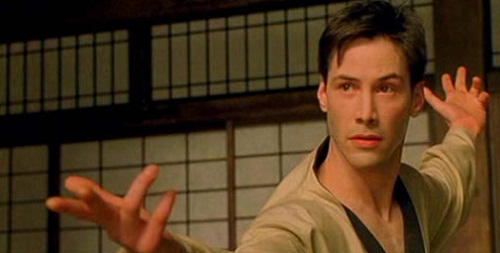
keanu-reeves-kung-fuA long time ago I thought that Martial Arts simply taught you how to fight – the right way to throw a punch, the best technique for blocking and countering an attack, etc. I thought training consisted of recognizing these attacks and choosing the correct responses more quickly, as well as simply faster/stronger physical execution of same. It was later that I learned that the entire purpose of martial arts is to train your body to react with minimal conscious deliberation, to remove “you” from the equation as much as possible.

The reason is of course that conscious thought is too slow. If you have to think about what you’re doing, you’ve already lost.  It’s been said that if you had to think about walking to do it, you’d never make it across the room. Fighting is no different. (It isn’t just fighting either – anything that requires quick reaction suffers when exposed to conscious thought. I used to love Rock Band. One day when playing a particularly difficult guitar solo on expert I nailed 100%… except “I” didn’t do it at all. My eyes saw the notes, my hands executed them, and no where was I involved in the process. It was both exhilarating and creepy, and I basically dropped the game soon after.)

You’ve seen how long it takes a human to learn to walk effortlessly. That a situation with a single constant force, an unmoving surface, no agents working against you, and minimal emotional agitation. No wonder it takes hundreds of hours, repeating the same basic movements over and over again, to attain even a basic level of martial mastery. To make your body react correctly without any thinking involved. When Neo says “I Know Kung Fu” he isn’t surprised that he now has knowledge he didn’t have before. He’s amazed that now his body now reacts in the optimal manner when attacked without his involvement.

All of this is simply focusing on pure reaction time – it doesn’t even take into account the emotional terror of another human seeking to do violence to you. It doesn’t capture the indecision of how to respond, the paralysis of having to choose between outcomes which are all awful and you don’t know which will be worse, and the surge of hormones. The training of your body to respond without your involvement bypasses all of those obstacles as well.

This is the true strength of Martial Arts – eliminating your slow, conscious deliberation and acting while there is still time to do so.

Roles are the Martial Arts of Agency.

When one is well-trained in a certain Role, one defaults to certain prescribed actions immediately and confidently. I’ve acted as a guy standing around watching people faint in an overcrowded room, and I’ve acted as the guy telling people to clear the area. The difference was in one I had the role of Corporate Pleb, and the other I had the role of Guy Responsible For This Shit. You know the difference between the guy at the bar who breaks up a fight, and the guy who stands back and watches it happen? The former thinks of himself as the guy who stops fights. They could even be the same guy, on different nights. The role itself creates the actions, and it creates them as an immediate reflex. By the time corporate-me is done thinking “Huh, what’s this? Oh, this looks bad. Someone fainted? Wow, never seen that before. Damn, hope they’re OK. I should call 911.” enforcer-me has already yelled for the room to clear and whipped out a phone.

Roles are the difference between Hufflepuffs gawking when Neville tumbles off his broom (Protected), and Harry screaming “Wingardium Leviosa” (Protector). Draco insulted them afterwards, but it wasn’t a fair insult – they never had the slightest chance to react in time, given the role they were in. Roles are the difference between Minerva ordering Hagrid to stay with the children while she forms troll-hunting parties (Protector), and Harry standing around doing nothing while time slowly ticks away (Protected). Eventually he switched roles. But it took Agency to do so. It took time.

Agency is awesome. Half this site is devoted to becoming better at Agency. But Agency is slow. Roles allow real-time action under stress.

Agency has a place of course. Agency is what causes us to decide that Martial Arts training is important, that has us choose a Martial Art, and then continue to train month after month. Agency is what lets us decide which Roles we want to play, and practice the psychology and execution of those roles. But when the time for action is at hand, Agency is too slow. Ensure that you have trained enough for the next challenge, because it is the training that will see you through it, not your agenty conscious thinking.


As an aside, most major failures I’ve seen recently are when everyone assumed that someone else had the role of Guy In Charge If Shit Goes Down. I suggest that, in any gathering of rationalists, they begin the meeting by choosing one person to be Dictator In Extremis should something break. Doesn’t have to be the same person as whoever is leading. Would be best if it was someone comfortable in the role and/or with experience in it. But really there just needs to be one. Anyone.

Aug 012014
 

schemerMuch like The Joker, I used to think there was a plan. That someone (or rather, various groups of people) had some idea of what they wanted to happen, and had some sort of plans to bring those things to fruition. You know, the adults of society. The older I get and the more I interact with people up the ladder, the more I realize no one has a fucking clue and everyone’s just kinda faking it and hoping things don’t collapse on their watch.

Recently when interacting with the person who is replacing my boss’s boss he asked me to run a report a week earlier than usual. I asked if this was just for this month, or should I move up the due date permanently? He did exactly what I would do in that situation, down to the physical mannerisms, so I recognized it instantly and intimately: He put on a contemplative look, waited a few seconds, then told me implement the change I had suggested (permanent move of the due date). This is the Basic Look-Managerial Move. He was thinking (as I would have at that moment) “I have no fucking clue. It doesn’t really matter, but now I’ve engaged the topic and I’ve got to look managerial. I will put on a contemplative face and wait a few seconds, to give the impression that I am deeply considering this and its various implications. Then I will confidently state that my employee go with their suggested action.” No actual contemplation was done, this was all for show. I’d had some suspicions before, but this was the first really firm evidence that the people above me don’t have any more of a clue than I do about running this whole thing.

More hilariously – every week they pack everyone in the office (100ish people) into the lunch room to have a “Stand-Up Meeting.” There’s barely enough room for everyone, and the meetings are worthless. I mean that in a strict sense – no information of value is given to anyone that would find it valuable. Those who need the information already know it, and the rest of us don’t care because it doesn’t affect our jobs or our work in any way. Mainly we stand around and burn 20 minutes of the day in boredom while some VPs and SVPs rattle off stats. I think it’s supposed to be a corporate bonding sort of thing, like the Japanese do. They try to encourage cheering and the reciting of the corporate motto and so forth. Anyway, a lot of people skip these meetings cuz they aren’t useful. Last week our Board of Directors was in the building and they came to the Stand-Up Meeting, so beforehand all our managers let us know that everyone should attend that meeting. We wanted to have an impressive turnout for the Board. The room was packed past capacity. I grabbed a spot by the door so I could get some fresh air. You know where this is going.

About 18 minutes in someone in the back corner passed out. A call went out for someone to call 911, and a couple people took off to do that. The SVP, who’d been going through his routine in the center of the room, looked around with wide eyes like a deer caught in headlights. As Draco would say “When you take advantage of emergencies to demonstrate leadership, you want to look like you’re in total control of the situation, rather than, say, going into a complete panic.” Of course I also did jack-shit, when I could have very easily announced we should clear the room so the passed-out person can get some damn fresh air. I did nothing, because to wrest control of the room from an SVP would make him look bad, would make me look like I was grabbing for un-earned status, and could possibly make me some powerful enemies. Of course it could also make me look great, but I was erring on the side of caution. Somehow the fact that someone was passed out in the corner and needed others to do something to help her didn’t come into consideration. :(  I suspect that at that moment the SVP was suffering from similar paralysis, because the CEO was in the room. Surely the CEO outranked him, shouldn’t he let the CEO take care of this? Or the Board of Directors, who were also all there? So he did nothing, and it looked bad.

On reflection, he should have acted, because as the leader of the meeting it was his room to control. He was in charge of that space, even if he wasn’t the highest-ranking person there in absolute terms.
First lesson – everyone is just as clueless as I am. We’re all faking it, hoping nothing goes wrong.

Second lesson – #CivilizationalInadequacy permeates organizations of all levels. It even goes down to the individual level.

Third lesson – I should always assume I am the defacto person in charge and responsible for any area I’m in, and if any of my underlings (even those nominally of much higher rank) are failing to do things that prevent others from being hurt I have to intervene.

Fourth lesson – This explains a LOT about politics.

Fifth lesson – How the hell does civilization still exist if it’s such a loose hodge-podge of people bumbling along trying to keep things from falling apart for one more day and hoping nobody catches on that none of us has a fucking clue? It must be both much more robust and much less directed than I had imagined.

Sixth lesson – Being an adult in the real world is stupidly scary. I used to think the world made sense. Turns out the great clown Pagliacci was right: everyone is alone in a harsh and threatening world.