Apr 192013
 

Sister_PrayingI used to hate the phrase “I’ll keep you in my prayers.” It’s a meaningless sentence muttered so that people can feel like they’re helping without actually doing a thing. As the saying goes, “Two hands working accomplishes more than a thousand clasped in prayer.” I’d much rather that someone offered to help in some way.

My thinking has started to change on this, however, due to the cynicism/realism of bloggers like Robin Hanson. As Robin would say – religion isn’t about God. I’ve started to simply disregard any explanation that a believer makes that involves God or the supernatural as a lie (even if they don’t realize that it is), and started to look for the real answer. When a believer says they’ll pray for you, they’ll tell you it’s because their recitations will invoke a magical entity to alter the laws of physics in your favor. But what’s really happening?

A lot of the time when someone is suffering (say, they’ve been in a car accident) and they are visited by a friend, there is nothing that the friend can do at that exact moment. The injured does not have a doctor’s bill in their lap. They don’t need anything fetched from the shelf they can’t reach, and they aren’t particularly hungry. Maybe they’re in a lot of pain, but there’s nothing the friend can do about that. The injured will need help later, when it’s less convenient and no one is around.

By “keeping someone in their prayers”, what the divine-petitioner is actually doing is reminding themselves every day that this friend of theirs is still in need of help. Not only does this keep the memory of the injured fresh in their mind, it also may convey a slight sense of obligation. By praying for the injured’s welfare, they are emotionally pre-committing to aid that has not yet even been asked for. In theory, this would make them more likely to check-up on the injured party, and quicker to respond to any requests for help, be it physical or financial.

Studies seem to be mixed. Sometimes there appear to be correlations between surgery recovery times and religiosity, and sometimes no such link is found. It used to be the case (in America) that mainly only the very independent would shirk religion – even nonbelievers would remain in a church community for the social aspects. As non-belief becomes more common and communities form around other things, I imagine that this correlation will continue to decrease. I’ve always been a bit of a loner, so regardless of how communities function in the future, I’ll be unlikely to ever fully participate in them and get these advantages. Which is ok with me.

But now – when people say “I’ll keep you in my prayers” – instead of tasting indignation, I remind myself that they are simply trying to say “I’ll try to remember to help you when you need it.” Which makes for much better social interaction. :)

Apr 172013
 

Runners continue to run towards the finish line as an explosion erupts at the finish line of the Boston Marathon


This was just a comment on Facebook in reply to someone’s flailing calls for action. I didn’t think it was very noteworthy, and I’ve said similar things before, but someone else asked for permission to repost it, so I guess it’s good enough to put up on a blog.


I think the psychological hurdle is that people want to do something right now! And there’s very little that can be done right now! If you want to help catch the guy, you need to have joined the FBI already, which means many years of schooling and related experience. If you want to help those who are injured directly, you need to already be working in the medical profession, which means many years of schooling and experience. And even then – the entire country can’t JUST be law enforcement and medical professionals. They need a whole infrastructure of builders, farmers, factory workers, inventors, store-keepers, truck-drivers, (and yes even accountants) to support them and keep society running. So in the long run, the best thing you can do is to be useful to society in some way.

But that doesn’t feel very fulfilling. The best that can be done immediately and directly by 99.9% of everyone is to give blood, and donate money to responder organizations.

Apr 152013
 

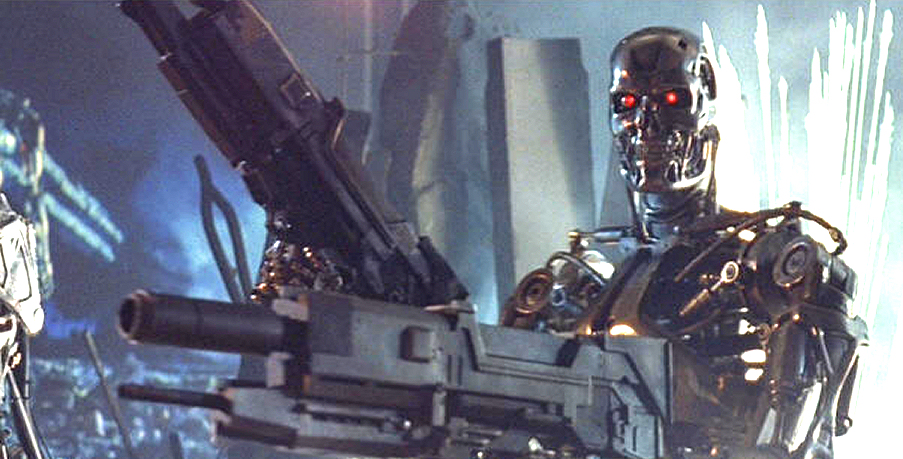
T-800.4A gun is a tool like any other. But its function is specifically to kill, which makes it a tool we’ve got good reason to be wary of and maybe place some restriction on (an obvious no-brainer is the magazine capacity limit). Some people find the registration of guns controversial. I don’t think it should be.

Of course one cannot blame a tool for how its used, one can only blame the user. For this reason we have restrictions on who can use guns – we don’t give them to children, or the insane, or people who are likely to use them for criminal purposes. And yet somehow these people still often get their hands on guns, guns which they do not legally own. This is because some gun owners do not treat the ownership of guns as a responsibility. If you have created or purchased a tool who’s purpose is to dispense death, you have some responsibility in ensuring it isn’t used for evil.

My support for registration comes from my opinion that the legal owner of a gun should be held at least partially liable whenever a gun is used illegally. Which means that a gun must have a legally registered owner from the point of manufacture, through transportation, resale, and final ownership. Any time a gun is reported stolen, lost, or missing, there would be a hefty fine on the owner, reflecting the cost to society for having a death-machine unaccounted for on the loose. I assume this may lead to gun insurance, with lower rates for more responsible owners.

Yes, people will complain when their guns are used by criminals against their consent to do things they would never endorse, so why should they be held partially responsible? My reply is that they should think about the consequences of owning a death-machine when they purchase one. It’s fucking pathetic that someone would need a law to make them feel responsible about what a gun they’ve made/sold/purchased was used for, but it looks like many people lack a sense of basic responsibility. Anyone who would complain about this doesn’t have the maturity to own a gun in the first place.

If you own a dog you may be held liable if it maims someone. Especially if it has a history of aggression, and doubly so if you are a negligent owner who allows it to roam the neighborhood without supervision. The standard should be at least as high for the ownership of firearms. The primary purpose of a gun is to kill. That is why they are made, that is what they are designed to do most efficiently. They are literally death-machines. Yes, sometimes we need death-machines, that’s why they were invented in the first place. I’m not saying they are inherently bad. I am saying that if you buy a device who’s purpose is to spit death, you need to treat that ownership like the responsibility it is. Which means accepting the consequences when your death machine is taken to hurt or kill someone.

Apr 122013
 

bitterseedsBitter Seeds, by Ian Tregillis

Synopsis: Nazi X-Men vs British Demon-Summoning Warlocks in an alternate-history WWII. It’s played straight, and very dark. The first book in a trilogy.

Brief Book Review: While a minority of people may find the premise difficult to take seriously, I had no trouble suspending my disbelief, and if you can do that it’s a great read. On a technical level, Ian Tregillis is a great writer, with a lot of evocative prose that really highlights the gothic nature of the story. It is perhaps a bit overly dramatic at points, but I enjoy that immensely. The plotting is very strong, the conflict is enthralling, and the story is entertaining. The villain is superb. It’s unfortunate that the characters tend to be rather stereotypical and play strongly to established tropes (with a notable exception), but it’s not a terrible flaw. A note of warning however – this definitely borders on horror sci-fi. Recommended.

Book Club Review: Also a winner for a book club. It’s a good alternate history that will intrigue the WWII buffs. It raises many moral questions as to what prices we are willing to pay for what ends, and how the costs of those prices are assigned. The villain’s manipulations are a great exploration of omniscience, and may spark discussion about the role of prophecy in fiction and how it interacts with determinism and free will. And interestingly, the villain’s actions all seem very evil, yet manage to prevent the worst parts of the real WWII. A fine book for discussion. Recommended.

Apr 092013
 

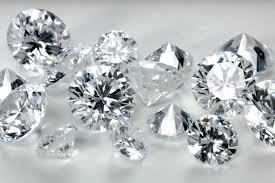
diamondsAs almost everyone who’s bought a diamond knows – along with most people who haven’t – diamonds are only valuable because de Beers wants them to be. Through strict monopoly practices and careful marketing they can sell cheap, abundant shiny rocks at a huge markup. Some people say this is bullshit, and that we should overturn the system. I think they’re doing us a favor.

Consider: what is the primary function of a diamond? It certainly isn’t to look pretty – plenty of things look just as pretty at much more reasonable prices. Cubic Zirconium and polished glass give you functionally identical beauty at a fraction of the cost. What is the first thing you think when you see a really big, sparkly diamond on someone’s finger? “Damn, that must’ve cost a ton.” The function of a diamond is simply to be expensive in a way that everyone recognizes.

Other substances aren’t as useful for this purpose. There are a wide variety of precious gems and very few people have a working knowledge of how much they cost, and how stable that price may be. Thanks to de Beers throttling of supply (to make the price high and stable) and extensive advertising (to ensure everyone knows how high the price is) everyone knows just how expensive that diamond is. Metals can be tricky (Can you easily tell silver from white gold from platinum?) and can be impractical – to give a woman a $10,000 gold ring you’d have to make it a 6 ounce ring. Diamonds are a much more compact package.

There are other gems which are also very valuable, but they suffer from the same recognizability problems – most people aren’t able to quickly tell they are expensive. A celebrity can get away with an exotic gem, as the tabloid media will inform everyone how much it costs. But the average guy needs something that is already well-known.

In additional, gem diamonds aren’t very useful for other applications. If people couldn’t use diamonds as their social wealth-barometer they may turn to substitutes that actually are rare. If those substitutes have alternative uses we may be bidding away material that is providing us with a real benefit simply for our signaling games. (And yes, industrial diamond would be a bit cheaper if it wasn’t for 20% of it going to gems, but it’s not in short supply).

So sure, de Beers is extracting huge profits. But as long as we’re going around comparing what we make by glancing at the hand of the other person’s spouse, someone will be making those profits. It might as well be the organization that’s putting in the effort of limiting the supply of a cheap product, and stabilizing and advertising its price, all while preventing us from using up useful minerals. Cheers to de Beers!

Apr 082013
 

408138_630276420319487_1975656987_nI’m going to get married.


I am happy. :) But I was against marriage for a long time, and I still am. I dislike marriage for two major reasons.


1. I don’t need any outside group telling me my relationship is legitimate.

I don’t need anyone’s approval to be with the person(s) I love. I don’t particularly care what anyone else thinks about my choice of mate(s), whether they approve of their race, gender, temperament, or anything else. Therefore I don’t feel any need to get a piece of paper telling me that my choice has been approved by the government. Big fucking deal, you can take that paper and shove it up your ass. It will not change the nature of my relationship, I will not love my mate any less or any more because I have it. We’ll stay together as long as we both want to be together. Which leads me to…


2. I don’t want any outside group telling me my break-up is illegitimate.

I’ve gone through a divorce before, and the amount of legal hold your partner has over you is terrifying. Basically, either person can hold their ex-partner’s life hostage for months and force tens of thousands of dollars in lawyer’s fees upon them, simply in retribution. Fortunately this didn’t happen, it was an amicable divorce. But if my ex wasn’t a civil person it easily could have, because she still wanted a relationship and I did not.


Let me clarify a few things here.

I don’t believe men should be able to take-and-dump women. I realize that some women’s life path is to marry a nice guy with a good job and spend her life making the home and raising the children. (Actually that can work for both genders, but traditionally it’s more common among women) It is arguable that a woman’s highest-potential years for achieving this are in her twenties, and thus a man who marries a woman in her twenties and then leaves her in her forties is literally robbing her of her greatest producing years. Marriage (in its current incarnation) is designed as a contract to protect the homemaker in these sorts of arrangements. If one party has given up their careers – decades of income, and decades of gathering job skills and professional contacts – with the implicit assumption that they will be economically secure in their old age due to this sacrifice, it is both Right and Just that s/he be assured that security through legal means if their partner reneges.

I’ve never had that sort of relationship. I do not want that sort of relationship. I consider it distasteful and exploitative. I like my women independent and self-fulfilled. Aside from brief periods of unemployment (on both sides) everyone I’ve ever been in a relationship with has had their own ambitions and career and made roughly the same amount I do. House work is shared. There are no children. The marriage contract does not apply to our relationship. No one is being exploited. No one needs to be legally bound to uphold their side of “the deal” which marriage represents. We don’t have or want that deal. This is what I realized during my first divorce – the social good which marriages protect does not apply to my relationship. It does no good at all, and only serves to encumber us, and give us hostage rights over each other. We should never have entered into a marriage in the first place.

Until such a time as I decide to be party to a marriage of the traditional sort (1 wage-earner, 1 home-maker) there is no good reason to enter into a marriage, and several good reasons to avoid doing so. And as someone who hopes to live for at least thousands of years, I have to accept that it is likely that both I and my partner will value-drift in ways that do not match, and in time we will no longer be ideal for each other, and at that time we should separate. I don’t want to go through the whole terrifying divorce ordeal again once that happens.


There are a few things which have persuaded me to actually get married, despite these reservations.

*The most obvious, but least important, is the various legal benefits that society grants to couples that have that piece of paper. It’s ridiculous, but there are all sorts of rights that it conveys – some of them non-trivial.

*Far more important is that my mate values being married as a terminal goal by itself. As she’s my SO, my utility function contains a term for the fulfillment of her utility function. I was worried, however, that she wasn’t including the terror I felt at being legally bound in her utility calculations. This was allayed by:

*She has agreed to divorce me after five years. After that we’ll remarry after five years, and repeat. Obviously with no change in lifestyle (unless we desire), merely in legal standing. This, more than anything, convinced me that she understands my worries, and she’s willing to share the burden of living in sub-optimal marital states for 5 year periods with me (though of course the periods we consider sub-optimal are transposed). And that… that is what true love is. :) I feel I can trust someone who’s willing to be so fair and honest with me, and I’m happy to make concessions to her, as she’s willing to make them for me.

Plus we’re crazy happy together. <3

Apr 032013
 

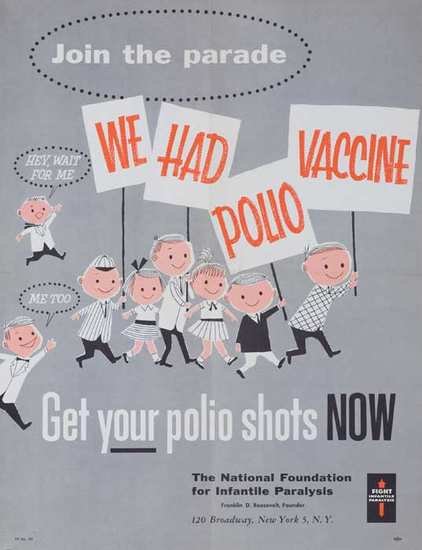
polio posterThe Tragedy of the Commons is a broader application of the Prisoner’s Dilemma (brief summary at Wikipedia). I wouldn’t call the Prisoner’s Dilemma the Root of Morality if it wasn’t for the fact that the Tragedy of the Commons is interchangeable with it, since the TotC is more common and a bigger problem.

Most laws are attempts to avert the Tragedy of the Commons. Take theft. Everyone is better off if theft is illegal. When property rights are stable people have incentive to make things, and society grows. In a world where everyone can take anything at will and there are no property rights it is nearly impossible to go beyond simple hunter-gatherer economics. Everyone is much better off. (as Paul Graham says: “the Europeans rode on the crest of a powerful new idea: allowing those who made a lot of money to keep it. Once you’re allowed to do that, people who want to get rich can do it by generating wealth instead of stealing it.”) But if a single person can avoid the restriction on taking things that “belong” to other people he gains immense personal advantage over everyone else, while still living in a rich and vibrant society! Thus it is in everyone’s personal interest to steal, while simultaneously demanding that no one else do so. The Tragedy is that if everyone does what is individually best for them, society crumbles (the Commons are destroyed) and everyone is much worse off, including the cheaters.

This is why the anti-vaxxers (people who refuse to have their children vaccinated) are morally evil. They are defecting in a TotC/Prisoner’s Dilemma situation. There are some miniscule risks to getting vaccinated. (Let me say right now that Autism is not one of them. Autism has been conclusively proven to not be linked to vaccination in any way, and the single study that claimed otherwise has been demonstrated to be maliciously fraudulent.) They are extremely rare, and as a compassionate society we’ve even set up a program to compensate and help people who are thusly injured. The fact that we can coordinate in such a manner makes me extremely happy, I didn’t realize we’d once had such a well-functioning government! Even if this program didn’t exist, the tiny risk of complications is worth the benefits. Small pox used to ravage populations, with a 20-50% mortality rate, usually leaving permanent scars, and sometimes causing blindness. Polio would kill and paralyze thousands per year just 60 years ago – people hid indoors during the summer months in fear of catching it. These have both been wiped out in the US, and other major childhood killers are held at bay, by a successful public vaccination program.

Anti-vaxxers take advantage of the fact that everyone else vaccinates their children. They live in areas with such a high vaccination rate that their children run no risk of catching the disease – it has been functionally wiped out. By doing so they avoid the risk of vaccination complications, and transfer that cost onto their neighbors. This is the very definition of an evil act. They are weakening herd immunity in their area for personal gain. They are no different from the thief who takes other’s property but expects society to continue to function as if property rights exist. If the community followed their example we would return to the Dark Ages in terms of infant mortality and public health. These people must be found and punished no less than the thief or the fraudster.

I’m not sure how long it took society to develop such strong taboos and counter-measures against theft and violence. But I hope we develop a strong defense against subtler TotC defectors much quicker than it took us to figure out slavery was bad.

Apr 022013
 

mouseI live in a townhome, and share a wall with an unoccupied unit. This puts us at greater risk of pests, and sure enough, a couple weeks ago we heard a mouse in the walls. We have since solved this problem by catching it with a live trap and letting it free in a field a few dozen miles away. This was not my preferred solution, and I feel it was not the most moral one. It was the one that would keep my girlfriend from hating me, which is very important to me, so I went with it. It also made me feel much better than the true moral solution, so it was hard to resist. However the moral solution would have been to use to death trap and/or simply kill it.

In case you aren’t familiar with The Prisoner’s Dilemma, here’s a short summary. Or here is one in comic-strip form.

It’s fairly easy to get people to do things that are to their advantage, and to not do things that harm them. On the other hand, it’s harder to get people to take actions that would lead to better results overall when it harms them personally. I’ve felt for a long time that the primary purpose of morality is to get people to cooperate in Prisoner’s Dilemma-type situations. It’s a big job that requires a multi-pronged approach. We add rewards to cooperating, and we add punishments to defecting. We attempt to instill a desire to cooperate in our fellow humans, so that there will be self-inflicted rewards and punishments for cooperating/defecting (as appropriate). And still we have a hard time even getting basic cooperation on simple issues, like pest-control.

You’d think the warm-fuzzy feelings I get for releasing a furry little mouse wouldn’t compare to the huge disadvantages of living in a city overrun with vermin. It’s nice having walls that aren’t eaten away in the night. I like not having to lock up all my food in glass or metal containers to prevent it from being stolen and soiled. And most importantly, I like not living in a city ravaged by plagues and diseases, constantly worrying for my own health and likely often falling sick.

But I don’t have to bear any of these costs, because I can avoid the cost of feeling bad for killing a mouse simply by shifting that burden on to my neighbor (or in this case, a neighbor of a few dozen miles away). Someone else will be inconvenienced by this mouse, and then they’ll kill it for me. This is an immoral action. In an ideal world I would have someone living with me that would help me keep watch over my immoral impulses and remind me of the right thing to do. Two people together are much stronger than one. But that was not the case this time.

I’m not sure there’s a point to this post. I guess I’m mainly feeling guilty, and I’m confessing to the internet. So I guess morality wasn’t completely impotent, just not effectual enough. /sigh

Mar 312013
 

some men4

A few days back on Facebook I posted a thing I learned:

Keep Calm and Carry On doesn’t have an official font, as it was originally hand-drawn. Use Gill Sans. Why?

P22 Underground has a similar look, and is used on London Underground signage. Gill Sans is a kinda rip-off of Johnson’s Underground font (something Eric Gill admitted) It was designed because London Underground held the licence for Johnson Underground and wouldn’t allow others to use it. The poster has very similar characteristics to Gill and Johnson Underground and one of them was probably a reference point for the designer of the poster. Gill Sans was a hugely popular font at the time and has become part of British design culture as representative of the graphic style of the 30s/40s. It is used frequently by designers who want to evoke a nostalgic Britishness.

From here.

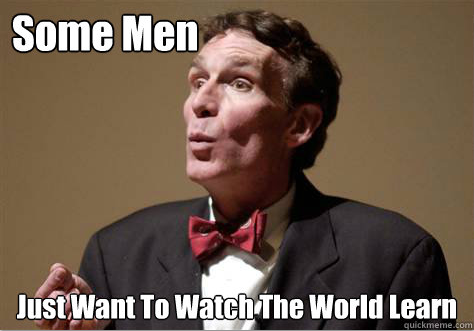
My girlfriend commented: Some men just want to watch the world learn.

Which inspired me to create a few QuickMeme image macros. The one above, and these below.

some men2

some men3

some men1

Mar 282013
 

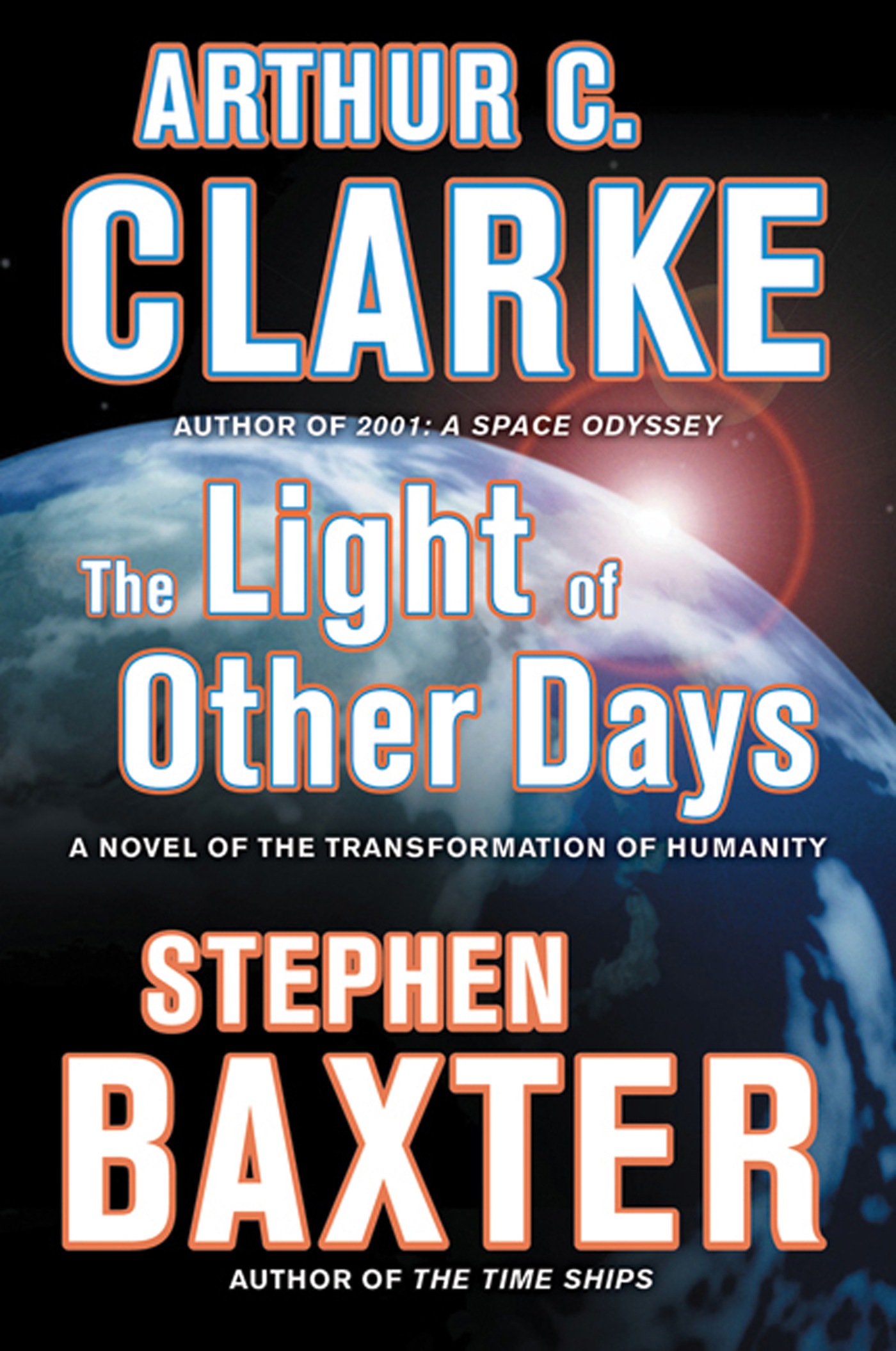
light of other daysThe Light of Other Days,by Arthur C. Clarke and Stephen Baxter

Brief Synopsis: Privacy is demolished when a technology is invented that lets anyone see what is happening in real time anywhere on earth. Later in the book this is extended to allow people to see into the past as well.

Book Review: This is a terrible book. It’s hard to know where to start. The writing is flaccid and unsatisfying. The characters are shallow caricatures, and their dialog consists of things humans wouldn’t ever say. There is no emotion to be found, and the plot just sorta lays there. A moon-sized planetoid is on a collision course with Earth in a few hundred years, and the collective response of everyone is “Meh.” It also has absolutely no impact on the plot or characters, it could have been left out of the book entirely without changing anything. The concept (in the Synopsis above) is absolutely stellar, it could have made for amazing reading. Unfortunately it wasn’t explored in any depth. No one acts differently, there is no exploration of the social implications of never having any secrets again and living in a crime-free world, the world’s religions are barely mentioned, and so on and so forth. It’s just awful on pretty much every level. Not Recommended With A Vengance.

Book Club Review: This is a great book for a book club. We went late because there was so much to talk about. First, the venting at the poor writing can take a bit of time and provide for a lot of entertainment. But there is also the fact that if someone simply wrote a brief essay on a tech that forces complete transparency, that itself would be enough to get conversation going for quite some time among thoughtful people. There was disagreement in our group as to whether this would lead to chaos and societal collapse, or a shedding of taboos and embracing of social harmony (*cough* the latter *cough*). In addition, some people can overlook the atrocious writing and pick out some things that speak to them, particularly those with an interest in historical revisionism. As a catalyst for interesting discussion, this book does very well. Just be prepared to do a lot of skimming if you pick it up. Recommended.