May 092014
 

kitchener_2634167bI’m reading a book set in the British colonial period. Early on an alchemist is pressed into service on a ship. “Britain needs your skills. By the power of the crown I compel you to serve.” That man was unique, and he was needed. The ship could not function without him, and they forced him in. On the one hand, that sucks. On the other hand, it’s nice to be needed.

The world was still small back then. The world population was a fraction of what it is now, and maybe more importantly – it was extremely fragmented. It was quite possible that by lucky genes, good upbringing, and a lot of personal effort, someone could become the best at something. Sometimes only two of the three were needed. Sometimes just lots of hard work. You could be the best carpenter in the local area, which was for practical purposes indistinguishable from being the best carpenter in the world. Or the best soldier. Or the best musician. And even if you weren’t the best, as long as you were good at what you did, you were needed.

That is no longer the case. The world is small, and the population is vast. With the exception of a tiny handful of people, no one is really needed. Regardless of what you do or who you are, there is someone within a few day’s travel that can replace you, and is probably willing to do so. We are all fungible. No one really matters.

Yes, it’s nice to have the freedom to leave whenever I want, to do what I want. I wouldn’t want to be pressed into service for years aboard a sailing ship. It’s a relief to know that no one’s life will be ruined if I decide to quit, someone else will step in the pick up the slack. But it makes the things I do feel less meaningful. If Finding Purpose is life’s expansion pack, I’m still not very good at it.

I almost didn’t post this, since I try to keep upbeat about things and not dwell on gloomy crap. Happiness is a choice, after all. But it has been dwelling on my mind for well over a week, and I needed to get it out. It’s been blocking up other things.

May 022014
 

kronar-150x135Flaws Only A Protagonist Could Have. I laughed.

This makes me smile. Parent called the cops on a teen for giving away free books at a book giveaway. “it’s almost like banning books from schools makes teens more likely to independently find and read those books”

The Entirety of Denmark Recreated In Minecraft

Family sues N.J. School District Over Pledge of Allegiance. Huzzah! Much luck to them.

(quoting Alonzo)
The intent when “under God” was put in the Pledge in 1954 was to promote a public hostility against those who do not believe in God. To brand them as unpatriotic.
And it has worked for 60 years. It is a significant factor in creating a nearly foolproof barrier to block atheists from holding public office.

I try not to link Scott Alexander TOO often, because otherwise my FB feed would simply turn into “Look what he wrote today!” every day. But these three line from THE ECONOMICS OF ART AND THE ART OF ECONOMICS have got to be shared. “let me just come out and say it – sell every piece of art in Detroit, but hire skilled forgers to make exact copies of them for a couple of hundred dollars each. You’ll have made billions of dollars, and the Detroit Art Museum will look exactly the same to anyone who’s not examining it through an electron microscope.

Sure, it’ll make it a little harder to signal snooty cultural superiority. But if you’re living in Detroit and trying to signal snooty cultural superiority, man, I don’t know what to tell you.”


After Hours – still great!

April 20th was the 100th Anniversary of the Ludlow Massacre.
“members of the Colorado National Guard opened fire on a group of armed coal miners and set fire to a makeshift settlement in Ludlow, Colorado, where more than a thousand striking workers and their families were camped out. Today, the Ludlow … massacre remains one of the bloodiest episodes in the history of American industrial enterprise; at least sixty-six men, women, and children were killed in the attack and the days of rioting that followed”

I resisted posting this when it first showed up 6 months ago. But now a “Hardest Job IN THE WORLD” video is making the rounds, so I’m digging it up.
No disrespect intended to my friends with kids, or my parents, or my loved one’s parents. It does make life tougher and more expensive. But…
Being a mother is not the most important job in the world
“Even if it were a job, there is no way being a professional mother could be the hardest when compared to working 16 hours a day in a clothing factory in Bangladesh, making bricks in an Indian kiln, or being a Chinese miner. […] There is also a curious sliding scale to the argument. “Working career mums” are at the lower end of the spectrum, and stay at home mothers are at the highest echelons, with ascending increments for each child you have.”

Oops. Quote on the 9/11 Memorial Is… Ill-Advised
(You’d think that someone forging 60 feet of text from steel would look up the source material first…)

Jai: Starbucks’ most valuable contribution to civilization has been enabling people to describe countless things as less expensive than a cup of coffee.

The latest series from Not Literally – Ask Westeros. I helped with some of the writing. :)

Like, Degrading the Language? No Way“We may not speak with the butter-toned exchanges of the characters on “Downton Abbey,” but in substance our speech is in many ways more civilized.”

Ah ha! So THAT’S how biblical literalism works!

“I’m quoting the Declaration [of Independence], or, I’m paraphrasing the Declaration … There exists a creator God. He is the God of the Bible. He is not Allah, nor any of the Hindu deities, nor is he the God that is in the wind or in the trees or some other impersonal force. He created us. We did not evolve from apes or slimy, swampy things.”
It’s amazing that a declaration signed 83 years before Origin of the Species was published mentioned evolution!

I discovered another aspect of Male Privilege I was unaware of. My Evening Wear and Business Formal Wear is basically identical. This is not the case for women. (Evening vs Business Formal for ladies)

Thanks anti-vaxxers!
“A young woman at that concert in Seattle has come down with measles, which can be spread for days by a person who’s infected but not yet sick. That’s bad news for the thousands of people who shared the concert hall with her, or were at the many other places she went that week.
And that’s why the Washington State Department of Health has published the unidentified woman’s schedule online.”

A Better Way to Say SorryWorks for adults too. Actually, I think it’s far more important for adults than kids.

If you’re trying to go vegetarian, I can’t imagine a reason why you wouldn’t want to adopt insects into your diet. In addition to being more nutritious and environmentally sound than any other meat or animal-based food (eggs or dairy included), insects are the only animals that might actually prefer to be farmed than live in the wild. Insects raised in farms live in teeming dark conditions (preferable environment), with ample and abundant food supply, no natural predators, no risk of outside diseases or parasites, and when they’re culled we lower the temperature so that there’s no violent death or change in state (because insects are exothermic their metabolism slows until they go into a coma-like sleep without any pain). I can’t think of a more humane way to raise our meat.

And finally, one more reason to never have children.
Since the site is randomly forcing people to create an account before they can read the answer, I’ve just copied the whole Q&A below:
What is the evolutionary benefit or purpose of having periods?


Suzanne Sadedin, PhD in Zoology from Monash University.

I’m so glad you asked. Seriously. The answer to this question is one of the most illuminating and disturbing stories in human evolutionary biology, and almost nobody knows about it. And so, O my friends, gather close, and hear the extraordinary tale of:

HOW THE WOMAN GOT HER PERIOD

Contrary to popular belief, most mammals do not menstruate. In fact, it’s a feature exclusive to the higher primates and certain bats*. What’s more, modern women menstruate vastly more than any other animal. And it’s bloody stupid (sorry). A shameful waste of nutrients, disabling, and a dead giveaway to any nearby predators. To understand why we do it, you must first understand that you have been lied to, throughout your life, about the most intimate relationship you will ever experience: the mother-fetus bond.

Isn’t pregnancy beautiful? Look at any book about it. There’s the future mother, one hand resting gently on her belly. Her eyes misty with love and wonder. You sense she will do anything to nurture and protect this baby. And when you flip open the book, you read about more about this glorious symbiosis, the absolute altruism of female physiology designing a perfect environment for the growth of her child.

If you’ve actually been pregnant, you might know that the real story has some wrinkles. Those moments of sheer unadulterated altruism exist, but they’re interspersed with weeks or months of overwhelming nausea, exhaustion, crippling backache, incontinence, blood pressure issues and anxiety that you’ll be among the 15% of women who experience life-threatening complications.

From the perspective of most mammals, this is just crazy. Most mammals sail through pregnancy quite cheerfully, dodging predators and catching prey, even if they’re delivering litters of 12. So what makes us so special? The answer lies in our bizarre placenta. In most mammals, the placenta, which is part of the fetus, just interfaces with the surface of the mother’s blood vessels, allowing nutrients to cross to the little darling. Marsupials don’t even let their fetuses get to the blood: they merely secrete a sort of milk through the uterine wall. Only a few mammalian groups, including primates and mice, have evolved what is known as a “hemochorial” placenta, and ours is possibly the nastiest of all.

Inside the uterus we have a thick layer of endometrial tissue, which contains only tiny blood vessels. The endometrium seals off our main blood supply from the newly implanted embryo. The growing placenta literally burrows through this layer, rips into arterial walls and re-wires them to channel blood straight to the hungry embryo. It delves deep into the surrounding tissues, razes them and pumps the arteries full of hormones so they expand into the space created. It paralyzes these arteries so the mother cannot even constrict them.

What this means is that the growing fetus now has direct, unrestricted access to its mother’s blood supply. It can manufacture hormones and use them to manipulate her. It can, for instance, increase her blood sugar, dilate her arteries, and inflate her blood pressure to provide itself with more nutrients. And it does. Some fetal cells find their way through the placenta and into the mother’s bloodstream. They will grow in her blood and organs, and even in her brain, for the rest of her life, making her a genetic chimera**.

This might seem rather disrespectful. In fact, it’s sibling rivalry at its evolutionary best. You see, mother and fetus have quite distinct evolutionary interests. The mother ‘wants’ to dedicate approximately equal resources to all her surviving children, including possible future children, and none to those who will die. The fetus ‘wants’ to survive, and take as much as it can get. (The quotes are to indicate that this isn’t about what they consciously want, but about what evolution tends to optimize.)

There’s also a third player here – the father, whose interests align still less with the mother’s because her other offspring may not be his. Through a process called genomic imprinting, certain fetal genes inherited from the father can activate in the placenta. These genes ruthlessly promote the welfare of the offspring at the mother’s expense.

How did we come to acquire this ravenous hemochorial placenta which gives our fetuses and their fathers such unusual power? Whilst we can see some trend toward increasingly invasive placentae within primates, the full answer is lost in the mists of time. Uteri do not fossilize well.

The consequences, however, are clear. Normal mammalian pregnancy is a well-ordered affair because the mother is a despot. Her offspring live or die at her will; she controls their nutrient supply, and she can expel or reabsorb them any time. Human pregnancy, on the other hand, is run by committee – and not just any committee, but one whose members often have very different, competing interests and share only partial information. It’s a tug-of-war that not infrequently deteriorates to a tussle and, occasionally, to outright warfare. Many potentially lethal disorders, such as ectopic pregnancy, gestational diabetes, and pre-eclampsia can be traced to mis-steps in this intimate game.

What does all this have to do with menstruation? We’re getting there.

From a female perspective, pregnancy is always a huge investment. Even more so if her species has a hemochorial placenta. Once that placenta is in place, she not only loses full control of her own hormones, she also risks hemorrhage when it comes out. So it makes sense that females want to screen embryos very, very carefully. Going through pregnancy with a weak, inviable or even sub-par fetus isn’t worth it.

That’s where the endometrium comes in. You’ve probably read about how the endometrium is this snuggly, welcoming environment just waiting to enfold the delicate young embryo in its nurturing embrace. In fact, it’s quite the reverse. Researchers, bless their curious little hearts, have tried to implant embryos all over the bodies of mice. The single most difficult place for them to grow was – the endometrium.

Far from offering a nurturing embrace, the endometrium is a lethal testing-ground which only the toughest embryos survive. The longer the female can delay that placenta reaching her bloodstream, the longer she has to decide if she wants to dispose of this embryo without significant cost. The embryo, in contrast, wants to implant its placenta as quickly as possible, both to obtain access to its mother’s rich blood, and to increase her stake in its survival. For this reason, the endometrium got thicker and tougher – and the fetal placenta got correspondingly more aggressive.

But this development posed a further problem: what to do when the embryo died or was stuck half-alive in the uterus? The blood supply to the endometrial surface must be restricted, or the embryo would simply attach the placenta there. But restricting the blood supply makes the tissue weakly responsive to hormonal signals from the mother – and potentially more responsive to signals from nearby embryos, who naturally would like to persuade the endometrium to be more friendly. In addition, this makes it vulnerable to infection, especially when it already contains dead and dying tissues.

The solution, for higher primates, was to slough off the whole superficial endometrium – dying embryos and all – after every ovulation that didn’t result in a healthy pregnancy. It’s not exactly brilliant, but it works, and most importantly, it’s easily achieved by making some alterations to a chemical pathway normally used by the fetus during pregnancy. In other words, it’s just the kind of effect natural selection is renowned for: odd, hackish solutions that work to solve proximate problems. It’s not quite as bad as it seems, because in nature, women would experience periods quite rarely – probably no more than 30 times in their lives between lactational amenorrhea and pregnancies***.

We don’t really know how our hyper-aggressive placenta is linked to the other traits that combine to make humanity unique. But these traits did emerge together somehow, and that means in some sense the ancients were perhaps right. When we metaphorically ‘ate the fruit of knowledge’ – when we began our journey toward science and technology that would separate us from innocent animals and also lead to our peculiar sense of sexual morality – perhaps that was the same time the unique suffering of menstruation, pregnancy and childbirth was inflicted on women. All thanks to the evolution of the hemochorial placenta.

Links:
The evolution of menstruation: A new model for genetic assimilation
Genetic conflicts in human pregnancy.
Menstruation: a nonadaptive consequence of uterin… [Q Rev Biol. 1998]
Natural Selection of Human Embryos: Decidualizing Endometrial Stromal Cells Serve as Sensors of Embryo Quality upon Implantation

Credits: During my pregnancy I was privileged to audit a class at Harvard University by the eminent Professor David Haig, whose insight underlies much of this research. Thanks also to Edgar A. Duenez-Guzman, who reminded me of crucial details. All errors are mine alone.

*Dogs undergo vaginal bleeding, but do not menstruate. Elephant shrews were previously thought to menstruate, but it’s now believed that these events were most likely spontaneous abortions.

** Scientists Discover Children’s Cells Living in Mothers’ Brains (Thanks to Robyn Adair for the link).

***I initially said 7-10 times based on my course notes, but haven’t been able to source that statistic so I’m being more conservative now. One older published estimate for hunter gatherers was around 50, but this relied on several assumptions that suggest it’s a significant over-estimate. In particular, it includes 3 whole years of menstruation before reproduction (36 periods) for no obvious reason.

We can make an estimate from studies of the Hadza of Tanzania, who reach puberty around 18, bear an average of 6.2 children in their lives (plus 2-3 noticeable miscarriages) starting at 19, and go through menopause at about 43 if they survive that long (about 50% don’t). Around 20% of babies die in their first year; the remainder breastfeed for about 4 years. So this is 25 years of reproductive life, of which about 20 are spent lactating, and 4.5 pregnant. That would leave only about 6 periods, but amenorrhoea would cease during the last year of lactation for each child, so this figure is too low. On the other hand, this calculation ignores the ~50% of women who died before menopause, miscarriages, months spent breastfeeding infants who would die, and periods of food scarcity, all of which would further reduce lifetime menstruation. Stats from: http://www.fas.harvard.edu/~hbe-lab/acrobatfiles/who%20tends%20hadza%20children.pdf

Apr 302014
 

medicEver since my brother joined the Military I’ve thought that could be a potentially good way to push cryonics. The Military is already well-known for forcing technological change, but it’s less known that the Military’s effort to reduce loss of fighting men to Syphilis (as well as other STIs) was a contributor to the social acceptance of condoms, which had previously been shunned. The social changes resulting from that campaign, especially in the wake of WWII, are sometimes cited as a precursor to the sexual revolution.

People don’t seem to care that much when an old person dies of natural causes, which is the case for most cryo. A young, attractive corpse gathers enough sympathy and attention to get crowd-sourced funding. The Military produces a much higher-than-average number of young, tragic deaths. A fair percentage of them leave the brain intact. It shouldn’t be that hard of a case to make that since the Military is the reason that these young people are losing their lives, it has a duty to give them the best chance at getting their lives back.

Difficulty of engineering a moderately-sided canister that can be fitted over the head of a dead soldier and automatically sever and preserve it (obviously opt-in only)? Probably well within DARPA resources. A decade of this being a standard option for military personnel would do wonders to ease social acceptability, no? A family that has a son/brother in cryo now has emotional motivation to consider that it just might, maybe, work some day in the future.

Unfortunately I’m currently estranged from my brother, and I don’t think he’d be willing to pursue this with me even if we were on good terms. But maybe some day this could be an avenue of attack for someone with military connections/knowledge.

Apr 282014
 

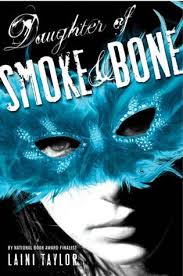
smoke and boneDaughter of Smoke & Bone, by Laini Taylor

Synopsis: Romeo & Juliette with angels and demons.

Book Review: The first thing you notice about this novel is that strength of the author’s voice. It is witty and young and energetic, and reminds you what it’s like to be a teen. I rarely see such a fantastic portrayal of modern sensibilities outside of the best online fanfic (and just to be clear – yes, this is a compliment. There’s fanfic out there better than many published works). I want to hang out with these characters. In fact, the prose in this book is just fantastic throughout. Taylor is extremely skilled in the craft of writing.

Furthermore, unlike most YA romances, this one doesn’t get the vapors and need a fainting couch whenever sex is mentioned. The protagonist has already had sex when the novel begins! It’s discussed as a real thing that real people do as a part of life, rather than some sort of mythical holy grail. I cannot begin to say how great it is to see the traditional American Puritanism tossed aside in a book that’s marketed for teens.

Two-thirds of the way through the book we hit an extended flashback that lasts the rest of the novel. It feels like this should have been a separate book, because we need all-new exposition and world-building. In fact, the requirements of building a new plot & world in a short time this far into the book dominate the text, and it crowds out all the amazing characterization and the strong voice we’d grown accustomed to. It was an unfortunate choice in an otherwise excellent book. However the extended flashback is still good, if not great.

I have a bit of a prejudice against YA, as covered before. But this book really is quite good. If you’re going to read just one YA this year… well, read Heroes of the Valley. But if you’re going to read TWO, read this one as well. I can’t outright recommend it, I wouldn’t read this just for myself. If you’re like me, Not Recommended. But if you like YA this is a shining example of the genre, and it must be Recommended.

Book Club Review: This is a very enjoyable book, and pretty much anyone who’s been a teen can relate to it. And even people who generally don’t like YA or don’t like romance will still like the book because it’s written so well. Maybe they wouldn’t read it of their own accord, but they’ll gladly finish it for a book club, to have that shared experience with everyone else reading it. It’s the perfect size and flows quickly, and is laugh-out-loud funny in quite a few places.

In addition, it does contain a few meaty chunks to talk about. The morality of colonialism and vengeance may well come up. While initially it seems hard to sympathize with the colonial oppressors (especially if you come from a country that uses its heroic struggle against such oppressors as its foundation myth), perhaps after a thousand years of perpetual warfare someone would be willing to strike a truce? And what’s with Brimstone’s bone-headed decision to keep the protagonist in the dark about her past, and extend the war by (at least) two decades? C’mon man!

So yeah, fun times all around. Recommended.

Apr 242014
 

Every year my book club reads the short stories and novelettes nominated for the Hugo Awards that are available for free. This year that is all of them. Here are the links:

Short Stories

‘‘The Water That Falls on You from Nowhere’’, John Chu
‘‘The Ink Readers of Doi Saket’’, Thomas Olde Heuvelt
‘‘Selkie Stories Are for Losers’’, Sofia Samatar (audio)
‘‘If You Were a Dinosaur, My Love’’, Rachel Swirsky (audio at same link)


Novelettes

‘‘The Truth of Fact, the Truth of Feeling’’, Ted Chiang
‘‘Opera Vita Aeterna’’, Vox Day
‘‘The Waiting Stars’’, Aliette de Bodard
‘‘The Lady Astronaut of Mars’’, Mary Robinette Kowal
‘‘The Exchange Officers’’, Brad Torgersen (text is not available free online, but the audio version is!)


Apr 232014
 

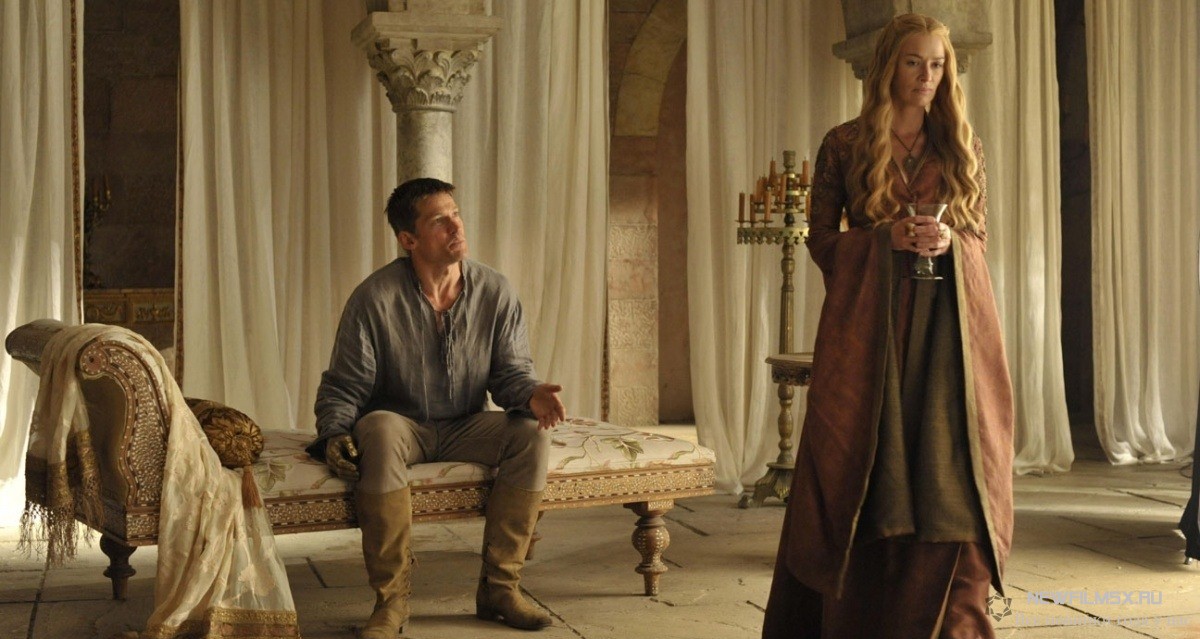
Jamie Cersi RapeEveryone is freaking out about how HBO is making Game of Thrones extra rapey. From The AV Club: Why are the Game Of Thrones showrunners rewriting the books into misogyny? and from navigatingwonderland on Tumblr: I guess consensual sex isn’t edgy enough for hbo.

Let me quote from that last one.

Book:    “He stopped then, and drew her down onto his lap. Dany was flushed and breathless, her heart fluttering in her chest. He cupped her face in his huge hands and looked into his eyes. “No?” he said, and she knew it was a question.

She took his hand and moved it down to the wetness between her thighs. “Yes,” she whispered as she put his finger inside her.”

Show:   rape

Book:    “Hurry,” she was whispering now, “quickly, quickly, now, do it now, do me now. Jaime Jaime Jaime.” Her hands helped guide him.

Show:   rape

Let’s start with the Daenerys/Drogo case, as that one is easier. She’s 14 in the books, maybe 16 in the show? Let’s split the difference and call her 15 years old. As a society we do not accept that a 15 year old can give consent to a 30 year old in any meaningful sense. ESPECIALLY not with such a huge power differential (as he’s a king, a violent warrior, and has just purchased her). Is there any scenario you can imagine where a modern-day congressman or general is caught in bed with a 15 year old girl, and we let him go because she’s consenting? Not a chance in hell.

Now say that HBO portrayed this scene as it was played out in the book – an adult male buys a child bride, gets her permission to have sex, and the two of them consummate their relationship. Can you imagine the shit-storm that would ensue? The cries of pedophilia and rape-apology? HBO realized that Americans are not good with nuance. Any rape must be shown to be unequivocally bad. HBO’s safest course of action is to remove all doubt and simply show Drogo throwing Daenerys down and raping her as she’s crying. Because at least then there’s no implication that anything other than pure evil is happening here.

And I am NOT defending statutory rape! Drogo should go to jail for that scene, even as it was written in the books, because he is evil. What I’m saying is that many people would not have understood that if HBO didn’t portray it as a violent rape, and would have attacked HBO for “promoting rape.”

Moving on to Jamie/Cersei.

The quote above makes it pretty clear Cersei is willing. One could make this even more clear by quoting the next couple lines:

“Yes,” Cersei said as he thrust, “my brother, sweet brother, yes, like that, yes, I have you, you’re home now, you’re home now, you’re home.” She kissed his ear and stroked his short bristly hair.

But that’s jumping the gun just a bit. Let’s rewind a few paragraphs.

“No,” she said weakly when his lips moved down her neck

and

She pounded on his chest with feeble fists

What’s going on? Let’s take the passage as a whole.

She kissed him. A light kiss, the merest brush of her lips on his, but he could feel her tremble as he slid his arms around her. “I am not whole without you.”

There was no tenderness in the kiss he returned to her, only hunger. Her mouth opened for his tongue. “No,” she said weakly when his lips moved down her neck, “not here. The septons…”

“The Others can take the septons.” He kissed her again, kissed her silent, kissed her until she moaned. Then he knocked the candles aside and lifted her up onto the Mother’s altar, pushing up her skirts and the silken shift beneath. She pounded on his chest with feeble fists, murmuring about the risk, the danger, about their father, about the septons, about the wrath of gods. He never heard her. He undid his breeches and climbed up and pushed her bare white legs apart. One hand slid up her thigh and underneath her smallclothes. When he tore them away, he saw that her moon’s blood was on her, but it made no difference.

“Hurry,” she was whispering now, “quickly, quickly, now, do it now, do me now. Jaime Jaime Jaime.” Her hands helped guide him. “Yes,” Cersei said as he thrust, “my brother, sweet brother, yes, like that, yes, I have you, you’re home now, you’re home now, you’re home.” She kissed his ear and stroked his short bristly hair. Jaime lost himself in her flesh. He could feel Cersei’s heart beating in time with his own, and the wetness of blood and seed where they were joined.

It becomes clear that Cersei does want to have sex, but she’s worried about the risk of them being discovered. Jamie says “Fuck the risk, I don’t care.” She protests initially, then grabs his dick and guides him in. Was this consensual?

Discussing the book, one friend said “the original scene was complex but ended with Cersei enthusiastically consenting.” But in a separate discussion regarding the HBO scene (in which Cersei is very obviously raped, yet some people thought maybe not?!) she said: “ “No” is potentially the least relative term that exists in the English language. Everyone just needs to realize that when it comes to consent, NO LINES ARE BLURRED.”

But she said “no” in the book as well, at least once. She retracted that no soon after, isn’t that some blurring of the lines?

The answer that some people give is that it doesn’t fucking matter. The word “no” was used.

Imagine, again, that HBO had aired the scene as originally written, where Cersei first says “No.” It doesn’t matter if both of them wanted to have sex. Jamie was less risk-averse and he pushed Cersei for sex after she said no. If HBO had shown Cersei relenting under such “enthusiastic encouragement” and then enjoying the following sex act? Oh my fucking god, the internet would have EXPLODED. The Blurred Lines controversy would have nothing on this. Rape-apology, rape-promotion, “telling boys it’s ok because the slut wants it”, etc. Again – all of these are very real problems, and traditionally society has blamed the victim and let the rapists get away with it. There’s a reason that there is all this pent-up emotion behind such portrayals.

So HBO took the safe route. They jettisoned nuance, they jettisoned the complex sex real adult couples in relationships have, and instead they showed a violent rape with a crying woman. Perhaps it says something about our knee-jerk reactions when HBO considers it safer to show a violent rape than to show a troubling scene of consent granted under pressure.

A different friend said “GRRM is really out of touch if that he thinks that what he wrote was consensual. That scene was always rape to me.” HBO wanted to avoid that controversy.

Apr 212014
 

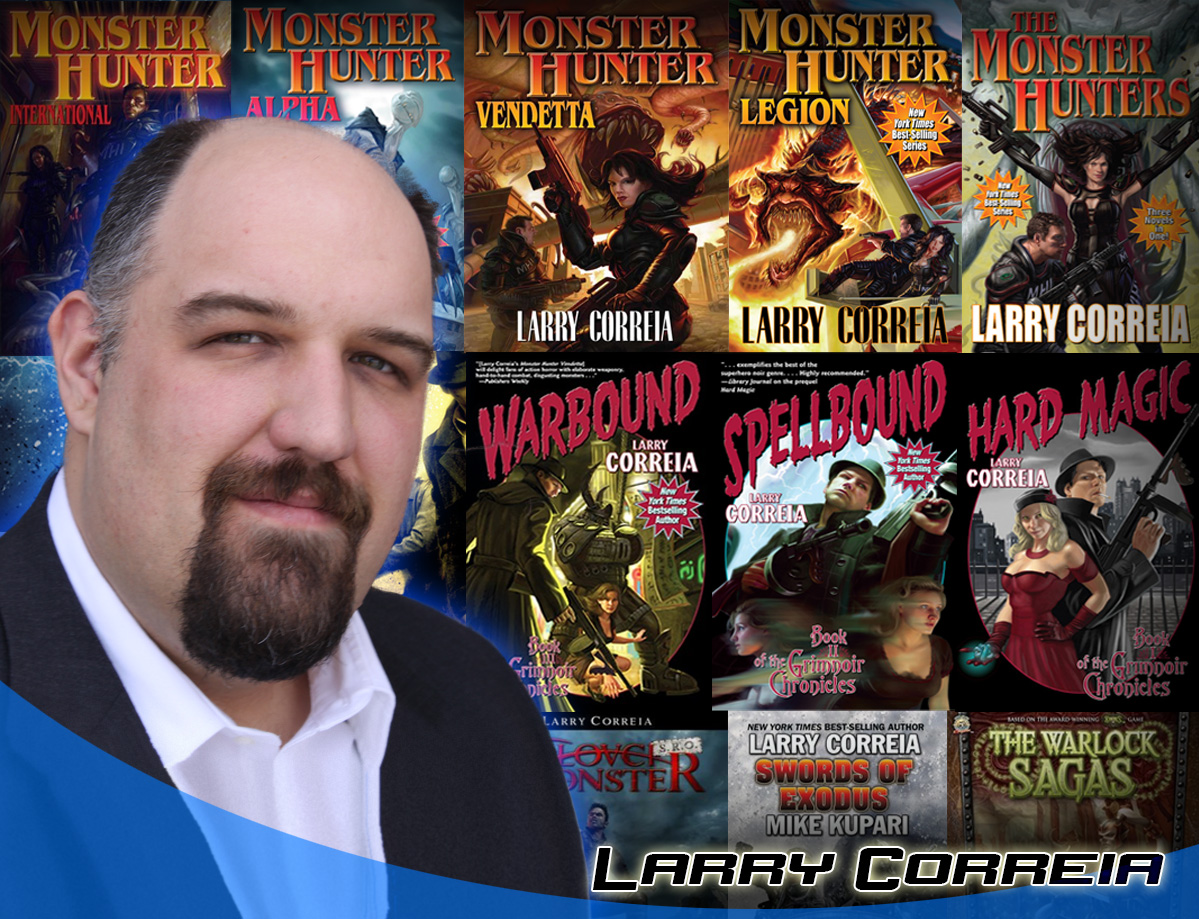
Larry-CorreiaLarry Correia had a problem – he was getting what he wanted. For years he’d been whining about the “liberal intellectual elite” that run the Hugo awards (which is laughable to anyone who’s seen the sausage made… but I digress), and how they would never give a conservative down-to-earth guy like him a fair shake.

Fortunately for him, Larry is a popular guy. Say what you want about his politics or his attitude, he’s got some major online charisma. I may disagree with some of his politics, but his blog is a great read. This man can lead and inspire. So he does what any popular guy who wants to win a popularity contest does – he told his fans to vote for him.

Larry runs on the same formula that a lot of the “persecuted majority” use – anger at what they view to be an authority figure for failing to give them the recognition they feel they deserve, combined with contempt for that authority figure and constant crowing about how much better he is than them (he often brings up that he’s in the top 1% of authors based on royalty income). It’s the classic inter-generational conflict story, anyone who’s had an asshole father can relate to it. It inflames the passions and makes you want to cheer for the young challenger, and we all love it.

The problem comes in the winning. Once the challenger marshals his resources and overcomes the haughty authority figure it becomes apparent to pretty much everyone that he is now the institution he hated. Now that he can point his legion of followers at the works he most wants to promote and have them respond, HE gets to wield the power of approval to decide who should get the coveted acknowledgement from on high. Oops.

Moreover, all that talk about how they’re a bunch of dicks and he doesn’t care about their stupid approval anyway, cuz fuck those guys, is shown to be a sham. Obviously he did care about their approval, because he went to great lengths to secure that approval. Before he was all Groucho – “I wouldn’t want to be part of that club even if they would have me,” now he’s all Honey Boo Boo “I should be getting this prize!!!”  Makes him look like a kid with daddy issues. Double oops.

But Larry ain’t dumb. In fact, Larry is a friggin genius. Because Larry has a secret weapon. Larry had his fans get Vox Day nominated! As Larry knows, the majority of the SF community *hates* Vox Day. Mainly because Vox Day is a neo-reactionary and loud about it. He’s famous for his racist, sexist, anti-liberal rants. He’s the guy that shows up at the party with a giant sack of ripe dog shit and starts throwing shit at everyone. Predictably, the SF-blogosphere has a collective seizure. Instantly all attention is off Larry and onto Vox Day. Success!

Moreover, this thumb-in-the-eye probably feels awesome for Larry. All those stuck-up pricks now have to include this guy they hate, because they were dumb enough to trust in their stupid system which they thought would exclude people they didn’t like! Their party will be, well, probably not ruined… but certainly marred! This will stick in their craw for a long time. Vengeance has been achieved. Double success!

And, of course, there is both the prestige of receiving a Hugo nomination, and the increased sales it will generate. And the validation that one gets when successfully pulling off a move like this. Quadruple success.

In the social status game, Larry manage to strike a decisive victory this year. I doff my hat to him, it was a master stroke. I assume that for the coup-de-grace he will shun this year’s Hugo ceremony. While his attendance may irritate some people, it will give them the opportunity to either shun him, or show their good graces by accepting him anyway. Either option will be a bit of a loss. Showing his contempt with a pre-emptive rejection of the entire affair is the best possible play, as far as I see it.

I’m excited to see what the next move in the game will bring. :)

Apr 182014
 

grim_9-fullConfounded by people’s strong attachment to Deathism, I posited that they’re probably just automatically reciting back the answers they’ve heard. I thought better results would be achieved by asking “If you could live young and healthy for as long as you wanted, how many centuries would you want to live?” Get people to stop and think, ya know?

So recently when I was the TopicsMaster at a ToastMasters meeting I tossed out that topic, and then picked a random person from the audience. Turns out I had been naively optimistic (again!). The reply was “Just one”, with a standard Deathist elaboration about not wanting to live on without their friends/family.

This was partly my fault for not making it clear that this ability would be society-wide, and not unique magic.

But, with yesterday’s post about emotions being the biological tools of alliance-building still in my mind, I came to another realization. People are being alliance-smart when answering like this.

Right now, biological immortality is impossible. Saying “I’d like to live for hundreds of years” gets you nothing, any more than saying “I’d like to fly and be invisible!” does. When making such fanciful proclamations, the only thing to be gained or lost is the respect of your allies (or potential allies). For someone to say “I am so dedicated and committed to my allies that I would not want to live without them! I would rather die first!” sends a signal that one is a good alliance-partner to have. Loyalty unto death is a highly prized trait in allies. And while sometimes making this claim can be costly (maybe if someone needs an organ donated, or is in trouble with the mafia), it literally costs absolutely nothing to make such a claim in the face of eventual-death-from-old-age, since that’s currently unavoidable anyway!

All this time I think I’ve only been making the Deathist position stronger, by making supporting it have a social payoff. Dammit!

New strategy then – try to flip the tables, and make it look like supporting Deathism is a strike against your allies instead. Because, honestly, it is. You’re taking the position that you’re cool with all your allies dying due to inaction. New phrasing:

“If science cured aging, and your children & loved ones could live young and healthy as long as they wanted, how many centuries do you think we should limit them to?”

That’s probably too crass. But it’s a starting point. And supposedly this difference in thinking can help. When finding that women who ask for raises are much less assertive than their male counterparts, they were advised to stop thinking that they were asking for a raise for themselves and start thinking that they were asking for others, such as their children or family. Apparently that made a big difference. So, from now no more appeals to a person’s own survival when fighting Deathism – EVER. Only appeals to the altruism of preventing the deaths of their loved ones.

Apr 172014
 

animal,love,cat,dog,goodnight,kissYesterday I managed to screw up my back when I ignored proper form while putting down some weights. Yay me. :/

Now I’m all hobbling around in pain. Which reminded me of something I’ve observed several times, but haven’t commented on yet – when I’m ill or injured, I feel the emotion of love more strongly.

Not constantly, of course. Mostly I’m grumpy and achy. But when I’m around others I feel a greater desire to interact with them. I feel more warmth at that interaction, and a great deal more happiness when talking with or being around others. Touch is especially nice. I even feel a heightened level of love and affection for my SO (who, presumably, I love all the time).

This seems to simply be the other side of the much-publicized studies that show The Powerful feel less empathy. When you have power you don’t need other people as much, so you simply care less for them. For the most part I’m doing alright. I have a decent job which I feel secure in, and enough money for all my basic needs/wants. I’m a white male in a society that gives huge privileges to white males. I live in a safe neighborhood in a stable country, and I’m still young and healthy and (I’ve been told) somewhat attractive. I don’t really feel I need others in a visceral sense (even though I know that I do, intellectually), and thus the intensity of my emotional attachment to others is muted.

But every now and then I get sick. Or I suffer some injury. And all of a sudden everyone is wonderful, people are the best things ever, and I love all my friends and family. This seems to me to be alliance-strengthening behavior, in times when it is biologically obvious I need some allies! The blatantly exploitative nature of my emotions is embarrassing. As is their short-sightedness. This is the least appealing time to have me as an ally. My emotions should have been cementing alliances back when I was strong, and a desirable ally to have! It’s a bit late now! “Digging the well after your home has already caught fire”, as my parents would say (they’re from the Old Country).

But evolution is a short-sighted and stupid creator. Mainly I just feel frustration at being reminded that yes, I am just a conglomeration of hormones and chemicals that act subconsciously in ways that tend to ensure my genetic survival, rather than in ways I would consider morally or intellectually appropriate. Evolution ain’t ethical, and my surge of love is another damned example of it. I guess I should try to enjoy it while I can. It’s nice to feel that warmth among others coming so easily for a while.

Apr 152014
 

writeAn acquaintance asked a group of us to motivate him to finish his story for a writer’s workshop in a few days rather than attending the local book festival coming that weekend.

Ahem.

There will be other book festivals. If you go to this one, what lasting impact will you have on the world? What will be left of your life after you are gone? If you go to a book festival – nothing. Temporary enjoyment, and then it’s gone in a flash. If you work and produce something – possibly a great work of art. Perhaps not this one that you’re writing, but it will be one more stone laid in the foundation for what will become your legacy.

Do you want to fade to nothing like almost everyone else who’s ever lived? Or do you want your life to mean something?

Write.