Jul 292013
 

OSnc8 (1)The 2013 Hugo-nominated novels are a bit of a mystery, in that most of them are not very good. I’ve been trying to figure out why this is, as we’ve been reading through them. There are less-than-charitable views on why the Hugo’s suck, but I have more optimistic view of the matter.

As anyone who’s tried to read EarthFic knows, it is relentlessly depressing. And I don’t mean in a cool Grim Dark The Crow kind of way, but rather in the life-sapping soul-draining This American Life kind of way. Where individuals are weak and ineffectual and we just have to take comfort in our shared humanity and accept our powerlessness in the face of the unfairness of life. It’s hard to explain the level of crushing pessimism most TAL episodes convey. Secretly everyone is just a flawed person who ruins everything due to human weakness and we have to shrug and make the best of it because in the end it doesn’t matter, we don’t have any effect on anything anyway. It is emotional solipsism and it grinds you down.

Genre fiction has long been a bulwark against such bullshit. The stakes matter in a wider context and people have the ability to change things. Usually. But it’s not always that way. Some books are darker than others, and some go so far as to give up on humanity entirely. Lots of Phillip K Dick’s stuff and almost all of Vonnegut’s stuff was like this. The less enjoyable a novel becomes the more it’s praised by the traditional literary critics, and things can start to slide in that direction. Soon everything you’re reading becomes sullen.

As Eliezer Yudkowsky recent said –

“It’s getting shockingly hard to find enjoyable reading material anywhere, including in mainstream science fiction and fantasy. I think that reading fanfiction has trained me to expect a certain amount of funny and awesome in my stories, and mainstream SF&F, whatever its other virtues, is not delivering the quantity of hedons per second I have come to expect. I mean, yes, have your characters suffer and character-develop, but also have them strap a solid-fuel rocket to a broomstick, ya know? I try to read the mainstream stuff now and nobody in the novels is having any fun even when I’m a third of the way through the book. It’s like they don’t even realize their readers might want sympathetic hedons along with the suffering and character development.”

I think the 2013 Hugo nominations are a reaction against that. Every single book seems to be a way to try to bring back awesomeness. Let’s have a balls-to-the-wall good time without angsting and moaning about how tortured we are and how much everything sucks. It’s harder for readers to relate when life in this century is objectively so darn good.

I think it’s unfortunate that the books that captured this zeitgeist and got Hugo noms are so very *very* lacking. I’ve honestly read fanfic better than most of them. And I’m not just talking about Harry Potter and the Methods of Rationality, although obviously that’s the big one. It IS possible to write Awesome stories that are also good! There must be some way to also make them legally publishable. The first person who figures out how to do that is going to make massive amounts of money. 50 Shades of Grey-style money. Until then, at least we have the big Hugo carrot to keep tempting new authors forward with more.
Jul 262013
 

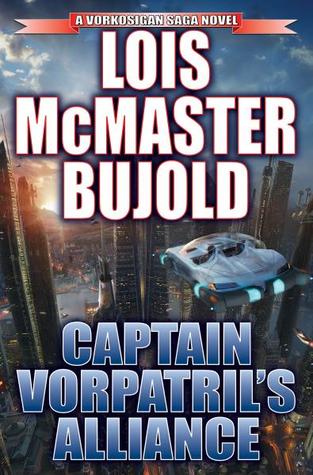
Capt VorpatrilCaptain Vorpatril’s Alliance, by Lois McMaster Bujold

Synopsis: A romantic comedy and a heist adventure set in an Imperial Britain-style future.

Brief Book Review: Bujold can write witty dialog like no one else. Her writing style is a pleasure to read, you can tell she’s having fun and she infects you with that same sense of joy. There are no surprises in this book, it follows all the tropes from the first-chapter Meet Cute onward, but even though you know how it’ll end it’s still fun to watch it going there. Or it would be, if this was a novella, which it really should have been. Because between the charming bits at the beginning and the end there is an slog of absolute drudgery in the middle. You know what’s extremely boring in real life? Reading about the archaic and intricate ways that seating guests around a dinner table in formal events signifies their status and importance in the noble bureaucracy, and how a faux pas in the utensil setting reveals either a person’s ignorance of custom or their deliberate snubbing of someone else’s station. You know what’s even MORE boring? All that same crap about a society that doesn’t even exist! If that wasn’t bad enough, Bujold takes pains to give us superfluous and absolutely irrelevant information constantly. Allow me to demonstrate a typical over-worded sentence.

“I’d have loved to go with him, but I’m running a diplomatic luncheon”X

See that big red X? That would be the PERFECT place for a period! We have all the info we need. But there was no period. Instead we got:

“I’d have loved to go with him, but I’m running a diplomatic luncheon at the Residence today for Laisa, as she had to go down to that Vorbarra District economics conference in Nizhne-Whitekirk.”

That part in italics? It meant nothing. There was never anything that happened at any “the Residence”, Laisa never showed up in the book, the Vorbarra District is some random place we never see with no impact on anything, the economics conference is never touched on in any way again, and what the fuck is Nizhne-Whitekirk??? No one else in the book cares, so why should I? I got the (uncharitable) impression that a novella was being padded out to novel length because novels earn money and novellas don’t, and the victim of this fraud was hours of my life.

The members of our book club who follow her work assured me that this book is less tedious if you’ve read all her other works. It’s like a jaunt down memory lane, visiting all the old friends, with shout-outs and nods to the fans. I guess that sort of nostalgia can be fun, but there’s nothing here for people who don’t follow the series. I had flashbacks of being forced to read biblical genealogies. Even then, 200 pages of nothing happening for the sake of nostalgia is too much. Not Recommended.

Book Club Review: This book did provide us discussion of style vs substance. There’s no denying that Bujold has great style, her prose is like a great pop song. Like most pop songs however, it also doesn’t have much to say. There’s nothing here that’ll stick with me. When the story was moving the writing really was enjoyable. Some of our members were appreciative of the style on its own merits, sometimes it’s fun to listen to pop music and you don’t need anything deeper there. But that sort of conversation can be had about any book with great style and no meat, there’s nothing that makes this one special in that regard. Plus it could have done without the 200 pages in the middle. Not Recommended.

Jul 112013
 

ShortstoryEvery year in our book club we read the 2013 Hugo-nominated Short Stories and Novelettes (those that can be found online anyway) and discuss them at one of our semi-monthly meetings. I’m not sure how exactly to do a “Book Club Review” for a handful of shorts that aren’t bound together in a single work. So I will come out and say that yes – this is a very fun thing to do. Every SF/F book club should do it, I can’t recommend it enough. It makes for an interesting change from reading a single book. You get to compare different author’s styles and different story types. And since short stories are generally about delivering a cool concept in a short hard-hitting package there tends to be a ton of ideas to talk about. As a matter of fact, I wish we did these sorts of short-story discussions more often than once per year, they’re really cool! Definitely Recommended.


Since this makes for a rather short post, I’ll so do a quick few-lines review of each story.


Immersion”, Aliette de Bodard – Great story, everyone took away something different from it. One member related to the idea of hiding yourself under layers of false fronts. Another spoke of immigration without integration – where people can seperate themselves and become immersed but isolated in a culture rather than assimilating. I was intrigued by the concept of off-loading so much of our mental tasks to outside devices (like iPhones) that we lose our human impetus and become program-executors instead.

Mantis Wives”, Kij Johnson – No one understood this story. And we’ve got some fairly smart people in our group, not to be arrogant. It was too abstract, the point was lost within all that metaphor, which always makes me suspect maybe the author wasn’t quite sure what the point was in the first place. Closest we could figure is that we’re all going to die anyway, so one might as well make a beautiful art out of the living/dying. Maybe?

Mono no Aware”, Ken Liu – A story that demonstrates exactly what Mono no Aware is by making the reader feel it (it is a sense of beauty in sadness, a glory in passing, but that explanation doesn’t do it justice). Good characterization and an inspiring portrait of the Japanese ideal of honor and unity. The ending was a little predictable, but there was no other ending this story could have had if it was to remain Mono no Aware.


The Boy Who Cast No Shadow”, Thomas Olde Heuvelt – A metaphorical tale of children (well, teen boys) dealing with terminal illness. The bitterness that comes from its unfairness, and the acceptance of mortality.

Fade To White”, Catherynne M. Valente – In our group this was everyone’s favorite novelette. A patriotic horror story that extends the 50’s mentality into the present day, taking it to its flag-waving and silently-screaming conclusion. So good!

In Sea-Salt Tears”, Seanan McGuire – Given how much I disliked her second Newsflesh book, I was surprised by this novelette. Maybe McGuire has simply fallen prey to the common fate of good short-story writers who can’t transition to novel-length works. This story gave away its twist at the start, which was unfortunate, but aside from that it was a good story about desire, and choosing something you want over someone you love. I love that the ending was unapologetic.

Jun 272013
 

Throne-of-the-Crescent-Moon-CoverThrone of the Crescent Moon, by Saladin Ahmed

Synopsis: An old ghoul-hunter trains his apprentice while trying to protect the kingdom from evil forces.

Brief Book Review: The cool thing about this book is its setting. Most fantasy is set in an analog of Medieval Christian Europe, and this one is set in an analog of the Islamic Golden Age, primarily in Baghdad. The culture shock is initially very interesting, and draws you in. The book also moves quickly near the beginning, moving from action to action without lingering on minutia. Unfortunately it slows down after a few chapters, which exposes the books flaws – primarily shallowness. No character has any depth, they all chose a dominant personality trait and alignment at character creation, and they stick to it rigidly. The D&D comparison is actually very apt, because it reads very much like a badly run D&D campaign that someone decided to write down. Everything that happens is right there on the surface, there are no hidden depths. The characters don’t grow, they simply gain XP and loot. The final boss is Evil just because it’s evil to be Evil. He does not speak a single word throughout the book, he just throws monsters at the PCs and then dies at the end. It is notable that the author manages to subvert the readers expectations several times. He does so by clumsily playing to old tropes that we see coming from a mile away (“Ah, the Emperor is secretly the Evil Overlord!” or “The Falcon Prince is going to go Dark Messiah”) and then surprising us not by adding a twist or going deeper, but by becoming even shallower! Maybe I’m uncultured, but I think this is the first time I’ve seen a subversion of expectations by retreating to surface appearances. It’s kinda meta, but not in a gratifying way. So – too simplistic, which makes it boring. Not Recommended.

Book Club Review: As you may have noticed, the last three books reviewed have all been 2012 Hugo Nominees. The next two reviews will be as well, this is a tradition our bookclub has been exercising for a few years. We spent a fair bit of our discussion trying to figure out how this book had managed to get nominated for a Hugo. While it’s technically proficient – it reads well and is clear – there’s nothing of substance here. Not much to discuss aside from the falling short of expectations. Not Recommended.

Jun 212013
 

23122312, by Kim Stanley Robinson

Synopsis: A guided tour of our solar system after extensive terraforming and space-settling.

A note – this review is over a week late because I wasn’t able to finish the book in time. I still haven’t quite finished it, so please keep in mind the “book review” part is based on incomplete information. However the book club meeting we had about it is threatening to fade from my memory, so I’m getting this done now.

Brief Book Review: If 2312 was to be summed up in a single word, it would be “leisurely”. My parents are of an age where they travel abroad twice a year for weeks at a time, taking guided tours of historically or culturally important areas. This book feels exactly like that, in book form, in the future. The descriptions are gorgeous, every aspect of any given location – from the physical to the political – is worked with loving care. There is a plot and characters in this book as well, but they mainly function as a way of getting you from one place to another so you can take in the sights and wonders. The whole thing is very relaxing and rather enjoyable. The lack of urgency is sometimes very conspicuous – it can be a little jolting to go from interplanetary terrorist intrigue on one page to a Victorian Tea Party discussing sentience a few pages later, especially as the tea party is given a higher word count. But the book lulls you into its rhythm. This certainly isn’t a bad read, but ultimately there’s nothing here that will stick with me when I’m done. It is a much higher caliber of popcorn, but I can only recommend it as popcorn reading, to be enjoyed in delightful lulls between other books. So ultimately – Not Recommended.

Book Club Review: There is a fair bit to like about this book when it comes to a book club meeting. Robinson has a style that will appeal to a particular type of reader, and repel another, while being fairly neutral to most. If you happen to have both kinds of reader in your book club, this can make for some great debate. He also has a habit of incorporating rather rarefied concepts in this book without explaining them, which can be a boon for readers who like to google new ideas they encounter and are willing to give brief summaries to others. The only major downside to this book is that its length combined with its sedate pacing makes it hard to get it finished on time. There are books that demand one’s attention/comments which would likely be better served by discussion. If you have other good options, go with those first. But in the end our discussion was pretty good, so a Mild Recommendation.

May 242013
 

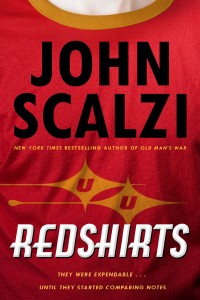
Redshirts_800Redshirts, by John Scalzi

Synopsis: A comedic Star Trek fanfic that goes meta, followed by three essays on existentialism.

Brief Book Review: If you’ve ever been a fan of Star Trek you’ll like this book. The fanfic portion is hilarious. Scalzi excels at writing witty banter and snappy comebacks, and placing characters in believably ridonkulous situations. His pacing is admirable, you’re always being propelled directly into the next exciting event even as the previous one is wrapping up. There’s no hang ups, no chance for your mind to wander, yet it’s never dizzying. It’s hard to put it down, and it’s not too long, making this a very fast read. And while the main show is supposedly the novella, the real meat is in the Codas. The writing slows down and a number of rather serious concerns about existential angst are explored by characters struggling to find meaning in their lives (and yes, this helped fuel my last series of posts). As fun as the fanfic was, these essays really made the book for me, and for everyone who discussed this at our book club. Recommended!

Book Club Review: This is a tough one. It “suffers” from a common problem among good books vis-a-vis book clubs – there is little to disagree over. Recounting your favorite moments of hilarity is fun, but it only gets you so far. There are minor quibbles people will bring up, but nothing major, and it’s unlikely to spark much discussion. The Codas are admirable, but again there’s not too much to say about existentialism aside from “Yeah, I know that feel. It sucks.” Unless people are willing to open up about their own recent existential crises, but it always seems like whining to complain about that sort of thing in public when we’ve Beaten The Game. Not to say that this is a desolate wasteland for conversation – there’s a fair bit to talk about and to enjoy together. But there isn’t much grist to fuel analysis and discussion. I don’t want to say it’s not recommended, because it was such an enjoyable book. So how about – if your book club has gone through a run of dark or harrowing books and needs a bit of levity to raise everyone’s spirits while retaining thoughtfulness, this is a perfect book! Save it for such an occasion, everyone will be grateful. :)

May 102013
 

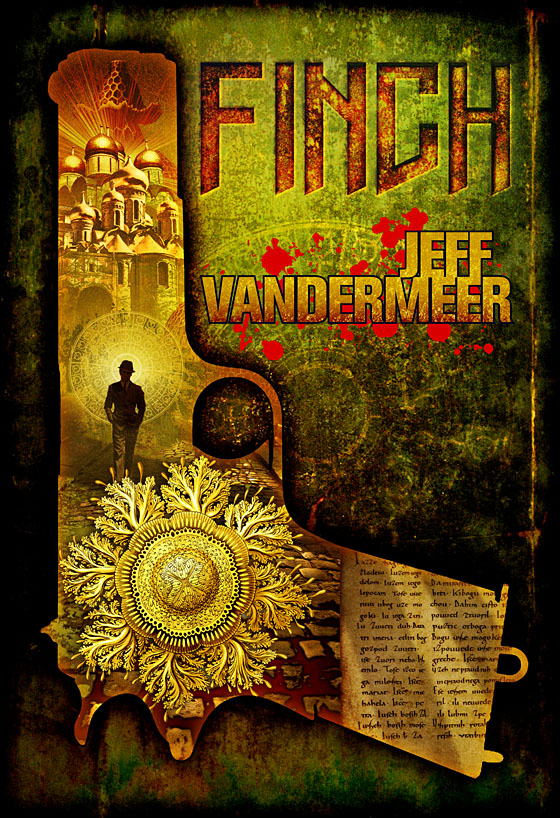
Finch by Jeff VandermeerFinch, by Jeff VanderMeer

Synopsis: A noir murder-mystery set in a city occupied by a totalitarian alien race.

Brief Book Review: I’m torn on this one. It does some things extremely well. The city is half-flooded and overrun with mold and fungus, and that’s portrayed excellently – I constantly felt damp while reading it. VanderMeer also does creepy brilliantly, there’s a constant level of dread and ickiness, especially whenever the alien Grey Caps are around. They feel downright Lovecraftian. Perhaps most notable is the portrayal of living under the heel of a totalitarian government. The menace is ever-present and inescapable. You are always under threat from forces you cannot fight. Not just you personally, but the things you value and the people you love. Any perceived disobedience will cause your loved ones to be hurt. It’s very effective, and makes for a character who has been believably broken, struggling merely to get from day to day without drawing the attention of the authorities. On the other hand, the villains are flat and only have the one trick (threat) – they quickly blur together. The protagonist is fairly passive and occasionally incoherent in his actions. The stakes aren’t made clear until far too late, and after about the halfway point of the book (at which point you still aren’t sure why any of this matters) the story really starts to drag. It’s a slow, plodding read. This is primarily due to the writing style used. Short, chopped sentences. Staccato. Obviously intentional. Effective in short bursts. Writing an entire book that way? Tiresome. Exhausting.

Unfortunate.

Right on the edge, but ultimately – Not Recommended.

Book Club Review: In theory this wouldn’t be a bad book for a book club. It does portray totalitarianism well, which can keep people talking for quite a while. There’s a lot to like in the book, and quite a few things to complain about, which all together would make for a full evening. But only if the members of the book club actually finish the book. This was one of the least-attended meetings we’ve had in a while. Of course it isn’t fair to lay the blame for this just on Finch, several people had life events, and the weather was bad. But even of those who attended, fully half of them didn’t bother finishing the book. It was simply too much of a slog to get through it. There isn’t enough to keep people interested, especially when the writing style slows your reading speed to a crawl. Since it’s hard to have a book club meeting about a book people don’t read, I’ll have to give this one a Not Recommended.

Apr 262013
 

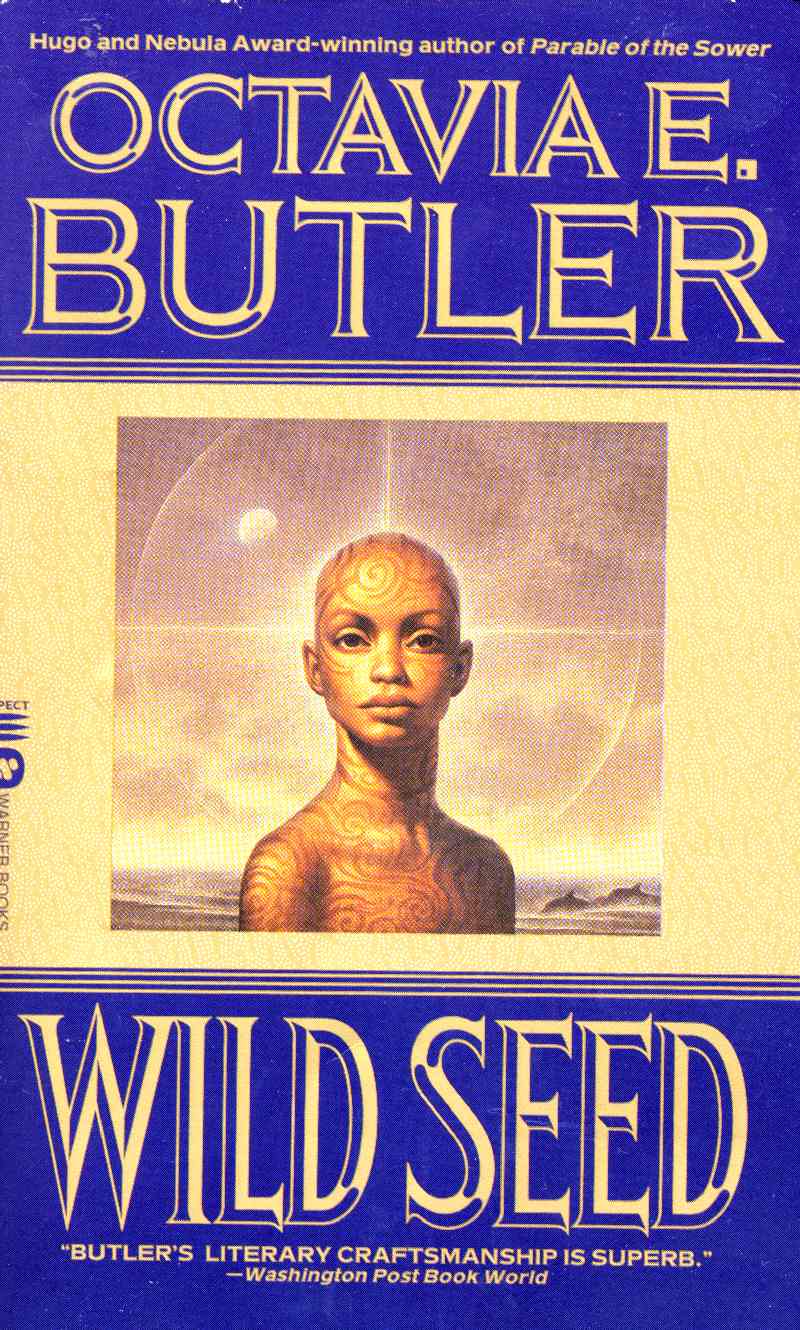
wild-seedWild Seed, by Octavia Butler

Synopsis: Two demi-gods clash. The immortal Doro wants to breed a race of god-men to be his equals. The unaging shapeshifter Anyanwu just wants her family to live in peace.

Brief Book Review: A masterful exploration of the consequences of slavery and how it erodes the humanity from both its victims and benefactors even when ideally executed. The characters are complex and believable, and the ease with which one can both admire and hate Doro is breathtaking. This book has a lot to say, but it is never preachy – it allows the character’s actions to speak for it. The prose is very smooth and efficient, Butler can say things in one sentence that would take other writers a paragraph to convey. I couldn’t find a single thing to dislike about this book, and lots to love. Some possible triggering for people who’ve been victimized, but nothing graphic. Strongly Recommended.

Book Club Review: Books with a lot to say written by very talented authors are exactly what book clubs were made for. This is an ideal book, and will have everyone talking for hours. In addition to the slavery and victimization aspects, it is rather clear that Doro is basically the Old Testament God, adding another topic. And much of the interaction between the two main characters can be viewed as gender conflicts writ large, throwing even more into the mix. The ways the two characters clash – the tactics they use to manipulate, dominate, and win-over the other – make for good discussion and disagreement. It’s particularly interesting that there was a male/female divide in our book club about whether the ending was believable or strained. Strongly Recommended.

Apr 122013
 

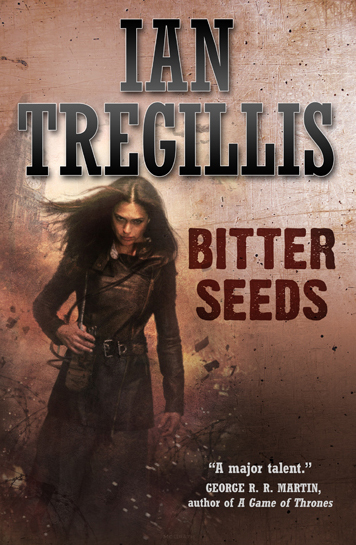
bitterseedsBitter Seeds, by Ian Tregillis

Synopsis: Nazi X-Men vs British Demon-Summoning Warlocks in an alternate-history WWII. It’s played straight, and very dark. The first book in a trilogy.

Brief Book Review: While a minority of people may find the premise difficult to take seriously, I had no trouble suspending my disbelief, and if you can do that it’s a great read. On a technical level, Ian Tregillis is a great writer, with a lot of evocative prose that really highlights the gothic nature of the story. It is perhaps a bit overly dramatic at points, but I enjoy that immensely. The plotting is very strong, the conflict is enthralling, and the story is entertaining. The villain is superb. It’s unfortunate that the characters tend to be rather stereotypical and play strongly to established tropes (with a notable exception), but it’s not a terrible flaw. A note of warning however – this definitely borders on horror sci-fi. Recommended.

Book Club Review: Also a winner for a book club. It’s a good alternate history that will intrigue the WWII buffs. It raises many moral questions as to what prices we are willing to pay for what ends, and how the costs of those prices are assigned. The villain’s manipulations are a great exploration of omniscience, and may spark discussion about the role of prophecy in fiction and how it interacts with determinism and free will. And interestingly, the villain’s actions all seem very evil, yet manage to prevent the worst parts of the real WWII. A fine book for discussion. Recommended.

Mar 282013
 

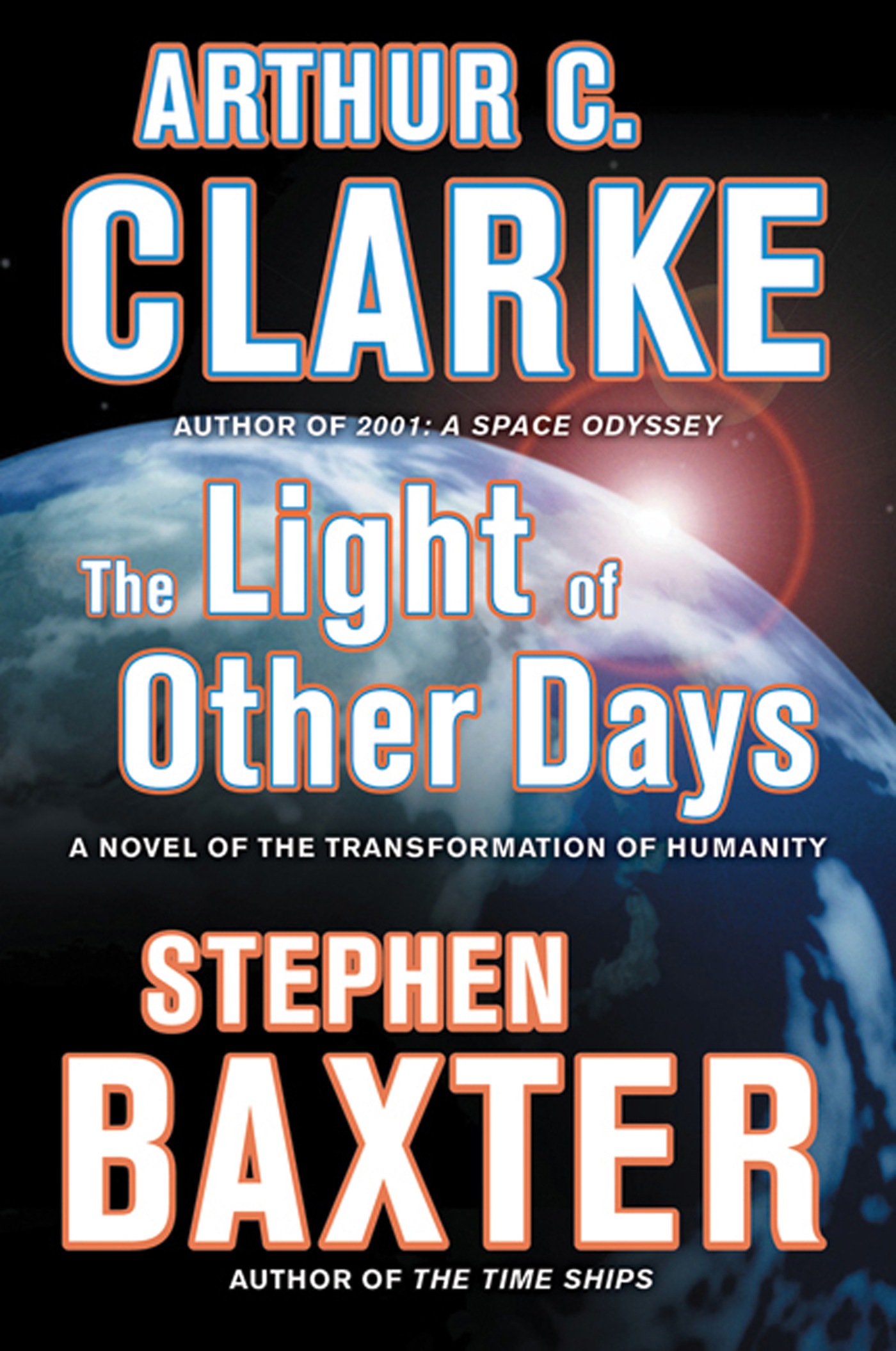
light of other daysThe Light of Other Days,by Arthur C. Clarke and Stephen Baxter

Brief Synopsis: Privacy is demolished when a technology is invented that lets anyone see what is happening in real time anywhere on earth. Later in the book this is extended to allow people to see into the past as well.

Book Review: This is a terrible book. It’s hard to know where to start. The writing is flaccid and unsatisfying. The characters are shallow caricatures, and their dialog consists of things humans wouldn’t ever say. There is no emotion to be found, and the plot just sorta lays there. A moon-sized planetoid is on a collision course with Earth in a few hundred years, and the collective response of everyone is “Meh.” It also has absolutely no impact on the plot or characters, it could have been left out of the book entirely without changing anything. The concept (in the Synopsis above) is absolutely stellar, it could have made for amazing reading. Unfortunately it wasn’t explored in any depth. No one acts differently, there is no exploration of the social implications of never having any secrets again and living in a crime-free world, the world’s religions are barely mentioned, and so on and so forth. It’s just awful on pretty much every level. Not Recommended With A Vengance.

Book Club Review: This is a great book for a book club. We went late because there was so much to talk about. First, the venting at the poor writing can take a bit of time and provide for a lot of entertainment. But there is also the fact that if someone simply wrote a brief essay on a tech that forces complete transparency, that itself would be enough to get conversation going for quite some time among thoughtful people. There was disagreement in our group as to whether this would lead to chaos and societal collapse, or a shedding of taboos and embracing of social harmony (*cough* the latter *cough*). In addition, some people can overlook the atrocious writing and pick out some things that speak to them, particularly those with an interest in historical revisionism. As a catalyst for interesting discussion, this book does very well. Just be prepared to do a lot of skimming if you pick it up. Recommended.