Jun 122014
 

WarboundWarbound, by Larry Correia

Synopsis: A secret group of superheroes saves the Earth from an approaching planet-consuming alien in a 1930s noir setting.

Book Review: First the good parts – Larry Correia can spin one hell of a yarn! He writes a cool alternate-history world with fantastic settings, from a superhero prison to a walled-off Berlin filled with zombies. His pacing is good and his action scenes are riveting. I kept turning pages when I knew I really should be doing something else, which a mark of a good book. He does dead-pan humor extremely well, I laughed out loud several times. It’s exactly over-the-top enough to be a great ride, and very entertaining. When he sticks to doing what he does well he writes great fiction!

The book does have two major failings.

First, it falls into the Superman trap that many superhero stories stumble into. The primary actor in any scene has exactly the right amount of power to just barely overcome their obstacles. It doesn’t matter what the power-level of the threat is. If it’s a stab to the chest, they’ll barely survive. If it’s an army of goons they’ll suddenly be impervious to bullets and wade through them to get to the boss, and then barely survive the city-block-exploding powers of the boss. And they always have just the powers they need to make it through, which leads to things like Superman’s Brick-Laying Vision and that starts to take the tension out of things when you catch on. Larry tries to paper over this by emphasizing that they are pushing their power right to the limit, but there’s only so many times you can read “he burned through the very last of his power” before it loses all impact. What’s the downside of burning through your power again? You gotta rest of a few hours while your power bar fills back up? Good thing you didn’t run through all your power until right at the very end of the boss fight. Again.

(also, how frikkin stupid is it that so few people have the Healing Kanji? Sullivan wouldn’t even give it to his own side, and the entire human race was literally on the line. I guess it was more important to him that he stays the only super-special one. It made the faceless-goon fights boring, as they just died so easily.)

Secondly, Larry has long said that he’s opposed to message fiction, and thinks novels should be about entertaining the reader. This probably explains why he’s bad at writing message fiction – he probably hasn’t read much of it so he doesn’t know how to do it well. The first Correia book I read (Hard Magic) stuck to telling a great adventure tale. Warbound dabbles heavily in message fiction, and it brings it down. I can tell Larry has something to say, which is by far the most important part of writing message fiction, so I’m sure eventually he’ll be able to do it well, if he keeps working at it. But he’s new to this aspect of storytelling, so he blunders through it and makes a mess of things as he goes. For example – his exchange between Francis and the President of the USA (Roosevelt) is completely tone deaf as to how real people with lots of power actually talk. They act more like the puffed-up mayors of a large town than people who shape history. His portrayal of political power games could be most charitably called… naïve. It was so jarringly bad that I had to think for a while, then go back and re-read the entire passage while doing Roosevelt as the Nazi Major from Hogan’s Heroes. If your political commentary only makes sense when the other side is acting like a caricature, you really need to work on your knowledge of how politics is played at the higher levels. And while I realize Correia is politically to the right of me, this is a problem on both sides. It seems like both the left and the right really get off on portraying the other side as Evil Nazis, and it makes for both bad politics and bad writing.

More to the point, in good message fiction the message is an integral part of the story. You can’t remove the politics from a Heinlein novel without gutting it entirely. Much of the “message” in Warbound feels tacked on, and could easily be removed without affecting the story at all. The Active Camps served absolutely no function in the story. Neither did the bizarre non-sequitur line about “real” gold currency being replaced with worthless paper currency (which I realize is a bugbear of the radical wing of the libertarians, but seriously, wtf?) And good message fiction should maybe take just a step back sometimes and not assert that it is the answer to all of life’s problems (I’m looking at you Ayn Rand). In the epilogue Correia finally comes out and directly states that if everyone was like Sullivan, the world would be damn near perfect. “If there were enough like him, the world would be a very safe place to live in, without becoming too dull to be worth living in.” /sigh

There are also a few disturbing glimpses into what Correia idealizes. The characters are creepily joyful in the use of violence. They enjoy hurting the people on the “other side,” and at one point a character is disappointed that a confrontation was resolved before it could escalate to violence and he wouldn’t be able to kill anyone today. Women are treated as property to be protected rather than agents who can make their own decisions about their lives (Hammer is not allowed to join the men in saving the world because one of the men really likes her, and doesn’t want her to get hurt. Despite the fact that if they fail the entire world will be destroyed and she’s dead anyway, so they might as well fucking let her help out! Or even give her the option. Also when Lady Origami takes a lover an older man takes on the role of regulating her sexuality, telling the lover that he must now marry her or face his wrath. Because as a woman she can’t make her own choices, and must have her virtue protected or some shit?) However while these are things that make the book crappier in my eyes, they will make the book better for other readers. I’ve long been a proponent of doing things that make you less valuable to the general public if you can make yourself much more valuable to a specific audience. I’d rather be loved by some and hated by others than just kinda “meh” by everyone. So despite the fact that I disagree with him, I gotta give him props on the decision.

Still…. ewww.

Larry is a rising force, and I’d watch for his stuff. Eventually it will be flat-out amazing. But for now he’s still working out the kinks. In this particular case – Not Recommended.

Book Club Review: OK, just look at how many words I wrote above. I think this is my longest review yet. The man really gets you talking! Warbound is harder to give a Yes/No on than most books. It’s great for sparking discussion, which is the primary measure of a good Book Club book, so normally I would give it a hearty recommendation. However we had a smaller-than-normal turn out because several people simply couldn’t finish it. The action was too comic-book-esque, the violence too wanton, and the message parts too flimsy. We had a very wide range of scores. I think you may have to play it by ear, taking the composition of your particularly book club into account. I would give it a wary Recommended, with that caveat.

May 302014
 

DeadalusThe Daedalus Incident, by Michael J. Martinez

Synopsis: A steampunk-in-space/hard-SF mining-on-Mars crossover

Book Review: I picked this up because it was an awesome concept. Olde Timey wooden ships, sailing between the planets? Sign me up! I wish it had been executed by someone who could write. The book reads like an outline that was never fleshed out. Copious amounts of telling with very little showing. The characters are indistinguishable, and it’s impossible to empathize with any of them because one gets the distinct impression the author never considered them as beings to empathize with, only cardboard cut-outs to move through the plot. As a result everything is shallow and boring.

Someone with a flair for writing could have carried us away with style. This is, after all, steampunk in space! What’s not to love? But the descriptions are bland and brief, we never once get a feel for anywhere, anything, or anyone. The steampunk sections never get into the wonder of awesome quirky machines or weird Edwardian/Victorian societies. They feel for all the world like someone saw some people doing steampunk cosplay and thought “Well that looks nifty, let’s do some of that!” without having ever read any steampunk or having any inkling of what that sort of society looked like. The people feel like caricatures, in the bad way, which is quite a feat for a genre which is known and beloved for its delightful absurdities.

Likewise, all the action set in the near-future Hard-SF Mars setting is equally flat. The people there don’t interact like real people either. It feels more like someone who’s never met an adult before tried to picture what adults trying to solve problems in a professional setting would do, and had to rely on bad pulp fiction as his only resource. Has the author ever met a real adult human in the wild? It really doesn’t feel like it.

Needless to say – Not Recommended.

Book Club Review: Sometimes bad novels are fun, much like certain B-Movies are fun. We all have our favorite bad movie that we like because it’s so spectacularly bad in such an amazing way. Some movies are famous for it. I still haven’t seen The Room, but I certainly plan to!

This book is not like that. It’s not “so bad it’s good”, it’s just plain old regular boring bad. After getting the complaining out of the way, we spent most of the time talking about this year’s Hugo’s controversy, how SF has changed over the past half century, and various other sundry topics. Not Recommended.

Apr 282014
 

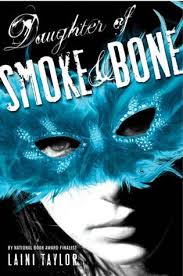
smoke and boneDaughter of Smoke & Bone, by Laini Taylor

Synopsis: Romeo & Juliette with angels and demons.

Book Review: The first thing you notice about this novel is that strength of the author’s voice. It is witty and young and energetic, and reminds you what it’s like to be a teen. I rarely see such a fantastic portrayal of modern sensibilities outside of the best online fanfic (and just to be clear – yes, this is a compliment. There’s fanfic out there better than many published works). I want to hang out with these characters. In fact, the prose in this book is just fantastic throughout. Taylor is extremely skilled in the craft of writing.

Furthermore, unlike most YA romances, this one doesn’t get the vapors and need a fainting couch whenever sex is mentioned. The protagonist has already had sex when the novel begins! It’s discussed as a real thing that real people do as a part of life, rather than some sort of mythical holy grail. I cannot begin to say how great it is to see the traditional American Puritanism tossed aside in a book that’s marketed for teens.

Two-thirds of the way through the book we hit an extended flashback that lasts the rest of the novel. It feels like this should have been a separate book, because we need all-new exposition and world-building. In fact, the requirements of building a new plot & world in a short time this far into the book dominate the text, and it crowds out all the amazing characterization and the strong voice we’d grown accustomed to. It was an unfortunate choice in an otherwise excellent book. However the extended flashback is still good, if not great.

I have a bit of a prejudice against YA, as covered before. But this book really is quite good. If you’re going to read just one YA this year… well, read Heroes of the Valley. But if you’re going to read TWO, read this one as well. I can’t outright recommend it, I wouldn’t read this just for myself. If you’re like me, Not Recommended. But if you like YA this is a shining example of the genre, and it must be Recommended.

Book Club Review: This is a very enjoyable book, and pretty much anyone who’s been a teen can relate to it. And even people who generally don’t like YA or don’t like romance will still like the book because it’s written so well. Maybe they wouldn’t read it of their own accord, but they’ll gladly finish it for a book club, to have that shared experience with everyone else reading it. It’s the perfect size and flows quickly, and is laugh-out-loud funny in quite a few places.

In addition, it does contain a few meaty chunks to talk about. The morality of colonialism and vengeance may well come up. While initially it seems hard to sympathize with the colonial oppressors (especially if you come from a country that uses its heroic struggle against such oppressors as its foundation myth), perhaps after a thousand years of perpetual warfare someone would be willing to strike a truce? And what’s with Brimstone’s bone-headed decision to keep the protagonist in the dark about her past, and extend the war by (at least) two decades? C’mon man!

So yeah, fun times all around. Recommended.

Apr 242014
 

Every year my book club reads the short stories and novelettes nominated for the Hugo Awards that are available for free. This year that is all of them. Here are the links:

Short Stories

‘‘The Water That Falls on You from Nowhere’’, John Chu
‘‘The Ink Readers of Doi Saket’’, Thomas Olde Heuvelt
‘‘Selkie Stories Are for Losers’’, Sofia Samatar (audio)
‘‘If You Were a Dinosaur, My Love’’, Rachel Swirsky (audio at same link)


Novelettes

‘‘The Truth of Fact, the Truth of Feeling’’, Ted Chiang
‘‘Opera Vita Aeterna’’, Vox Day
‘‘The Waiting Stars’’, Aliette de Bodard
‘‘The Lady Astronaut of Mars’’, Mary Robinette Kowal
‘‘The Exchange Officers’’, Brad Torgersen (text is not available free online, but the audio version is!)


Apr 112014
 

drowned citiesThe Drowned Cities, by Paolo Bacigalupi

Synopsis: Child soldiers in a crumbling American South try to survive.

Book Review: An interesting mix, because this is marketed as “YA”, but the subject matter really pushes the boundaries of that. It’s rare (to say the least) for YA to feature amputation, pre-teens using drugs/alcohol and visiting brothels, and committing war crimes. However the writing style often feels like YA, which is unfortunate.

The book has an extremely strong setting, I loved the over-grown jungles and crumbling cities of a war-torn South. The characters are all vibrant and distinct. They really grab you, and you feel like you would love to meet any of them (not because they’d be pleasant to be around of course, but because they are so interesting). The plot moves along at a good clip, and there are a lot of things in this book that will stay with you for quite a while.

On the other hand, the prose itself is lackluster. It lacks a strong voice, and never gets very intricate. It is also sometimes too un-subtle (and I am not a subtly fetishist). I often hear “Well, it’s YA, you have to make allowances for the book due to the target audience. It won’t be as intricate as an adult novel.” And frankly I think that’s intentionally setting the bar low. It’s the same complaint people have about self-published stuff. With the excuses of “Well, it’s self-published, you gotta let some things slide” it just lowers the level of the entire field because no one strives for excellence. This is one of the reasons I don’t really like to read YA. Drowned Cities could have been an amazing novel. But the excuse of “it’s YA, it doesn’t have to be as polished” let it aim lower.

Also there is too much reliance on Tool to solve every problem, and the ending is somewhat unsatisfying.

However the book is so good in so many other ways it’s really hard to come down hard on it. It is, overall, good. If you like YA (and can handle some atrocities), I’d definitely recommend it. If you’re like me and tend to avoid YA, I’d wish the fates were different but say not to make a special effort to pick it up.

Book Club Review: We had a massive turn out for this meeting. Everyone had things they wanted to say. Things they loved that they wanted to enthuse about with others, and things that rubbed them the wrong way that they really had to get out of their system. I mentioned in my introductory postthat generally the best books for book clubs are ones that have great highlights and also substantial flaws, so there’s things to talk about other than just repeating “Yeah, that was great.” This is one of those books.

It also, like all of Paolo’s writings, has a lot to say. Political/moral/social things, which people can agree or disagree with at length. It was pointed out by another member that this book takes the position that there is no such thing as a just war, or as virtuous violence. If fighting erupts in an area they only sensible thing to do is walk away, leave the animals to wipe each other out, then maybe come back later to pick up the pieces. Violence only ever feeds more violence. Intervention, even for good reasons, will only make things worse. I don’t know if this is the author’s personal position, but it was well presented in the story and made for some interesting comments.

The discussion was insightful and fun, and no one disliked the book. Definitely a solid win. Recommended.

Mar 272014
 

Tregillis-SomethingMoreThanNightSomething More Than Night, by Ian Tregillis

Synopsis: A murder-mystery set in the near future, told by two protagonists. The murder victim is an angel. One of the protagonists speaks entirely in 40’s Noir patter, and is also an angel. The existence of angels is not well known.

Book Review:  I don’t know where to begin on this review. The narrative style is amazing. If you love over-the-top-Noir like I do you will get a huge kick out of this. There are some beautifully crafted sentences. If you don’t smile while reading Bayliss’s POV chapters you may have misplaced your soul.

The plot is good, and manages to avoid several common tropes which I don’t want to get into for risk of spoilers. Let it be said that if you groan and /facepalm when running into received-wisdom Deathist tropes in standard fiction, you will be pleasantly surprised by their avoidance here. There is a strong thread of transhumanism throughout.

On the minuses, the settings/sense-of-place was sadly lacking. And while it starts strong and ends strong, it drags a bit in the middle. Finally, the climax is a bit lacking in catharsis.

Also – have Wikipedia open nearby while you’re reading. It’s not necessary, but it did increase my enjoyment of the book. It is quite obvious that the author works at Los Alamos. I, for one, love learning while I’m reading. :) You will be entertained and challenged at once!

All in all, a good read. Recommended.

Book Club Review: There was a fair bit to talk about in this. It had some flaws to offset its successes, which is always a plus. It gives people something to disagree about. Several of our members thought the Noir patter was over-the-top and should have been dialed down. There was also a strong bit of disagreement over whether the author “cheated” near the end, which was exciting.

Unfortunately there was no theological debate to get into, because the angels in SMTN are not religious entities. They are extremely-powerful, trans-dimensional, immortal and semi-incomprehensible beings. Their physical descriptions are informed by biblical accounts, and there’s theological influences on the narration, but ultimately there are basically zero ties to religion as we know it. This isn’t a bad thing– Tregillis simply wasn’t writing a religious story. That would have been a very different book. But don’t go into it expecting this to spark theological conversation.

There are, however, discussions to be had about the choices made by both the angels and the humans at the end. Themes of responsibility vs servitude. The book also comes down on the practical side of the power-vs-morality struggle, which is fortunate for the humans in the end, but feels like it was left unexplored. It’s a bit too pat that the human heroine managed to find such an optimal solution that was near perfect in every regard. Maybe that’s just my dislike of happy endings. At any rate, I look forward to a sequel that reveals all the choices made at the end where actually disastrous. ;)

Yes, also Recommended.

Mar 252014
 

hugo-awardsThe deadline for the 2013 Hugo Nominations is almost upon us! It seems less popular to blog about who you’re nominating this year, but I think it’s a fine tradition, so I’ll be continuing it myself.


Much like last year, I’ve not had much time for reading this year, so my list is woefully short. But that just means that other people can still sway me to fill my vacant spots with their own favorite story recommendations if they hurry. :)


Short Stories

A Plant (Whose Name is Destroyed), by Seth Dickinson
audio

I’m a sucker for stories about gods. Big gods, small gods, angels, devils. If the story is good it reaches inside me and grabs me by my sense of the divine. It’s a very strong sense, and if I hadn’t been born into such a ridiculously literal religion I might not be an atheist. Now that sense needs to find expression in other ways, and by far the best way is amazing mythological god-stories, like this one.

A Plant explores a relationship between a mortal and a god. The consequences of omniscience on a being who needs to believe he has free will. The fallout of subconscious omnipotence on causal physics. It is sweet, and it is sad, and it is very human. Also, I believe this story counts as rationalist fiction!


Difference of Opinion, by Meda Kahn
audio

A great story about a highly autistic (but functioning) person, and how she gets around in a world ruled by neuro-typicals. I have to say I cannot believe how little buzz this has gotten, especially when compared to last year’s horrible “Movement.”

The stories are similar in that they center on an autistic character, in a world were a cure for autism is possible, and the protagonist does not want it. But while Movement is unqualified trash, Difference of Opinion is beautiful and terrifying and funny all at once.

The protagonist of Difference of Opinion is a real person, with agency and motivations and character. The protagonist of Movement was an object. Things were done to her, but she was not a person. And this wasn’t just a matter of how others in the story related to them – this was how the authors treated their characters. Meda Kahn respects her protagonist (Keiya). She sees her personhood and clings to it fiercly. That is why it is horrifying when society tries to alter her personality – the autism is part of what makes her who she is. They’re killing the person inside the body and replacing her with someone that fits into society better.

Nancy Fulda seems to think of autistic people as toys, or sympathy-receptacles. They are there to be babied and felt sorry for. They are useful as dependency super-stimuli, rather than as people. It’s kinda disgusting. And that’s why I sympathized with those coming to fix her autism. They were removing the thing that caused everyone – including the author – to treat her as a toy. Better to not be used like that.

Meda Kahn touches on this in her story as well. At one point her character says:

“(2) They want you to stay alive for them. For their inspiration, their edification.

(3) They start doing things like patting you on the shoulder and telling you they’ve been so privileged to meet you, that you’ve changed their outlook on life.”

Not only is it a respectful treatment of people with autism, it has an amazing prose style that really feels alive and speaks to you. And it has a tragic story about the powerless trying to stand up in the face of a remorseless, powerful machine and how society will chew you up and spit you out. I’m torn between this and A Plant for best story of the year. They’re both amazing.

I’d like to add that the audio version of this story is fantastic. It captures the voice of the character very well. You’ll remember Anaea Lay’s delivery of “Well fuckballs” for a long, long time. :)


All That Fairy Tale Crap, by Rachel Swirsky

I’m not sure I want this story to win. I really dislike the protagonist. I tend to dislike stories about people who don’t give a fuck, and decide the best course of action is to burn down the world around them while they try to steal and exploit whatever they can on the way down. That being said, the world the protagonist finds herself in is shit, and you can’t say it doesn’t deserve it. The character is a powerless shlub doing what she can to flip off the system that fucked her over in the first place. It plays with fairy tale tropes and feminism tropes and post-modernism tropes, and then it gets all meta on you and makes a shoulder-rush right at the fourth wall. As much as I disliked the protagonist, I loved what the story had to say, and how it said it. I am as much a sucker for structure-play as I am for gods. And I gotta say, this story will stick with me for quite a while. That’s worth at least a nomination, if nothing else.


Novelettes

The Truth of Fact, the Truth of Feeling, by Ted Chiang

Look, it’s mutha-fuckin’ Ted Chiang, do I even HAVE to say anything else? The man is a god among short fiction writers. If you haven’t read it yet, you should. He brings his signature style and analytic mind to the subject of memory plasticity, and the fairly modern invention of historic truth. Every time I read something by Chiang I start seeing it more in my normal life. Just a few months ago, after a venerable guest at a gathering related a very humorous anecdote about something that had happened earlier in his life, I had the temerity to ask “But did that really happen?” To which a third party gave me an incredulous look and asked “Does it really matter?” I had to think about that for quite a while. And I’m still not sure I have an answer. The story had the truth of humanity behind it, and it was enjoyable. Does it matter if every bit isn’t literally true? I still think it does… but I’m not so sure as I used to be. And that’s the great thing about Ted Chiang’s stories. Even when you’re done reading them, they keep affecting your life and your thinking for years.


Novel

The Wheel of Time (the entire series), by Robert Jordan
I only ever read the first book, and I didn’t really care for it. However according to the Hugo rules it appears that a series can be nominated once it is completed if none of its component novels have previously been nominated for a Hugo. From the link “The administrators of the Hugos have declined to rule on this interpretation unless and until it becomes an issue, and therefore that’s precisely what Jennifer (and many other WOT fans) propose to make it.”

Um, fuck yeah. I love making trouble for the establishment. :) And Wheel of Time has a large enough following that it has a shot at making this happen. Let’s do it!


Something More Than Night, by Ian Tregillis

This is perhaps the only novel I read in the past year that was published in 2013, so it’s kinda a shoe-in for my nominations. :) But it is a fascinating book, half of it is written in a lovely 40s noir style that is just a pleasure to read, and it is well-written and strongly plotted, like all of Tregillis’s novels. A strong contender, and I like it!

As a personal note, it doesn’t tickle my “sense of the divine” that I mentioned earlier, because the angels/gods within it are not true Religious Deities. They are extra-dimensional creatures with incomprehensibly vast powers and different physical laws. It’s an interesting contrast.


Words of Radiance, by Brandon Sanderson

I’ll be reading this next month, so maybe I shouldn’t technically be nominating it yet. But the deadline approaches quickly, and the first book in this series, Way of Kings, was so fucking amazing that I’m willing to give this one a pre-emptive nod. I have confidence that this will be at least in the same league as Way of Kings, and thus entirely worthy of a Hugo nomination/win.


Dramatic Presentation (Short Form)

Game of Thrones, “The Rains of Castamere” 

Commonly known as The Red Wedding episode. Because c’mon.


My Little Pony: Friendship is Magic, “Castle Mane-ia” 

This series is great, and it really should get recognition for it. Castle Mane-ia was one of the best episodes of an already very strong season, and it fell in 2013. You may ask “Why not the season 3 finale (Magical Mystery Cure), which also fell in 2013?” Well, MMC is not as enjoyable if you don’t already know the characters and the world. It requires some knowledge of the ponies’ personalities, as well as the importance of alicorns. Castle Mani-ia, OTOH, is completely enjoyable by even a first-time watcher. It would make a better intro for the poor, deprived souls who might first be hearing of MLP from the Hugos (and I’m sure there will be some).


Welcome to Night Vale, Episode 19: The Sandstorm

I was reminded of this and had to add it after this post initially went up. How could I forget WTNV?? This episode showcased the best this show has to offer in terms of oddness, originality, and creepiness. And as I’ve said before, I adore structure-play, and the way the two episodes intertwine (you must listen to both 19A and 19B!) is fantastic! Episode 25 – One Year Later – is also great, and really has the most storyline and character development of any single episode (at least of 2013). However it requires so much back-knowledge of WTNV to really enjoy it that it wouldn’t be a good introduction to any new listeners. I’m going with The Sandstorm.


No Dr Who. I’m so sick of that over-played, over-hyped mediocre show.


And while I’m not trying to imply anything, The Sword of Good was released in 2013. It’ll never get through the crush of Dr Who and GoT noms, but I couldn’t not say anything. :)

Mar 172014
 

Divergent_hqDivergent, by Veronica Roth

Synopsis: Teen girl in a vaguely post-apocalyptic society rebels against authority, gets a boyfriend, and saves the day.

Book Review: Let’s start with the good stuff. Roth is extremely good at making us sympathize with the protagonist, and despise the antagonist. I personally wanted to murder the hell out of Peter, and I would’ve loved to Ender him to death in self-righteous self-defense. Motherfucker has it coming, and totally deserves it. The portrayal of a broken system that leaves everyone as victims with no good choices is excellent. And whenever Roth sticks with things she knows about, her physical action is very strong and very sensory. Her prose is solid.

Unfortunately she moves further and further from her strengths as the story progresses. She repeatedly displays a complete lack of knowledge of both guns and computers that really kicks you out of the story. She abandons the antagonists she spent the first 2/3rds of the book getting us to hate and drops in a generic evil-genius-villain that we don’t care about at the end. Her world building is bad – she desperately needs to give us some hint as to what happened to 90% of humanity, what happened to the state and federal governments of the USA, and some explanation of how people are continuing to live basically a modern middle-class lifestyle without those things. Even a few lines would have been nice. And as good as her characterization is, her plotting is atrocious. She has friends/family of the protagonist run into gunfire unnecessarily – basically committing suicide – for no reason at all except that it’s their turn to die in order to motivate the protag. It’s like they know they’re in a novel and they need to do this to force the story into the course the author wanted it to go. This gets so absurd that in places where I was supposed to be feeling sad all I could feel was /facepalm. I wanted to hurl the book across the room. It was disappointing after such a strong start to the novel. Not Recommended.

Book Club Review: There isn’t much to talk about, because Roth gives us so little to work with. We had to resort to flipping to the “book club discussion” questions in the back, most of which were atrociously bad. Some of them made you say “Why yes, I do wish the author would have thought to ask that question when she was writing the book, perhaps that would have made it better.” While this isn’t the worst book we’ve read (by far!), it was one of the most disappointing, since you can see the potential. You end up reading the whole thing, hoping it’ll start shining again, rather than just skimming or quitting. And it never does. Not Recommended.

Feb 132014
 

Wool1Wool, by Hugh Howey

They’re back! I did not abandon these reviews, I’ve simply been unable to do them for a while. Nov/Dec we only do one book per month, due to holidays. Then I was sick one week, and I didn’t feel I could do an honest “Book Club Review” if I didn’t see the book discussed in an actual book club. And after that we read a sequel to which I hadn’t read the original yet, and I couldn’t read both books in time for the meeting. So, after many weeks, finally I got to see my Book Club friends again yesterday! Yay!!

On to the review.

Synopsis: A generation-ship story set on post-apocalypse Earth, with a few twists (which I won’t spoil). Or: Fallout, before they opened the vaults.

Book Review: Another well-regarded self-published book which, as I’ve mentioned before, inclines me to want to love it and see it succeed. It is very competently written, at the level of many “traditionally” published authors. I loved his portray of a society on the edge of collapse, too complex for any individual to fully understand, so everyone desperately tries to keep it running just one more generation and hopes things won’t fall apart in their own lifetime. But as the book progressed, it started to lose its luster. As a fellow book clubber said: “Howey is very good at writing personal interactions, and politics. He’s not that great with the standard action-adventure fare. The first half of the book plays to his strengths, and the second half of book plays to his weaknesses.” This was a common consensus, so I’m including it. Despite being lengthy the book was a fairly quick read. However, in the end, it won’t stick with me. There was no soul-wrenching emotion, no biting insights, nothing that really spoke to me. I’ve already forgotten much of it, and by this time next year I don’t expect I’ll have any real memories of the book itself. It wasn’t bad, but my time is limited. Not Recommended.

Book Club Review: This is actually a pretty good book for a book club. It’s got a lot of good points, and a lot of flaws. The latter is primarily due to the genre – as Charles Stross has pointed out (in a post I can’t find now) Generation Ships are actually impossible unless you’re literally recreating an entire biosphere and putting an engine on it. Either you’re willing to gloss over the occasional suspension-of-disbelief-breaking for the sake of the story, or you aren’t. As such everyone will find something they feel is unrealistic to the point of forehead-slapping. The interesting thing is that the part that someone really loves, and the part that someone really dislikes, is different for every reader. Comparing which parts stood out for each person (both in good and bad ways) is fascinating, and reveals a bit of each reader’s life experience and expertise. You also get to learn a bit about psychology/sociology/engineering/whatever that reader’s specialty is that was violated. :) Also hearing if they thought the story was good enough to hand-wave the violations or not, and why, is great. Everyone had something to say, and we had one of the highest turnouts ever for this book, even though no one considered it among their favorites. So – Recommended.

Dec 132013
 

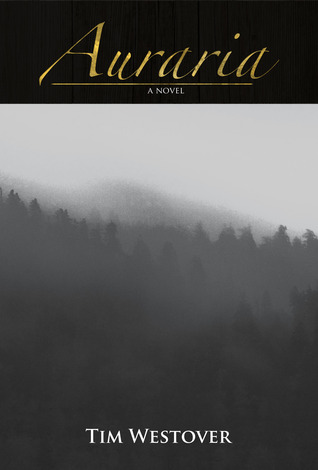
Auraria Tim WestoverAuraria, by Tim Westover

Synopsis: A land developer buys up property in a quirky, haunted valley in late 1800’s small-town Georgia

Book Review: This book came to our club’s attention via the 2012 Fall Battle of the Books, where it made it to the final round. I was very excited, as this is a self-published book, and I’m always very much in support of screwing The Man. Self-published works that garner critical acclaim while bypassing the old dinosaur gatekeepers make me all warm and fuzzy inside. So I really wanted to like this book. And I will say that the prose is beautiful. Excellently crafted; the imagery is extremely evocative. The sense of place is palpable, every page immerses one deeply into the old south. The writing is witty and charming. But… nothing happens. I like for things to happen in my books, and this wasn’t that sort of book. No one grows, there’s no excitement, nothing changes very much. It’s hard to care about any of the characters. This didn’t deter several of our book club members, who still enjoyed it anyway, but I was bored to tears and had to struggle to get through it. If you listen to Welcome to Night Vale you are familiar with this type of story. Neat quirky things happen, the end. It’s perfect and very entertaining in 20 minute doses every two weeks. To have to plow through 400 pages of that non-stop is awful. It goes from being enjoyable to boring to downright annoying. I feel that this would have worked better as a collection of shorts? In any case – Not Recommended.

Book Club Review: The lack of any plot gives book club discussions a very clear thing to focus on: the writing craft. That’s clearly a good thing for the author, because the writing itself is exquisite. But Auraria is unlikely to spark any deep conversation. It doesn’t take any strong positions and doesn’t seem to have much to say. There’s not much there to provoke further comments or inflame the passions. Not Recommended.