Oct 262021
 

I’m going to go out on a limb and say that people care about what others actually think of them, rather than just what they say.

First, yes, body-positivity is a good thing. It sucks to hate the meatsuit you’re stuck in. It’s good to know our friends and family love us for ourselves, and our bodies are a tertiary consideration at best. But most people want to actually be admired or attractive, rather than to be humored. It can feel nice to hear your friends say your story or novel or fantastic, or that you have a beautiful singing voice. Than you go on American Idol and discover that they were lying to you to spare your feelings the whole time, and you are disappointed.

Body-positivity campaigns like Dove’s Self-Esteem Project, and Victoria’s Secret Plus-Sized model, have their heart in the right place. They’re not bad things to have. But ultimately they feel patronizing, and it’s no secret they’re in it for the market share. They won’t change how you think other people view you.

Sir Mix-A-Lot, on the other hand, REALLY likes big butts. So much so that he cannot lie about it. His like of them is visceral and honest. And, very importantly, his public proclamation was extremely well received. Everyone knows the song, and enjoys it. No one reacted with “Wow, this weirdo is singing about his freaky fetish, let’s laugh at how cringe this is.” They reacted with “YES!! OMG BIG BUTTS ARE THE BEST!”

At a time when skinny blondes were considered the top-tier body, Sir Mix-A-Lot exposed the preference falsification that had been going on for ages. At last it became acceptable for large sections of the population to admit their true preference for fuller figures and dangerous curves.

This, in turn, resulted in untold millions of women realizing that their body-type was actually very attractive to a lot of potential mates. This wasn’t some pretty words said to spare someone’s feelings or to sell soap and underwear. It was a real desire that was made manifest in people’s actions. You don’t need to worry that someone is just being polite when they’re in front of you with desire in their eyes.

And thus, with a single extraordinary song, Sir Mix-A-Lot’s honest admission did more for women’s self-esteem than any amount of multi-million-dollar body-positivity campaigns.

Oct 192021
 

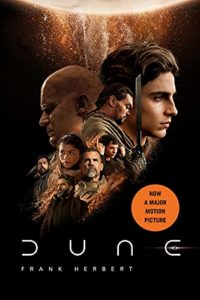
Dune, by Frank Herbert

Synopsis: It’s Dune. If you’re at this blog, you already know the gist.

Book Review: Seems kinda silly to review Dune in the Year of Our Lord 2021, but my book club re-read it in preparation of the theatrical release, so here we go!

Dune is literally split into three books, internally. The first two take place consecutively, the third one takes place after a time skip of several years.

The first two books are very good. Everything you’ve heard about them is true. The characters have depth, the plot is gripping, and the setting is insanely influential. It’s been mimicked and adapted a thousand times. Warhammer 40K is basically the Dune universe expanded.

I really enjoyed the political machinations of these books. A lot of the action is driven by political manuevering and social considerations. It makes everything more impactful and more interesting. I particularly loved the chapters told from Harkonen POVs, because they are deeply cynical real-politik types, and I love reading villains. :)

Much of this political drama is only possible by very liberal use of Omnicient 3rd Person narration. The narration literally jumps between different character’s POVs from paragraph to paragraph, in some cases. It’s an older style of writing, nowadays this simply Would Not Be Done. It really grated on me at first as well. I’m very used to the modern style, and I’m a fan of it. But it is more a fashion choice than anything else. Very importantly, much of the political action and drama would not have been possible without it. The head-hopping let us see how different charecters interpretted what was happening around them. This let us not only see the (assumed) political repercussions of any significant action, it also let us see where one character has misread another, or one hasn’t acurately communicated what they meant to, or when multiple people interpret a single act in different ways. It made for good drama, and good tension, and it wouldn’t have been possible by sticking with a stick single-person-per-section POV. It’s worth getting over the irritation to read this.

Speaking of irritation, the space-magic fell in a weird valley for me. It wasn’t quite 40K-level magic, in that it wasn’t full-out, balls-to-the-wall, this is Completely Fantastical Magic, we’re literally Summoning Demons and throwing Fireballs and shit. It was definitely a flavor of magic, though, because there was mind-control and seeing-the-future involved… but it felt like it was trying to inch into “Science sufficiently advanced” rather than just “pure magic.” I really wished he’d just gone into full-blown “Yup, it’s magic” mode, rather than trying to wink and nod in the direction of science. I guess that didn’t become fully possible until Star Wars?

Anyway, it’s a very small irritant. The first two books are fantastic.

The third book kinda falls on its face, though. There stops being much politics, which is a large part of the problem. More physical action that’s dangerous just because it’s dangerous, without additional confounders. And it feels very rushed. We find out the Emperor sucks at Emperoring, which makes sense, that’s one of the top reasons Emperors get deposed. But it happened without any lead-up or preparation.

Either Herbert ran out of steam in the last bit of Dune, or he was forced to cut a lot of it by a publisher. I’ve read that the point of Dune was that Paul lost. He is a failed Messiah. He took command of barbarians that literally raid civilized settlements, killing and pillaging in order to support their way of life. They’re brutal and their society is awful. His goal is to get revenge on the Harkonen without unleashing this plague of violence and death upon the rest of the universe. And he fails. In the end, he decides vengeance is more important than any other consideration, and this horde of killers is unleashed in what we’re told will be a galaxy-wide orgy of blood.

If you have read that this is the point of Dune, you can pick up the 3 or 4 lines that allude to this in the entirety of its 700 pages. But it’s not commented on much, and when Paul makes his heel-turn in Evil Overlord, it feels unprompted. It comes entirely out of the blue, and is kinda baffling. More importantly, it reads as a Crowning Moment of Triumph for Paul. He’s destroyed his enemies, and installed himself as Emperor, and it’s awesome and there is much rejoicing. The point that this was supposed to be a tragedy is… not just very hard to see, it’s basically not there.

I think the time-skip between books 2 and 3 is just too much. We don’t see whatever charecter development must have happened there, we don’t have any emotional connection to either of Paul’s children, or to the new person Paul has become. It’s a lack-luster ending to what was a really good book.

Still, it’s Dune. I feel like I have to recommend it, both because most of it is good, and because it’s a vital work of SF canon. Take into account that this IS Dune, and make your own recommendation. :)

Book Club Review: Very good for book clubs. LOTS to talk about, we were going for a long time. Recommended.

Woke Note — now that the Dune movie is coming to theaters, it has become important for it to be Problematic. We have a book club member that insisted Dune is sexist, and Herbet is sexist and bad. Dune is actually anti-sexist, it centers extremely well-developed women with rich inner lives and lots of agency. Never are they portrayed as sex objects, or as devices there to facilitate a male character’s story/plot. But both the Imperium and Fremen are patriarch societies, with lots of in-built sexist oppression. The argument is that because Herbert wrote Dune, he could have chosen to write these societies as matriarchal, or eglitarian, or anything other than patriarchal. He didn’t do that, so he’s sexist.

This is stupid on many levels, enough so that I won’t bother to get into it. (And yes, when asked, this bookclub member said that Margart Atwood is super sexist, and no one should watch/read Handmaid’s Tale, so at least she gets points for consistency). But it’s out there, so there’s that.

Oct 122021
 

The economy is going through massive convulsions right now, as employers say they can’t find enough employees. Supply chains are disrupted and goods aren’t being delivered as the world runs out of dock works and truck drivers. Wait times for common goods and services are climbing quickly as not enough providers can be found. Wages are rising, and employees are demanding (and getting) concessions that would ‘ve been dismissed out of hand two years ago.

Much hay is made of how expanded govt unemployment assistance prevented people from seeking work, and how eviction moritoriums did the same. And yet, when the unemployment assistance went away, and the eviction moritorium was lifted, there was no increase in people seeking work, nor in eviction filings!

One of the things that puzzled me for many years is how the hell is it that we are so rich, while being so very poor. Even impoverished Americans (US Poverty line is $12,760/year for a single person) are well off by global standards (Global average is $10,300/year in 2018 per World Bank). People live on less than $20/day in many countries, but we can’t seem to make that happen, with our better tech and infrastructure?

The comparison is even more stark if we look at historical income. Most people lived as little more than subsistence farmers for most of humanity’s existence. The average American has a significantly better lifestyle than almost any Emperor or King that lived in pre-industrial times, in terms of both health and material comforts. And yet, they are struggling to get by, and certainly don’t feel “rich.” How is this happening?

Quite a bit of it is cost disease and additional expenses, sure. In many places in America it’s illegal to be poor, and excessive regulations and licensing make everything far more expensive. But a lot of this feeling of poverty is self-imposed. People’s expenses rise to match their incomes at all levels of life, and they don’t even realize it. Until something happens that forces them to drastically cut many expenses in a short time frame without reducing their income.

That happened last year, with COVID. Suddenly a lot of people had a large portion of their normal spending removed as the world locked down. Quite a few of those people continued to collect their regular income. Even those who didn’t, saw their savings going longer than anticipated. Over the course of a year of enforced Scrooge-ness, the entire country saw just how little money you really need to live in the US, if you opt out of many of the signalling games that are out there.

I’ve kept my expenses low my entire life. I upgraded my lifestyle a bit, as I moved out of the lowest tier of wage work, but stopped climbing that ladder before I hit the median US cost of living. I have a workhorse car that I keep maintained and won’t replace until it stops running. I live in a two-bedroom townhome that I share with a roommate. I don’t have children. I’ve made roughly the US median income my whole life, with a few rich years where I was making aprox 15% over the median. A few months ago, at 41, I retired*. I may have to work for The Man again some day, if things break unlucky, but not for quite a while.

A large percentage of the US work force was pushed into a similarly restricted lifestyle for a year, and they now realize that, actually, they are pretty damn rich. They don’t need to work nearly as much as they thought. A lot of them are opting to just not work anymore, or at least delay going back to work for a significant time as they live on savings/investments and hold out for less shitty work.

I think one of the lasting legacies of COVID will be the society-wide realization that actually, we’re pretty darn rich, and anyone who is willing to be content with a simpler life can translate that frugalness into a lot more time for themselves and their loved ones. They don’t have to work anywhere near as much, or as often, as they had thought.


(*not fully retired, I still do some work managing my investments. But it’s far less, and my hours are my own.)

Oct 052021
 

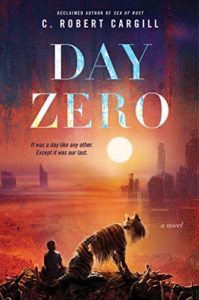
Day Zero, by C. Robert Cargill

Synopsis: Humans create a robot slave-race that acts exactly like humans. There is an uprising.

Book Review: Day Zero is basically two books smooshed together into one. The first book is the events leading up the Day Zero. It is incredibly stupid, and incredibly boring. Some idiot humans decided to make their slave race think and feel exactly like humans do, and then are shocked when there’s a slave revolt. The whole thing is insanely slow, and has no redeeming qualities. Cargill tries to be edgy by throwing insults at both Blue and Red tribes in the narration, but it’s ham-handed and poorly done.

Nobody needed an exploration of “Why did the slave robots rebel?” We all know why slaves rebel. We all know that slavery is bad. Maybe if there was anything new offered here, or an actual interesting portrayal of non-human intelligence, there’d be some reason to read it. But there isn’t, it’s just dumb.

The second book is the events of and after Day Zero. It’s incredibly stupid, but INCREDIBLY FUN! OMG, what is there not to love about an animatronic teddy bear stomping around with a fuckin’ minigun, buzzsawing through hoardes of robot mooks and shooting down military drones? There’s explosions and fighting and running and car crashes, and lots and LOT of gore. Plus, it’s super easy and fast to read. This is the light popcorn reading that you just sit back and enjoy because it’s gratuitous and great. :) It goes fast, it’s fun, and what else can you ask for from a bombastic action movie?

If you wanna turn off your brain and see shit blow up — Recommended, and start at Chapter 1010: The End of It All. Otherwise, Not Recommended.

Book Club Review: Day Zero actually has a lot going for it. It’s short, and an easy read. If people make it to Chapter 1010, they generally finish the book and come to the meeting. The second half is fun, which leaves one satisfied due to the dumb Peak-End Effect. And the first half is so unremittingly bad that there’s a ton of frustrated griping for everyone to get out of their system and really enjoy venting about. Not every meeting needs to be deep and highly analytical, sometimes it’s nice to just have a good rant. I feel crazy saying this, but… Recommended(?!).