Jul 292017
 

(epistemic status: brain dump)

It’s weird when you see something working the way it was intended to for the first time, and things click.

In my post, Marriage is a Hostile Act, I took exception with the fact that there exists in the US a standard contract that one is encouraged to sign which literally takes away a large percentage of your personhood. This is very much against everything I know of the spirit of the liberal ideal. Contracts which remove personhood are generally considered unconscionable and illegal. You cannot sell yourself into slavery, nor into indentured servitude. There are exceptions, but they are not entered into lightly and generally come with a lot of oversight.

I’ve come to realize lately that I never really understood what marriage is supposed to be about to a large part of the populace.

For most of my childhood, my family lived as exiles. We could have no contact with anyone back in the home country, as that was both nearly impossible practically, and would endanger my parents’ family members. I had no uncles/grandparents/in-laws/cousins/etc to model normal family life. My only real-life model was my parents marriage which, with all due respect to my parents, was massively dysfunctional.

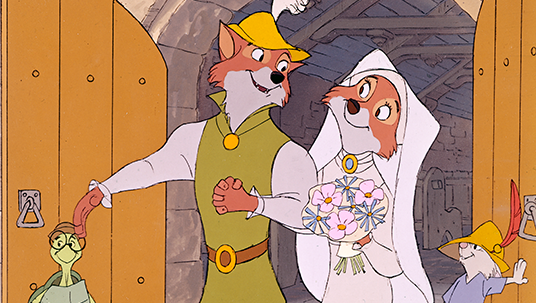
My fall-back models were Hollywood/Disney. Which is basically the porn equivalent of marriage. As far as I could tell, marriage is what you did with someone that you had developed a strong emotional bond with. And I develop emotional bonds pretty easily.

This seemed reasonable, in fact. Friends live together all the time. Sometimes they have sex. It makes sense that they get a few legal protections to help each other out. That shit’s important when you’re incapacitated, and it’s good to have someone watching your back. If, over time, you drift apart or move on to the next phase of your life, you just dissolve the marriage and keep in touch.

Recently I read that the difference between economic and social ties is that social ties are longer term. (I don’t recall where, but probably at Samzdat?) In any economic transaction, it must be fair immediately, or nearly so. AND verifiable. I give you X for Y, and we’re both better off. In social transactions, one trusts they’ll even out in the long term. I see the dishes are scattered across the counter, so I put them away and turn on the dishwasher. I don’t expect anything in return, because I believe that when you (my partner) find yourself in a similar situation you will do the same for me. It’s a beautiful sort of acausal trade among instances of ourselves that we cannot verify, because we aren’t there, but we have faith they’re being executed because we know each other’s character.

You can’t have trade like that with strangers. (It’s probably one of the reasons that working for a corporation feels so empty and meaningless.) Acausal among humans trade takes bonds of family or deep brotherhood. The trust it both requires and engenders allows for all sorts of efficiencies that can’t be created otherwise. This is why throughout most of history the basic economic unit was the family.

There’s massive personal benefit beyond the efficiencies of trade as well. There’s immense psychological safety in knowing that even if everything I’m doing falls apart, I still have a home and a place. They will help me for the months or years it takes to get going again, because they love me, and they know I’d do the same for them.

And I guess marriage-relationships are like that, taken up to eleven. Back in the day there was a semi-tongue-in-cheek way to say “I love you” that ran something along the lines of “My utility function contains a term for the fulfillment of your utility function.” I think marriage is supposed to go beyond that though. The two utility functions are supposed to be merged and mangled to a point where its hard to distinguish them any more. It’s not just a commitment. It’s partially becoming the other person. It’s thinking of them instinctively in all situations. It’s not something that can be done in the course of a few weeks or months, and certainly not something that can be shown in a stupid 100-minute film.

And of course, after such a meshing of utility functions, one could never, EVER be replaced. It would be unthinkable. It would be like ripping out a limb and several organs. It’s not something you do unless the limb’s become gangrenous and it’s the only way to save someone’s life. Even then, the person will be diminished and lesser for a long time afterwards.

(Perhaps ironically, the first (and as far as I can recall, only) time I’ve seen this sort of thing modeled, it has been with a multiple-relationship polyamorous family, not a mono couple.)

This sort of thing is hardcore. And when it’s made official, it should be a big deal. It should be a long, elaborate magical ritual that taps into a culture’s mythology and the participant’s wibbly mystical instincts. It should require sacrifice of some sort. Maybe if the religion I’d been raised in had something like this it would’ve helped me “get it.” As it was, I was in an upstart sect less than a century old, there was nothing particularly interesting about the few weddings I attended.

The government, certainly, should have never gotten involved. Perhaps this was a tactic to grab power from the church. Perhaps it was an attempt to make marriages legible to the state. As usual, it fucked things up. Reducing a social ritual to an economic contract broke the core of what the ritual was about in the first place. When marriage means going to the DMV, signing a single-page contract, and paying a $15 fee, well, you don’t expect it to come with the same sorts of entanglements.

I don’t know if I’m OK with ever getting that deeply enmeshed with anyone. The closest I’ve come is a sort of hetro-life-partnership with a deep friend. I’m starting to trust my parents to this degree, though. So I guess I’m coming closer.

The marriage thing probably isn’t that big of a deal if both participants of a marriage are expecting the same thing. But if one party is expecting “Friends who care for each other, but remain separate people” and the other is expecting “life long soul-enmeshment,” and they fail to communicate properly, and then find out their partner expected the opposite of what they thought they were getting… Well. That can be a very hurtful shock.

Jul 282017
 

As setup for the uninitiated: Trump recently tweeted that transgender people wouldn’t be allowed in the military because their medical care is too expensive. (Though, as has been noted by others, it obviously was not him tweeting. The tweets are far too coherent and grammatically correct. Pence got a hold of his phone, maybe?)

It’s classic Trump bullshit. I noticed something weird about one of the common responses though. I’m not sure if it’s for humor value or because sex sells or whatever, but there was a lot of focus on Viagra. Lots of “The Pentagon spends 5 times more on Viagra than transgender services“-type headlines. This sort of thing happens every now and then, when a medical cost is brought up people will sometimes respond with “But look at how much we spend on Viagra!” And, OK, but Viagra is also a legitimate medicine. It helps with the side-effects of many psychoactive drugs, such as anti-depressants and anti-psychotics. Things which soldiers with PTSD often need.

I don’t dispute the facts. But there’s lots of things that cost 5x more than medical care for trans people, as it’s such a small cost. The focus on Viagra specifically seems to be along the lines of “If we can spend money on something as ridiculous as Viagra…” like it’s a party drug. Its the same attitude about sex that leads to “trans people don’t really need medical care either, its a private perversion” sentiments. It’s a harmful attitude to spread.

Jul 252017
 

Stolen from a friend: “Since conservatives are an underrepresented minority in academia, and having more conservatives in academic disciplines would raise the cognitive diversity among researchers in most fields, I think we should probably use affirmative action-ish policies to make universities cheaper and easier to get into for conservatives.”

This is a surprisingly good point.

Of course, AA is primarily meant to help those who have been traditionally disadvantaged by systemic relics of oppression. It’s not actually intended simply to increase diversity for its own sake. But to the extent that diversity is a goal worth achieving, this idea has some merit. I do think diversity is a good thing, something that we want more of, and this looks to help advance that goal.

There’s also the stealth-attack aspect… Higher education tends to make conservatives more liberal, so this would get more conservatives into the ideological killing fields. So to speak.

A different friend objected that this would only be acceptable if and when conservatives start supporting AA for disadvantaged groups. I don’t think this is legitimate though. Should disadvantaged minorities only get AA benefits if they endorse AA policies? And if the principle at play here is “affirmative action programs should not apply to folks who would not apply them to other folks” does this mean we should disallow affirmative action for minority folks if they don’t support it for conservatives?

Of course then someone had to ruin all the fun by requesting actual data. We turn to the great google, and we find:

Since 1980
% of Far Right students remained even at 20%
% of Far Left students increased, from 20% to 35%
% of Middle/Moderate students decreased from 60% 45%

So conservatives haven’t actually decreased in representation… the far left has swelled greatly instead, at the cost of moderates. The rise in radicalism and polarization isn’t due to lack of conservatives at all, but rather an increase in one fringe.

Suddenly I’m of the opinion that perhaps increasing the amount of people on the opposite side isn’t actually a great idea. That may very well simply lead to more radicalization on the right. Which could feed back into increased radicalization on the left, and so forth. If there’s too much weight on one side of a scale, adding more weight to the other side may break the scale entirely, rather than returning it to balance.

The hell of it is, moderates aren’t sexy. “Boring” is the last thing passionate young people want to be. Can we go about creating and popularizing a form of Radical Moderate movement? People who are vocal and passionate about being reasonable and considering consequences and viewing others as incorrect rather than evil mutants? It seems this was what much of the Rationalist movement was about, but I’m too far removed from university life to know if anything is growing there (god I’m old). Has anyone begun a Rationalist and/or Moderate version of campus activist groups?

Jul 192017
 

The Stars Are Legion, by Kameron Hurley

Synopsis: A fleet of Death Star-esque biological space stations are slowly dying. Their inhabitants will die with them, so they fight bloody wars over the few healthy stations remaining.

Book Review: This could have been a good book if it had been given the attention it needed. The premise has promise, and the world Hurley has created is intriguing. But this feels like a first draft that was rushed out.

We are often not given any description of our surroundings or the objects our hero (Zan) interacts with, which is a problem in science-fiction. I need some idea of what a space station’s interior looks like, aside from “biological.” When Zan goes to the hanger (how big?), looks at a “vehicle,” repairs it, takes off, and gets into combat, it wasn’t until she was already zipping through space that I realized it was basically a space-motorcycle that she was riding on. Until then I’d defaulted to a Star Trek-style shuttlecraft.

This sort of thing is rife throughout the book. The dialog can be clunky, as if it was a placeholder for something to be fleshed out. Whenever anything with color is described it is always just one or two simple primary colors that are mentioned. I got sick of everything being either Green, Yellow, or Purple–it felt like I was watching a low-budget cartoon. Some of the action didn’t quite make sense, as if Hurley wasn’t really keeping track of where in the room everyone was, just jotting down fighting motions.

All this led to boredom with the story. Reading a slightly-filled-in story outline doesn’t make for exciting reading. When I got to the first sex scene I thought “Oh thank goodness, at least this will be interesting.” But it turns out that an author rushing through a narrative can even make sex boring.

Hurley also starts the novel off with an amnesiac character (already a very tricky thing to do) and then has a second POV character. Who is intimately tied up in these events, but without anmesia. Which, like, at that point the jig is up. We’re in the POV of someone who knows the mysterious thing in the recent past that is supposed to be providing narrative suspense. Hurley tries to get around this by simply concealing it from us. At least once I read something like ‘She thought about the thing in her past, the really bad thing she tries not to think about.’ The POV character literally thought about the thing while we’re in her POV that we’re not supposed to know about, so it’s just marked as “the thing” she’s thinking about. Is there any way MORE clumsy to hide info from the reader?  /fallsonfloor

Hurley does do a very good job of conveying rage, which is her trademark. So anytime there was rage to be felt, I felt it. But then there’s the other 95% of the novel…

The thing is, Kameron Hurley is a good writer. Both The Horror Novel You’ll Never Have To Live and We Have Always Fought are very well done! I’ve heard from numerous sources that God’s War is really good, and I regret we didn’t read that one instead! Why was Stars Are Legion written so carelessly?

In Horror Novel we are told that Hurley has Type 1 Diabetes, and can only afford to live as long as she keeps a day job that provides Health Insurance. This is, in fact, the primary reason that most people who would otherwise take risks working for themselves or starting a new business instead continue working for The Man. Our government makes it extremely difficult for anyone with dependents or not in perfect health to do anything other than work as a cog in the corporate system. If I recall correctly, in a more recent post she’s mentioned that she aims for two novels a year. Plus her day job, family/relationships, etc. That’s a crazy pace.

You hear about this sort of thing a lot in music. A band puts out their first album, and it’s the culmination of years and years of effort. And then they’ve got six months to put out the follow-up album, and it’s just not enough time to make something as great, something that was refined over years. Authors often sign multi-book contracts, because I guess that’s what publishers want nowadays? If something comes up in personal life, or work life, and you can’t find the time on weekends and evenings to make this what it should be–tough. The publisher wants a manuscript, and the contract has a deadline and a word count, and you can’t fuck that up if you want to keep a career in fiction writing. So instead, one is forced to hand in an early draft and go to print with that.

This wouldn’t be as much of an issue if we had sane healthcare. If people weren’t forced to work 40 hours a week to get access to the insurance-industry-paywalled medicine that keeps them alive. If an author could choose to live on low wages and take the time they need for a book, rather than having that choice mean death. What I’m saying is, America’s shitty healthcare is to blame for all sorts of things, and this is just one more of them. Not Recommended.

Book Club Review: Not everyone was as disappointed as I was. The coolness of the setting kept a number of people hooked through the end. One of our readers said the real story is in the last 25 pages or so (which I never got to) and this would really have been better as a short story or novelette. But there’s not much wider conversation that this novel brings up, and I can’t see any reason to inflict this on a book club. Not Recommended.

Jul 172017
 

The Welcome To Night Vale live show came to Denver yesterday. It was great fun, I loved it! And one of the best things about it is that everyone in the audience is the sort of person you want to know. There’s a very strong “these are my peeps!” feel there. :)

The show, as usual, involves a bit of audience participation. A friend sitting by me didn’t participate very much, for which I teased them a little right afterwards (the participation makes it so much more fun!!). They responded that they don’t participate in ritual lightly, and weren’t comfortable joining in this one. My initial reaction was “lol, audience participation isn’t ritual,” but after about ten seconds of reflection I realized “Oh yeah… it kinda is.”

Which got me to thinking.

Rationalists are aware of the power and importance of ritual, and there are ongoing attempts to harness that power. They meet with various levels of success, depending on group and area. In Denver they haven’t taken hold. A fair number of us here are rather allergic to the trappings of religion. Personally I have no problem with anyone else doing it, but to me it feels forced and hokey. Like putting on your parents’ clothes as a kid and pretending to be adults. Religious ritual works because the participants think it really does tap into a higher power. Mimicking the form without believing in the substance feels… uncomfortably silly.

A different friend has recently asked if Universities could take the place of Churches in the secular community (after reading the excellent “Man As A Rationalist Animal” post by Lou Keep). I think that if they could have, they would have by now. They’re halfway there. They have the instinctive respect of the populace, the arcane credentialing and clergy, and of course the miracles. But they’re missing the interface with the common man–the language of ritual and community.

Welcome To Night Vale has that. WtNV is the start of a church for the modern urban/suburban areligious person. It tackles the fundamental question that plagues the educated proletariat–the meaninglessness of existence in a post-community capitalist society, where everyone is interchangeable and replaceable. And it answers it not with speeches or therapy or advise… it answers it by giving us a mirror made of myths. Modern myths, spun just weeks ago.

The podcast creates the foundation of myth that informs the spiritual layer of all its listeners. On its own it doesn’t do much. It is interesting art, of varying quality, that can sometimes touch deep emotions. The true power of WtNV comes about in its live shows. Here they take the common base of myth that the audience shares and they do something wonderful with it. They transform it into ritual. They bind the audience together, guiding their emotions down the tracks of a mythical story, until it resolves in a catharsis and an instruction (“be good to each other”) that means something.

But VERY importantly – it does it tongue-in-cheek. It is funny, self-referential, and irreverent. Because that is what it means to be areligious in a world that doesn’t need you. Taking things seriously simply does not work. Life is a farce, and we all know it. So the absurdity is played up. We are here to have fun. To make jokes and ¯\_(ツ)_/¯ about how stupid all this is. And when the merriment is high enough we can all join hands are jokingly chant to a story book character, because in it’s fun to do so in the spirit of the story. And if, along the way, we manage to say something deeper and more important, and feel uplifted at the end, well, so much the better. We came for the lols, and we left having touched something within that united us all for a few hours.

It only worked because no one comes SEEKING a deep experience at WtNV. We came for fun, and the masterful story led to something deeper. It’s like dating–if you’re seeking a relationship, it is apparent, and it doesn’t work. It’s only when you’re just dating around for the pleasure of an evening with interesting company that you are in a state where a relationship can begin.

This is what Rationalist Rituals get wrong. They are trying for deep experience and wonder, like we had in our childhood when our parents took us to church. That is not available via the same route of reverence and worship that the religious rituals used. The mindset of one who doesn’t instinctively revere the greater power being channeled is inimical to that sort of ritual. The ritual of the educated areligious must start in a different place. Our priests are comedians as well. Our religion must laugh first, or be rejected by our immune system.

Someday a Welcome To Night Vale community theater will form at a university. A group of fans have a lot of fun reenacting favorite WtNV episodes, and form strong bonds, and the university institution will lend them support and prestige in other aspects of life. And maybe, a couple generations down the line, their children will have a fully-formed religious life tailored for the concerns of an early 21st century proletariat, which fulfills their emotional needs with myth and community, while slowly becoming less relevant as the centuries grind on. And it’ll all have started with people needing to laugh at the absurdity of this sort of thing happening in the first place.

Until that happens, check out the live Welcome To Night Vale show “All Hail,” even if you aren’t a listener of the podcast. It’s good, and it’s instructive. Likely even if you don’t listen to the podcast.

Jul 112017
 

Guys, guess what?? I have made a thing (again)! A small collection of my published stories is available for purchase!

You can get Red Legacy and Other Stories as a printed book at Amazon, or as an ebook at all the major ebook sellers (including Amazon and B&N, of course). You can read most of the stories in it free here, so you can decide up front if my fiction is the kind that you enjoy. If you do, and you think the enjoyment was worth a few dollars, buying a copy would help me. And buying it comes with a bonus — the collection includes “Host,” my latest story which is otherwise only available in the March/April issue of Analog magazine.

If you can’t buy a copy, but you’ve read or listened to most/all of the stories before, leaving a review also helps a ton. :)

Jul 082017
 

From The New Yorker. Even they are getting in on it.

THE “EFFECT IS TOO LARGE” HEURISTIC – “a Radiolab episode…mentioned a famous study on judges handing out harsher sentences before lunch than after lunch. …the percentage of favorable decisions drops from 65% to 0% over the number of cases that are decided upon. This sounded unlikely.”


In Defense of Individualist Culture – A strong counter to the current pro-communitarian trend. Still don’t know if this is great or awful.

“The idea of mankind as arbitrarily malleable is an appealing one to marketers, governments, therapists, or anyone who hopes that it’s easy to shift people’s behavior. But this doesn’t seem to be true. It might be worth rehabilitating the notion that people pretty much do what they’re going to do.
…Once you’re aware that you can pick your favorite way of life, you’re a modern. Sorry. You’ve got options now.
Which means that you can’t possibly go back to a premodern mindset unless you are brutally repressive about information about the outside world, and usually not even then.”

((I’m assuming a bit of background knowledge, based on what’s been floating around the Rationalist Sphere lately, but it does have a good summary:
“The behaviorist or sociological view of the world would say that individualist cultures are gravely deficient because they don’t put any attention into setting up healthy defaults in environment or culture. If you don’t have rules or expectations or traditions about food, or a health-optimized cafeteria, you “can” choose whatever you want, but in practice a lot of people will default to junk. If you don’t have much in the way of enforcement of social expectations, in practice a lot of people will default to isolation or antisocial behavior. If you don’t craft an environment or uphold a culture that rewards diligence, in practice a lot of people will default to laziness. “Leaving people alone”, says this argument, leaves them in a pretty bad place. It may not even be best described as “leaving people alone” — it might be more like “ripping out the protections and traditions they started out with.””))


This is goddamn poetry!! Seriously good writing.  ‘Glow’ Star Betty Gilpin: What It’s Like to Have Pea-Sized Confidence With Watermelon-Sized Boobs
I feel it does it injustice to quote only a small snippet, but here’s a tiny bit: “at some point I realized the obvious truth that I was a hideous goblin under a bridge, that the sound of my voice was like audible feces, and the presence of my body in a room was like bringing a moose carcass to brunch. […] And then puberty was like, WA-BAM.”


Fascinating perspective. And unusually short for an SSC article!
ordinary conversations are hard to predict because they’re designed to be so.
There was some interesting discussion about this on Autistic Tumblr, which centered around: why would someone do this? Why can’t people just say what they mean?
And the best answer I saw …explained that people were trying to spare their friends the burden of rejecting them.
But if there are people who are unusually bad at understanding social cues, like autistic people, then any cue calibrated to be on the exact border of neurotypical understanding is likely to fail for them more often than not.”


Sheep want to die?


Living Ohio man Donald Miller ruled ‘legally dead’


Surprising! “You are wrong about Adam West’s Batman” I am revising my opinion on the 60s Batman. Might even check out an episode or two when I have time. It’s strange how many opinions we simply inherit from our culture.


It’s a decent start, and I’m glad Colorado is leading the way. :) Gov. Hickenlooper signs controversial civil asset forfeiture bill, calls it “important first step” in addressing problems with practice.
I still surprised people are willing to go on the record being FOR forfeiture… which I think just speaks to my stupid naive optimism about humans, given the entire political landscape we currently inhabit. :/


Interesting bits from a flyer regarding police training on Phone Forensics Tools:
* Before an officer views or extracts cell phone or tablet data during the course of a criminal or administrative investigation, he or she will obtain a search warrant or “signed written consent” <— Remember this part and don’t give consent, so you can maybe get the case thrown out afterwards if they do it anyway.
Data that can be extracted includes:
 Text and Picture Messages
 Videos and Pictures (in some cases with GeoTag-location info) and creation date and time
 Audio Files
 Emails and Web Browsing Information (in some devices)
 GPS and Location Information (in some devices)
 Social Networking messages and contacts (in some devices)
 Deleted Data – Call Logs, Messages, Emails (in some devices)
 PIN Locked and Pattern Locked Bypass & Data Extraction – (on some devices – not all phones bypassed)


YES!!! The future is *slightly* less dystopian!! Supreme Court Rules Patent Laws Can’t Be Used to Prevent Reselling
“This was one of those fundamental-right-altering cases of which your average American tends not to be aware.”


The Social Justice Warriors are right – “the fight over Confederate symbols is just a thinly-veiled proxy for the biggest moral question that’s faced the United States through its history, and also the most urgent question facing it in 2017. Namely: Did the Union actually win the Civil War? Were the anti-Enlightenment forces—the slavers, the worshippers of blood and land and race and hierarchy—truly defeated? Do those forces acknowledge the finality and the rightness of their defeat”


A fantastic review of Logan. It’s more a video about how genre evolves, using Logan as a case study, and stating that we are right at the cusp of one such evolution right now. So good, must recommend! Plus NerdWriter is generally awesome.

Donald Trump supported me when I was wrongly accused of murder. What do I owe him? – “I owe my freedom to those people who saw reason beyond loyalty.”


“Let’s be honest: the recent success of Catholicism is the ultimate sign of our inability to deal with the world through anything other than a late capitalist lens of standardizaton, corporatism, and carefully-packaged pablum. It’s the perfect religion for the Age of Trump.
(yes, it’s satire)


A Brief History of Goths. So neat to learn the word’s history!


People Around The World Throw “American” Theme Parties


An actual transcript of an actual interview with the actual president.
“Look at those very nicely dressed people. It’s religious liberty out there.”
(ending his answer to the question “Do you need to get Democratic support to get this tax plan passed?”)


Doing Business In Japan – ” “Most people want to become wealthy so they can consume social status. Japanese employers believe this is inefficient, and simply award social status directly.” The best employees aren’t compensated with large option grants or eye popping bonuses — they’re simply anointed as “princes”, given their pick of projects to work on, receive plum assignments, and get their status acknowledged (in ways great and small) by the other employees.”

” It is socially mandatory that your boss, in fulfillment of his duties to you, sees that you are set up with a young lady appropriate to your station. He is likely to attempt to do this first by matching you with a young lady in your office. There are, at all times, a number of unattached young ladies in your office. Most of them choose to quit right about when they get married or have children.

You might imagine that you heard a supervisor tell a young lady in the office “Hey, you’re 30 and aging out of the marriage market, plus I hear you’re dating someone who is not one of my employees, so you might want to think about moving on soon.”, but that would be radioactively illegal, since Japanese employment discrimination laws are approximately equivalent to those in the US. A first-rate Japanese company would certainly never do anything illegal, and a proper Japanese salaryman would never bring his company into disrepute by saying obviously untrue things like the company is systematically engaged in illegal practices. So your ears must be deceiving you. Pesky ears.”

(In contrast, the entirety of “The Personal Touch” section (just over halfway down) is rather heart-warming.)


“In late March, Hypatia, a feminist-philosophy journal, published an article titled “In Defense of Transracialism” by Rebecca Tuvel, an assistant professor of philosophy at Rhodes College in Memphis, as part of its spring 2017 issue.
…Tuvel is now bearing the brunt of a massive internet witch-hunt..The biggest vehicle of misinformation about Tuvel’s articles comes from the “open letter to Hypatia” that has done a great deal to help spark the controversy.

It’s remarkable how many basic facts this letter gets wrong about Tuvel’s paper. Either the authors simply lied about the article’s contents, or they didn’t read it at all. Every single one of the hundreds of signatories on the open letter now has their name on a document that severely (and arguably maliciously) mischaracterizes the work of one of their colleagues. ”


This is just a text post on facebook, link here, but I’ve pasted it below for those without the FB. It’s the most depressing thing ever.

> “The Endless September has ended and we’re in some kind of other state of internet discourse. The lack of reliable information and discussion means the open internet isn’t really a usable tool as a communication platform. Things have gotten weaponized very quickly – far faster than people seem to be capable of defending against. The Endless September was a coarsening of discourse, whereas what we have now is a directed corruption of communication tools, as well as the corruption of search and matching. Multiple actors (including state actors) pushing as much noise and propaganda into view that usability plummets. It does feel like a new era of internet trust/usability/identity crises that we haven’t actually pointed at and named.
> If I look at any article my default reaction is “I have no idea if this is real.” and often “No, really, I can’t tell if this is real or illusion.” If look at any science reporting my default reaction is “this is probably not what the paper actually claims, also the effect may not be reproducible, also whoever wrote this may have a political or social objective.” Forum comments are all suspect, analysis is questioned. The underlying theme is to ask “who wins if I were to believe this”? Sure, these are all good threads to run in any information environment but it is taxing and the answer is negative more often than positive.
> Tools that should enable us to reach out and observe beyond our immediate capacity are now suspect, as we have no way of ensuring the source of the observations are reliable and the number of unreliable signals has significantly grown. The problem here aren’t the obviously unreliable sources of information, it’s the persistence and ubiquity of just-reliable-enough-to-influence-beliefs and unreliable-in-increasingly-non-obvious-ways.”

— Brandon Reinhart (quoted w/ permission)


From Eliezer Yudkowsky – “I was just browsing Hacker News, and somebody called the Ethereum currency (one of the first genuinely different successors to Bitcoin, in which ether pays for arbitrary computing services) a “cult”.

So here’s my bad idea of the week: Let’s just call everything we don’t like a cult, and see how far we can spread the habit on Tumblr. If the Internet calls everything that exists a cult, people will be used to hearing themselves called a “cult” for the crime of voting Democratic or eating meat, and distrust it when others are called a cult; the word will become meaningless through sheer overuse and people will be allowed to be odd again, since the English language will no longer have a handy derogation that means “weird people” as opposed to generically “people I don’t like”. I mean, English will still have words like “weirdo” but it won’t come with the scare-factor of “cult” whereby all weirdos are tarred with the brush of Scientologists.”


Also another from Eliezer Yudkowsky on Markets as Post-Human Optimizers that can be broken very easily if you Disrupt The Ritual.  Too long to quote, sadly.

Jul 042017
 

Three Parts Dead, by Max Gladstone

Synopsis: When the God of Fire dies unexpectedly, forensic accountant/mage Tara steps in to keep the infrastructure that ran on his power from collapsing. She soon uncovers a conspiracy from the first days of the God Wars.

Book Review: This is a snappy modern piece that hits all the important notes and left me admiring the ease with which it flowed.

As you can probably tell from the synopsis, Gladstone has a fascinating setting crafted. His world is in the early stages of the industrial revolution, featuring very cosmopolitan urban centers still surrounded by rural countrysides full of superstitious villagers. But this industrial revolution uses gods and a scientific renaissance in human-directed magic as power sources, rather than coal and gas.

A while back it was noted (by Winston Churchill) that if magic actually existed, it would be a branch of applied engineering by now. There’ve been a number of explorations of this over recent decades, and they are neat to see. I think this is the first time I’ve seen someone expand this to the financial system. Which, now that I’ve read it, makes complete sense. Of course it wouldn’t stop with the engineers. The quants would get up in that shiz and find a way to leverage and create financial instruments and soon half the world’s economy would be wrapped up in arcane contract law (pun actually not intended). Published in 2012, this is a very post-2008-financial-crisis book, and it pulls it off  with aplomb! It also marks this as a very modern work, despite being set in an industrial-revolution era.

The language and sensibilities are very contemporary as well. This feels like reading a modern urban fantasy. Except in urban fantasy the magical part of the world is always somehow hidden from the rest of humanity, and the entire genre is pretty tedious because of this. Here all the magic is out front and integrated into society, while keeping the modern parlance of urban fantasy. Our protagonists speak with our speech patterns. When a sleeping vampire wakes to find that someone has slid their wrist into his mouth he spits out “Haven’t you ever heard of consent?” It’s basically Steampunk Buffy + The Big Short, and it’s a delight to read. One of our book club members called it “Dark and Fluffy,” which is a perfect description. :)

There are some problems with pacing around the middle. It really drags for a while after a plot-transition, during which time we don’t really have anything invested in the protagonist succeeding. The threat of her losing her job doesn’t seem very threatening (even though, in theory, we know why it is, this isn’t conveyed in a compelling way). In a lesser book I might have abandoned it at this point. But the strength of the extremely relate-able characters and the enthralling setting pulled me through, and it started to pick up again.

And then the climax! This is one of those books where the climax lasts for the entire final third/quarter! I started into it a bit late in the night, and then I couldn’t put the book down until I was done, so I was up for far longer than I should have been. It is so good, it just keeps growing and topping itself and slamming new twists in which were well set-up before. Every character contributes in a meaningful way until it all cumulates in a glorious cresendo.

The book has some rough edges, but it’s got some real beauty in it too. Good story, imaginative setting, great characters – definitely Recommended.

Book Club Review: An interesting mix! While my overall impression was shared by most, the specifics that different people liked varied. Some weren’t as into the modern voice, others were less happy about the dark bits, and so forth. But they liked other bits of it more to balance it out, so comparing notes on what really spoke to people was neat. (Though everyone agreed the middle dragged). Only one reader disliked it, she didn’t find anything there that spoke to her and viewed it as lost time. Which happens sometimes, not everything works for everyone. Overall though, everyone else enjoyed it and was glad to have read it.

The difficulty comes in that there isn’t all that much else to talk about. There are obvious ties being made between the fantasy world and our own, but they aren’t used to say very much. The book could have made much stronger “Capitalism Will Take Everything True And Good, Dissect It, And Then Sell It Back To You In Super-Efficient Soulless Pieces” statement. It was obvious that was the theme that the book had originally been going for. It is a very pertinent theme, I’m seeing it more and more, and seems to be one of the biggest points of existential suffering in modern life. I really like works that explore that theme.

But somewhere along the way, Three Parts Dead got distracted by the evil-lich-is-evil, lets-all-stop-him game. Which is fine, it makes a good story. But the theme was lost. Now the villain was just a standard Nefarious Bad Dude, instead of The Systemic Forces That We All Embrace.

It’s still a good story. I’m just sad it isn’t the great story it looks like it was aiming for. I would give it a very mild Not Recommended. Depending on your book club’s moods/tastes, it might slip into recommended? Also it’s decently well known by a lot of people now, so that may give it another point in its favor.