Feb 292016
 

usda_organic-logo-300x300This is for future reference for myself, so I don’t have to hunt down these links again every six months.


Organic pesticides must be cultivated from natural sources, rather than produces synthetically. They are toxic, because that’s the whole point. Where they are less toxic than synthetic compounds, they are used in greater amounts to compensate for that. Most importantly – organic pesticides aren’t studied in depth by the EPA. Synthetic pesticides are. The toxicities and effects of synthetic pesticides are very well known. Organic pesticides have been used for less than ten years, and aren’t well researched. If you are averse to being a “human guinea pig” then you should stay away from organics.


From https://www.ocf.berkeley.edu/~lhom/organictext.html

The difference between organic and synthetic pesticides is that organic pesticides must be derived from natural sources, not synthetically manufactured.

When you test synthetic chemicals for their ability to cause cancer, you find that about half of them are carcinogenic.

Until recently, nobody bothered to look at natural chemicals (such as organic pesticides), because it was assumed that they posed little risk. But when the studies were done, the results were somewhat shocking: you find that about half of the natural chemicals studied are carcinogenic as well.


A recent study compared the effectiveness of a rotenone-pyrethrin mixture versus a synthetic pesticide, imidan. Rotenone and pyrethrin are two common organic pesticides; imidan is considered a “soft” synthetic pesticide (i.e., designed to have a brief lifetime after application, and other traits that minimize unwanted effects). It was found that up to 7 applications of the rotenone- pyrethrin mixture were required to obtain the level of protection provided by 2 applications of imidan.

It should be noted, however, that we don’t know for certain which system is more harmful. This is because we do not look at organic pesticides the same way that we look at conventional pesticides. We don’t know how long these organic pesticides persist in the environment, or the full extent of their effects.


When you look at lists of pesticides allowed in organic agriculture, you find warnings such as, “Use with caution. The toxicological effects of [organic pesticide X] are largely unknown,” or “Its persistence in the soil is unknown.” Again, researchers haven’t bothered to study the effects of organic pesticides because it is assumed that “natural” chemicals are automatically safe.


From http://www.npr.org/sections/health-shots/2011/06/18/137249264/organic-pesticides-not-an-oxymoron


nearly 20 percent of organic lettuce tested positive for pesticide residues

It turns out that a key factor in chemicals being cleared for use on organic crops is whether they occur naturally. Spinosad, for example, comes from the soil bacterium Saccharopolyspora spinosa. It can fatally scramble the nervous systems of insects. It’s also poisonous to mollusks.

“To control fire blight on the same acre of land,” he explains, “I could use a tiny amount of a potent synthetic that has proved safe over the last 50 years, or a much larger amount of an organic pesticide.” He demurs on saying which is better, saying, “I want people to know that there are definitely tradeoffs.”

In the USDA tests, there was ten times as much spinosad on organic lettuce than was found on conventionally cultivated fruits and vegetables.

Copper compounds are used to fight fungal and bacterial diseases in plants. Copper isn’t very toxic to humans, but it can accumulate in the soil and eventually become poisonous to plants and even worms at high concentrations.

The seeming contradiction between organic labeling and potentially harmful pesticide practices may lie in the relative leniency of the USDA organic guidelines


From http://blogs.scientificamerican.com/science-sushi/httpblogsscientificamericancomscience-sushi20110718mythbusting-101-organic-farming-conventional-agriculture/

the actual volume usage of pesticides on organic farms is not recorded by the government. Why the government isn’t keeping watch on organic pesticide and fungicide use is a damn good question, especially considering that many organic pesticides that are also used by conventional farmers are used more intensively than synthetic ones due to their lower levels of effectiveness. According to the National Center for Food and Agricultural Policy, the top two organic fungicides, copper and sulfur, were used at a rate of 4 and 34 pounds per acre in 1971 1. In contrast, the synthetic fungicides only required a rate of 1.6 lbs per acre

Rotenone is widely used in the US as an organic pesticide. Because it is natural in origin, occurring in the roots and stems of a small number of subtropical plants, it was considered “safe” as well as “organic”. However, research has shown that rotenone is highly dangerous because it kills by attacking mitochondria, the energy powerhouses of all living cells. Research found that exposure to rotenone caused Parkinson’s Disease-like symptoms in rats, and had the potential to kill many species, including humans.

nearly half of the pesticides that are currently approved for use by organic farmers in Europe failed to pass the European Union’s safety evaluation that is required by law

Canadian scientists pitted ‘reduced-risk’ organic and synthetic pesticides against each other in controlling a problematic pest, the soybean aphid. They found that not only were the synthetic pesticides more effective means of control, the organic pesticides were more ecologically damaging, including causing higher mortality in other, non-target species like the aphid’s predators. Of course, some organic pesticides may fare better than these ones did in similar head-to-head tests, but studies like this one reveal that the assumption that natural is better for the environment could be very dangerous.

This isn’t pesticide related, but – organic foods tend to have higher levels of potential pathogens. One study, for example, found E. coli in produce from almost 10% of organic farms samples, but only 2% of conventional ones10. The same study also found Salmonella only in samples from organic farms, though at a low prevalence rate. The reason for the higher pathogen prevalence is likely due to the use of manure instead of artificial fertilizers, as many pathogens are spread through fecal contamination. Conventional farms often use manure, too, but they use irradiation and a full array of non-organic anti-microbial agents as well, and without those, organic foods run a higher risk of containing something that will make a person sick.


From https://www.geneticliteracyproject.org/2015/12/07/myth-busting-on-pesticides-despite-demonization-organic-farmers-widely-use-them/

Bt (the bacterium Bacillus thuringiensis) is the most widely used organic pesticide. (This is the pesticide that causes insect’s stomachs to burst)
Feb 262016
 

invasive-ads-300x168A comment in a previous post brought up a privacy concern that I’ve seen a lot, but never understood. I’ve met a number of people who don’t want the stores they shop at to keep a database of what they typically buy. For example:

>I’ve heard stories of people buying diapers for a friend and later getting mails targeted at young parents.. So even if I can’t make it impossible for that to happen I’d at least make it as difficult as possible.

I don’t really understand that hesitation. When I think about it, I can see no downside to the store knowing that I buy lots of diapers. This isn’t sensitive info. Tons of people buy lots of diapers. Why is it bad if my customer account number includes the “Diaper-Buyer” tag?

And I can see the upside – being directly mailed coupons that I find useful. Twice a week I get a huge pack of coupons in my mailbox, which goes directly into the trash without me looking at it, because it’s the same scattershot pack that is sent to EVERYONE and 98% of the time there is nothing in there that will benefit me. But once every few months I get a nice direct mail from my supermarket with coupons in it for things that I buy very regularly. It saves me a lot of money, and takes almost no effort. I appreciate it a lot.

Every now and then I see an advertisement for something I am REALLY glad I saw. A Paul & Storm concert sneaking through my city, in one case. I had a great time. I would love for more advertising to actually tell me about things I want to know about. I would even be willing to pay for useful advertising!

Right now I have AdBlocker installed, because the internet is a giant flashing billboard that is always yelling in your face. The advertising makes many sites unusable. To me it feels like a personal violation, and an assault. My time is being wasted, my attention is being stolen, and my concentration is being disrupted. This is the sort of thing that would make me suspect intentional, malicious sabotage if I didn’t know better. I despise it.

But I can imagine a world were the only ads I see are the ones that I am extremely happy to see! The ones that tell me about an upgrade to my car, or a game I’ve been dying to play is on sale, or a band or podcast I love is coming to my town. The sort of thing I would literally pay an assistant to keep track of and notify me about, if I had the money. These are good ads. And I don’t understand why I would want to make that world harder to achieve. If using a customer card can help make my life better in this way, I’m all for it.

Am I missing a strong counter-argument?

Feb 242016
 

thecaldera_by_rationalparadox-itunesBecause projects seem to multiply over time, I am now part of a new podcast on Rationality! It’s a conversational podcast for people familiar with Less Wrong/SSC and the new Rationalist movement, but who don’t consider themselves Black-Belt Bayesians.

I expect the few first episodes to be a bit rough, but give it a listen if you’re interested. We’ll be smoothing out the rough edges and getting better as we figure out how to drive this thing. :)

Home or iTunes

Feb 232016
 

col bernieIn the late 80s and early 90s, there was a mini-baby boom, as the original Baby Boomer generation reached their peak reproducing years. This has been called the “Echo Boom”. The Oct 1995 issue of American Demographics identified 1989-1993 as the peak birth years of the Echo Boom. We know them today as Millennials.

Aproximately 18 years later, in 2008, the Baby Boomers tanked the world economy in an orgy of greed and stupidity that we now call the ’08 Financial Crisis, leading to the Great Recession, which we are still climbing out of. Right about the time that the peak-years Millennials were graduating high school.

I was born in 1980, which puts me on the cusp of Gen X and Millennial. I’ve been grouped into both, and I don’t fully feel a part of either one. But I do have close ties with many Millennials, and I’ll say this – they are the hardest working group of people I’ve ever met. They are passionate, they pursue their dreams, and they don’t expect any financial reward. They’ve come to accept that you generally don’t get paid to be creative or innovative. You struggle to get by, and spend your spare energy on bettering yourself, and hope that maybe someday in the future it’ll pay off. I admire the hell out of them.

But what do they get from the Boomer generation? Even from the older Gen X generation? Nothing but derision. They’ve been called entitled, self-absorbed, and sissies. Their fashion-choices, many driven by an actual lack of money, are sneered at as “hipster” and “poor-envy.” Their lack of opportunity is portrayed as a lack of ambition.

This demographic swell has inherited the worst economy in decades. They are coming out of higher education with crippling debt-loads that earlier generations don’t seem to comprehend. They are expected to work for years with no pay for the “experience” or “exposure”, since they can’t get jobs without those, despite their degrees. And then they’re called lazy and entitled by the very people who put them in this shitty situation. They are playing extremely well, considering the hand they were dealt.

And now the older generation is surprised that a crazy-eyed firebrand speaking to the young people is surging in popularity? That a man promising to end their student debt, and disrupt the wealth disparity that forces them to work for nothing while the old guard who sneer at them rake in millions, is evoking such passionate support? Face it old folks – you done fucked up. Bernie Sanders is the voice of the surging tide you created. And while I personally have doubts he’ll crest this year, the tide is only going to keep getting stronger. Expect the game to change, and learn to swim.

Feb 222016
 

cash-or-creditIt’s nice to see Monopoly catching up with the times. In a new version of Monopoly, there is no cash included. All transactions are done via a bank card and a scanner that will add or deduct money from an account as you purchase or sell properties (or pay fines, pass Go, etc). It’s my hope this will make for a better future, where people can interact with the real money system with more intuition.
It seems a lot of people today still have a weird hang-up for cash, which I never understood. I was never paid in cash. My first few years of work were checks, which I deposited promptly into my bank account, and not long after that every employer moved to direct-deposit, so I don’t have to make the annoying stop at the bank anymore! :) This meant that from the very beginning, I intuitively understood that the number in my bank account was my life.

All my effort and labor was represented in that number when it went up every other week. All my rent, car payments, insurance, and utilities came from reducing that number. In a perfectly literal sense every essential in my life flowed from that number. And that number was accessed by using my check book or my bank card as the keys. My bank card was the REAL money in my life. It was what mattered.

Cash, on the other hand, was a frivolity. If someone gave me cash, what good was it? It could not contribute toward sustaining my life unless I first visited the bank and converted it into the Life Number. Cash always felt like Monopoly Money – a fake thing that you don’t worry too much about. It was always kinda amazing that I could hand over some colored slips of paper and someone would give me food or physical objects in return. Really? Shit, OK, if you say so. I’m glad I don’t have to touch my Life Number for this toy transaction. :)

I was surprised when I heard from others that they felt the opposite way. That only cash felt “real” to them, and they ran up credit cards because, I dunno, it didn’t take away from their cash? It was a bizarre mindset. But I guess if you grew up in a cash economy, rather than an electronic one, you would put emotional weight on those papers as containing true value, as opposed to your bank account’s Life Number.

I don’t think one system is inherently better than another. But in the modern world, where the most important transactions often will not accept cash at all, and even in day-to-day purchases cash is becoming obsolete and everything is handled by cards, I think considering your Life Number to be the emotionally-real store of value is more adaptive.

It is my hope that games like the new Monopoly will help children to focus on the abstract Life Number rather than physical slips of paper very early in life, and therefore be more prepared to enter the economy and not be swindled by the common credit card traps that young people used to fall into.

Feb 122016
 

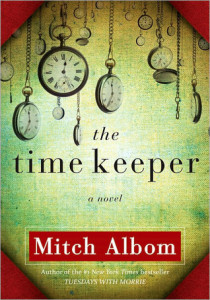
time keeper2The Time Keeper, by Mitch Albom

Synopsis: A crappy parable about the folly of measuring time.

Book Review: This book is stupid. It is stupid on multiple levels. The most obvious level is the prose. The Time Keeper is written at a second grade level. It was literally like reading “See Spot Run” for 100 pages. I was actually insulted.

It is also stupid in its inability to think about the consequences of its world. One of the protagonists (Dor) is literally the man who invents the concept of numbers. He invents counting. However the world he inhabits is not one of cavemen or hunter-gatherers. Here are things that existed in his world BEFORE THE CONCEPT OF NUMBERS:

Fired Bricks
Sheer Veils
Perfume
Oil Lamps
Refined Silver and gold
Wool Robes and Purple Dye
Cities and Kingdoms

ಠ_ಠ

After Dor creates the first sundial (which he calls a “sun-stick”), his stick is stolen by a villain, and now the villain has the ability to tell time. This is also stupid. It’s as bad as the famous Detached Dematerialization Lever. The thing that prevented the villain from telling time before was not that he didn’t have access to sticks! Stealing the stick doesn’t give him the insight needed to understand “counting” and “measuring time.” Unless you are in a Mitch Albom novel, I guess.

The theme is stupid as well. The book frowns upon the concept of measuring time. In Albom’s words:

“Man alone chimes the hour.

And, because of this, man alone suffers a paralyzing fear that no other creature endures.

A fear of time running out.”

He lists some examples of all the sorrow that time running out brings. This list includes “A horseman riding to beat the sunset.” “A farmer fighting a late harvest.” “A mechanic…with impatient customers waiting.” Excuse me? NONE of those are due to the sin of measuring time! In what world does the fact that man has invented clocks change how desperate the horseman is to beat the sunset, or how desperate the farmer is to get in his late harvest? What the hell is Albom complaining about? How would these situations be different if mankind never learned how to measure time? Albom doesn’t bother to think about anything he’s saying or writing, he just emotes about sucky things that are time-dependent and implies that the fault is with man’s knowledge of the passing of time.

The worst part about this book is that it fails even in the stupid goal it had. Albom tries to Pretend To Be Wise, which would be eye-rollingly annoying by itself. But he can’t even get that right, because he doesn’t understand the pabulum he’s trying to regurgitate. He’s probably trying to tell people to live in the moment and not stress about man’s fleeting nature. That’s always good for a round of sagely nodding, and maybe a few declarations of profundity. But since he’s doesn’t think through anything, all he has are vague emotional tremblings of badness when he considers the marking out of how much time has passed/is left. So he blames this ON CLOCKS, and writes a whole book that consists of “Boo clocks!!” It’s asinine.

Not Recommended.

Book Club Review: There’s nothing here. At best you can spend a bit of time pinning down what exactly was at the core of the stupidity. But it seems weird to spend more time thinking about this novel’s theme than its author ever did. Not Recommended.

Feb 092016
 

00003422Here’s a silly post by a guy trying to sell books by stirring up outrage.

In short: he wanted to think of some really original reason for an AI to decide to wipe out humanity, a reason that readers can really empathize with. He went with the old AIs-realize-that-humanity-attacks-things-they-view-as-a-threat, and-thinks-humanity-will-see-AI-as-a-threat. This is kinda the opposite of originality. It’s pretty much the stock reason given in every popcorn AI-wipes-out-humanity flick or novel. I’m not saying it’s a bad trope. After all, it is a darn good reason, and one we can empathize with. But Cole seems really impressed with himself for thinking of it. /shrug

Anyway, according to the author, his moment-of-clarity for the AI is when the AI learns about abortion. He says this isn’t a pro-life/pro-choice debate, but duh, obviously it is, we’re not stupid. For an AI to be more concerned with terminating an unwanted pregnancy than our species-long history of genocide and violence, is a very clear message that an objective, non-emotionally-invested third party would view abortion as a stronger indicator of humanity’s dangerousness than genocide is.

That’s blatantly a pro-life message. That’s fine, I personally like message fic, as long as it’s actually about the message and engages it. From the sounds of it (again, based only on the author’s post), this was just kinda stuck in at the beginning of what is otherwise a popcorn action book. It’s basically just a big middle finger to the hated Other Side, a simultaneous rallying cry for the like-minded, before moving on to good shoot-‘em-up fun. That’s not really message fic, it’s just being divisive. I will be the first to say that there isn’t anything wrong with this, if that’s what you’re going for. But it will turn off all the readers on the Other Side, while gaining you some fans on the Correct Side. That’s what it’s designed to do.

HarperCollins didn’t think this would gain him enough readers to offset those lost, and refused to publish unless he changed that. He refused, they parted ways, and that’s that.

Hahahaha, no of course it’s not.

Nick Cole is now making some pretty good hay out of the fact that his publisher wouldn’t accept the book. I can see this from HarperCollins’s point of view. The contract would have included an advance, plus they would be out the cost of production & printing & promotion (if any). If they were confident that the book wouldn’t make back its cost, not publishing it is the logical choice.

On the other hand, identity politics is crazy profitable right now! Every few months one side or the other gets outraged over something and dumps a lot of money into “supporting their side of the cultural war” or whatever. Chick-fil-A, that one pizza store, Sad Puppies 3, etc.

The real problem is getting some controversy going. It’s not hard to find bad message fiction out there, the internet is awash in it. We’re drowning in bad message fic. How’s a guy to differentiate himself, and get some attention? What you need is some sort of Great Injustice to occur that people can really get behind.

And thus the post entitled “Banned by the Publisher”. Where not only does Nick claim that he was censored and silenced by elitist liberal publishers, but he paints himself as a courageous oppressed minority fighting against the powers of Hitler. No, really. Here’s some direct quotes:


“I had no right to have such a thought”

“That is censorship, and a violation of everyone’s right to free speech.”

“I am a writer.
No. One. Will Ever. Bully. Me.
Ever.”

“A writer is often the last defense in a society collapsing into a one-mind totalitarian state where the rights of people are trodden upon by the ruling elite”

“artists disappear either by blacklisting or “disappearing” ”

“It is my job to stand up and say what cannot be said”

“Many dead writers have paid for the freedom of others with the truth, and their lives. Writers are often the last flame of freedom on the flickering candle of civilization in the darkness of a world going mad.”

“Thinking like that made the concentration camps possible”


At this point, he has a shot of getting the big Counter-Oppression dollars, so kudos to him! It’s unlikely he would have gotten anywhere without HarperCollins turning down his novel, so I suspect this is “banned” in the same way that SuperBowl commercials are “banned” – ie: intentionally designed to be refused.

I guess that’s a viable business strategy right now, but I really dislike how it relies on hatred to be effective. This is the same reason the Sad Puppies 3 campaign was bad. The externality this ignores is that the publicity isn’t free. It comes at the cost of manipulating one group of people into feeling extreme anger and hostility at a different group of people undeservedly. Hatred of actual evil is good. It’s a motivating force. But it’s a dangerous tool, and extremely toxic. Exploiting it for book sales is like dumping radioactive waste in a community’s ground water.

Ultimately, I would have shrugged and supported Nick Cole in going self-pub with this book, if he just put it out as a self-pub because his publisher wouldn’t print it. By turning it into another toxic rage-fest to boost sales, I consider him vile. :/ Way to take “freedom of expression” and ruin it for all of us, dillweed.

Feb 092016
 

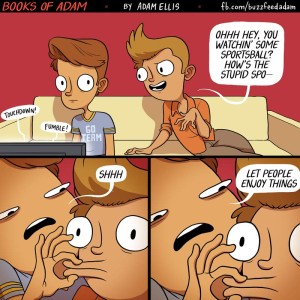
tumblr_o21tjdhKDn1uuik1zo1_1280Today there is a parade in my city (Denver) to celebrate a Super Bowl victory. I caught a few glimpses of the prep on the TV, and it strikes me how similar this sort of behavior is to the Ancient Roman practice of the Triumph. It made me very happy. Because a Triumph necessitated the previous murder of tons of people. We’ve managed to replace it with a civilized competition with structure and rules instead of carnage and destruction. This is a huge step forward.
I consider this a form of civilizational bio-hacking. There is an innate violence in our species. We long to destroy our enemies and see them driven before us (and hear the lamentation of their women, etc). It’s a wonderful feeling to revel in the shared rushed of crushing a foe and celebrating your mastery over them. In the absence of the tools needed to remove this sickness from our psyches, we found a way to get that rush while removing the harm.

It’s similar to the way that the introduction of easily-available pornography reduces sexual violence. Or how violent video games allow people to indulge their aggressive tendencies without actually harming people (at least for a little while).

So next time someone disparages the stupidness of sports, remind them that they fulfill a biological need with a clever hack that makes all of our lives comparatively better.

Feb 082016
 

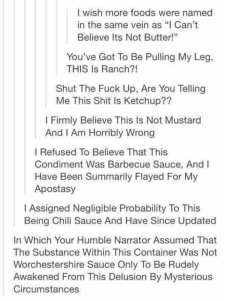
Cant Believe its NotUntil today the whole “spirit animal” thing seemed bizarre to me. Just one more thing kids these days do that I don’t get. Then I read “Crystal Society” (by Max Harms) and OMG!!!!! FACE IS MY SPIRIT ANIMAL!! I finally get what that term means, and it’s perfect! :D
The book applies Society of Mind theory to AI development. The story uses social manipulation/interaction as the primary plot drivers and conflict-resolution mechanisms!
It’s $5 on Amazon, or free online here.
(I would recommend just skipping the prologue entirely though. But that’s just me, others like it.)

I’ve found a fascinating new blog – The First Principle – a blog for commentary on the political landscape from the perspective of those engaged in the business of changing public policy.

Ayn Rand’s Firefly. “Do not hide behind such superficialities as whether you should or should not rescue your sister from torture school. That is not the issue. The issue is whether you do or do not have the right to exist without rescuing her from torture school.”

It turns out that cultural technology is so basic to my idea of human-ness that a group of humans without the most fundamental technology (the concept of numbers) literally feel like aliens to me. I didn’t realize that before. But very rarely do I read about alien species in science fiction that feel as alien as this group.

Dammit! Who’s been revealing all our secrets??

Wow, technology really does get a lot better. A small 2009 car demolishes a 1959 Chevy in a crash test. Hilarious in several places due to sheer understatement.

A fun flash fic. Altho, also accurately depicts factory farming (if briefly) so, don’t read if that’ll ruin your day.
“This is kind of going to be a weird question,” I said, “but are you a Buddhist god?”
“Hindu, actually,” said Mahaksuryana, “but I’m not offended. I like the Buddhists. They’re pretty chill.”

A guy was illegally demoted for supporting a candidate – supporting a candidate is projected 1st Amendment speech. BUT! He wasn’t actually supporting the candidate, he was just getting a sign for his sick mom. The argument is that since he wasn’t “exercising his rights” (he didn’t actually support the candidate) his demotion was entirely legal.
So if his boss had been right in his assumptions about what the employee was doing, the demotion would have been illegal. Fortunately he was wrong, so it’s all kosher? The Supreme Court will weigh in. I’m ready to be disappointed.

We like our disasters in black and white,” but a combination of arrogance and incompetence caused the Flint water tragedy. And despite his disclaimer at the top, this is not long at all. Under 1500 words.

How Well the Economy is Doing Depends on Your Party, and $1
“The paper by Mr. Bullock, Alan S. Gerber, Seth J. Hill and Gregory A. Huber found that offering a $1 payment for a correct response and a 33-cent payment for an answer of “Don’t know” eliminated the entire partisan gap between Democrats and Republicans on questions about the economy.”

“Yes, people are less deluded about objective conditions than we imagined, but that also implies that peoples’ belief about objective conditions matters less for how they vote than we thought,” he said. “We’ve always thought that how people vote depended a lot on the state of the economy and the state of war. But maybe those objective realities matter less than we thought.”

While I thought the new Star Wars movie was boring, I am against people being dicks about popular things just to be dicks. The recent HuffPo article was horseshit, and this is a great breakdown of why, and response.
“As some of you may be able to see, the ‘plot holes’ outlined in the Huffington Post‘s article are not plot holes at all. They’re simply things to which the reviewer willingly turned a blind eye due to the fact that he went in with a prepossessed notion of what he was going to write. His notion was so strong in fact, that he was able to completely overlook clear and obvious parts of the movie in order to back up the ‘facts’ of his dumb-shit, preconceived article. ”

What Could Have Entered the Public Domain on January 1, 2016, if Corporate Dragons Weren’t Devouring our Cultural Myths.

I note that this is exactly what I want to hear, and therefore I should be extra-doubtful. But here’s a quick summary of Jacobs on the importance of cities in economies, making the argument that the primary unit of economic development is the city.
“Empires are built by cities; but they inevitably siphon off the wealth of their cities in these unproductive ways, till stagnation and decline set in.”

An anti-aging startup hopes to elude the U.S. Food and Drug Administration and death at the same time. I’ve already started on my first year’s supply. I’ll let y’all know how it’s going every decade or so. :) Also the SciAm take here.

Anyone into Ponies – give Steven Universe a try. It’s *really* good, and it builds!

Alexander Wales tackles the impossible task of writing an exciting short story about project management. Success!
Instruments of Destruction” – Admiral Tian Jerjerrod tackles the impossible task of building the second Death Star.

I finally listened to Hamilton after absolutely everyone was raving about how great it was. I gotta stop coming to these things late. It is FANTASTIC. If you haven’t reached the critical mass of jumping in yet, consider me one more vote towards doing so.

In a society where the real laws aren’t the same as the pretend laws, and it’s impossible to unilaterally obey the pretend laws, what do you do when you have to explicitly program robots about the speed limit?
“One approach is to teach the vehicles when it’s OK to break the rules, such as crossing a double yellow line to avoid a bicyclist or road workers.
“It’s a sticky area,” Schoettle said. “If you program them to not follow the law, how much do you let them break the law?””

Are Americans losing faith in democracy?

Hey, you want nonprofits to act more like businesses? Then treat us like businesses. “For some reason, it’s OK to invest millions into Google Glass, or the Amazon phone, or the various buy-outs of smaller companies, or whatever, only for them to fail, lose a ton of money, and then chalk it up as a normal part of business. And yet, society invests much smaller amounts to solve complex entrenched social problems, expects miracles, and gets disappointed when we don’t meet outcomes. It’s going to take a while, and significant resources, and the acceptance of failure if we have any hope of solving serious issues like homelessness and human trafficking.”

The radicalization of Luke Skywalker – a Jedi’s path to jihad

I didn’t know this until I was in my late 20s. Because American Sex Ed is really just Reproduction & STI Ed, which DOES NOT CUT IT.
“Physically speaking, virginity doesn’t exist. It’s just something we made up to be mean to women.”

“Trump did not bring his supporters into the GOP. They were already there. … The GOP’s problem is that Trump is the distillation of every political strategy they’ve honed over the last several decades, and particularly ramped up over the last two. … the race-baiting, xenophobic religious bigots he’s currently energizing will still be there if and when he goes.”

OMGOMGOMG! NBC Boss on ‘Xena’ Reboot: “We’re Looking for a Writer” Can I do it? I’LL SO DO IT!

UHF Microwave Gun, made from a standard microwave oven. This makes me miss cyberpunk.

Feb 032016
 

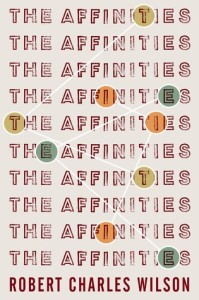
AffinitiesThe Affinities, by Robert Charles Wilson

Synopsis: A group of like-minded people who met on the internet form an intentional community.

Book Review: This book starts out FANTASTIC. First, and most obvious, is the sheer writing skill that Wilson displays. His prose is concise and evocative, managing to do with a few lines what would take other authors several paragraphs or pages. I love this ability to cut away the extraneous and reveal the emotional core of any particular scene or narrative. It’s delicious and efficient.

Coming immediately on the heels of that is the promise of exciting events. The story takes place in the near future and addresses issues that intensely concern me. ie: An evolved desire for small-tribe communities that conflicts with modern social organization. The elites becoming divorced from nationalities, becoming essentially stateless. The non-interaction of physically proximate cultures, via filter bubbles and self-selection effects. The replacement of the church (and other traditional institutions) by new social networks, and the resultant backlash.

Wilson portrays a world on the edge of revolution. The old system no longer works. The current system is broken, causing isolation and exploitation. The new system of “Affinities” brings hope of community. It matches people with others who they can trust and cooperate with effectively. They are happy, and their low coordination costs make them extremely competitive, and for this reason the ruling powers are threatened(!). There is retribution coming.

I was extremely excited! I expected this to be a story of social revolution. I expected there to be conflict, and the old corrupt system being burned to the ground and a new ideal raised up from the ashes. For the first half of the novel, the story was trending to ever-greater epicness. A disruptive social tech like this is a game changer.

It seems that Wilson also thought this was an extremely cool idea, and then after he introduced it he didn’t know what to do from there. So the stakes were rapidly lowered, over and over. The tension is ramped down, and we readers get the sense that there will be no fulfillment of any of the big promises. In the end a rival group kidnaps the protagonist’s kid brother. The protagonist stages an incompetent rescue that flops almost immediately. Things are wrapped up when the police show up and basically just do their jobs, because the kidnappers are just as half-assed and incompetent as the protagonist. Also, the Affinities movement fizzles out as quickly as the novel does.

I was so incredibly disappointed I couldn’t even be mad. I was just sad at the wasted potential. Why’d you go and build up all that awesome and promise me all those things, and then not even try to deliver? This is what a one-night-stand with a flashy pick-up artist must be like. /sigh Not Recommended.

Book Club Review: As it turns out, a good ending isn’t necessary for a great book club book! Due to the tightness and effectiveness of the prose, just about everyone finished this and we had a huge turnout! And the most important condition for a book club book – giving us something interesting to talk about – was fulfilled in spades! Since Wilson brought up all these ideas, which concern everyone and everyone has some measure of opinion on, we were able to talk about them at length. There was quite a bit of exchange regarding people’s views on how individuals and societies relate, especially the nerdy kind of individuals who come to SF book clubs. The discussion was wide-ranging and fascinating, and we went well over time.

And of course everyone was also able to put in their dismay at the terrible ending, or comment on their like/dislike of the various characters, and so forth. It is truly an excellent book club book. Strongly Recommended!

Cultural Appropriation Watch: The protagonist is a straight, white, middle-class, youngish liberal male, who works in the arts. I think the Cultural Appropriation Police would probably be very pleased with this book. Of course if they’re hardcore enough they can point out that there are several minor characters of color, and can accuse Wilson of tokenism for that. But surely even they wouldn’t stoop so low.