Mar 272014
 

Tregillis-SomethingMoreThanNightSomething More Than Night, by Ian Tregillis

Synopsis: A murder-mystery set in the near future, told by two protagonists. The murder victim is an angel. One of the protagonists speaks entirely in 40’s Noir patter, and is also an angel. The existence of angels is not well known.

Book Review:  I don’t know where to begin on this review. The narrative style is amazing. If you love over-the-top-Noir like I do you will get a huge kick out of this. There are some beautifully crafted sentences. If you don’t smile while reading Bayliss’s POV chapters you may have misplaced your soul.

The plot is good, and manages to avoid several common tropes which I don’t want to get into for risk of spoilers. Let it be said that if you groan and /facepalm when running into received-wisdom Deathist tropes in standard fiction, you will be pleasantly surprised by their avoidance here. There is a strong thread of transhumanism throughout.

On the minuses, the settings/sense-of-place was sadly lacking. And while it starts strong and ends strong, it drags a bit in the middle. Finally, the climax is a bit lacking in catharsis.

Also – have Wikipedia open nearby while you’re reading. It’s not necessary, but it did increase my enjoyment of the book. It is quite obvious that the author works at Los Alamos. I, for one, love learning while I’m reading. :) You will be entertained and challenged at once!

All in all, a good read. Recommended.

Book Club Review: There was a fair bit to talk about in this. It had some flaws to offset its successes, which is always a plus. It gives people something to disagree about. Several of our members thought the Noir patter was over-the-top and should have been dialed down. There was also a strong bit of disagreement over whether the author “cheated” near the end, which was exciting.

Unfortunately there was no theological debate to get into, because the angels in SMTN are not religious entities. They are extremely-powerful, trans-dimensional, immortal and semi-incomprehensible beings. Their physical descriptions are informed by biblical accounts, and there’s theological influences on the narration, but ultimately there are basically zero ties to religion as we know it. This isn’t a bad thing– Tregillis simply wasn’t writing a religious story. That would have been a very different book. But don’t go into it expecting this to spark theological conversation.

There are, however, discussions to be had about the choices made by both the angels and the humans at the end. Themes of responsibility vs servitude. The book also comes down on the practical side of the power-vs-morality struggle, which is fortunate for the humans in the end, but feels like it was left unexplored. It’s a bit too pat that the human heroine managed to find such an optimal solution that was near perfect in every regard. Maybe that’s just my dislike of happy endings. At any rate, I look forward to a sequel that reveals all the choices made at the end where actually disastrous. ;)

Yes, also Recommended.

Mar 252014
 

hugo-awardsThe deadline for the 2013 Hugo Nominations is almost upon us! It seems less popular to blog about who you’re nominating this year, but I think it’s a fine tradition, so I’ll be continuing it myself.


Much like last year, I’ve not had much time for reading this year, so my list is woefully short. But that just means that other people can still sway me to fill my vacant spots with their own favorite story recommendations if they hurry. :)


Short Stories

A Plant (Whose Name is Destroyed), by Seth Dickinson
audio

I’m a sucker for stories about gods. Big gods, small gods, angels, devils. If the story is good it reaches inside me and grabs me by my sense of the divine. It’s a very strong sense, and if I hadn’t been born into such a ridiculously literal religion I might not be an atheist. Now that sense needs to find expression in other ways, and by far the best way is amazing mythological god-stories, like this one.

A Plant explores a relationship between a mortal and a god. The consequences of omniscience on a being who needs to believe he has free will. The fallout of subconscious omnipotence on causal physics. It is sweet, and it is sad, and it is very human. Also, I believe this story counts as rationalist fiction!


Difference of Opinion, by Meda Kahn
audio

A great story about a highly autistic (but functioning) person, and how she gets around in a world ruled by neuro-typicals. I have to say I cannot believe how little buzz this has gotten, especially when compared to last year’s horrible “Movement.”

The stories are similar in that they center on an autistic character, in a world were a cure for autism is possible, and the protagonist does not want it. But while Movement is unqualified trash, Difference of Opinion is beautiful and terrifying and funny all at once.

The protagonist of Difference of Opinion is a real person, with agency and motivations and character. The protagonist of Movement was an object. Things were done to her, but she was not a person. And this wasn’t just a matter of how others in the story related to them – this was how the authors treated their characters. Meda Kahn respects her protagonist (Keiya). She sees her personhood and clings to it fiercly. That is why it is horrifying when society tries to alter her personality – the autism is part of what makes her who she is. They’re killing the person inside the body and replacing her with someone that fits into society better.

Nancy Fulda seems to think of autistic people as toys, or sympathy-receptacles. They are there to be babied and felt sorry for. They are useful as dependency super-stimuli, rather than as people. It’s kinda disgusting. And that’s why I sympathized with those coming to fix her autism. They were removing the thing that caused everyone – including the author – to treat her as a toy. Better to not be used like that.

Meda Kahn touches on this in her story as well. At one point her character says:

“(2) They want you to stay alive for them. For their inspiration, their edification.

(3) They start doing things like patting you on the shoulder and telling you they’ve been so privileged to meet you, that you’ve changed their outlook on life.”

Not only is it a respectful treatment of people with autism, it has an amazing prose style that really feels alive and speaks to you. And it has a tragic story about the powerless trying to stand up in the face of a remorseless, powerful machine and how society will chew you up and spit you out. I’m torn between this and A Plant for best story of the year. They’re both amazing.

I’d like to add that the audio version of this story is fantastic. It captures the voice of the character very well. You’ll remember Anaea Lay’s delivery of “Well fuckballs” for a long, long time. :)


All That Fairy Tale Crap, by Rachel Swirsky

I’m not sure I want this story to win. I really dislike the protagonist. I tend to dislike stories about people who don’t give a fuck, and decide the best course of action is to burn down the world around them while they try to steal and exploit whatever they can on the way down. That being said, the world the protagonist finds herself in is shit, and you can’t say it doesn’t deserve it. The character is a powerless shlub doing what she can to flip off the system that fucked her over in the first place. It plays with fairy tale tropes and feminism tropes and post-modernism tropes, and then it gets all meta on you and makes a shoulder-rush right at the fourth wall. As much as I disliked the protagonist, I loved what the story had to say, and how it said it. I am as much a sucker for structure-play as I am for gods. And I gotta say, this story will stick with me for quite a while. That’s worth at least a nomination, if nothing else.


Novelettes

The Truth of Fact, the Truth of Feeling, by Ted Chiang

Look, it’s mutha-fuckin’ Ted Chiang, do I even HAVE to say anything else? The man is a god among short fiction writers. If you haven’t read it yet, you should. He brings his signature style and analytic mind to the subject of memory plasticity, and the fairly modern invention of historic truth. Every time I read something by Chiang I start seeing it more in my normal life. Just a few months ago, after a venerable guest at a gathering related a very humorous anecdote about something that had happened earlier in his life, I had the temerity to ask “But did that really happen?” To which a third party gave me an incredulous look and asked “Does it really matter?” I had to think about that for quite a while. And I’m still not sure I have an answer. The story had the truth of humanity behind it, and it was enjoyable. Does it matter if every bit isn’t literally true? I still think it does… but I’m not so sure as I used to be. And that’s the great thing about Ted Chiang’s stories. Even when you’re done reading them, they keep affecting your life and your thinking for years.


Novel

The Wheel of Time (the entire series), by Robert Jordan
I only ever read the first book, and I didn’t really care for it. However according to the Hugo rules it appears that a series can be nominated once it is completed if none of its component novels have previously been nominated for a Hugo. From the link “The administrators of the Hugos have declined to rule on this interpretation unless and until it becomes an issue, and therefore that’s precisely what Jennifer (and many other WOT fans) propose to make it.”

Um, fuck yeah. I love making trouble for the establishment. :) And Wheel of Time has a large enough following that it has a shot at making this happen. Let’s do it!


Something More Than Night, by Ian Tregillis

This is perhaps the only novel I read in the past year that was published in 2013, so it’s kinda a shoe-in for my nominations. :) But it is a fascinating book, half of it is written in a lovely 40s noir style that is just a pleasure to read, and it is well-written and strongly plotted, like all of Tregillis’s novels. A strong contender, and I like it!

As a personal note, it doesn’t tickle my “sense of the divine” that I mentioned earlier, because the angels/gods within it are not true Religious Deities. They are extra-dimensional creatures with incomprehensibly vast powers and different physical laws. It’s an interesting contrast.


Words of Radiance, by Brandon Sanderson

I’ll be reading this next month, so maybe I shouldn’t technically be nominating it yet. But the deadline approaches quickly, and the first book in this series, Way of Kings, was so fucking amazing that I’m willing to give this one a pre-emptive nod. I have confidence that this will be at least in the same league as Way of Kings, and thus entirely worthy of a Hugo nomination/win.


Dramatic Presentation (Short Form)

Game of Thrones, “The Rains of Castamere” 

Commonly known as The Red Wedding episode. Because c’mon.


My Little Pony: Friendship is Magic, “Castle Mane-ia” 

This series is great, and it really should get recognition for it. Castle Mane-ia was one of the best episodes of an already very strong season, and it fell in 2013. You may ask “Why not the season 3 finale (Magical Mystery Cure), which also fell in 2013?” Well, MMC is not as enjoyable if you don’t already know the characters and the world. It requires some knowledge of the ponies’ personalities, as well as the importance of alicorns. Castle Mani-ia, OTOH, is completely enjoyable by even a first-time watcher. It would make a better intro for the poor, deprived souls who might first be hearing of MLP from the Hugos (and I’m sure there will be some).


Welcome to Night Vale, Episode 19: The Sandstorm

I was reminded of this and had to add it after this post initially went up. How could I forget WTNV?? This episode showcased the best this show has to offer in terms of oddness, originality, and creepiness. And as I’ve said before, I adore structure-play, and the way the two episodes intertwine (you must listen to both 19A and 19B!) is fantastic! Episode 25 – One Year Later – is also great, and really has the most storyline and character development of any single episode (at least of 2013). However it requires so much back-knowledge of WTNV to really enjoy it that it wouldn’t be a good introduction to any new listeners. I’m going with The Sandstorm.


No Dr Who. I’m so sick of that over-played, over-hyped mediocre show.


And while I’m not trying to imply anything, The Sword of Good was released in 2013. It’ll never get through the crush of Dr Who and GoT noms, but I couldn’t not say anything. :)

Mar 192014
 

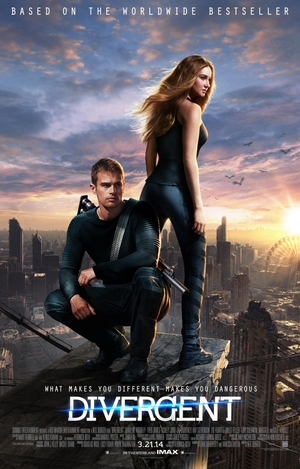
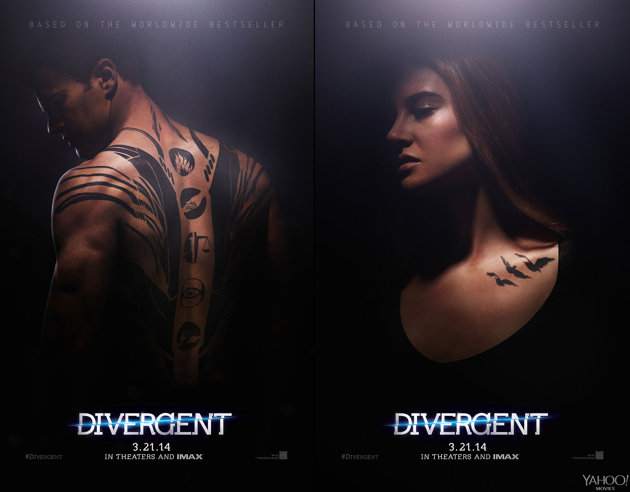
Divergent_film_posterI didn’t mention this in the previous post, because I got off on a dystopias-gotta-be-dark-or-they-don’t-work tangent. But there was one scene in the movie that was heavily modified from the book which infuriated me. It was such blatantly sexist gender-conformist bullshit that I want to strangle the asshole who made this decision. And no, it’s not the stupid ass-display poster. Not even close.

In the book, in Four’s fear-scape, his father comes after him with a belt to beat the shit out of him. Four cowers away, and Tris steps up to save him. She catches the belt, yanks it away, and lays into that abusive fuck. She stands up for her man. She saves him.

This is entirely appropriate. This is Four’s deepest fear. It’s childhood trauma, which is causing him to regress. It’s not Tris’s childhood trauma, so she can still act with rational agency. She’s been established as pretty bad ass, and she’s going up against an old drunk man. Everything about this scene was legit, it didn’t even strike me as something to question.

But apparently SOMEONE thought that this was SOOOOOOOOOO jarring that it couldn’t be left in the movie. A girl takes action to protect a guy??? Oh HELLS no! That is not allowed! Men are strong – grrr, rah! Women are weak – boo hoo, whimper. How dare anyone reverse this order, even when the man is a supporting character and the woman is the ACTUAL HERO OF THE MOVIE, and even when it makes complete sense and is exactly what would happen? No sir! Not while the penis-wielders have anything to say about it! And dammit, in Hollywood they most certainly DO!

So in the movie, when Tris steps up to rescue him, Four pushes her out of the way, grabs the belt himself, and decks his father.

Fuck you, Hollywood. Fuck you, whoever made that decision. You are worthless meat that doesn’t deserve a place in anything artistic.

Mar 192014
 

Divergent1I got to see an early showing of Divergent due to being in a super-cool SF/F book club. This is a review of the movie Divergent intended for people who have already read the book. So beware:

MASSIVE SPOILERS!

Turn back now or forever hold your peace.

Before we get started, can I make comment about how much Hollywood is Hollywood. There was almost no cosmetic difference between Abnegation and the other factions. They still put product in their hair, used make-up, and had immaculately groomed eyebrows (no mirrors my ass!). The only difference was that the older folks didn’t use wrinkle-concealer. Oh Hollywood.
(and btw, Tris does not look anything like the above photo in the movie. Which is a good thing, cuz the role was that of “rebelious teen”, not “Freakish French Runway Model”. But why are they using this shitty un-representative photo?)

I previously mentioned several things that really annoyed me in the book, things that made me want to throw it across the room. The movie fixed these! Right off the bat we’re given some background about the world, and what happened to it (yay!). The gun- and computer-illiterate sections were gone! And best of all – Tris’s mother’s death is no longer COMPLETELY RETARDED. It was a legitimate death when they were taken by surprise out in the open. The actress (Shailene Woodley) really sells the grief, which was awesome. I actually liked the death scene! And finally, the majority of the climax actually made some semblance of sense. Rather than Four running the whole simulation by himself for some stupid-ass non-reason, the Erudite head-honchos were all there overseeing the whole process. So – mad props on fixing the crap parts.

Also, thank goodness they only used the name Tobias once, and then quickly went back to Four. :)

But all this came at a massive cost.

Peter was completely neutered. In the book you HATE him. Hate with the fire of a thousand suns. You see murder every time he comes on stage. In the movie he’s… just kinda a jerk? A completely forgettable nuisance. Seriously, anyone who didn’t read the book before – would they even remember Peter’s name after the movie? I really doubt it.

This hate also came with fear. In the climax of the book when they’re sneaking back into Dauntless HQ and Tris approaches the man guarding that first door, and once she’s close it’s revealed that it’s fucking PETER!? That moment sent a jolt of fear up my spine. Literally. My pulse jumped and my chest felt tight. Because holy fuck – it’s goddamn Peter. The vile asshole who can murder us dead but good. I felt Tris’s terror in that moment. But in the movie – meh. Nothing. We don’t know Peter, we don’t fear Peter. We don’t care.

Part of that is because there is no knife-in-the-eye scene in the movie.

You read that right. It’s gone.

Why? Why would you remove the most emotionally-impactful moment of the whole book? (Yes, more impactful than her parent’s death. By far.) That scene drives home our vulnerability in this new school. It shows the power of brutality and the abusive nature of Dauntless in general. It really cements Peter as a threat. Anyone can be permanently maimed. Their attacker will not suffer repercussions. And the victim will be ejected on the streets to live in squalor for the rest of his pitiful life for the audacity to be better at something than the bully. This was the core of what it is to be in Dauntless. This explained Tris’s decent into recklessness and viciousness. This is what drove Al’s decision to betray his friend and attempt to murder her at the bully’s behest. And it’s gone in the movie.

This affected Al’s motivation too. His betrayal scene kinda came out of nowhere without this prompting action. It wasn’t actually clear what the gang was going to do with Tris, and Al’s actions were so out of character and unexplained that if you hadn’t read the book you got the distinct impression that Al was being controlled by someone else. Perhaps an early test of the Eurdite mind-control. This is only strengthened by his “suicide” immediately after. Al was such a minor character that you don’t know any of his motivation, and it seems like it is strongly hinted that the “suicide” was actually a murder by the real actors to cover their tracks. Very sloppy film-making guys.

I think all of these problems can be traced back to a single failure by whoever was in charge of this movie:

They decided to make the Divergent society a kinder, gentler place.

Right off the bat – that Factionless guy that almost rapes Tris near the beginning of the book? That was cut. I didn’t remember this until later though.

The first thing you notice is that when the new initiates first jump from the train onto the Dauntless HQ roof, everyone makes it. There is no poor bastard moaning on the sidewalk five floors down with shattered legs as he bleeds to death. There were no people who stayed on the train and decided to accept a life of homelessness rather than take that risk. This movie is stripping away all the dark.

Once inside it’s hard not to notice that all the stairs and ramps have railings! Maybe this was required by work-safety regulations in California, but there had to be some way to get around this. The recklessness of Dauntless is key to their psyche, it helps make the world a dangerous and awful place. The railings were a subtle negation of that.

As someone who’s handled guns before, one of the things that most struck me as indicative of how degenerate their society had become was how cavalierly they treated their weapons. People would constantly menace each other with loaded guns. Even their fucking INSTRUCTOR put a loaded gun right up to the forehead of one of the children he is responsible for on the first day of their training. These people do not respect life at all. That was a major sign of their evil. That is a strong part of what pushes Tris to become brutal herself. It is what breaks down Al – a kind, gentle soul – to someone who feels he has to murder a friend simply to stay alive in this relentless grinding system, and then who kills himself in remorse afterwards. This is what a broken system does to good people. It destroys the ones that it doesn’t outright kill. In the movie, they don’t really handle guns at all. Certainly not with the abandon of the people in the book.

In every single respect, this movie makes their world kinder and gentler. It takes all the teeth out of the world, and the story suffers for it. Honestly, they should have simply written Al out, there’s no point in having the gentle soul in the movie anymore if he isn’t ground up and spat out.

Divergent the movie is not a dystopia. It almost looks like it’d be fun to live in that Chicago. Heck, they even made getting a tattoo painless and lame. How do you make tattoos lame? /shakes head

In the end, the movie fixed all the really shitty parts of the book, but it also tore away all the really good parts. So instead of a roller coaster of highs and lows that inspires both awesome cheers and disappointed groans, it’s just sorta mediocre throughout. It’s not bad, but it’s not memorable. And that’s a damn shame. I’d rather have something I can both love and hate, than something which I’ll forget about in a week. :/

Mar 172014
 

Divergent_hqDivergent, by Veronica Roth

Synopsis: Teen girl in a vaguely post-apocalyptic society rebels against authority, gets a boyfriend, and saves the day.

Book Review: Let’s start with the good stuff. Roth is extremely good at making us sympathize with the protagonist, and despise the antagonist. I personally wanted to murder the hell out of Peter, and I would’ve loved to Ender him to death in self-righteous self-defense. Motherfucker has it coming, and totally deserves it. The portrayal of a broken system that leaves everyone as victims with no good choices is excellent. And whenever Roth sticks with things she knows about, her physical action is very strong and very sensory. Her prose is solid.

Unfortunately she moves further and further from her strengths as the story progresses. She repeatedly displays a complete lack of knowledge of both guns and computers that really kicks you out of the story. She abandons the antagonists she spent the first 2/3rds of the book getting us to hate and drops in a generic evil-genius-villain that we don’t care about at the end. Her world building is bad – she desperately needs to give us some hint as to what happened to 90% of humanity, what happened to the state and federal governments of the USA, and some explanation of how people are continuing to live basically a modern middle-class lifestyle without those things. Even a few lines would have been nice. And as good as her characterization is, her plotting is atrocious. She has friends/family of the protagonist run into gunfire unnecessarily – basically committing suicide – for no reason at all except that it’s their turn to die in order to motivate the protag. It’s like they know they’re in a novel and they need to do this to force the story into the course the author wanted it to go. This gets so absurd that in places where I was supposed to be feeling sad all I could feel was /facepalm. I wanted to hurl the book across the room. It was disappointing after such a strong start to the novel. Not Recommended.

Book Club Review: There isn’t much to talk about, because Roth gives us so little to work with. We had to resort to flipping to the “book club discussion” questions in the back, most of which were atrociously bad. Some of them made you say “Why yes, I do wish the author would have thought to ask that question when she was writing the book, perhaps that would have made it better.” While this isn’t the worst book we’ve read (by far!), it was one of the most disappointing, since you can see the potential. You end up reading the whole thing, hoping it’ll start shining again, rather than just skimming or quitting. And it never does. Not Recommended.

Mar 112014
 

Moby_DickVery few things irritate me as much as when some pretentious dickbag denigrates someone for reading what they consider to be low-class works, and tells them they should go read Moby Dick instead. First off all, congrats on just driving away another person from reading. You are making the problem worse.

But secondly, why are you grabbing for Moby Dick? It’s not that great a book, by today’s standards. I’ve heard large portions of it are about the workings and operation of whaling vessels, and long treatises about the whaling industry. As if it forgot it was a novel and tried being a textbook for a while. Moby Dick has become the standard cudgel, and anytime someone references it as a great book I immediately suspect that either A. They’ve never read it, or B. They’ve read so little fiction that they have no idea what makes a book good. They’ve simply accepted the received wisdom that Moby Dick is TEH AWESOMES which everyone must be beaten with until their eyes bleed.

I’m sure it was amazing for its time. But that’s the thing about progress – things keep getting better.  I don’t think that’s a fault of our predecessors. It’s not fair to compare modern TV/movies/novels to their counterparts from 40+ years ago. Citizen Kane was groundbreaking, but when put next to the best examples of modern cinema of the same genre, it doesn’t hold up. We (humans) keep learning more about what makes things better and become more skilled in applying the things we learn. It’s no more fair than belittling Newton for not discovering relativity. It takes a long time to grow a body of knowledge, and the current writers/directors/etc wouldn’t be where they are if they didn’t have the shoulders of those who came before them to stand on. They should be acknowledged for the work they’ve done to get us where we are. But they aren’t amazing by modern standards.

I feel that’s part of the reason why genre fic keeps growing, and literary fiction is stagnating. They’ve stopped reaching for new improvements, and have turned inward to navel-gazing and ancestor-worship.

Mar 062014
 

avoid-power-tool-accidents-1While working with power tools recently, I heard someone say “Remember, Safety Third!” I’d always heard “Safety First”, so I asked him to explain.

In his community (which handles power tools much more frequently than I do), it’s a combination joke and reminder. Everyone says “Safety First”, but this is a lie. If Safety really was First, they wouldn’t be using power tools at all. Power tools improve efficiency tremendously, but at the price of safety – it’s impossible to accidentally cut your own hand off with a traditional hand-saw. So things like time and money savings trump safety, and everyone knows it. That’s the “joke” part of it.

But more importantly is the “reminder” part. It reminds you that the Corporate Dragons may say “Safety First”, but they don’t mean it. YOUR safety is not THEIR highest priority. So it has to be YOUR OWN priority. You cannot trust them to act in your best interest in anything, ever. You must personally weigh when the costs outweigh the benefits, and act accordingly. Never trust a them to have your best interests at heart.

Remember, Safety Third.

Mar 052014
 

girl interruptedRachel Canning is an honor student at a private school, and has received a $20,000 scholarship. Lately she was suspended from school a few times, got caught drinking, and lost the captaincy of the cheerleading squad. Also, her parents don’t approve of her boyfriend. They kicked her out of the house, and now she’s staying at a friend’s house rather than living on the streets. She’s suing them for college tuition.

There’s a bunch of idiots calling her a spoiled brat. These people obviously have never met a teenager in their lives, and simply went straight from being 11 year olds to being 23 overnight.

This reminds me of a friend’s synopsis of “Girl, Interrupted”.

“A teenager acts like a teenager. Her parents freak the fuck out that their perfect china doll is showing agency, and lock her up in a mental institution.”

Look you fuckwads, making another sapient being is an enormous responsibility, and one that people shouldn’t enter into lightly. When they rebel – as all teenagers do – you suck it up and act like goddamned adults. If you are an upper-middle-class American you’ve taken on the responsibility of putting your offspring through college simply by conceiving them. You brought a new life into a world where securing a career takes an investment equal to years of median-level salary. This is your responsibility.

How many of the people cheering on these parents would be cheering on someone who adopted an adorable puppy, and then dumped it at a dog pound a year later because it wasn’t cute enough anymore?

How many of the them would be cheering on homophobic parents who chased their high-school-age son out of the house when they found out he’s gay? Abandoning him to live however he could on the streets.

This girl is lucky. She has friends she can stay with. Those friends have enough legal sense to realize society may have a vested interest in ensuring parents can’t simply abandon their children if they get a little unruly. She’s smart and pretty and her parents are well off, and I guess that’s a good enough reason to attack her and called her a spoiled brat. If they took five damn minutes to think about this, maybe they’d realize you don’t just create a new human and then discard it when it doesn’t fully subjugate itself to your will, ESPECIALLY when you were warned this is exactly how teens act. What the fuck happened to being responsible for your decisions?

But I guess if these parents’ role-model for a good parent is God, it’s not surprising they lack that level of responsibility. He’s notorious for murdering anyone who doesn’t debase themselves enough to soothe his fragile ego.

Mar 042014
 

Community S05E06 violenceI love Community (except for most of season 4, of course). Episode 6 of Season 5 touched on one of my favorite themes in fiction – the final basis of all power is the ability to do violence to others.

The episode follows Annie as she explores the bureaucratic anatomy of Greendale Community College. Greendale’s power structure is diffuse, with many small pockets of specialized power in a delicate balance. It’s an interesting (if brief) examination of motives of the powerful, and the repercussions their desires have on the populace at large. But that’s just the set up for the really interesting conflict.

The power balance in Greendale is tense enough that Annie can’t get her cork-board approved, so she decides to circumvent the entire system and simply install it herself. This is, of course, completely unacceptable to the powers that be. It is a challenge to the existing authorities, allowing it stand means a huge loss of credibility for those at the top. Why should anyone respect the Dean if his rules can be broken at a student’s whim? The actors below him will no longer be reined in by his authority and the resulting power struggle could cripple the whole school (well, moreso). So the Dean dispatches Hired Goons to take down the corkboard, as his prerogative as the recognized head of the Greendale Leviathan.

And here’s where it gets really interesting. Annie physically attacks the Hired Goons. Because when it all comes down to it, power structures are just ways of organizing how much violent force any particular coalition can muster. Leviathan is left with a choice – crush the opposition, or demure. Leviathan has much bigger goons and would almost assuredly win this direct physical confrontation. And demurring is always undesirable, as it weakens the Leviathan’s ability to credibly threaten others in the future. However in this case the opposition is more than just some student rabble. Annie is a founding member of a strong student coalition which has spent the past 4.5 seasons growing in influence in Greendale. They are admired by the student body, and have previously shown themselves able to spark or douse riots. They have allies within the greater community, and Annie has shown herself adept at navigating and wooing the Greendale power structure. Up until this point they have been nominal allies of the Dean, turning them into enemies would be unwise. Moreover, there is the possible intervention of the greater leviathan of State & Local Laws to consider (whose views on the matter are uncertain), and the Dean is sexually attracted to one of the other founding members of the group.

The Dean calls off the attack. Annie’s coalition is willing to fight and make this victory too costly for its rewards. And importantly, Leviathan has shown its teeth, and reminded those watching that anyone who wishes to challenge it needs to at least have the power base of Annie’s group.

(also, Annie has just (unwittingly?) made herself a bigger player in the Greendale power game. If this was a political show I’d be thrilled by the implications :) )

However, despite all the alliances and influence to consider, what it boiled down to in the end is who had the greater ability and willingness to do violence to the other side. The Hired Goons flexed their muscles. Annie jumped on one and beat him, and rallied the other founding members of her coalition to literally stand at her side in a wall of angry fists. It was their willingness to spill blood that was the decisive moment of their triumph. This is the sort of story I adore. The anger and desperation that pushes people to say “No more.” The point that turns them from participants in the façade of civilization, to people who demand the lies be thrown aside and the true violent nature of power be done to them as proof of dedication. That tipping point where the hand is called, and the real priorities of everyone are laid bare.

It was wonderfully done, especially for a 22 minute comedy show.