I made a thing!
Sep 282012
I made a thing!
If you look up, there’s a new tab up there next to Videos. I don’t really write, but it is something I’d like to start doing more often, so I figured I’d start putting my stuff up. Right now all that’s there is some submissions to flash-fiction contests. There’s a half-dozen stories of varying quality, each one readable in under 4 minutes.
 While I’m going on about Among Others, I have a thought about morality that can be pulled from it.
“I went into Woolworths where I pinched a bottle of talc and a Twix […] I wouldn’t take a book though, or rather, I would from Woolworths, if they had any, but I wouldn’t from a bookshop, not unless I was desperate.”
There’s a lot of dystopic settings in SF/F that show how morality goes out the window in extreme situations. I could have taken any of them as an example. But I think this hits much closer to home, and it shows degrees both in when we’re willing to steal and who we’re willing to steal from. It’s very easy to be moral when you have a decent steady income. I buy every book I read*, because I can and I know others can’t. If I was unable to buy the books I would still read them somehow, and hope that someone in a better position than me could buy them to make up the difference. A lot of us are good simply because we can afford to be.
The solution to this is fairly obvious – to create better people, create more wealth. Scientific and economic progress doesn’t just make us better off, it makes us better people. In the aggregate, the researchers at Bell Labs have done more to make the world a better place than any prophet.
* When possible. Some aren’t available
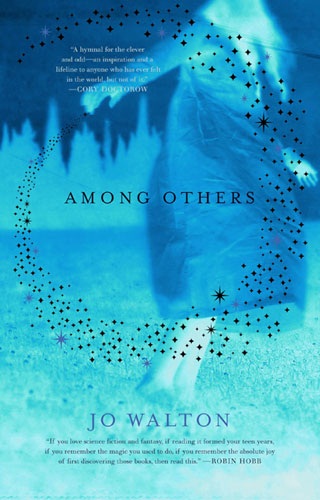 Speaking of Among Others, I had an interesting conversation with Anaea Lay about the ending when we were at WorldCon.
Warning, here there be spoilers.
One of the things that you notice as you’re leaving religion is that almost nobody acts like they believe in an afterlife. With few exceptions, no one acts like it’s going on to the next stage of life – like going through puberty, or moving to a different city. Everyone treats it like it is the annihilation of a human soul. It’s one of the clues that tips off observant children that this whole religion thing is probably bullshit.
As I mentioned in my book-club review, there’s two ways to read Among Others. One way is as a fantasy, that actually contains fairies and ghosts and magic. The other way is as the story of a girl struggling with mental illness. Specifically, she’s written as someone who is succumbing to schizophrenia, in a family with a history of schizophrenia. I’ve been told that Jo Walton based many of the things that happened in the book on events in her life, as she did grow up with a mother suffering from schizophrenia. As such, there’s two ways to read the ending.
The naturalist reading is a triumph. Mor overcomes her mental problems and doesn’t commit suicide. She goes on to live a happy, prosperous life as a Sci-Fi author.
The supernaturalist reading is a horror story. Mor casts her sister half-mauled into some unknown afterlife, having robbed her of the chance to be eternal and happy as a fairie, with the knowledge of magic running in their veins. She chooses instead to go be with her new boyfriend.
As was pointed out by Anaea, it is akin to having a choice between moving to a different country with your sister, or delaying moving to that country for a few decades so you can hang out with your new crush and knowing that this will cause you sister’s legs to be crippled and her left arm amputated. Sure, it sucks that you’re forced to make that choice. In an ideal world you wouldn’t have to choose between your new romance and your sister’s limbs. But once you’re in that position, there is NO WAY that not saving your sister is the correct moral choice.
This did not occur to me, because I was committed to the naturalist reading. But this also did not occur to Jo Walton or almost anyone else who read this with the supernaturalist view, even though it should have. Because just like all the religious people out there who profess to believe in an afterlife but still treat it as annihilation, the characters in the story act like there is no afterlife. In a world with no afterlife Mor’s choice was correct, and most readers in this world cannot suspend that feeling even when we’re presented with a world in which there IS an afterlife. We still react as if there isn’t one.
(It’s similar to how many readers of Movement couldn’t get past the fact that autistic children require compassion and acceptance in OUR world to realize that not treating them in a fictional world where a treatment is available is immoral, as I argued).
I consider this another good reason to stick with the naturalist reading of the book. I prefer to have a heroine that is strong and relatable, rather than an amoral beast.
Synopsis: Set in ’79 and ’80, the diary of a teenage girl (Mor) who lost her twin and was herself crippled in a car accident. She deals with the loss by joining an SF book club. In the meantime, fairies help her defend herself from her evil witch mother.
Brief Book Review: A well written book with a few minor holes. An intimate portrayal of an isolated teen dealing with loss. Some readers may be put off by the lack of a plot, or that Mor seems far too wise for her age, but I didn’t mind the first and actively enjoyed the latter. Be prepared for more of an Oprah Book Club book rather than a SF book, but with all the positive aspects rather than the negative ones. Recommended.
Club Review: This book can be read in two very different ways, and once a reader latches on to one it is extremely hard to switch to the other. Different people will have very different reading experiences depending on which way they chose to interpret the story. This itself makes it a very strong book club book, as there will be a lot of comparing of notes on how the experience differed. There are a number of implied or veiled aspects to the story that can be disputed. The large number of references to 70s SF/F will get the older members of a group reminiscing about books of the past. The combination of powerlessness and frankness that characterize Mor make for some memorable lines. And the existence of a book club within the book makes for some fun comparison.
Summary: A strong book with some flaws that will give a book club a lot to chew over. The vagueness of it provides for a lot of reader interpretation, which makes for good discussion with others. Strongly recommended.
 This article from Alone is extremely good. I’d recommend reading the whole thing, but in summary it states that people expect a higher power (god, government, society, dad, etc) to provide an environment where the most terrible things are not allowed, and this allows us to accept less responsibility for ourselves. It is a reminder that the world is beyond the reach of god. It is a continuation of the idea of Heroic Responsibility.
He points out that humans create institutions to make their environment safer, and then offload their own responsibilities onto these institutions. He accuses us all of shirking our Heroic Responsibility. I’m not sure this is fair. An individual human can only do so much. I’ve avoided vulnerability to a somewhat silly degree in the past (avoiding caring for others or owning much more than I can carry at a dead run… caring for too much makes you vulnerable). Turns out too much independence can be far more harmful than not enough, because individual humans are weak and small, and we can do things of Power only by combining our efforts. To do something noteworthy, we much focus on our specialty and trust others to do focus on theirs. To create a strong meta-individual, we cannot all be completely responsible for everything – we need some specialists in responsibility as well. Not every cell in the human body can fight off hostile invaders, most of them have other vital tasks.
On the other hand, cells are cheap. They are destroyed and discarded and replaced constantly. A single person/cell can’t expect their survival to be prioritized over the meta-being (or even over that of the comfort of a large number of other persons/cells, hence Torture vs Dust Specks). We are powerful in groups, but what is the point of that power if we trade away our existence to achieve it? It is, perhaps, important that we are working and trusting others sufficiently like ourselves, lest we find ourselves re-purposed for the interests of hostile beings.
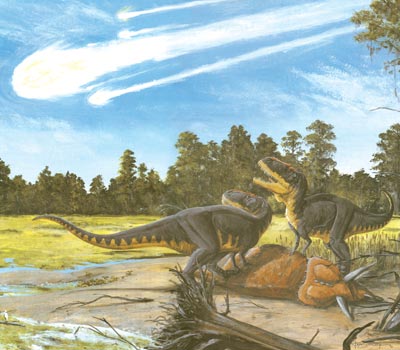 A recent episode of Planet Money described the process of “creative destruction”.
“By 1991 Walmart has taken over Woolworth’s place on the Dow Jones, by 1997 Woolworth’s has closed down all of its stores […] Why isn’t Woolworth’s prepared to make that change, they should be better prepared than anyone. They could’ve been Wal-Mart, why didn’t they go out to the rural areas and build giant stores? […] When you have an incremental innovation, where it’s just about trying to do what you already do a little bit better, the established firms are really good at that, they’ve got all the resources and all the expertise. But whenever there’s a disruptive innovation that comes along, a totally different way of doing something, that causes a problem for the established firms.”
10% of companies go bankrupt every year. If a major cause of death for powerful, established companies is failure to adapt, it is important that anyone who plans to live for thousands of years be willing and able to adapt to changing conditions. This includes being willing to change your values. Maybe not drastically, and maybe not the most fundamental values. But inflexibility is a death sentence, and it is far better to keep yourself mentally limber than to default to brittle conservatism. If you resist all minor changes for long enough you can become so entrenched in your old positions that once change is finally inevitable you may be unable to adapt in time, and go the way of Woolworth’s.
 On August 27, 2012, the American Academy of Pediatrics issued a revised circumcision policy statement saying:
Although health benefits are not great enough to recommend routine circumcision for all male newborns, the benefits of circumcision are sufficient to justify access to this procedure for families choosing it … Parents ultimately should decide whether circumcision is in the best interests of their male child.
As summarized at Science Based Medicine, the medical support for circumcision has always been shakey. There appear to be some minor benefits*, and some minor costs and risks, and the two are close enough in the balance scales that pediatric organizations around the world teeter around the “no recommendation” point – some recommending slightly against, some recommending slightly for, many neutral.
Surprisingly (at least to me) it seems that sexual pleasure is not affected one way or another by circumcision. It’s nice to see that’s actually being considered in these studies. But what’s not considered (at least not that I’ve been able to find) is masturbation. It’s easier when you’re uncircumcised. Most circumcised men need to use a lubricant to masturbate, the uncircumcised don’t. Masturbation is great, and simply ignoring this aspect of human life seems to be a major oversight.
Anecdotally, my gf likes that she can grab at me at any time. It’d be a pain in the ass if she always had to get some lube first, and a bit messy. I’d be upset if I ever had to give that up.
* to summarize: nearly all the health benefits can be achieved with simple hygiene. And you should be washing your dick anyway if you want other people to play with it. It appears to reduce how frequently you will catch STDs when having unprotected sex, but you’re gonna catch something if you’re having unprotected sex anyway, wtf is wrong with you?
Synopsis: After his sister was murdered, Shaun now hallucinates her speaking to him constantly. He drives around a post-zombie-apocalypse US with his friends, making “witty banter” and trying to uncover a big government conspiracy to keep the populace timid and afraid.
Brief Book Review: Not much to like here. A longer review/FAQ here.
Club Review: It’s actually not terrible for a book club book. It’s rather long, but as mentioned in the FAQ, it’s very easy to skim. It’s much like a popcorn movie, you don’t have to put in much effort. It may make for a decent break between more demanding books. There are several really good scenes, but like most good scenes they don’t really provoke much discussion. There is a LOT to complain about, and if you like going MST3K on a book, this can provide for a fair bit of fun. The problem is that there isn’t much variety to the fun, as the same annoying items keep coming up over and over and you can’t really mock them more than once or twice. It is not nearly the beautiful MST3K-feast that something truly awful would be. It’s uniformly middlin’ bad, with some good bits here and there which don’t quite make up for it. It’s too bad this book isn’t worse, or better, or shorter (seriously, an editor would have made this a much better novel). If it was any of those it’d be easy to give it a mild recommendation, but it’s hard to slog through 600 pages of mediocre writing and repetitive snarky quips just for some exasperated venting.
I will note that several people actually gave it fairly decent ratings, despite it’s flaws. They felt it was light and fun enough that it wasn’t a loss.
Summary: Not worth it. It ends on a cliff hanger and I don’t care. I wouldn’t recommend it for book clubs, but not terrible.